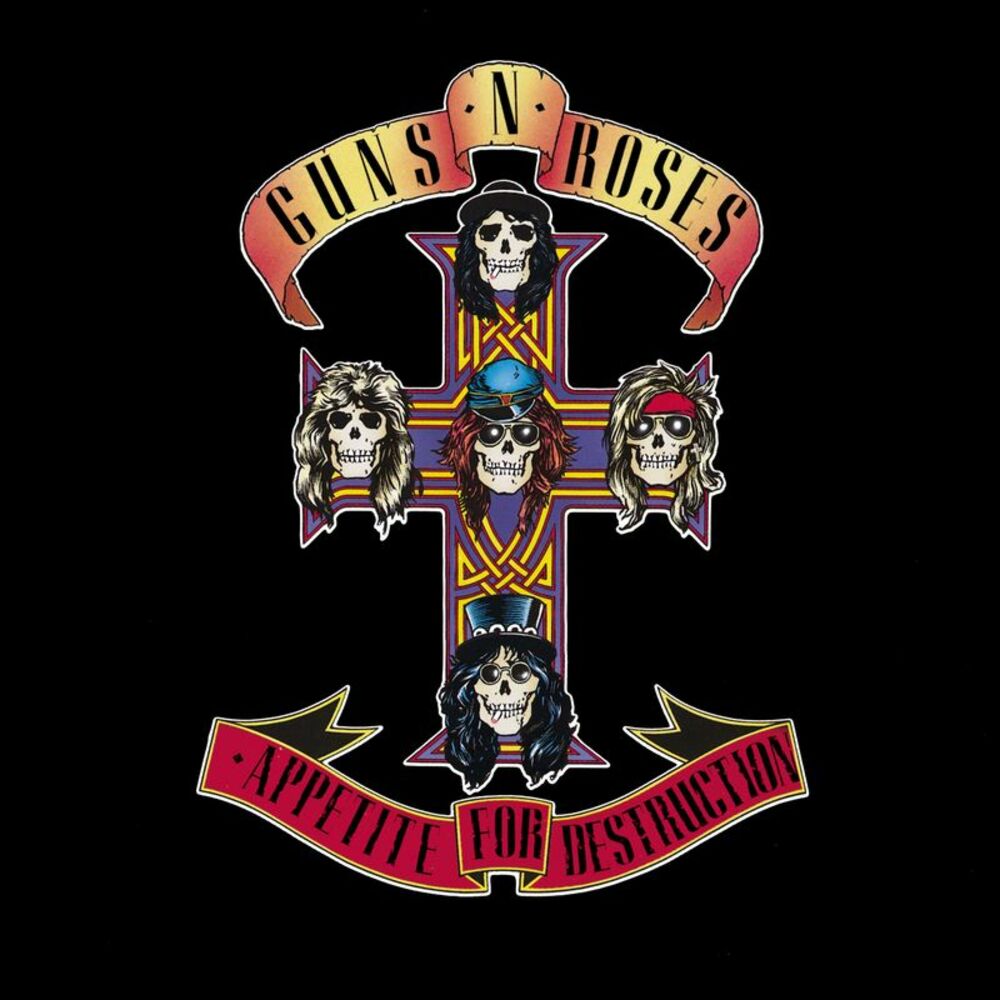
The album was not well received by contemporary American critics, many of whom complained that its massive success with consumers was fostered by the taboo of "sex, drugs and rock & roll" during the 1980s, when much of the cultural atmosphere in the US became informed by the Reagan-Bush Administration, the AIDS crisis, and the popularity of MTV. Writing in 1987, Dave Ling of Metal Hammer dismissed the album as an inferior mix of elements from bands such as Aerosmith, Hanoi Rocks, and AC/DC. Critics in the UK were more positive, and Kerrang! claimed that "rock is at last being wrestled from the hands of the bland, the weak, the jaded, the tired, the worn, and being thrust back into the hands of the real raunch rebels." However, the album was voted the 26th best album of the year in The Village Voice's 1988 Pazz & Jop, an annual poll of American critics nationwide. Robert Christgau, the poll's supervisor, was qualified in his praise when reviewing the album for his 1990 book Christgau's Record Guide: The '80s. While applauding Rose's "effortless, convincing vocal abilities" as "undeniable and [setting] him apart from his contemporaries", the journalist found his performance undermined by questionable lyrics that reveal darker ideas: "He doesn't love 'Night Train', he loves alcoholism. And once that sweet child o' his proves her devotion by sucking his cock for the portacam, the evil slut is ready for 'See me hit you you fall down.'"
In a retrospective review for The Rolling Stone Album Guide (2004), Ann Powers wrote that Guns N' Roses "produced a unique mix of different rock values", such as "speed and musicianship, flash and dirt", on an album that "changed hard rock's sensibilities at the time." Stephen Thomas Erlewine also viewed the album as a "turning point for hard rock" in his review for AllMusic, and felt Rose's singing and songwriting were enhanced by Slash and Stradlin's dual guitar playing, which helped make Appetite for Destruction "the best metal record of the late '80s". According to Jimmy Martin of The Quietus, the album, which he called "the greatest hard rock record of the 80s", has an "unrefined, punk quality" that marked a "shift away" from the hair metal bands commercialized by MTV. Christa Titus of Billboard said Appetite for Destruction was able to appeal to various rock music listeners because, on it, Guns N' Roses incorporated "metal's forceful playing, punk rock's rebellious themes, glam metal's aesthetic, and bluesy guitar riffs that appealed to purists." Russell Hall, the features writer for Gibson's online publication, said the album "injected a much-needed dose of '70s-style rebellion into the frothy pop metal of the '80s", by "combining the swagger of late '60s Stones and vintage Aerosmith with the menace of punk and a trash-glam aesthetic".
Writing for Pitchfork, Maura Johnston called the album "a watershed moment in '80s rock that chronicled every vice of Los Angeles led by the lye-voiced Axl Rose and a legendary, switchblade-sharp band." BBC Music's Dennis O'Dell said the engagingly hedonistic album remains the band's best, as did Ric Albano of Classic Rock magazine: "This band would never again reach this level of importance and breakthrough originality." In a 2000 list, Q named it one of the greatest metal albums ever and hailed it as "a riotous celebration of sex, drugs and rock'n'roll". Chuck Klosterman said the album would be the only pop metal album to make a theoretical list of rock's ten best albums, and Chuck Eddy, who called it "the greatest album ever made about how you can't run away from yourself", named it one of his essential hair metal records in Spin. On the other hand, Sputnikmusic said the album has been somewhat overrated, and most of the songs suffer by comparison to the highlights "Welcome to the Jungle", "Sweet Child o' Mine", "Paradise City", "Mr. Brownstone", and "Rocket Queen". In a retrospective review for the album's 30th Anniversary David Bennun in The Quietus …