About the artist
The Allman Brothers Band, formed in Florida in 1969, became a cornerstone of American rock music, based in Macon, Georgia. They masterfully blended blues, jazz, and country, renowned for their improvisational jam band style. Inducted into the Rock and Roll Hall of Fame, they are considered one of the greatest artists of all time.
About the album
"At Fillmore East" is the Allman Brothers Band's seminal first live album, recorded over two nights in March 1971 at New York City's Fillmore East. Produced by Tom Dowd, this double LP features extended, improvisational jams blending blues, rock, country, and jazz. It captures their raw, electrifying sound, which couldn't be replicated in a studio.
Meanings
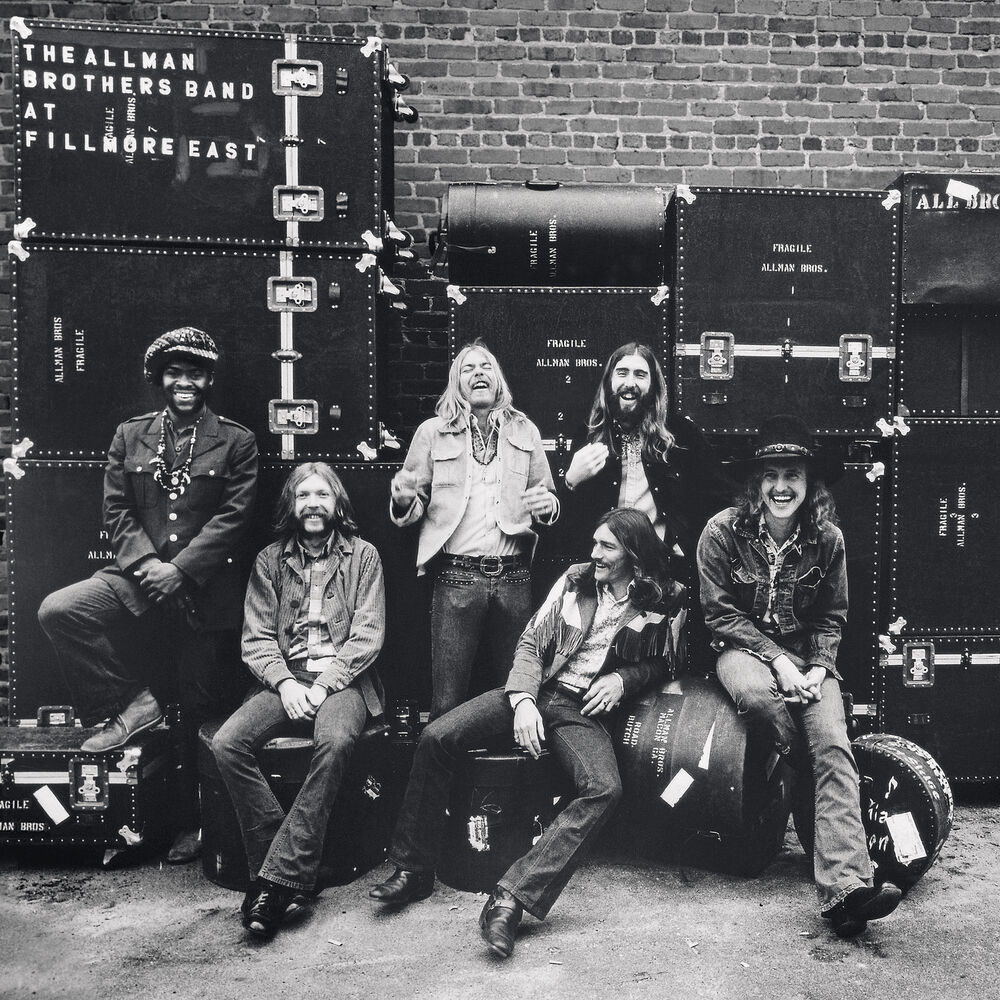
The album's concept was to capture the band's authentic live energy, which they felt studio recordings couldn't convey. Its iconic cover, shot in Macon, Georgia, shows the band laughing, a spontaneous moment after Duane Allman discreetly grabbed a bag of cocaine. The back cover honours their road crew, whom Duane considered "unsung heroes."
Why it's rated so high
"At Fillmore East" was a critical and commercial breakthrough, widely hailed as one of the greatest live albums ever recorded. Critics called it "rock's greatest live double LP" and "the pinnacle of the Allmans and Southern rock." It rapidly increased their exposure, earned Platinum certification, and was preserved in the Library of Congress.
Career and historical context
Their first two studio albums had struggled commercially, but the band's reputation grew from their intense live performances. They felt frustrated by studio limitations, leading them to record a live album to capture their natural fire. This release cemented their popularity and established their association with the jam band genre.
Fun facts
- Eric Clapton, impressed by Duane Allman, invited him to contribute memorable guitar licks to Derek and the Dominos' "Layla" album.
- The band played over 300 dates in 1970, travelling in a Ford Econoline van and later a Winnebago nicknamed the "Wind Bag."
- During recording, producer Tom Dowd had to ask Duane Allman to cut horn players whose sound was leaking into other tracks.
- The final show at Fillmore East was delayed by a bomb scare and didn't end until 6 am.
- The album was initially rejected by Atlantic and Atco executives, who felt it "ridiculous to preserve all these jams."