João's Music Archive
Born to Die
← Back to the lists

Born to Die

Lana Del Rey
2012-11-16
Urban
24 tracks, 1 h 37 min
Rating
–
Not heard yet
110
–Archive
62Critics
0Listeners
Average score 62Metacritic 62Pitchfork 5.5AnyDecentMusic? 6.210 reviews

Tracklist

  1. Born To Die4:46
  2. Off To The Races5:01
  3. Blue Jeans (Remastered 2011)3:29
  4. Video Games4:42
  5. Diet Mountain Dew3:43
  6. National Anthem3:49
  7. Dark Paradise4:04
  8. Radio3:35
  9. Carmen4:09
  10. Million Dollar Man3:50
  11. Summertime Sadness4:25
  12. This Is What Makes Us Girls4:00
  13. Without You3:51
  14. Lolita3:41
  15. Lucky Ones3:45
  16. Ride4:48
  17. American4:07
  18. Cola4:19
  19. Body Electric3:52
  20. Blue Velvet2:36
  21. Gods & Monsters3:56
  22. Yayo5:21
  23. Bel Air4:05
  24. Burning Desire3:51
Listen on

Have you heard it?

Sign in to mark it as listened, rate it and keep notes.

About the artist

Lana Del Rey, an American singer-songwriter, reshaped modern alternative and mainstream pop with melancholic themes, glamour, and Americana. Critics praise her poetic lyricism and storytelling, establishing her as a significant artist of the 21st century.

About the album

Born to Die is Lana Del Rey's 2012 major-label debut, featuring a cinematic, hip-hop-inflected sound, blending baroque pop and trip hop. Its dramatic strings and distinctive composition garnered a cult following, becoming a global best-seller.

Meanings

The album explores melancholic themes of romance, glamour, love, sex, and drugs, with frequent references to 1950s-1970s Americana. Much of the lyrics reflect Del Rey's "wilderness years" and her experiences with alcohol in New York.

Why it's rated so high

Initially polarising, Born to Die received retrospective acclaim for its distinctive sound and influence, ranking on best-of lists. It significantly impacted pop music, paving the way for emotionally vulnerable pop and shifting the genre's moodier direction.

Career and historical context

This album marked Del Rey's major-label debut, following her earlier, withdrawn album and the viral success of "Video Games." It introduced her unique "gangsta Nancy Sinatra" persona and cinematic sound to a global audience.

Fun facts

  • The single "Video Games" went viral on YouTube before the album's release.
  • Born to Die became the longest charting album by a woman in the history of the US Billboard 200.
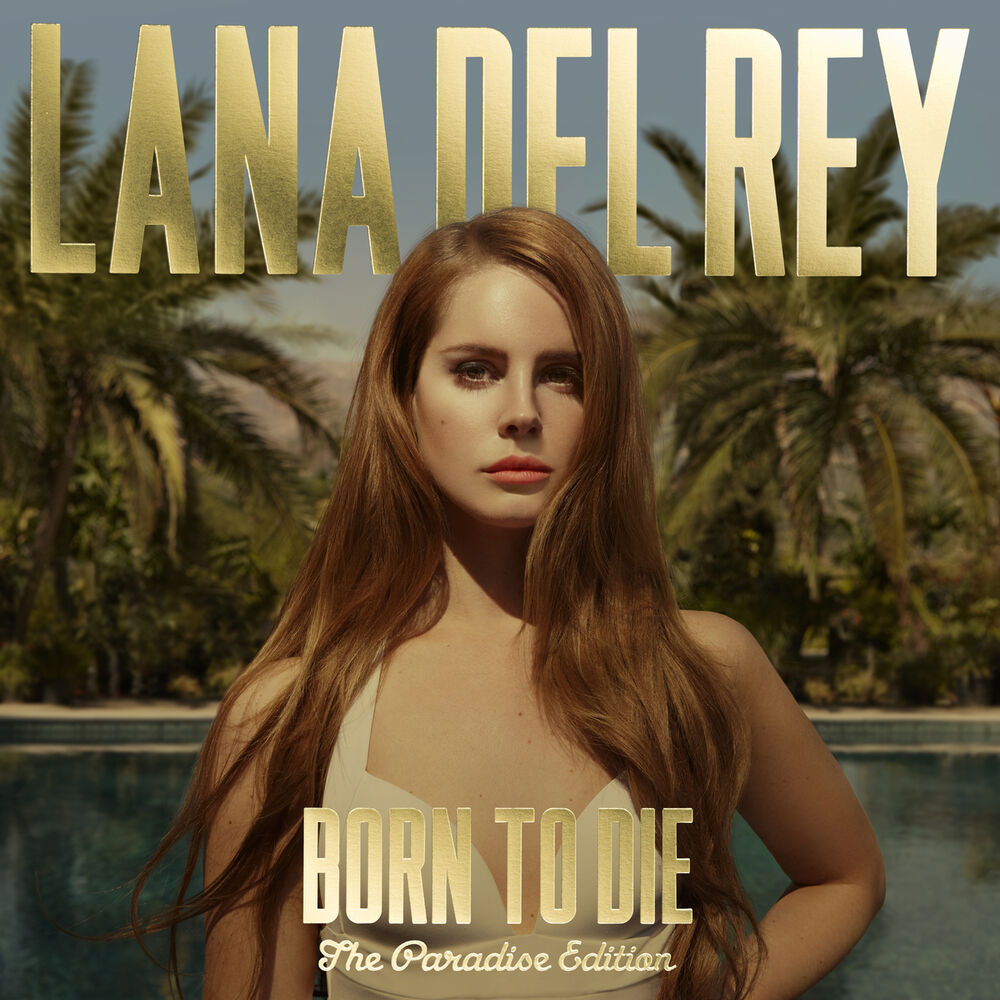
  • The album's cover photograph was shot in Carpenders Park, Watford.
  • Del Rey consciously lowered her voice to stand out in the music industry.
  • It was the world's fifth best-selling album of 2012, selling 3.4 million copies.
Written by AI from the album's and artist's Wikipedia articles and the archive's notes. Double-check anything important.

The full story

Born to Die is the second studio album by American singer-songwriter Lana Del Rey. It was released on January 27, 2012, through Interscope Records and Polydor Records as her major label debut. A reissue of the album, subtitled The Paradise Edition, was released on November 9, 2012. The new material from the reissue was also made available on a separate extended play (EP) titled Paradise. Before the album's release, Del Rey had attracted attention with her 2011 singles "Video Games" and "Born to Die", which contrasted contemporary electronic/dance music with a cinematic sound accompanied by dramatic strings. A predominantly baroque pop and trip hop album, Born to Die features the same cinematic composition. The lyrics are about love, sex, and drugs, and feature prominent references to 1950s and 1960s Americana. The album was the world's fifth best-selling album of 2012. In 2023, it became the second album by a woman to spend more than 500 weeks on the US Billboard 200, where it peaked at number 2, and topped charts in Australia and various European countries including France, Germany, and the UK. In December 2025, Born to Die became the longest charting album by a female artist in Billboard 200 history with 618 weeks. Born to Die was supported by four further singles: "Blue Jeans", "Summertime Sadness", "National Anthem", and "Dark Paradise". "Summertime Sadness" peaked at number 6 on the Billboard Hot 100, becoming Del Rey's highest-charting single in the US at the time. The album polarized contemporary critics; praise was directed toward the album's distinctive sound, while criticism targeted its repetitiveness and melodramatic tendencies. Del Rey's image during promotion of Born to Die was controversial; tabloid media accused her of inauthentic marketing tactics to gain an audience in the indie music scene. Despite an initially ambivalent reception, the album has been retrospectively ranked in best-of lists by several publications including The Guardian and NME, and helped Del Rey acquire cult status among music fans.

Background and development

In 2007, Elizabeth "Lizzy" Grant signed a recording contract with the record label 5 Point Records, and began planning her debut studio album. But after hiring new management services, taking an interest in adopting the stage name Lana Del Ray, and a perceived lack of motivation during production, she found herself in conflict with the record label and her producer David Kahne. The final product, Lana Del Ray, was digitally released in January 2010, and her stage name was respelled Lana Del Rey shortly after its launch. Grant was successfully bought out of her recording contract at her manager's request; consequently, Lana Del Ray was pulled out of circulation before physical versions were produced. After settling on her current stage name, Del Rey signed a recording contract with Stranger Records in June 2011, and released the track "Video Games". Initially, she had released the song because it was her "favorite" and had no intentions of releasing it as a single, although the video went viral on YouTube after its premiere. During an appearance on the French television series Taratata in November 2011, Del Rey announced that her second studio album would be titled Born to Die.

In an interview with British GQ, Del Rey revealed she was sent to boarding school in Connecticut at age 14 to get sober from alcoholism and said much of Born to Die is written about her experiences with alcohol while living in New York:I was a big drinker at the time. I would drink every day. I would drink alone. I thought the whole concept was so fucking cool. A great deal of what I wrote on Born to Die is about these wilderness years. A lot of the time when I write about the person that I love, I feel like I'm writing about New York. And when I write about the thing that I've lost I feel like I'm writing about alcohol because that was the first love of my life. Sure, there have been people, but it's really alcohol.The photograph used on the cover for Born to Die was shot in Carpenders Park, Watford by Nicole Nodland, while Del Rey and David Bowden oversaw the overall direction for its packaging. On behalf of Complex, Dale Eisinger ranked the cover eighth on the magazine's list of "The 50 Best Pop Album Covers of the Past Five Years", commending its usage of the typeface Steelfish and speaking favorably of the "ominous" feeling it evoked, which he credited to "the shadows or whatever the shapes in the background are [and] how properly Lana can affect her detached and still-flawless persona to a simple gaze". The album's track listing was announced on January 9, 2012, while the record was released on January 31 in the United States; it became Del Rey's first album with Interscope Records after she secured a distribution arrangement with them.

Composition

Born to Die's music style has been described as alternative pop, "sultry, overstated orchestral pop," baroque pop, indie pop, sadcore and trip hop. Of the style of her vocals on the album, Del Rey said: "people weren't taking me very seriously, so I lowered my voice, believing that it would help me stand out. Now I sing quite low... well, for a female anyway". The singer's first singles, "Video Games" and "Born to Die" were described variously as "quasi-cabaret balladry", "woozy and sometimes soporific soundtrack soul", and "pop". Del Rey described "Video Games" as "Hollywood sadcore". Tim Lee of musicOMH noted the songs are extremely similar, commenting that "her (alleged) agents clearly having stumbled upon a formula with which they can (allegedly) print money and (allegedly) further consign Lana's secretive, (allegedly) real debut LP to the annals of history. You didn't hear it from us, right?". Del Rey was described as a "gangsta Nancy Sinatra", although she cites Britney Spears, Elvis Presley and Antony and the Johnsons as her musical influences. When asked about her musical style, Del Rey said:

I would have loved to be part of the indie community. But I wasn't. I was looking for a community, I don't even know any people who are musicians. I never met that indie popular indie, whoever the fuck that is. Who IS indie? First of all, I can't really get my head around what indie music is. Because if you've heard of it, it's sort of pop music, right? Because it's, like, popular? Or is it just that it's not on the radio? It's not like I was in an indie community and then I blew up. It's like, I was living on the street and I'm not – like, for real, you know what I'm saying? The lyrics of "Off to the Races" have been called "a freak show of inappropriate co-dependency", with a chorus that recalls Sheryl Crow's "down and out drunken loner persona" in her 1994 single "Leaving Las Vegas". Pryia Elan of NME noted that the track "almost falls under the weight of this persona. There's none of 'Video Games''s measured, piano-led reflection. Instead the psychosexual rumblings of the lyrics and the dual voices she uses offset the comparatively simple musical shades on display." Del Rey's vocals on "Off to the Races", "National Anthem", and "Diet Mountain Dew" were described as "chatty" and "almost rapping". Her vocals on "Million Dollar Man" were likened to those of "a highly medicated Fiona Apple". Compared to soundtracks for James Bond films, Born to Die contains trip hop beats and a cinematic sound reminiscent of the 1950s. Thematically, Born to Die refers to sex and drugs, with Del Rey playing a Lolita-esque persona. Bill Lamb, a reviewer at About.com, wrote that "National Anthem" seems "lost in a messy blend of money, sex, and corporate greed, but it is the rousing yet graceful arrangement that solidifies the song's point of view as a clever critique of a society that is just as messy as these words". "National Anthem", Lamb says, fits into the lyrical structure of Born to Die in that the theme is that of a "bitter, albeit narcotized, criticism of all of the wealth and emotional artifice Lana Del Rey is accused of embracing". NME observed that Del Rey sings like a "perfect mannequin" on "National Anthem", criticizing the track for baldly revisiting the beat-driven chorus of "Born to Die".

Promotion

To promote Born to Die, Del Rey embarked on the Born to Die Tour from November 4, 2011, to September 25, 2012. Mainly consisting of concerts in Europe, the tour also visited North America and Australia. "Video Games" was featured for the first time on The CW's Ringer on September 28, 2011, during a pivotal scene, propelling Del Rey into the mainstream. Del Rey also promoted the album with performances in a number of live appearances, including for MTV Push, and at the Bowery Ballroom, where, according to Eliot Glazer of New York, "the polarizing indie hipstress brought her 'gangsta Nancy Sinatra' swag". Matthew Perpetua of Rolling Stone commented that, despite Del Rey's nervousness and anxiety while performing live, she "sang with considerable confidence, though her transitions from husky, come-hither sexuality to bratty, girlish petulance could be rather jarring". Del Rey also performed "Video Games" on Dutch television program De Wereld Draait Door, on British music television show Later... with Jools Holland, and on a show at Chateau Marmont in Los Angeles, California. She gave several interviews to newspapers and online magazines such as The Quietus, The Observer, and Pitchfork, while creating her own music videos for several tracks such as "Blue Jeans" and "Off to the Races". On January 14, 2012, Del Rey appeared on Saturday Night Live to perform "Blue Jeans" and "Video Games". Her performance soon came under scrutiny, and was criticized by NBC anchor Brian Williams, who called it "the worst in SNL history". SNL cast member Andy Samberg and the host of that week's episode, Daniel Radcliffe, came to her defense, with the latter stating that the criticism towards her was less about the performance and more about "her past and her family". Ringer played another Del Rey song, "Blue Jeans", on February 14, 2012, during the last scene of episode 13.

Critical reception

Initial reviews

At Metacritic, which assigns a weighted mean rating out of 100 to reviews from mainstream critics, the album received an average score of 62 based on 37 reviews, indicating "generally favorable reviews". Jaime Gill of BBC Music commented that the album "isn't perfect", criticizing the production of songs such as "Dark Paradise", but concluded that Born to Die is the most distinctive debut album since Glasvegas's eponymous disc released in 2008. Slant Magazine writer Sal Cinquemani commented that several tracks had their production changed for the album, making tracks such as "National Anthem" and "This Is What Makes Us Girls" less "radio-friendly". Cinquemani wrote, "ironically, the album's sole weakness is the strength of its immaculate production, which can be a bit overwhelming over the course of 12 tracks." Alexis Petridis of The Guardian said that Born to Die is "beautifully turned pop music, which is more than enough", with most melodies "constructed magnificently", but that Del Rey "doesn't have the lyrical equipment to develop a persona throughout the album." Greg Kot of the Chicago Tribune gave a negative review, criticizing the repetitive production. Rob Sheffield of Rolling Stone declared that the lyrics, with their "pop-trash perversity", were the strength of the album, but that Del Rey had a voice that was "pinched and prim" and "wasn't ready to make an album yet". He concluded, "Given her chic image, it's a surprise how dull, dreary and pop-starved Born to Die is." AllMusic critic John Bush wrote: "There is a chasm that separates 'Video Games' from the other material and performances on the album, which aims for exactly the same target—sultry, sexy, wasted—but with none of the same lyrical grace, emotional power, or sympathetic productions... an intriguing start, but Del Rey is going to have to hit the books if she wants to stay as successful as her career promised early on". Channing Freeman of Sputnikmusic disliked the album, saying, "The worst thing about Born to Die is that even its great songs contain problems". The Observer's Kitty Empire said that, unlike pop singers Lady Gaga and Katy Perry and their "hedonic outpourings", "Lana Del Rey's partying is fuelled by a knowing sadness, and sung in that laconic, hypnotic voice, which ultimately saves this thoroughly dissolute, feminist nightmare of a record for the romantics among us". The A.V. Club's Evan Rytlewski panned the album, writing, "Shallow and overwrought, with periodic echoes of Kesha's Valley Girl aloofness, the album lives down to the harshest preconceptions against pop music". Randall Roberts of Los Angeles Times also noted that Del Rey's vocals have "so much potential and yet [are] unrefined", and said that despite having standout tracks like "Summertime Sadness" and "Dark Paradise", listening to the album "has become tiring and woozy, like if you'd taken a half-dozen Ambiens when you'd put the record on—and now you're getting very, very sleepy". Pitchfork's Lindsay Zoladz commented: "The album's point of view—if you could call it that—feels awkward and out of date... [it] never allows tension or complexity into the mix, and its take on female sexuality ends up feeling thoroughly tame. For all of its coos about love and devotion, it's the album equivalent of a faked orgasm—a collection of torch songs with no fire". Alex Denney of NME gave a positive review, saying: "Although it's not quite the perfect pop record 'Video Games' might have led us to wish for, Born to Die still marks the arrival of a fresh—and refreshingly self-aware—sensibility in pop."

Retrospective acclaim

Born to Die has received retrospective reviews through the years, with many critics and journalists giving it a second chance and publishing think-pieces about the industry's perspective on Del Rey. Meaghan Garvey, writing for Pitchfork, said that "it’s a drag to rehash the Born to Die discourse now [...] a conversation so tediously narrow," praising …

Accolades

Awards

Year-end lists

Decade-end lists

Commercial performance

In the United Kingdom, Born to Die sold 50,000 copies on its first day of release. It debuted at number one on the UK Albums Chart and sold 116,745 copies. By accumulating digital sales of 50,007, the album became the fifth album ever to sell upwards of 50,000 downloads in a single week. Additionally, it was the fastest selling album of 2012, becoming the first album to reach 100,000 copies sold in that year. Born to Die remained atop the chart in its second week, selling an additional 60,000 copies. In the UK, the album was certified six-times platinum and by March 2023 had sold 1.4 million copies. On the UK albums chart, Born to Die's chart run and sales were combined with the release of Paradise. In France, the album debuted at number one on the French Albums Chart with sales of 48,791, whose 16,968 digital copies. The album remained at the top position the following week with 23,888 copies sold. With over 1,000,000 copies sold as of September 2019, it is one of the best-selling albums in France of all time. In New Zealand, the album debuted and peaked at number two on the charts, spending forty weeks in the chart. After the conjunction of Born to Die: The Paradise Edition, the album charted at number six. "Born to Die" is the fifty-seventh best charting album of all time in New Zealand. In the United States, the album attained first-week sales of 77,000 copies, subsequently debuting at number two on the Billboard 200, behind Adele's 21, and shipped over 500,000 units in the country by January 2013, getting Gold certification. On the week ending August 31, 2013, though the album was in its eighty-first week on the chart, it re-entered the top twenty at number 20, selling 13,000 copies. As of January 2024, Born to Die has sold 2.3 million copies in the United States, and has been certified five-times platinum by the RIAA for album units equivalent to five million. According to the International Federation of the Phonographic Industry (IFPI), Born to Die was the fifth global best-selling album of 2012 with sales of 3.4 million copies. By June 2014, the album had sold seven million copies worldwide.

Legacy

With the release of Born to Die, Del Rey became the main focus of attention of the press for her image as well as her music. Since her debut with "Video Games", Del Rey had been causing many to begin to accuse her of trying to erase her past with a different type of songs and style. Considering the album's composition and her appearance, many tabloids began to question her authenticity and claim that her success was due only to her beauty. Also, speculation arose that Del Rey was just a character created by Lizzy Grant and pop music industry, with her label trying to get a place and audience within indie music. Business Insider's Kevin Lincoln commented that Lana was manufactured by her label and used "Video Games" as a form of advertising. In defense of the singer, Jaime Gill from BBC Music wrote: "If you want an explanation for the unlikely rise of Lana Del Rey, it isn't that hard to find. Ignore accusations of cynical marketing and inauthenticity, or speculation about surgery and daddy's money – that's not important. And don't get distracted by YouTube statistics or the hyperbole, this isn't about new media. It's about something older and more mysterious than that; the extraordinary, resilient power of pop music". Sasha Frere Jones of The New Yorker came out in defense of the artist as well, writing: "The weirder strain of criticism concerns authenticity [...] Detractors cite a variety of presumed conspiracies, some involving the influence of her father, Rob Grant [...] The rumor of manipulative managers guiding her; the reality of professional songwriters working for her [...] and how Grant's top lip got so big so fast [...] Surely no equivalent male star would be subject of the same level of examination." Sharing a similar view, Ann Lee wrote in Metro: "I know it's fun to slate [Lana] but she's got a great voice – that's a fact". Sal Cinquemani of Slant Magazine also proved to be in favor of Del Rey, declaring: "I was initially puzzled by the accusations of inauthenticity that were hurled with such vehemence and frequency at Lana Del Rey in the wake of her meteoric rise to it girl status last year [...] And I guess we're supposed to lament the fact that, unlike Amy Winehouse, she doesn't appear to have a predilection for dope or booze to back up her supposed bad-girl bona fides. But since when exactly has 'authenticity' ever been a criterion in pop music?".

Global impact on pop-music

Born to Die's sound, themes and aesthetic left a major impact in popular music. In 2019, The Washington Post named Del Rey one of the "five people who helped shape the culture of the past decade." Max Migowsky from Indie described her as "the figurehead of an entire generation," while Zachary Small from Hyperallergic called Born to Die "ahead of its time." Al Horner from Red Bull agreed, marking Born to Die as "[a] blueprint for a new sonic world" and describing its sound as the feminine equivalent of grunge music. He argued that Del Rey's success "convinced record labels to take a chance on [...] emotionally vulnerable pop" and stated that "there's never been more space for melancholy in popular music." Sorrell Forbes from uDiscover Music named Born to Die "the most powerful moment in her career," while arguing that Del Rey brought "the sound [the public was] looking for." Del Rey herself stated in an interview with Pitchfork in 2019 that "there's been a major sonic shift culturally. I think I had a lot to do with that." Omar N. Goulding from Culturizando called Born to Die "the most influential album of the decade," arguing that "people were getting tired of happy music and wanted to listen to something different" and that Del Rey "set the [sad girl] trend into pop culture." Richard S. He, writing for Billboard, said that Born to Die is "one of the main catalysts for pop's mid-2010s shift from brash EDM to a moodier, hip-hop-inflected palette." Billboard later included the album's title track as one of the 100 songs that defined the …

From the Wikipedia article Born to Die, available under CC BY-SA 4.0.

Tracklist

  1. Born To Die4:46
  2. Off To The Races5:01
  3. Blue Jeans (Remastered 2011)3:29
  4. Video Games4:42
  5. Diet Mountain Dew3:43
  6. National Anthem3:49
  7. Dark Paradise4:04
  8. Radio3:35
  9. Carmen4:09
  10. Million Dollar Man3:50
  11. Summertime Sadness4:25
  12. This Is What Makes Us Girls4:00
  13. Without You3:51
  14. Lolita3:41
  15. Lucky Ones3:45
  16. Ride4:48
  17. American4:07
  18. Cola4:19
  19. Body Electric3:52
  20. Blue Velvet2:36
  21. Gods & Monsters3:56
  22. Yayo5:21
  23. Bel Air4:05
  24. Burning Desire3:51

Listeners 0

Nobody has logged it yet. Be the first.

Log a listen