João's Music Archive
The Wall
← Back to the lists

The Wall

Pink Floyd
1979-11-30
Pink Floyd Records
25 tracks, 1 h 19 min
Rating
–
Not heard yet
110
9Archive
84Critics
1Listener
Average score 849 reviews

Tracklist

  1. In the Flesh?3:18
  2. The Thin Ice2:26
  3. Another Brick in the Wall, Pt. 13:11
  4. The Happiest Days of Our Lives1:51
  5. Another Brick in the Wall, Pt. 23:58
  6. Mother5:34
  7. Goodbye Blue Sky2:47
  8. Empty Spaces2:07
  9. Young Lust3:29
  10. One of My Turns3:36
  11. Don't Leave Me Now4:15
  12. Another Brick in the Wall, Pt. 31:14
  13. Goodbye Cruel World1:14
  14. Hey You4:39
  15. Is There Anybody Out There?2:41
  16. Nobody Home3:22
  17. Vera1:33
  18. Bring the Boys Back Home1:27
  19. Comfortably Numb6:22
  20. The Show Must Go On1:36
  21. In the Flesh4:15
  22. Run Like Hell4:23
  23. Waiting for the Worms3:57
  24. Stop0:30
  25. The Trial5:18
Listen on

Have you heard it?

Sign in to mark it as listened, rate it and keep notes.

About the artist

Pink Floyd are an English rock band, formed in London in 1965, known for their extended compositions, sonic experiments, and philosophical lyrics. They became a leading progressive rock band, with Roger Waters as the primary lyricist for their most successful albums. Pink Floyd are one of the best-selling music artists of all time, with sales exceeding 250 million records worldwide.

About the album

The Wall is Pink Floyd's eleventh studio album, a double album rock opera released in 1979. It follows the story of 'Pink', a jaded rock star, as he builds a psychological 'wall' of isolation around himself. The album was recorded amidst personal and financial struggles, with co-producer Bob Ezrin helping to refine the concept.

Meanings

The album explores themes of abandonment, cycles of violence, and isolation, symbolised by the protagonist's 'wall'. The character of Pink is based on Roger Waters and former frontman Syd Barrett, drawing from Waters' childhood experiences like his father's death and tyrannical teachers. The lyrics detail how these traumas become metaphorical 'bricks in the wall'.

Why it's rated so high

Initially receiving mixed reviews, The Wall later earned widespread acclaim as one of the greatest albums of all time. It topped the US charts for 15 weeks and sold over 30 million copies, becoming the best-selling double album ever. The album was inducted into the Grammy Hall of Fame, and 'Another Brick in the Wall, Part 2' became their only UK and US number-one single.

Career and historical context

The Wall was conceived by Roger Waters during the 1977 In the Flesh tour, inspired by his alienation from the audience. The band faced significant financial problems during its creation, needing to produce an album to avoid high tax liabilities. Personal tensions were high, leading to keyboardist Richard Wright being fired by Waters during production, though he remained for the tour.

Fun facts

  • Roger Waters spat on a fan during a 1977 concert, which inspired the album's core concept of isolation.
  • The band had to leave the UK for a year to avoid bankruptcy due to failed investments and high tax rates.
  • Co-producer Bob Ezrin's poor punctuality led Roger Waters to mock him with 'NOPE' (No Points Ezrin) badges.
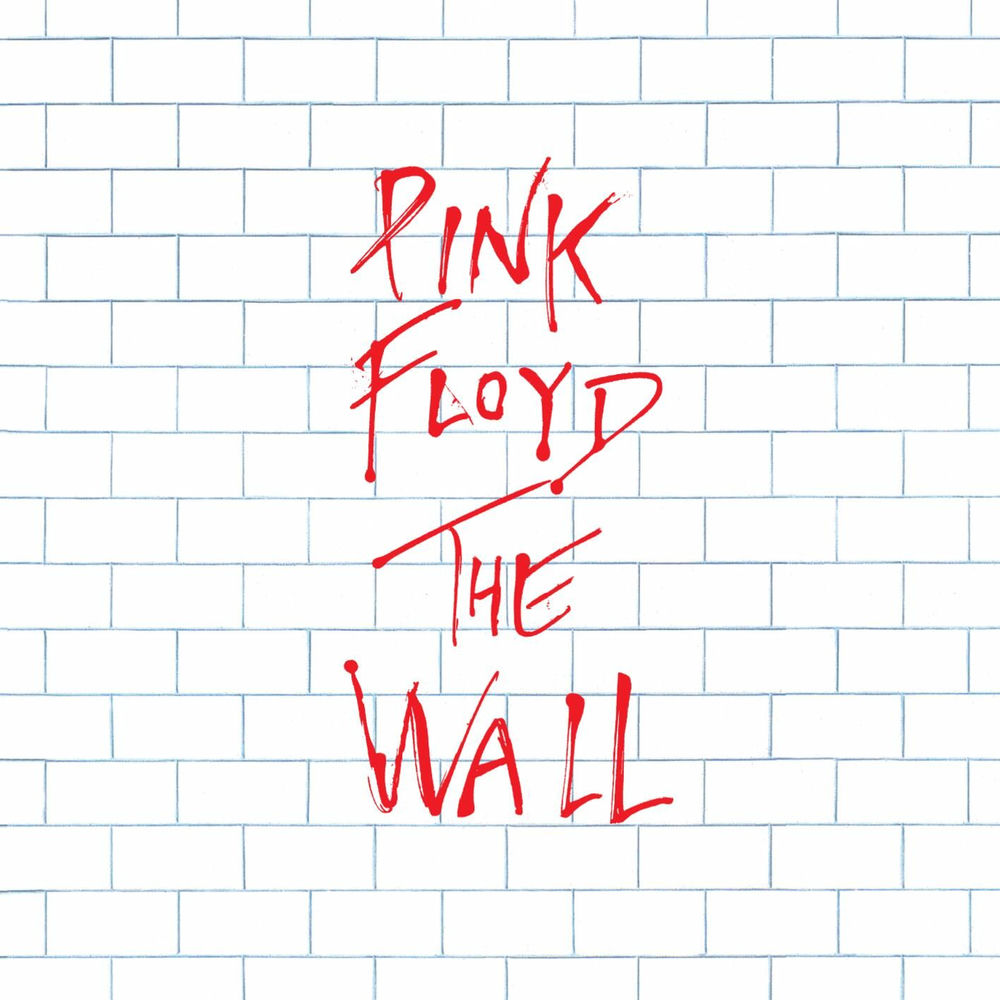
  • The album's minimalist cover art was the first since their debut not designed by the Hipgnosis group.
  • Bruce Johnston of The Beach Boys contributed backing vocals on several tracks, including 'In the Flesh?'.
Written by AI from the album's and artist's Wikipedia articles and the archive's notes. Double-check anything important.

The full story

The Wall is the eleventh studio album by the English rock band Pink Floyd, released on 30 November 1979 by Harvest/EMI and Columbia/CBS Records. It is the last album to include all four post-Barrett–era band members. A double album rock opera, it follows the story of "Pink", a jaded rock star, as he builds a psychological "wall" of isolation around himself. The Wall topped the US charts for 15 weeks and reached number three in the UK. It initially received mixed reviews from critics, many of whom found it overblown and pretentious, but later received accolades as one of the greatest albums of all time. The group's bassist Roger Waters conceived The Wall during Pink Floyd's 1977 In the Flesh tour, modelling the character of Pink after himself and former founding member Syd Barrett. Recording spanned from December 1978 to November 1979. Co-producer Bob Ezrin helped to refine the concept and bridge tensions during recording, as the band members were struggling with personal and financial problems. The group's keyboardist, Richard Wright, was fired by Waters during production but stayed on during the tour as a salaried musician. Three singles were issued: "Another Brick in the Wall, Part 2" (Pink Floyd's only UK and US number-one single), "Run Like Hell", and "Comfortably Numb". From 1980 to 1981, Pink Floyd performed the album on a tour that featured elaborate theatrical effects. In 1982, The Wall was adapted into a feature film written by Waters. Some outtakes were used on the next Pink Floyd album, The Final Cut (1983). The Wall is one of the best-known concept albums. With over 30 million copies sold, it is the second-best-selling Pink Floyd album behind The Dark Side of the Moon (1973), the best-selling double album of all time, and one of the best-selling albums of all time. In 2000, it was voted number 30 in Colin Larkin's All Time Top 1000 Albums. In 2003, 2012, and 2020, it was included in Rolling Stone's lists of the "500 Greatest Albums of All Time". From 2010 to 2013, Waters staged a new The Wall live tour that became one of the highest-grossing tours by a solo musician. In 2011, Waters declared The Wall to be his favourite album he recorded with Pink Floyd.

Background

Throughout 1977, Pink Floyd played the In the Flesh tour to promote their new album Animals. Roger Waters despised the experience – angered by the audience's rowdy behavior (such as setting off fireworks in the middle of songs) and convinced that they were not really listening to the music. During the final show on 6 July 1977 at the Montreal Olympic Stadium, a group of noisy and excited fans near the stage irritated Waters so much that he leaned over the side and spat on one of them. Waters said of the incident, "Immediately afterwards I was shocked by my behaviour. I realised that what had once been a worthwhile and manageable exchange between us (the band) and them (the audience) had been utterly perverted by scale, corporate avarice and ego. All that remained was an arrangement that was essentially sado-masochistic." That night, Waters spoke with producer Bob Ezrin and a psychiatrist friend of Ezrin's about the alienation and despair he was experiencing. He articulated his desire to isolate himself by constructing a wall across the stage between the band and the audience. The concept was an instant source of inspiration. While Gilmour and Wright were in France recording solo albums, and the drummer, Nick Mason, was busy producing Steve Hillage's Green, Waters began to write material. The spitting incident became the starting point for a new concept, which explored the protagonist's self-imposed isolation after years of traumatic interactions with authority figures and the loss of his father as a child. In July 1978, Pink Floyd reconvened at Britannia Row Studios, where Waters presented two new ideas for concept albums. The first was a 90-minute demo with the working title Bricks in the Wall. The second was about a man's dreams on one night, and dealt with marriage, sex, and the pros and cons of monogamy and family life versus promiscuity. The band chose the first option; the second eventually became Waters's debut solo studio album, The Pros and Cons of Hitch Hiking (1984). By September, Pink Floyd were having financial problems and urgently needed to produce an album to make money. The financial planners Norton Warburg Group (NWG) had invested £1.3–3.3 million, up to £18 million in 2025, of the group's money in high-risk venture capital to reduce their tax liabilities. The strategy failed when many of the businesses NWG invested in lost money, leaving the band facing tax rates potentially as high as 83 per cent. Waters said: "Eighty-three per cent was a lot of money in those days and we didn't have it." Pink Floyd terminated their relationship with NWG, demanding the return of uninvested funds. Gilmour said he became closely involved in the business side of Pink Floyd afterwards: "Ever since then, there's not a penny that I haven't signed for. I sign every cheque and examine everything." To help manage the project's 26 tracks, Waters decided to bring in an outside producer and collaborator, feeling he needed "a collaborator who was musically and intellectually in a similar place to where I was". They hired Ezrin at the suggestion of Waters's then-wife Carolyne Christie, who had worked as Ezrin's secretary. Ezrin had previously worked with Alice Cooper, Lou Reed, Kiss, and Peter Gabriel. From the start, Waters made it clear who was in charge, telling him: "You can write anything you want. Just don't expect any credit." Waters and Ezrin worked mostly on the story, improving the concept. Ezrin presented a 40-page script to the rest of the band, with positive results. He recalled: "The next day at the studio, we had a table read, like you would with a play, but with the whole of the band, and their eyes all twinkled, because then they could see the album." Ezrin broadened the storyline, distancing it from the autobiographical work Waters had written and basing it on a composite character named Pink. The engineer Nick Griffiths later said: "Ezrin was very good in The Wall, because he did manage to pull the whole thing …

Concept and storyline

The Wall is a rock opera that explores abandonment, cycles of violence, and isolation, symbolized by a wall. The songs create a storyline of events in the life of Pink, a fictional rock star based on Waters and Pink Floyd's former frontman Syd Barrett. The first half of the album largely features events from Waters' childhood and young adulthood, such as the death of his father in WWII, and his wife's infidelity. The album also includes several references to Barrett, namely the track "Nobody Home", which mirrors lyrically one of Barrett's final songs for the Floyd, the unreleased B-side "Vegetable Man" through descriptions of the narrator's possessions and character. "Comfortably Numb" was inspired by Waters' injection with a muscle relaxant to combat the effects of hepatitis during the In the Flesh tour in Philadelphia. In the song "In the Flesh", Waters "imagines himself as a fascist dictator".

Plot

The album opens with Pink, a rock star, addressing a crowd of fans at one of his concerts, to whom he is about to give an apparently unexpected performance of his life story ("In the Flesh?"). A flashback on his life up to that point begins, in which it is revealed that his father was killed during World War II, leaving Pink's mother to raise him alone ("The Thin Ice"). Beginning with the death of his father, Pink starts to build a metaphorical wall around himself ("Another Brick in the Wall, Part 1"). Growing older, Pink is tormented at school by tyrannical, abusive teachers ("The Happiest Days of Our Lives"), and memories of these traumas become metaphorical "bricks in the wall" ("Another Brick in the Wall, Part 2").

Now an adult, Pink remembers his domineering, overprotective mother ("Mother") and his upbringing during the Blitz ("Goodbye Blue Sky"). Pink soon marries, and after more "bricks" are created through more traumas, he is preparing to complete his "wall" ("Empty Spaces"). While touring in the United States, he seeks casual sex to relieve the tedium of touring, though in making a phone call home, he learns of his wife's infidelity ("Young Lust"). He brings a groupie back to his hotel room, only to trash it in a violent fit of rage, terrifying her out of the room ("One of My Turns"). Depressed, Pink thinks about his wife and fantasizes about committing violence against her ("Don't Leave Me Now"). Feeling trapped, he dismisses the impact his past has had on him while rejecting human contact and medication ("Another Brick in the Wall, Part 3"). Pink's wall is now finished, completely isolating him from the outside world ("Goodbye Cruel World"). Immediately after the wall's completion, Pink questions his decisions ("Hey You") and locks himself in his hotel room ("Is There Anybody Out There?"). As his depression worsens, Pink turns to his possessions for comfort ("Nobody Home"), and yearns for the idea of reconnecting with his personal roots ("Vera"). Pink's mind flashes back to World War II, with the people demanding that the soldiers return home ("Bring the Boys Back Home"). Returning to the present, Pink's manager and roadies break into his hotel room, where they find him unresponsive. A paramedic injects him with drugs to enable him to perform at a concert later that night ("Comfortably Numb"). The drugs kick in, resulting in a hallucinatory on-stage performance ("The Show Must Go On") where he believes that he is a fascist dictator, and that his concert is a neo-Nazi rally, at which he sets brownshirt-like men on fans that he considers unworthy ("In the Flesh"). He proceeds to attack minorities ("Run Like Hell"), culminating in him imagining holding a violence-inciting rally in suburban London ("Waiting for the Worms"). Pink's hallucination then ceases, and he begs for everything to stop ("Stop"). Tormented with guilt, Pink places himself on trial before his inner judge, who orders him to "tear down the wall" as punishment for his actions ("The Trial"). This is the opening of Pink to the outside world ("Outside …

Production

Recording

The Wall was recorded in several locations. Super Bear Studios in France was used between January and July 1979, and Waters recorded his vocals at the nearby Studio Miraval. Michael Kamen supervised the orchestral arrangements at CBS Studios in New York in September. Over the next two months the band used Cherokee Studios, Producers Workshop and The Village Recorder in Los Angeles. A plan to work with the Beach Boys at the Sundance Productions studio in Los Angeles was cancelled (although Beach Boys member Bruce Johnston does sing backing vocals on "In the Flesh?", "The Show Must Go On", the side 4 version of "In the Flesh", and "Waiting for the Worms"). James Guthrie, recommended by previous Floyd collaborator Alan Parsons, arrived early in the production process. He replaced engineer Brian Humphries, who was emotionally drained by his five years with the band. Guthrie was hired as a co-producer, but was initially unaware of Ezrin's role: "I saw myself as a hot young producer ... When we arrived, I think we both felt we'd been booked to do the same job." The early sessions at Britannia Row were emotionally charged, as Ezrin, Guthrie and Waters each had strong ideas about the direction the album would take. Relations within the band were at a low ebb, and Ezrin became an intermediary between Waters and the rest of the band. As Britannia Row was initially regarded as inadequate for The Wall, the band upgraded much of its equipment, and by March another set of demos was complete. However, their former relationship with NWG placed them at risk of bankruptcy, and they were advised to leave the UK by no later than 6 April 1979, for a minimum of one year. As non-residents they would pay no UK taxes during that time, and within a month all four members and their families had left. Waters moved to Switzerland, Mason to France, and Gilmour and Wright to the Greek Islands. Some equipment from Britannia Row was relocated in Super Bear Studios near Nice. Gilmour and Wright were both familiar with the studio and enjoyed its atmosphere, having recorded solo albums there. While Wright and Mason lived at the studio, Waters and Gilmour stayed in nearby houses. Mason later moved into Waters's villa near Vence, while Ezrin stayed in Nice. Ezrin's poor punctuality caused problems with the tight schedule followed by Waters. Mason found Ezrin's behaviour "erratic", but used his elaborate and unlikely excuses for his lateness as ammunition for "tongue-in-cheek resentment". Ezrin's share of the royalties was less than the rest of the band and he viewed Waters as a bully, especially when Waters mocked him by having badges made that read NOPE (No Points Ezrin), alluding to his lesser share. Ezrin later said he had had marital problems and was not "in the best shape emotionally".

More problems became apparent when Waters's relationship with Wright broke down. The band were rarely in the studio together. Ezrin and Guthrie spliced Mason's previously recorded drum tracks together, and Guthrie worked with Waters and Gilmour during the day, returning at night to record Wright's contributions. Wright, worried about the effect that the introduction of Ezrin would have on band relationships, was keen to have a producer's credit on the album. Their albums since More (1969) had credited production to "Pink Floyd". Waters agreed to a trial period with Wright producing, after which he was to be given a producer's credit, but after a few weeks he and Ezrin expressed dissatisfaction with Wright's methods. A confrontation with Ezrin led to Wright working only at nights. Gilmour also expressed his annoyance, complaining that Wright's lack of input was "driving us all mad". Ezrin later reflected: "it sometimes felt that Roger was setting him up to fail. Rick gets performance anxiety. You have to leave him alone to freeform, to create ..." Wright was troubled by a failing marriage and the onset of depression, exacerbated by his non-residency. While the …

Release

When the completed album was played for an assembled group of executives at Columbia's headquarters in California, several were reportedly unimpressed by what they heard. Matters had not been helped when Columbia Records offered Waters smaller publishing rights on the grounds that The Wall was a double album, a position he did not accept. When one executive offered to settle the dispute with a coin toss, Waters asked why he should gamble on something he owned. He eventually prevailed. The record company's concerns were alleviated when "Another Brick in the Wall, Part 2" reached number one in the UK, US, Norway, Portugal, West Germany and South Africa. It was certified platinum in the UK in December 1979, and platinum in the US three months later. In Germany, the album reached the one million sales mark within three months of its release. In Canada, the album was No. 1 for 13 weeks and had sold 830,000 copies by January 1981. The Wall was released in the UK and in the US on 30 November 1979. Coinciding with its release, Waters was interviewed by veteran DJ Tommy Vance, who played the album in its entirety on BBC Radio 1. It was reissued in three versions as part of the Why Pink Floyd...? campaign, which featured a massive restoration of the band's catalogue with remastering by producer James Guthrie: a "Discovery" edition in 2011, featuring the remastered version with no extras, and the "Experience" edition, which adds a bonus disc of unreleased material and other supplementary items, and the "Immersion" edition, a seven-disc collection that also adds video materials, in 2012.

Artwork and packaging

The album's cover art is one of Pink Floyd's most minimal – a white brick wall and no text. Waters had a falling out with Hipgnosis designer Storm Thorgerson a few years earlier when Thorgerson had included the cover of Animals in his book The Work of Hipgnosis: 'Walk Away René'. The Wall is therefore the first album cover of the band since The Piper at the Gates of Dawn not to be created by the design group. Issues of the album included the lettering of the artist name and album title by cartoonist Gerald Scarfe, either as a sticker on sleeve wrapping or printed onto the cover itself, in either black or red. Scarfe, who had previously created animations for the band's In the Flesh tour, also created the LP's inside sleeve art and labels of both vinyl records of the album, showing the eponymous wall in various stages of construction, accompanied by characters from the story. The drawings were translated into dolls for The Wall Tour, as well as into Scarfe's animated segments shown during the tour and the film based on the album. It is notable that the stadium drawn in the inner sleeve highly resembles the Montreal Olympic Stadium where the album's concept happens to find its origin. It seems plausible that the artist was inspired by the stadium's appearance in 1977 and its inclined tower which was completed only at a third of its projected (and present) height, reminiscent of the many "towers" pictured in the artist's stadium.

Critical reception

Critical reception upon release was mixed. Reviewing for Rolling Stone in February 1980, Kurt Loder hailed it as "a stunning synthesis of Waters's by now familiar thematic obsessions" that "leaps to life with a relentless lyrical rage that's clearly genuine and, in its painstaking particularity, ultimately horrifying." By contrast, The Village Voice critic Robert Christgau regarded it as "a dumb tribulations-of-a-rock-star epic" backed by "kitschy minimal maximalism with sound effects and speech fragments", adding in The New York Times that its worldview is "self-indulgent" and "presents the self-pity of its rich, famous and decidedly post-adolescent protagonist as a species of heroism". Melody Maker declared, "I'm not sure whether it's brilliant or terrible, but I find it utterly compelling." The album topped the US Billboard 200 chart for 15 weeks, selling over a million copies in its first two months of sales and in 1999, it was certified 23× platinum by the Recording Industry Association of America (RIAA). It remains one of the best-selling albums of all time in the US, having sold over 19 million copies worldwide between 1979 and 1990. The Wall is Pink Floyd's second-best selling album after their eighth studio album The Dark Side of the Moon (1973). Engineer James Guthrie's efforts were rewarded in 1980 with a Grammy Award for Best Engineered Recording (non-classical), and the album was nominated for the Grammy Award for Album of the Year. Rolling Stone placed it at number 87 on its "500 Greatest Albums of All Time" list in 2003, maintaining the rating in a 2012 revised list, although this was updated to 129 with the list's 2020 revision. The album was also included in the book 1001 Albums You Must Hear Before You Die (2006). In 2008, The Wall was inducted into the Grammy Hall of Fame. In retrospective, Billy Corgan of the Smashing Pumpkins praised The Wall during his speech at the Pink Floyd induction ceremony at the Rock and Roll Hall of Fame. In his teens, he felt the album was: "..too creepy, too intense, too nihilistic. And, of course, these are all the things that I believe in now… But at twenty-eight years old, it's one of the bravest records I've ever heard. And I really can't point to anything else that's ever summed up everything that's fucked up about life; everything that's fucked up about rock. It takes on politics, hero worship, rock 'n' roll, and our desires to connect with the universe, all in one fell swoop. It really, truly, is an amazing testament to how far they were willing to go to reach the outer limits of what's important." "The Wall is stupefyingly good," Waters declared in 1992. "Christ, what a brilliant idea that was. It holds together so well… And of course Dave's musical influence on that was considerable. Despite what has happened between us since then, I still have great respect for him as a guitarist."

From the Wikipedia article The Wall, available under CC BY-SA 4.0.

Tracklist

  1. In the Flesh?3:18
  2. The Thin Ice2:26
  3. Another Brick in the Wall, Pt. 13:11
  4. The Happiest Days of Our Lives1:51
  5. Another Brick in the Wall, Pt. 23:58
  6. Mother5:34
  7. Goodbye Blue Sky2:47
  8. Empty Spaces2:07
  9. Young Lust3:29
  10. One of My Turns3:36
  11. Don't Leave Me Now4:15
  12. Another Brick in the Wall, Pt. 31:14
  13. Goodbye Cruel World1:14
  14. Hey You4:39
  15. Is There Anybody Out There?2:41
  16. Nobody Home3:22
  17. Vera1:33
  18. Bring the Boys Back Home1:27
  19. Comfortably Numb6:22
  20. The Show Must Go On1:36
  21. In the Flesh4:15
  22. Run Like Hell4:23
  23. Waiting for the Worms3:57
  24. Stop0:30
  25. The Trial5:18

Listeners 1

cRating917 Nov 2026
1 like
Log a listen