Tracklist
- Virginia Plain2:58
- Do The Strand4:03
- Street Life3:29
- The Thrill Of It All6:24
- All I Want Is You2:53
- Love Is The Drug4:07
- Out Of The Blue4:46
- Ain't That So5:39
- Dance Away4:20
- Same Old Scene3:57
- The Main Thing3:54
- More Than This4:30
Have you heard it?
Sign in to mark it as listened, rate it and keep notes.
The full story
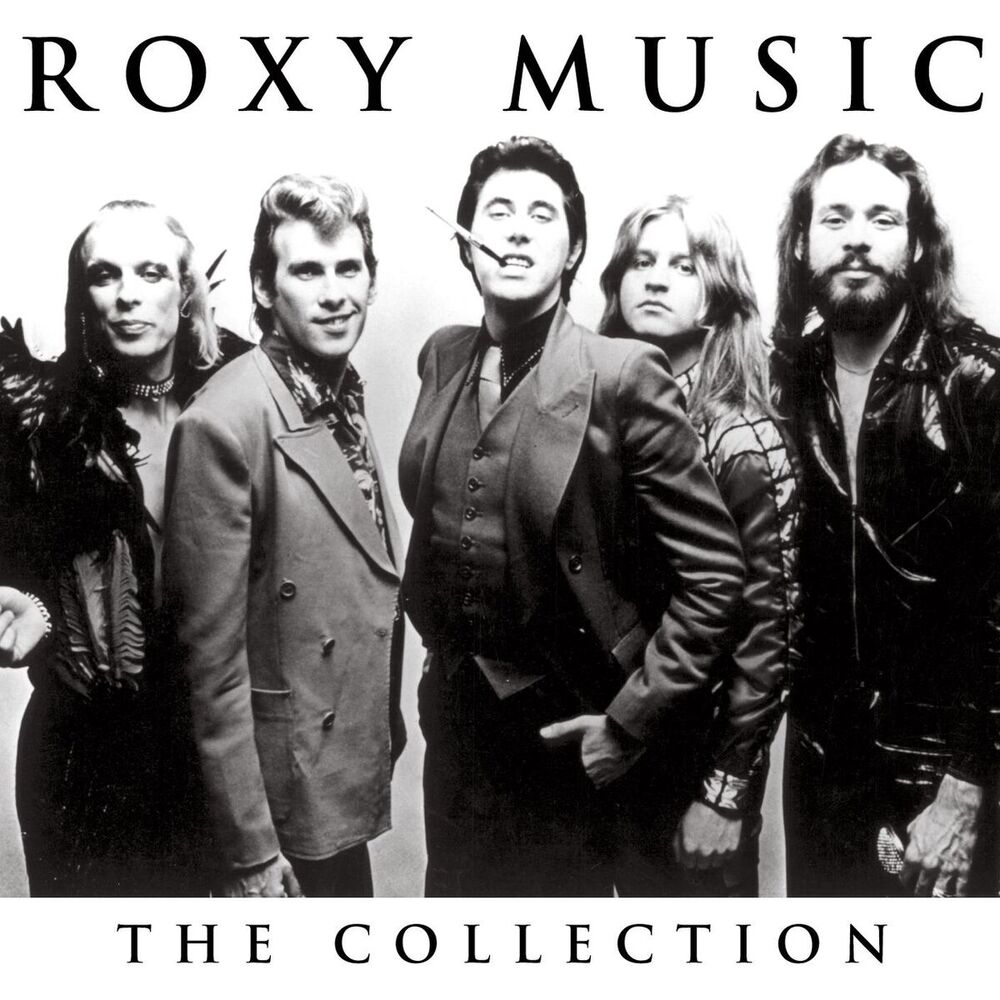
Roxy Music were an English rock band formed in 1970 by Bryan Ferry (lead vocals/keyboards/principal songwriter) and Graham Simpson (bass). By the time the band recorded their first album in early 1972, Ferry and Simpson were joined by Andy Mackay (saxophone/oboe), Phil Manzanera (guitar), Paul Thompson (drums) and Brian Eno (synthesizer). Simpson departed in mid-1972 – from which time the bassist position in the band went on to be unstable – while Eno was replaced by Eddie Jobson (synthesizer/keyboards/violin) in mid-1973. By 1980, the band was reduced to a core trio of Ferry, Mackay and Manzanera, augmented by various backing musicians. Beginning with their first album, Roxy Music became a successful act in Europe and Australia during the 1970s. The band pioneered more musically sophisticated elements of glam rock, significantly influencing early English punk music, and provided a model for many new wave acts while innovating elements of electronic composition. The group also conveyed their distinctive brand of visual and musical sophistication with their focus on glamorous fashions. Roxy Music split in 1976, reformed in 1978, and split again in 1983. Their final studio album was Avalon (1982), which was certified Platinum in the United States, where the band had spent their first ten years as a moderately successful cult band. In 2001, Ferry, Mackay, Manzanera and Thompson reunited for a concert tour and have toured together intermittently ever since, most recently in 2022 to celebrate the 50th anniversary of their first album. Outside the band, Ferry and Eno have had influential solo careers. Ferry has frequently enlisted Roxy Music members as backing musicians during his solo career, and Eno became one of the most significant British record producers of the late 20th century. In 2019, Roxy Music were inducted into the Rock and Roll Hall of Fame.
Style
Roxy Music have been associated with a range of genres including art rock, glam rock, pop rock, progressive rock, art pop, new wave, soft rock, synth-pop and sophisti-pop. The early style and presentation of Roxy Music was influenced by the art school backgrounds of its principal members. Ferry, Mackay and Eno all had studied at prominent UK art colleges during the mid-to-late 1960s, when these institutions were introducing courses that avoided traditional art teaching practice, with its emphasis on painting, and instead focused on more recent developments, most notably pop art, and explored new concepts such as cybernetics. As writer Michael Bracewell notes in his book Roxy: The Band that Invented an Era, Roxy Music was created expressly by Ferry, Mackay and Eno as a means of combining their mutual interests in music, modern art and fashion. Ferry studied at Newcastle University in the 1960s under renowned pop artist and educator Richard Hamilton, and many of Ferry's university friends, classmates and tutors—e.g. Rita Donagh and Tim Head—became well-known artists in their own right. Eno studied at Winchester School of Art and although his iconoclastic style became apparent early and caused some conflict with the college establishment, it also resulted in him meeting important artists and musicians including Cornelius Cardew and Gavin Bryars. His interest in electronic music also resulted in his first meetings with Andy Mackay, who was studying at University of Reading and who had likewise developed a strong interest in avant-garde and electronic music. The three eventually joined forces in London during 1970–71 after meeting through mutual friends and decided to form a rock band. Roxy Music were initially influenced by other artists of the time including the Beatles, the Kinks, the Rolling Stones, the Yardbirds, David Bowie, Elton John, the Animals, Pink Floyd, Deep Purple, King Crimson, Jimi Hendrix, the Velvet Underground and the Who, as well as American rock and roll acts and genres such as Elvis Presley and Motown. Ferry stated that Roxy Music's unique sound came as a result of the diverse and eclectic musical backgrounds of the band's members; "I had lots of musical influences, Phil Manzanera had this Latin heritage, being born in South America. Saxophone and oboe player Andy Mackay was classically trained. Eno with his deep interest in experimental music. They were specialists in their field. Paul Thompson brought a lot, with his very powerful, earthy drumming." Roxy Music were one of the first rock music groups to create and maintain a carefully crafted look and style, which included their stage presentation, music videos, album and single cover designs, and promotional materials such as posters, handbills, cards and badges. They were assisted in this by a group of friends and associates who helped to sculpt the classic Roxy Music 'look', notably fashion designer Antony Price, hair stylist Keith Mainwaring, photographer Karl Stoecker, the group's "PR consultant" Simon Puxley (a former university friend of Mackay) and Ferry's art school classmate Nicholas de Ville. Well-known critic Lester Bangs went so far as to say that Roxy Music represented "the triumph of artifice". Ferry later attributed the band's look to his interest in American music and popular culture icons including Marilyn Monroe, Motown and Stax Records artists. He also stated he wanted to create an alternative image to publicity shots of pop and rock groups at the time which would feature artists "in a dreary street, looking rather sullen. Which was the norm." The band's self-titled debut album, produced by King Crimson's Pete Sinfield, was the first in a series of albums with increasingly sophisticated covers, with art direction by Ferry in collaboration with his friend Nick De Ville. The album artwork imitated the visual style of classic "girlie" and fashion magazines, featuring high-fashion shots of scantily clad models Amanda Lear, Marilyn Cole and …
Legacy and influence
In 2005, Tim de Lisle of The Guardian argued that Roxy Music are the second most influential British band after the Beatles. He wrote, "Somehow, in a landscape dominated by Led Zeppelin at one end and the Osmonds at the other, they managed to reach the Top 10 with a heady mixture of futurism, retro rock'n'roll, camp, funny noises, silly outfits, art techniques, film references and oboe solos. And although their popularity has ebbed and flowed, their influence has been strikingly consistent." In 2019, The Economist also described them as "the best British art-rock band since the Beatles", arguing that "among English rock acts of that time, their spirit of adventure and their impact" was "surpassed only" by David Bowie. Bowie himself cited Roxy Music as one of his favourite British groups and in a 1975 television interview described Bryan Ferry as "spearheading some of the best music to come out of England." Roxy Music's sound and visual style have been described as a significant influence on later genres and subcultures such as electronic music, punk rock, disco, new wave and new romantic. They were a major influence on the next generation of bands such as Duran Duran, Simple Minds, The Human League and ABC, with members declaring their admiration of the band and its influence on their work. They were an influence on the early 1980s British new romantic-movement with bands such as Ultravox, Visage and Spandau Ballet, as well as new wave art rock-bands such as Magazine, Cabaret Voltaire, and the American bands Devo and Talking Heads. Madness are among the artists that have cited Roxy Music as an influence. They paid tribute to Bryan Ferry in the song "4BF" (the title is a reference to the song "2HB", itself a tribute to Humphrey Bogart from the first Roxy Music studio album). Other artists who have cited or been described as influenced by Roxy Music include OMD, Echo & the Bunnymen, Bauhaus, Melvins, Wire, Parquet Courts, Crime, Nile Rodgers, Siouxsie and the Banshees, U2, the Smiths, Radiohead, Scissor Sisters, Imogen Heap, Goldfrapp, Pulp, Sex Pistols, Todd Terje and Franz Ferdinand. In 1997, bassist John Taylor of Duran Duran produced the tribute album Dream Home Heartaches... Remaking/Remodeling Roxy Music. The compilation features Taylor as well as Dave Gahan (Depeche Mode) and Low Pop Suicide, among others. Sex Pistols guitarist Steve Jones named his first band the Strand after the Roxy Music song Do the Strand. Jones has also described Roxy Music's style as a strong influence on the later punk craze of which he would go on to become a part, and cited their first album as one of his all-time favourites. The electronic band Ladytron took their name from the title of a song from Roxy Music's first album. The British band Bananarama took their name, in part, from the Roxy Music song "Pyjamarama".
Cultural legacy and fashion influence
Roxy Music's emphasis on style, glamour, and artifice played a key role in shaping the visual language of 1970s and 1980s pop culture. Frontman Bryan Ferry's suave image and the band's fashion-forward album covers, often featuring models in provocative poses, influenced both the glam rock and New Romantic movements. Fashion designer Antony Price, who worked closely with the band, helped define their iconic look. The band's art-directed aesthetic has been referenced by designers such as Hedi Slimane and Raf Simons, and was an early model of fashion-music collaboration later popularised by artists like Madonna and Lady Gaga.
Tracklist
- Virginia Plain2:58
- Do The Strand4:03
- Street Life3:29
- The Thrill Of It All6:24
- All I Want Is You2:53
- Love Is The Drug4:07
- Out Of The Blue4:46
- Ain't That So5:39
- Dance Away4:20
- Same Old Scene3:57
- The Main Thing3:54
- More Than This4:30
Listeners 0
Nobody has logged it yet. Be the first.