João's Music Archive
Astral Weeks
← Back to the lists

Astral Weeks

Van Morrison
1968-11
Rhino/Warner Records
12 tracks, 1 h 14 min
Special pressing
Olive-Green
Rating
–
Not heard yet
110
–Archive
95Critics
0Listeners
Average score 95Pitchfork 10.010 reviews

Tracklist

  1. Astral Weeks (2015 Remaster)7:03
  2. Beside You (2015 Remaster)5:13
  3. Sweet Thing (2015 Remaster)4:22
  4. Cypress Avenue (2015 Remaster)6:56
  5. The Way Young Lovers Do (2015 Remaster)3:11
  6. Madame George (2015 Remaster)9:41
  7. Ballerina (2015 Remaster)6:59
  8. Slim Slow Slider (2015 Remaster)3:20
  9. Beside You (Take 1)5:57
  10. Madame George (Take 4)8:24
  11. Ballerina (Long Version)8:02
  12. Slim Slow Slider (Long Version)4:53
Listen on

Have you heard it?

Sign in to mark it as listened, rate it and keep notes.

About the artist

Sir George Ivan Morrison, known as "Van the Man", is an acclaimed Irish musician and songwriter. His career spans decades, moving from R&B and pop hits to deeply spiritual, jazz-influenced "Celtic soul" journeys. He is celebrated for his prolific output and significant contributions to music.

About the album

"Astral Weeks" is Van Morrison's second studio album, recorded in New York in 1968. It features a unique blend of folk, blues, jazz, and classical styles, with impressionistic lyrics and a stream-of-consciousness narrative. The album was largely improvised by jazz musicians, a radical shift from his earlier pop sound.

Meanings

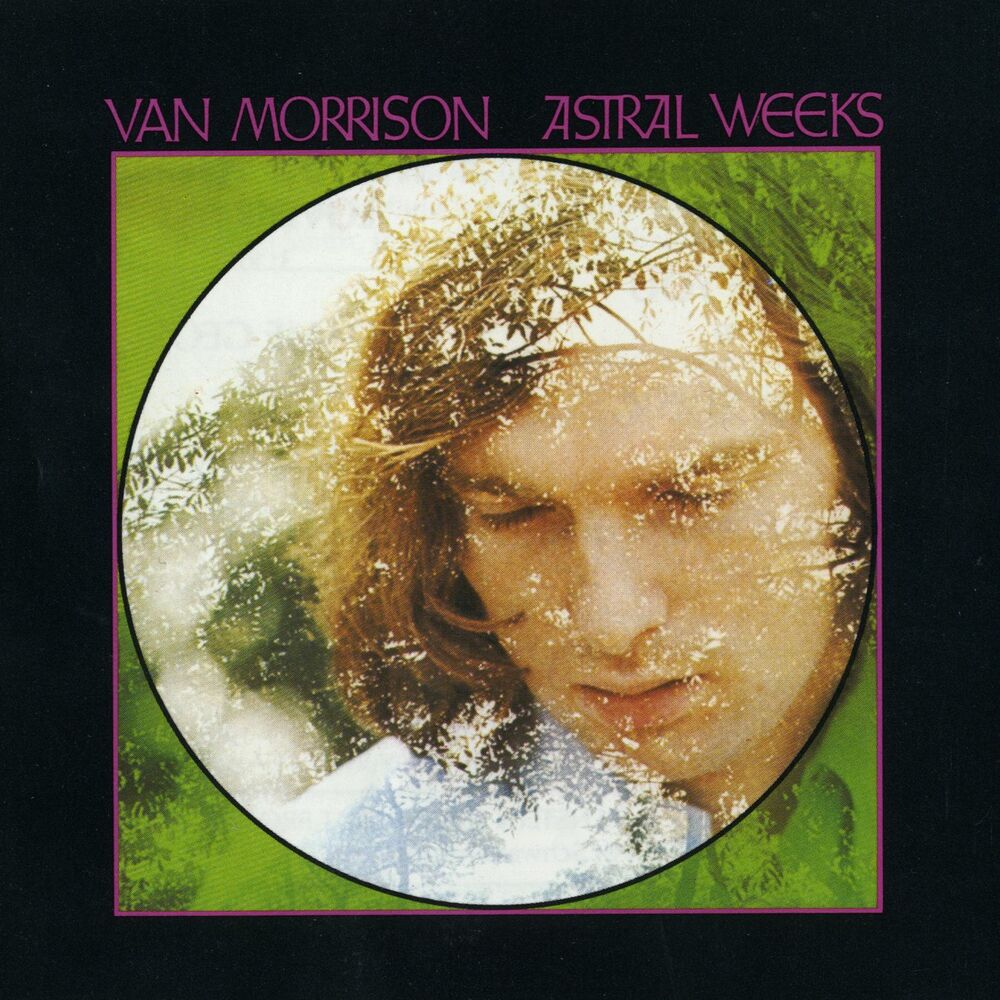
The album's poetic, stream-of-consciousness lyrics evoke emotions and images, often equating earthly love with heaven. It explores themes of nostalgia, drama, and personal mysticism, forming an "intangible narrative of unreachable worlds." The title was inspired by paintings of astral projection, with the cover art symbolising the union of opposites.

Why it's rated so high

Initially a poor seller, "Astral Weeks" gained immense critical acclaim over time, now considered one of rock's greatest and most important records. Critics praise Morrison's singing, the unique arrangements, and the profound songwriting. It has profoundly influenced many musicians and listeners, solidifying Morrison's legend.

Career and historical context

This album followed a difficult period for Morrison, marked by a contract dispute after the death of his previous label owner, Bert Berns. Warner Bros. Records signed him, allowing him to record this departure from his earlier pop hits like "Brown Eyed Girl." It established him as a major artist, paving the way for his acclaimed 1970s output.

Fun facts

  • Morrison was legally bound to Bang Records and unable to record or perform in New York after Bert Berns's death.
  • His then-girlfriend Janet Rigsbee married him, allowing him to stay in the US and escape deportation attempts.
  • Morrison developed the album's acoustic sound performing in Boston coffee houses with an upright bassist and flautist.
  • Producer Lewis Merenstein cried when he first heard Morrison play the song "Astral Weeks."
  • The jazz session musicians were told to play "whatever they felt like playing" without lead sheets.
Written by AI from the album's and artist's Wikipedia articles and the archive's notes. Double-check anything important.

The full story

Astral Weeks is the second studio album by Northern Irish singer-songwriter Van Morrison. It was recorded at Century Sound Studios in New York during September and October 1968 and released in November of the same year by Warner Bros. Records. The album's music blends folk, blues, jazz, and classical styles, a radical departure from Morrison's previous pop hits, such as "Brown Eyed Girl" (1967). The lyrics and cover art portray the symbolism equating earthly love and heaven that would often feature in the singer's subsequent records. His lyrics have been described as impressionistic, hypnotic, and modernist, while the record has been categorized as a song cycle or concept album. Astral Weeks did not originally receive promotion from Morrison's record label and was not an immediate success with consumers or critics. Its standing eventually improved greatly, with praise given to Morrison's singing, arrangements, and songwriting, and the album has been viewed as one of rock music's greatest and most important records (a reputation the singer himself has dismissed). It was placed on numerous widely circulated lists of the best albums of all time and has had an enduring effect on both listeners and musicians. Forty years after the album's release, Morrison performed all eight of its songs live for the first time at two Hollywood Bowl concerts in November 2008; this performance was later released as Astral Weeks Live at the Hollywood Bowl.

Background

At the beginning of 1968, Van Morrison became involved in a contract dispute with Bang Records that kept him away from any recording activity. This occurred after the sudden death of the label's founder Bert Berns. Born with a congenital heart defect, Berns had a fatal heart attack and was discovered dead in a New York hotel room on 30 December 1967. Prior to Berns's death, he and Morrison had experienced some creative difficulties; Berns had been pushing Morrison in a more pop-oriented direction, while Morrison wanted to explore newer musical terrain. Berns's widow, Ilene Berns, held Morrison and this conflict responsible for her husband's death. Years later she would downplay this scenario, but Morrison's then girlfriend Janet (Planet) Rigsbee has since gone on record describing Ilene Berns's subsequent vindictiveness towards Morrison. Following Bert Berns's death, Ilene Berns inherited the contracts of Bang Records. Morrison's annual option on his recording contract was also due less than a week after Berns's funeral. Legally bound to Bang Records, Morrison was not only kept out of the studio, but also found himself unable to find performing work in New York as most clubs refrained from booking him, fearing reprisals. (Bert Berns was notorious for his connections to organized crime and those connections still affected artists like Morrison and Neil Diamond trying to leave Bang Records, even after Berns's death.) Ilene Berns then discovered that her late husband had previously been remiss in filing the appropriate paperwork to keep Morrison (still a British citizen) in New York and contacted Immigration and Naturalization Service in an attempt to have Morrison deported. However, Morrison managed to stay in the U.S. when Janet Rigsbee agreed to marry him. Once married, Morrison and Rigsbee moved to Cambridge, Massachusetts, where he found work performing in local clubs. Morrison began performing with a small electric combo doing blues numbers and songs from Blowin' Your Mind! and from Morrison's Them band days. Two of the musicians soon left but Morrison retained the bassist, Tom Kielbania, a student at the Berklee School of Music. Morrison decided to try an acoustic sound and he and Kielbania began performing shows in coffee houses in the Boston area as an acoustic duo with Morrison playing guitar and Kielbania on upright bass. Before this, Morrison had primarily recorded and performed with electric musicians. The acoustic medium would provide him "greater vocal improvisation and a freer, folkier feel". Later, Kielbania heard jazz-trained flautist John Payne for the first time while sitting in on a jam session. He invited Payne to the club where he played with Morrison, hoping Morrison would invite him to join them. After allowing Payne to sit in on one performance, Morrison extended an invitation, which Payne accepted. The trio of Payne, Kielbania and Morrison continued performing for four months. In the weeks they played at the Catacombs, they began to develop the template for Astral Weeks. It was around this time that Warner Bros. Records approached Morrison, hoping to sign him. Presumably, their interest focused on his prior success with "Brown-Eyed Girl", not on Morrison's current acoustic work. Regardless, their interest allowed Morrison to return to the recording studio. At the time, Warner Bros. had a deal with Inherit Productions, the production arm of Schwaid-Merenstein, which was founded by manager Bob Schwaid (who worked for Warners Publishing) and producer Lewis Merenstein. Merenstein received a call from Warner Bros. to see Morrison in Boston and related how eight or nine producers had gone to hear Morrison, thinking they were going to hear "Brown Eyed Girl" only to find that "it was another person with the same voice". Merenstein first heard Morrison play at Ace Recording studio and recalled that when Morrison played the song "Astral Weeks" for him, "I started crying. It just vibrated in my soul and I knew …

Recording sessions

With his legal matters resolved, Morrison now had the freedom to proceed with recording his Warner Bros. debut album, with the recording sessions taking place at the Century Sound Studios in New York on 25 September, 1 and 15 October 1968. The live tracks for the sessions were performed by Morrison on vocals and acoustic guitar in a separate vocal booth with the other musicians playing together on upright bass, lead acoustic guitar, vibes, flute, and drums. The strings and horns constituted the only instruments added subsequently to the initial recording sessions. Morrison said later "They ruined it. They added strings. I didn't want the strings. And they sent it to me, it was all changed. That's not 'Astral Weeks'." Producer Lewis Merenstein had a background in jazz, and according to Merenstein, Morrison "was not an aficionado of jazz when I met him. R&B and soul, yes; but jazz, no." For the Astral Weeks recording sessions, Merenstein first contacted veteran bassist Richard Davis. Perhaps best known for his work with Eric Dolphy, Davis essentially served as the session leader, and it was through Davis that Merenstein recruited guitarist Jay Berliner, percussionist Warren Smith Jr., and drummer Connie Kay. All of these musicians had strong backgrounds in jazz; Berliner had worked closely with Charles Mingus and Kay was part of the Modern Jazz Quartet. Morrison was still working with Kielbania and Payne but, for these sessions, they were essentially replaced. According to Kielbania, "I got to show all the bass lines to Richard Davis. He embellished a lot of them, but I gave him the feeling." Davis proved, perhaps, to be the most pivotal instrumentalist during these sessions. "If you listen to the album, every tune is led by Richard and everybody followed Richard and Van's voice", says Merenstein. "I knew if I brought Richard in, he would put the bottom on to support what Van wanted to do vocally, or acoustically. Then you get Jay playing those beautiful counter-lines to Van." Davis was not impressed by Morrison, not out of disdain or any preconceived notions, but rather because Morrison's professional comportment generally did not meet Davis's expectations. "No prep, no meeting", recalls Davis. "He was remote from us, 'cause he came in and went into a booth ... And that's where he stayed, isolated in a booth. I don't think he ever introduced himself to us, nor we to him ... And he seemed very shy". Drummer Connie Kay later told Rolling Stone that he approached Morrison and asked "what he wanted me to play, and he said to play whatever I felt like playing. We more or less sat there and jammed." Morrison's impression of the sessions was "The songs came together very well in the studio. Some of the tracks were first takes. [But] the musicians were really together. Those type of guys play what you're gonna do before you do it, that's how good they are." He told Ritchie Yorke that only two tracks recorded during the sessions did not make it to the album. "One was about Jesse James and the other about trains. They were both just basic blues numbers. That's why they didn't fit in with the album."

For the Astral Weeks sessions, apparently they did not employ any lead sheets, or at least none were distributed to the musicians. "What stood out in my mind was the fact that he allowed us to stretch out", recalls Berliner. "We were used to playing to charts, but Van just played us the songs on his guitar and then told us to go ahead and play exactly what we felt." Berliner actually had great appreciation for the freedom given to him and the band; something few, if any, of them were used to. "I played a lot of classical guitar on those sessions and it was very unusual to play classical guitar in that context", says Berliner. The first session, held in the evening on 25 September 1968, produced four recordings that made it to the album. Only three had initially been intended for inclusion: "Cyprus Avenue", "Madame George", and "Beside You". …

Music and lyrics

Astral Weeks has poetic, stream-of-consciousness lyrics that evoke emotions and images instead of coherent, intellectual ideas and narratives. According to Guy Raz from NPR, it is a folk rock album, "perhaps the seminal album of the folk-rock genre", while the Rock and Roll Hall of Fame online biography of Morrison said its music is trance-like folk jazz set to "impressionistic, free-flowing" lyrics. AllMusic's William Ruhlmann, on the other hand, viewed the music as an amalgam of folk, blues, jazz, and classical music that is unlike rock. Although usually described as a song cycle rather than a concept album, the songs do, when considered in their totality, seem to link together as one long song, forming an "intangible narrative of unreachable worlds" and delivered with what one writer calls "a masterpiece of virtuoso singing". According to Charlie Gillett, the album has meditative songs that combine themes of nostalgia, drama, and Morrison's personal mysticism and are performed in a blue-eyed soul style. The album embraces a form of symbolism that would eventually become a staple of Morrison's songs, equating earthly love and heaven, or as close as a living being can approach it. Morrison and Davis's upright bass can be interpreted as the earth opposing Kay's percussion and the string arrangement representing heaven and with Berliner's lead acoustic guitar residing on a plane in between. Van Morrison told Ritchie Yorke, one of his biographers, he wrote both of the songs "Madame George" and "Cyprus Avenue" in stream of consciousness: "['Madame George'] just came right out ... The song is just a stream of consciousness thing, as is 'Cyprus Avenue' ...I didn't even think about what I was writing." In an interview with Paste in 2009, Morrison said the songs on Astral Weeks were written "prior to 1968 over a period of five years". In an NPR review he comments: "It's not about me. It's totally fictional. It's put together of composites, of conversations I heard—you know, things I saw in movies, newspapers, books, whatever. It comes out as stories. That's it. There's no more."

Packaging

According to Steve Turner, one of Van Morrison's biographers, Irish painter Cecil McCartney influenced the titling of Astral Weeks. Morrison related how "A friend of mine had drawings in his flat of astral projection. I was at his house when I was working on a song which began, 'If I venture down the slipstream' and that's why I called it 'Astral Weeks'." "It was a painting", McCartney corrects. "There were several paintings in the studio at the time. Van looked at the painting and it suggested astral travelling to him." The album cover photograph of Van Morrison was taken by Joel Brodsky, best known for his "Young Lions" photoshoot with Jim Morrison. The squared circle in the cover photo is described as portraying "the mystic symbol of the union of opposites; the sacred marriage of heaven and earth".

Reception

Astral Weeks sold poorly when it was first released in 1968. The album became a somewhat popular cult import in the United States, while in the United Kingdom it was largely overlooked by critics. The British magazine Beat Instrumental published a negative review of the record, finding Morrison's songs monotonous and unoriginal. In NME, Nick Logan regarded it as a pale imitation of the guitarist José Feliciano's 1968 Feliciano! album, which was one of the year's best-selling records. With the exception of Astral Weeks' title track, Logan felt the compositions were indistinguishable and "suffer from being stuck in the same groove throughout". In the American magazine Stereo Review, editor Peter Reilly panned it as a "free-verse mind bender of an album", plagued by nonsensical lyrics and incoherent singing from Morrison, especially on "Madame George". In December 1968, a week after the album's release, the Detroit Free Press published a positive review by Wilson Lindsey, who wrote that the album was "a rare and unexpected piece of recording art" that "explodes with joy or sorrow". Noting Morrison's abrupt shift away from his previous pop work, Lindsey said, "Forget everything that he has written in the past. Astral Weeks is different". In 1969, Greil Marcus reviewed the album positively in Rolling Stone, saying that Morrison's lyrics were thoughtful and deeply intellectual, "in terms of the myths and metaphors that exist within the world of rock and roll". He believed both the music and lyrics captured the spirit of Bob Dylan's 1967 album John Wesley Harding, while calling Astral Weeks a "unique and timeless" record. Rolling Stone later named it the album of the year. Melody Maker also called it one of the year's best records, featuring Morrison's "small harsh voice" backed by an attractive musical combo that "verges on genius" during "Madame George". When his third album Moondance was released in 1970, Warner Bros. ran full-page advertisements remarking on the unavailability of Astral Weeks in record stores, calling it a "damn shame" that it "ended up as what you might call a critically acclaimed but obscure album ... If you want it and can't find it, yell at the store's record buyer. Loud, because you're the customer and you're always right. Undo the veils of potential obscurity."

Legacy and influence

Astral Weeks' critical standing improved greatly over time. It became viewed as one of rock's greatest records and a culturally significant work. Many factors afforded the record its strong reputation in rock criticism: its back story as a commercial underachiever and highly personal work for Morrison, its distinction from the rest of his discography, his artistic autonomy, the music's song cycle composition, the enigmatic lyrics and quality of seriousness and originality as perceived by mature rock audiences and writers. According to Rob Sheffield, it was Morrison's "most beautiful and intense album", the foundation for his "legend" and a work that continues to captivate musicians and listeners. Lester Bangs said its anguished feeling resonated with him on first listen, calling it "the rock record with the most significance in my life so far ... a record about people stunned by life, completely overwhelmed, stalled in their skins, their ages and selves, paralyzed by the enormity of what in one moment of vision they can comprehend." Irish musician Glen Hansard said it made him think about life with a greater depth of feeling, "with a greater sense of fear and horror and desire than you ever imagined." Colin Larkin credited Morrison for fully realizing his ambition to "create without pop's constraints" on Astral Weeks, while AllMusic's William Ruhlmann said its reputation among critics was justified because "unlike any record before or since", it "encompasses the passion and tenderness that have always mixed in the best postwar popular music". Astral Weeks influenced future releases of other musicians such as Bono and Bruce Springsteen. Mike Ragogna with HuffPost wrote that Astral Weeks influenced Springsteen's 1973 first album Greetings from Asbury Park, N.J. and two of the songs from his second. Steven Van Zandt, from Springsteen's E Street Band, has said: "Astral Weeks was like a religion to us." According to writer Steve Turner, the album also became popular with travelers of the hippie trail, "from Europe through to Kathmandu and there were even reports of vans painted in psychedelic colours being renamed 'the Van Morrison'." In his 1975 book, Ritchie Yorke wrote "It was almost as if Van Morrison, elusive at any time, had deliberately created an album of music which would indefinitely withstand the vulgarity of music industry image-making. Later they might say that other albums were reminiscent of Astral Weeks, but they could never claim that Astral Weeks was like anything else." According to Greil Marcus, Martin Scorsese said that the first fifteen minutes of his 1976 film Taxi Driver was based on Astral Weeks.

The critical recognition and renown of Astral Weeks came to overshadow Morrison's subsequent work, as well as Morrison himself. According to biographer Johnny Rogan, his recording career was "all too often crystallized in a single moment. Like the Beach Boys' Pet Sounds, Astral Weeks was perceived as a one-off whose critical standing allowed little discussion for other equally fascinating musical forays that followed." Morrison felt annoyed by the retrospective acclaim and claims about the record's significance. In agreement with Logan's original criticism, he later said he should have "changed the arrangements because the arrangements are too samey ... four or five other songs should have had a change of mood." According to Robert Christgau in 1974, "Astral Weeks is still considered unlistenable [sic] obscure by many astute observers". Merenstein, on the other hand, still admires the album: "To this day it gives me pain to hear it. Pain is the wrong word—I'm so moved by it." In 2001, the album was certified gold by the Recording Industry Association of America, having shipped 500,000 copies in the US. Music historian Andrew Ford said the album's commercial performance, much like its musical aesthetic, is similar to classical music: "Neither instant nor evanescent: Astral Weeks will sell as many copies this year …

From the Wikipedia article Astral Weeks, available under CC BY-SA 4.0.

Tracklist

  1. Astral Weeks (2015 Remaster)7:03
  2. Beside You (2015 Remaster)5:13
  3. Sweet Thing (2015 Remaster)4:22
  4. Cypress Avenue (2015 Remaster)6:56
  5. The Way Young Lovers Do (2015 Remaster)3:11
  6. Madame George (2015 Remaster)9:41
  7. Ballerina (2015 Remaster)6:59
  8. Slim Slow Slider (2015 Remaster)3:20
  9. Beside You (Take 1)5:57
  10. Madame George (Take 4)8:24
  11. Ballerina (Long Version)8:02
  12. Slim Slow Slider (Long Version)4:53

Listeners 0

Nobody has logged it yet. Be the first.

Log a listen