João's Music Archive
American Idiot
← Back to the lists

American Idiot

Green Day
2004-09-20
Reprise
3 tracks, 17:13
Special pressing
Red & Black Splatter, 20th Anniversary
Rating
–
Not heard yet
110
–Archive
78Critics
0Listeners
Average score 78Metacritic 79Pitchfork 7.210 reviews

Tracklist

  1. Holiday/Blvd. of Broken Dreams (Demo)8:23
  2. Favorite Son2:06
  3. Minority (Live at Irving Plaza, New York, NY, 9/21/04)6:44
Listen on

Have you heard it?

Sign in to mark it as listened, rate it and keep notes.

About the artist

Green Day is an American rock band formed in California in 1987, credited with reigniting mainstream interest in punk rock. Known for their energetic sound, they have sold roughly 75 million records worldwide and won five Grammy Awards.

About the album

American Idiot is Green Day's seventh studio album, a 2004 rock opera that returned to their punk rock sound. Produced by Rob Cavallo, it was recorded in California over 10 months, costing $650,000.

Meanings

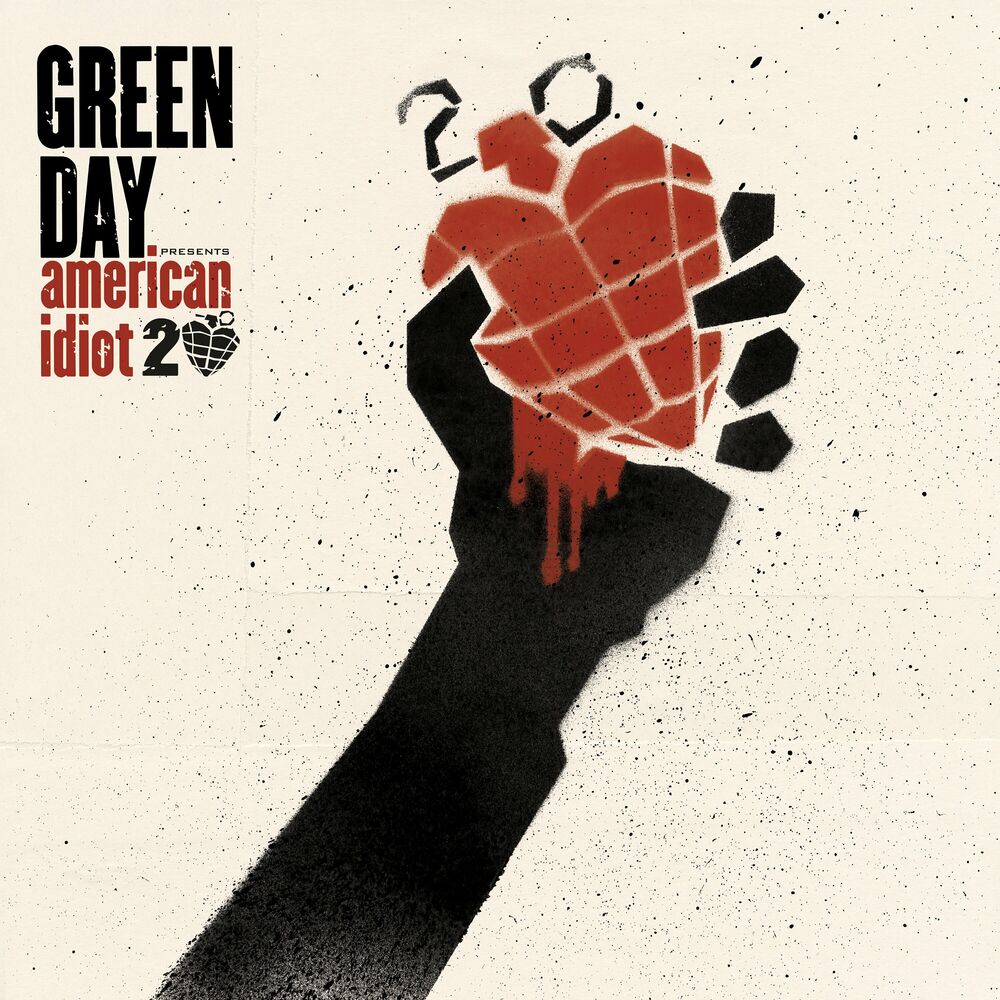
This concept album, a "punk rock opera," follows Jesus of Suburbia, an adolescent anti-hero. It expresses a generation's disillusionment, inspired by 9/11 and the Iraq War. Its artwork, a heart-shaped hand grenade, symbolises its political content.

Why it's rated so high

American Idiot was a critical and commercial success, winning a Grammy for Best Rock Album and selling over 23 million copies worldwide. Critics praised its musical muscle, politically charged narrative, and ambition, with Rolling Stone calling it a masterpiece. It is the best-selling rock album of the 21st century in the UK.

Career and historical context

After overcoming internal issues and a stolen album, American Idiot marked a revitalised Green Day. It became their first US number one album, inspiring a Broadway musical and a documentary. The band also adopted a theatrical red-and-black uniform image.

Fun facts

  • The album was created after the master tapes for their planned album, Cigarettes and Valentines, were stolen.
  • Billie Joe Armstrong spent weeks alone in New York City to clear his head and develop new song ideas.
  • The band recorded the songs in the exact order they appear on the album, a first for them.
  • Drummer Tré Cool used timpani, glockenspiel, and hammer bells on the record.
  • The album was not sold in Walmart due to its explicit content upon release.
Written by AI from the album's and artist's Wikipedia articles and the archive's notes. Double-check anything important.

The full story

American Idiot is the seventh studio album by the American rock band Green Day, released on September 21, 2004, by Reprise Records. The album was produced by Rob Cavallo in collaboration with the group. Recording sessions for American Idiot took place at Studio 880 in Oakland and Ocean Way Recording in Hollywood, both in California, between 2003 and 2004. A concept album, dubbed a "punk rock opera" by the band members, American Idiot follows the story of Jesus of Suburbia, a lower-middle-class American adolescent anti-hero. The album expresses the disillusionment and dissent of a generation that came of age in a period shaped by tumultuous events such as 9/11 and the Iraq War. Following the disappointing sales of their previous album Warning (2000), the band took a break and then began what they had planned to be their next album, Cigarettes and Valentines. However, recording was cut short when the master tapes were stolen; following this, the band made the decision to start their next album from scratch. The result was a more societally critical, politically charged record that returned to the band's punk rock sound following the more folk and power pop-inspired Warning. Additionally, the band underwent an "image change", wearing red-and-black uniforms onstage, to add more theatrical presence to performances and press events. The album charted in 27 countries, reaching number one on the Billboard 200, a first for the group. It has sold over 23 million copies worldwide, making it the second-best-selling album for the band (behind their 1994 major-label debut, Dookie) and one of the best-selling albums of the decade and all time. It is also the best selling rock album of the 21st century in the United Kingdom. It was certified 6× Platinum by the Recording Industry Association of America (RIAA) in 2013. The album spawned five successful singles: the title track, "Holiday", "Wake Me Up When September Ends", "Jesus of Suburbia", and the Grammy Award for Record of the Year-winner "Boulevard of Broken Dreams". American Idiot was a critical and commercial success upon release. It was nominated for Album of the Year and won the award for Best Rock Album at the 2005 Grammy Awards. It was also nominated for Best Album at the Europe Music Awards and the Billboard Music Awards, winning the former. Its success inspired a Broadway musical, a documentary, and an unmade feature film adaptation. Rolling Stone placed it at 225 on their 2012 list of the "500 Greatest Albums of All Time", and it was 248 on the 2020 update of the list.

Background

Green Day was one of the most popular rock acts of the 1990s. However, their 2000 album Warning was a commercial disappointment despite largely positive reviews. In early 2002, they embarked on the Pop Disaster Tour, headlining with Blink-182. The tour created momentum for the band, who were earning a reputation as "elder statesmen" of the pop punk scene, which consisted of bands like Good Charlotte, Sum 41, and New Found Glory. Things had come to a point regarding unresolved personal issues between the three band members. The band was argumentative and miserable, according to bassist Mike Dirnt, and needed to "shift directions". In addition, the band released a greatest hits album, International Superhits!, which they felt was "an invitation to midlife crisis". Lead singer and guitarist, Billie Joe Armstrong, called Dirnt and asked him, "Do you wanna do [the band] anymore?" He felt insecure, having become "fascinated and horrified" by his reckless lifestyle, and his marriage was in jeopardy. Dirnt and Tré Cool viewed Armstrong as controlling, while Armstrong himself feared to show his bandmates new songs. Beginning in January 2003, the group had weekly personal discussions, which resulted in a revitalized feeling among the musicians. They settled on more musical input from Cool and Dirnt, with "more respect and less criticism". Green Day had spent much of 2002 recording new material at Studio 880 in Oakland, California for an album titled Cigarettes and Valentines, creating "polka songs, filthy versions of Christmas tunes, [and] salsa numbers" for the project, hoping to establish something new within their music. After completing 20 songs, the demo master tapes were stolen that November. In 2016, Armstrong and Dirnt said that they eventually recovered the material and were using it for ideas. After the theft, the band consulted longtime producer Rob Cavallo. Cavallo told them to ask themselves if the missing tracks represented their best work. Armstrong said that they "couldn't honestly look at ourselves and say, 'That was the best thing we've ever done.' So we decided to move on and do something completely new." They agreed and spent the next three months writing new material.

Recording and production

The members of Green Day individually crafted their own ambitious 30-second songs. Armstrong recalled, "It started getting more serious as we tried to outdo one another. We kept connecting these little half-minute bits until we had something." This musical suite became "Homecoming", and the band wrote another suite, "Jesus of Suburbia". It changed the development of the album, and the band began viewing songs as more than their format—as chapters, movements, or potentially a feature film or novel. Soon afterward, Armstrong penned the title track, which explicitly addresses sociopolitical issues. The group then decided that they would steer the development of the album toward what they dubbed a "punk rock opera". Prior to recording, Green Day rented rehearsal space in Oakland, once again at Studio 880. Armstrong invited Cavallo to attend the sessions and help guide their writing processes. Cavallo encouraged the idea of a concept album, recalling a conversation the two had a decade prior, in which Armstrong expressed his desire for their career to have a "Beatles-like arc to their creativity". During the sessions at Studio 880, Green Day spent their days writing material and would stay up late, drinking and discussing music. The band set up a pirate radio station from which it would broadcast jam sessions, along with occasional prank calls. The band demoed the album sufficiently so that it would be completely written and sequenced before they went to record. Hoping to clear his head and develop new ideas for songs, Armstrong traveled to New York City alone for a few weeks, renting a small loft in the East Village of Manhattan. He spent much of this time taking long walks and participating in jam sessions in the basement of Hi-Fi, a bar in Manhattan. He began socializing with the songwriters Ryan Adams and Jesse Malin. Many songs from the album were written based on his time in Manhattan, including "Boulevard of Broken Dreams" and "Are We the Waiting". While there, he also formulated much of the album's storyline, about people "going away and getting the hell out, while at the same time fighting their own inner demons." With demos completed, Green Day relocated to Los Angeles. They first recorded at Ocean Way Recording, then moved to Capitol Studios to complete the album. Cool brought multiple drum kits, including over 75 snares. Drum tracks were recorded on two-inch tape to produce a compressed sound and were transferred to Pro Tools to be digitally mixed with the other instruments. All drum tracks were produced at Ocean Way Studio B, picked for its high ceiling and acoustic tiling, which produced better sound. The songs were recorded in order as they appear on the track listing, a first for Green Day. Each song was recorded in its entirety before proceeding to the next. They reversed the order in which they recorded guitars and bass (recording the guitars first), as they heard that was how the Beatles recorded songs. Armstrong said that at points he expressed fear at the amount of work before him, likening it to climbing a mountain. The band took a relaxed approach to recording. For five months, they stayed at a Hollywood hotel during the recording sessions, where they would often play loud music late at night, prompting complaints. The band admitted to partying during the LA sessions; Armstrong had to schedule vocal recording sessions around his frequent hangovers. Armstrong described the environment: "For the first time, we separated from our pasts, from how we were supposed to behave as Green Day. For the first time, we fully accepted the fact that we're rock stars." American Idiot took 10 months to complete, at a cost of $650,000. By the end of the process, Armstrong felt "delirious" regarding the album: "I feel like I'm on the cusp of something with this. [...] I really feel [...] like we're really peaking right now."

Composition

Music

Speaking on the album's musical content, Armstrong remarked, "For us, American Idiot is about taking those classic rock and roll elements, kicking out the rules, putting more ambition in, and making it current." Part of recording the album was attempting to expand their familiar punk rock sound by experimenting with different styles such as new wave, Latin, and polka music. The band listened to various rock operas, including the Who's Tommy (1969) and David Bowie's The Rise and Fall of Ziggy Stardust and the Spiders from Mars (1972). Armstrong was particularly inspired by the Who's Quadrophenia, finding more in common with its "power chord mod-pop aesthetic" than other concept records, such as The Wall by Pink Floyd. In addition, they listened to the cast recordings of Broadway musicals West Side Story, The Rocky Horror Show, Grease, and Jesus Christ Superstar, and they let contemporary music influence them, including the rappers Eminem and Kanye West, as well as the rock band Linkin Park. Armstrong considered rock music a "conservative" business with regard to the rigidity in which a band must release a single, create a music video, or head out on tour. He felt groups like the hip hop duo OutKast were "kicking rock's ass, because there's so much ambition." The band used more loud guitar sounds for the record. Armstrong said "We were like, 'Let's just go balls-out on the guitar sound—plug in the Les Pauls and Marshalls and let it rip'". Armstrong added tracks of acoustic guitar-playing throughout the record to augment his electric guitar rhythms and Cool's drumming. For most of the record, Dirnt used an Ampeg SVT bass amplifier, recording with his signature Fender Precision Bass. For the album, he and Cavallo strived for a "solid, big, thunderous" bass sound as opposed to one centered on countermelodies. Dirnt ran his bass guitar through an Evil Twin direct box, a staple of his recording methods since Dookie. Cool also employs unorthodox instruments for punk music—timpani, glockenspiel, and hammer bells—which he received out of a promotional deal with Ludwig. These instruments are especially evident on "Homecoming" and on "Wake Me Up When September Ends", the latter of which includes an African bead gourd that was welded to a remote hi-hat pedal for future live performances. "Extraordinary Girl", originally titled "Radio Baghdad", features tablas in the intro performed by Cool. For "Whatsername", Cool recorded drums in a room designed to record guitars to achieve a dry sound. With all these techniques and influences considered, critics have called the album pop-punk and alternative rock, but primarily the aforementioned punk rock.

Themes

American Idiot was inspired by contemporary American political events, particularly 9/11, the Iraq War, and the presidency of George W. Bush. There are only two overtly political songs on the album ("American Idiot" and "Holiday"), but the album "draws a causal connection between contemporary American social dysfunction [...] and the Bush ascendancy." While the content is clearly of the times, Armstrong hoped it would remain timeless and become more an overarching statement on confusion. Armstrong expressed dismay at the then-upcoming presidential election. He felt confused by the country's culture war, noting the particular division among the general public on the Iraq War. Summing up his feelings in an interview at the time, he said, "This war that's going on in Iraq [is] basically to build a pipeline and put up a fucking Wal-Mart." Armstrong felt a duty to keep his sons away from violent images, including video games and news coverage of the war in Iraq and the 9/11 attacks. Armstrong noted divisions between America's "television culture" (which he said only cared about cable news) versus the world's view of America, which could be considered as careless warmongers. Dirnt felt similarly, especially so after viewing the 2004 documentary Fahrenheit 9/11. "You don't have to …

Artwork

After finishing the music for the album, the band decided that the artwork needed to reflect the themes on the record, likening the change of image to a political campaign. Armstrong recalled, "We wanted to be firing on all cylinders. Everything from the aesthetic to the music to the look. Just everything." Green Day drew inspiration from Chinese communist propaganda art the band saw in art galleries on Melrose Avenue and recruited artist Chris Bilheimer, who had designed the art for the previous records Nimrod and International Superhits! to create the cover. The band aimed for the cover to be "at once uniform and powerful". The album's artwork—"a Posada-stark print of a heart-shaped hand grenade gripped in a blood-soaked fist"—is representative of its political content. After listening to the new music on his computer, Bilheimer took note of the lyric "And she's holding on my heart like a hand grenade" from "She's a Rebel". Influenced by artist Saul Bass's poster for the 1955 drama film The Man with the Golden Arm, Bilheimer created an upstretched arm holding a red heart-shaped grenade. Although he felt that red is the "most overused color in graphic design", he felt that the "immediate" qualities of the color deemed it appropriate for use on the cover. He explained, "I'm sure there's psychological theories of it being the same color of blood and therefore has the powers of life and death... And as a designer I always feel it's kind of a cop-out, so I never used it before. But there was no way you couldn't use it on this cover."

Critical reception

American Idiot received largely positive reviews from contemporary music critics. At Metacritic, which assigns a normalized rating out of 100 to reviews from mainstream publications, the album received an average score of 79, based on 26 reviews. According to AllMusic, it earned Green Day "easily the best reviewed album of their career". The website's editor Stephen Thomas Erlewine praised the album as either "a collection of great songs" or as a whole, writing that, "in its musical muscle and sweeping, politically charged narrative, it's something of a masterpiece". Pitchfork deemed it "ambitious" and successful in getting across its message, while "keep[ing] its mood and method deliberately, tenaciously, and angrily on point". NME characterized it as "an onslaught of varied and marvellously good tunes presented in an unexpectedly inventive way." Q called the album "a powerful work, noble in both intent and execution." The New York Times commended Green Day for trumping "any pretension with melody and sheer fervor". Chicago Sun-Times critic Jim DeRogatis wrote that the band had successfully "hit upon an actual 'adult' style of pop punk", while USA Today's Edna Gundersen wrote that they had steered away from the "cartoonish" qualities of their previous work in favor of more mature, politically oriented themes. Entertainment Weekly said that despite being based on a musical theater concept "that periodically makes no sense", Green Day "makes the journey entertaining enough". It described some of the songs as forgettable, though, arguing the album focuses more on lyrics than music. Rolling Stone said the album could have been, and was, a mess, but that the "individual tunes are tough and punchy enough to work on their own". The Guardian also called American Idiot a mess—"but a vivid, splashy, even courageous mess". Slant Magazine described it as a "pompous, overwrought", but nonetheless "glorious concept album". Uncut was more critical and wrote in a mixed review that although the album was heavily politically focused, "slam-dancing is still possible". In a negative review, Robert Christgau of The Village Voice called the album a "dud" and asserted that Armstrong's lyrics eschew "sociopolitical content" for "the emotional travails of two clueless punks—one passive, one aggressive, both projections of the auteur", adding that "there's no economics, no race, hardly any compassion." Ian Winwood of Kerrang! called it a "modern day masterpiece". Josh Tyrangiel of Time said, "For an album that bemoans the state of the union, it is irresistibly buoyant."

Accolades

In 2005, American Idiot won a Grammy Award for Best Rock Album and was nominated in six other categories, including Album of the Year. The album helped Green Day win seven of the eight awards it was nominated for at the 2005 MTV Video Music Awards; the "Boulevard of Broken Dreams" video won six of those awards. A year later, "Boulevard of Broken Dreams" won a Grammy Award for Record of the Year. In 2009, Kerrang! named American Idiot the best album of the decade, NME ranked it number 60 in a similar list, and Rolling Stone ranked it 22nd. Rolling Stone also listed "Boulevard of Broken Dreams" and "American Idiot" among the 100 best songs of the 2000s, at number 65, and #47 respectively. In 2005, the album was ranked number 420 in Rock Hard magazine's book of The 500 Greatest Rock & Metal Albums of All Time. In 2012, the album was ranked number 225 on Rolling Stone's list of the 500 Greatest Albums of All Time.

International awards and nominations

Grammy Awards and nominations

Release and commercial performance

American Idiot was released on September 21, 2004. It became Green Day's first number-one album in the United States, selling 267,000 copies in its first week of release, their biggest opening sales week. The album became 2005's fourth-highest seller, moving over 3.4 million units. American Idiot remained in the top 10 of the Billboard 200 upwards of a year following its release, staying on the chart for 101 weeks. The album also debuted at number one in the United Kingdom, selling 89,385 copies in the first week. The album has received certification awards in many territories; among them being certified six times platinum status in the United States and Australia, and diamond in Canada. As of August 2024, American Idiot has sold 23 million units worldwide. In 2025, the Official Charts Company labeled American Idiot as the most successful rock album of the 21st century in the United Kingdom. The album spawned five singles: "American Idiot", "Boulevard of Broken Dreams", "Holiday", "Wake Me Up When September Ends", and "Jesus of Suburbia". The title track was released to active rock and alternative radio stations preceding the album on August 6, 2004. Two weeks later, it became the band's first song to place on the Billboard Hot 100, where it peaked at number 61. Internationally, it peaked much higher, reaching number three in the United Kingdom, and debuting at number one in Canada. The song was released at a time before Billboard began accounting for internet sales in its chart positions; after "Boulevard of Broken Dreams" was released as the second single on November 29, it would peak at number two on the Hot 100. "Holiday" and "Wake Me Up When September Ends" would follow as the third and fourth singles on March 14 and June 13, 2005, respectively, the former peaking at number nineteen and latter peaking at number six on the Hot 100. "Jesus of Suburbia" was released on November 14, 2005, as the final single; the band played the entire nine-minute composition for the longest performance to that point on Top of the Pops in the week preceding the single. It did not perform as well on the charts as the preceding four songs. Samuel Bayer directed music videos for all five of the album's singles. In 2005, commenting on the success American Idiot brought the band, he stated, "The Billie Joe that I work with now is not the same guy that walked onto the 'American Idiot' set a year ago. Now, he's a rock star. They were famous. They had done big stuff. But it's transcended that. But he hasn't changed. And they haven't changed. They're three friends who love one another." Courtney Love also commented on the success of the band, stating "Billie Joe looks absolutely beautiful. You know how when people get super A-list, their face gets prettier? I think it's perception. It's something that happens in your subconscious". At the time of American Idiot's release, the album was not sold in Walmart due to its explicit content. A 20th anniversary deluxe edition of American Idiot was released on October 25, 2024, featuring 15 unreleased demos, 15 live tracks recorded at Irving Plaza, 9 other unreleased live recordings and 14 songs previously available only as B-sides and bonus tracks.

Legacy

John Colapinto of Rolling Stone summarized its immediate impact in a 2005 story:

American Idiot [...] gives voice to the disenfranchised suburban underclass of Americans who feel wholly unrepresented by the current leadership of oilmen and Ivy Leaguers, and who are too smart to accept the "reality" presented by news media who sell the government's line of fear and warmongering. Jon Pareles of The New York Times deemed it "both a harbinger and a beneficiary of the Bush administration's plummeting approval, selling steadily through 2005 as the response to Hurricane Katrina and the protracted war in Iraq turned much of the country against the government." "Wake Me Up When September Ends" became symbolic during various events such as the aftermath of Hurricane Katrina; one online blogger paired the song with television coverage of the disaster, creating a viral video. Ian Winwood of Kerrang! said that the album pushed rock music back into the mainstream. American Idiot was considered a career comeback for Green Day, and their unexpected maturation "stunned the music industry". In 2020 Rolling Stone placed the album at 248 on their updated list of the "500 Greatest Albums of All Time".

From the Wikipedia article American Idiot, available under CC BY-SA 4.0.

Tracklist

  1. Holiday/Blvd. of Broken Dreams (Demo)8:23
  2. Favorite Son2:06
  3. Minority (Live at Irving Plaza, New York, NY, 9/21/04)6:44

Listeners 0

Nobody has logged it yet. Be the first.

Log a listen