João's Music Archive
Marquee Moon
← Back to the lists

Marquee Moon

Television
February 8, 1977
Elektra Records
8 tracks, 45:35
Special pressing
Ultra Clear
Rating
–
Not heard yet
110
–Archive
100Critics
0Listeners
Average score 100AOTY 1003 reviews

Tracklist

  1. See No Evil3:52
  2. Venus3:49
  3. Friction4:43
  4. Marquee Moon10:38
  5. Elevation5:05
  6. Guiding Light5:32
  7. Prove It5:00
  8. Torn Curtain6:56
Listen on

Have you heard it?

Sign in to mark it as listened, rate it and keep notes.

About the artist

Television

About the album

Marquee Moon

Meanings

The album evokes themes of adolescence, discovery, and transcendence, using urban, pastoral, and nocturnal imagery, often referencing Lower Manhattan. Tom Verlaine's lyrics, influenced by Bohemian and French poetry, feature puns and double entendres, creating an impressionistic quality. The title "Marquee Moon" itself suggests a night sky viewed through the city's neon glare, highlighting sensory experience.

Why it's rated so high

Released to widespread critical acclaim, "Marquee Moon" was hailed as "something entirely original, a new dawn in rock music". Critics praised its innovative guitar work and sophisticated dynamics, with some calling it an "instant classic" and an "inspired work of pure genius". It consistently features on lists of the greatest albums and is considered a foundational record for alternative rock, influencing many subsequent bands.

Career and historical context

As an early fixture of the CBGB scene, Television had become a leading act in New York, helping to persuade the club manager to feature more unconventional groups. After turning down several labels and producers, they signed with Elektra, with Tom Verlaine insisting on co-producing. The album's unexpected commercial success in the UK, contrasting with poor US sales, contributed to the band's eventual disbandment.

Fun facts

  • Tom Verlaine took his stage name from the French poet Paul Verlaine.
  • The band rehearsed four to six hours a day, six to seven days a week, before recording the album.
  • The ten-minute title track, "Marquee Moon", was recorded in a single take, which the drummer initially thought was a rehearsal.
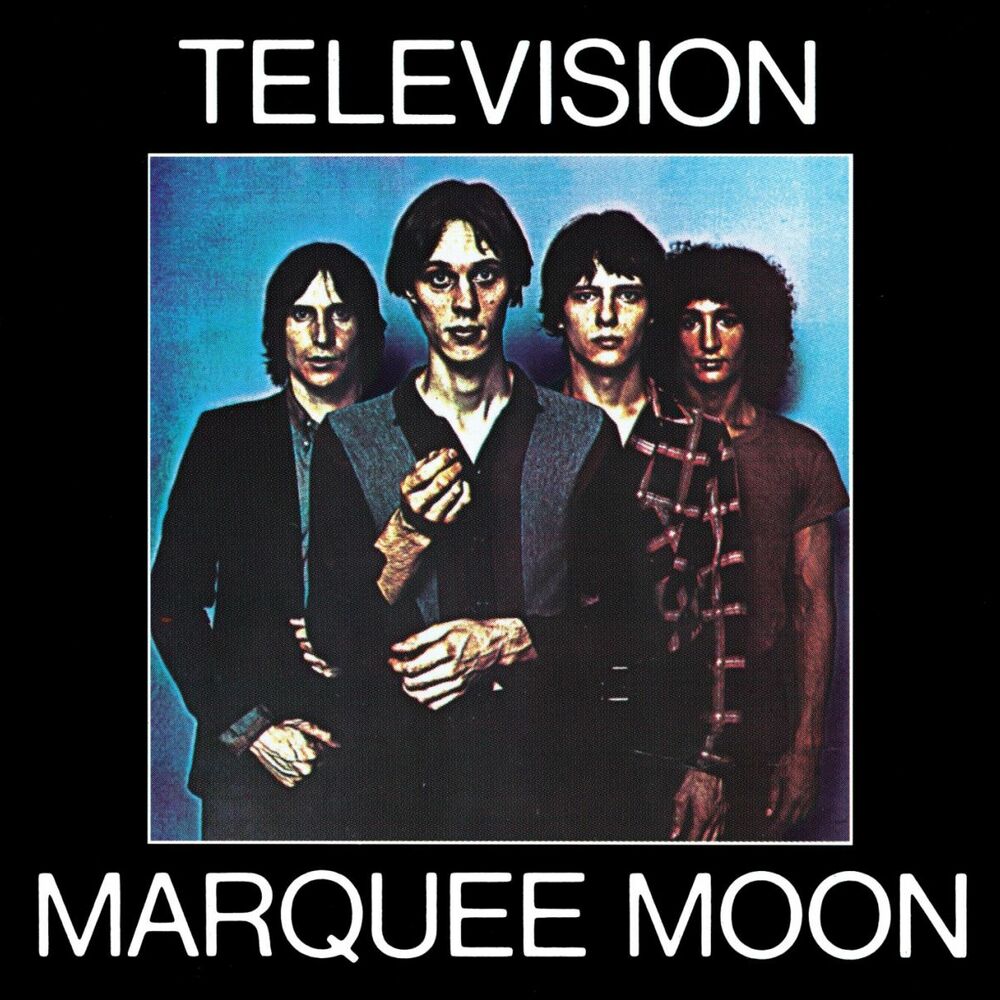
  • The album's iconic cover photo was shot by Robert Mapplethorpe, but Richard Lloyd altered the colours for the final version.
  • Television turned down Brian Eno as a producer because Tom Verlaine found his sound "very cold and brittle".
Written by AI from the album's and artist's Wikipedia articles and the archive's notes. Double-check anything important.

The full story

Marquee Moon is the debut album by the American rock band Television, released on February 8, 1977, by Elektra Records. In the years leading up to the album, Television had become a prominent act in the New York music scene and generated interest from a number of record labels, eventually signing a record deal with Elektra. The group rehearsed extensively in preparation for Marquee Moon before recording it at A & R Recording in November 1976. It was produced by the band's frontman Tom Verlaine and sound engineer Andy Johns. For Marquee Moon, Verlaine and fellow guitarist Richard Lloyd abandoned contemporary punk rock's power chords in favor of rock and jazz-inspired interplay, melodic lines, and counter-melodies. The resulting music is largely hook-driven with complex instrumental parts (particularly on longer tracks such as "Marquee Moon"), while evoking themes of adolescence, discovery, and transcendence through imagery in urban, pastoral, and nocturnal modes, including references to the geography of Lower Manhattan. Influenced by Bohemian and French poetry, Verlaine's lyrics also feature puns and double entendres intended to give the songs an impressionistic quality in describing his perception of an experience. Released to widespread acclaim, Marquee Moon was hailed by critics as an original musical development in rock music. The critical recognition helped the album achieve unexpected commercial success in the United Kingdom, despite poor sales in the United States. Among the most acclaimed music releases in history, it consistently features in professionally curated lists of top albums, including various iterations of Rolling Stone magazine's "The 500 Greatest Albums of All Time", on which it ranked 128th in the 2003 list and 107th in the 2020 list. Marquee Moon also proved to be a foundational record of alternative rock, as Television's innovative instrumentation on the album strongly influenced subsequent post-punk, new wave, and indie rock movements of the 1980s and rock guitar playing in general.

Background

By the mid-1970s, Television had become a leading act in the New York music scene. They first developed a following from their residency at the Lower Manhattan club CBGB, where they helped persuade club manager Hilly Kristal to feature more unconventional musical groups. The band had received interest from labels by late 1974, but chose to wait for an appropriate record deal. They turned down a number of major labels, including Island Records, for whom they had recorded demos with producer Brian Eno. Eno produced demos of "Prove It", "Friction", "Venus", and "Marquee Moon" in December 1974, but Television frontman Tom Verlaine did not approve of Eno's sound: "He recorded us very cold and brittle, no resonance. We're oriented towards really strong guitar music ... sort of expressionistic." After founding bassist Richard Hell left in 1975, Television enlisted Fred Smith, whom they found more reliable and rhythmically adept. The band quickly developed a rapport and a musical style that reflected their individual influences: Smith and guitarist Richard Lloyd had a rock and roll background, drummer Billy Ficca was a jazz enthusiast, and Verlaine's tastes varied from the rock group 13th Floor Elevators to jazz saxophonist Albert Ayler. That same year, Television shared a residency at CBGB with singer and poet Patti Smith, who had recommended the band to Arista Records president Clive Davis. Although he had seen them perform, Davis was hesitant to sign them at first. He was persuaded by Smith's then boyfriend Allen Lanier to let them record demos, which Verlaine said resulted in "a much warmer sound than Eno got". However, Verlaine still wanted to find a label that would allow him to produce Television's debut album himself, even though he had little recording experience.

Recording and production

In August 1976, Television signed a recording deal with Elektra Records, which promised Verlaine he could produce the band's first album with the condition that he would be assisted by a well-known recording engineer. Verlaine, who did not want to be guided in the studio by a famous producer, enlisted engineer Andy Johns based on his work for the Rolling Stones' 1973 album Goats Head Soup. Lloyd was also impressed by Johns, who he said had produced "some of the great guitar sounds in rock". Johns was credited as the co-producer on Marquee Moon. Elektra did not query Television's studio budget for the recording. Television recorded Marquee Moon in November 1976 at A & R Recording in New York City. In preparation for the album's recording, Television had rehearsed for four to six hours a day and six to seven days a week. Lloyd said they were "both really roughshod musicians on one hand and desperadoes on the other, with the will to become good". During preparations, the band rejected most of the material they had written over the course of three years. Once they were in the studio, they recorded two new songs for the album—"Guiding Light" and "Torn Curtain"—and older songs such as "Friction", "Venus", and the title track, which had become a standard at their live shows. Verlaine said that, because he had predetermined the structure of the album, only those eight songs and a few others were attempted during the recording sessions. For most of Marquee Moon, Johns recorded Television as they performed live in the studio. A few songs were recorded in one take, including the title track, which Ficca assumed was a rehearsal. Johns suggested that the group record another take of the song, but Verlaine told him to "forget it". Verlaine and Lloyd's guitars were recorded to the left and right channels respectively, and the final recordings were left unadorned by effects or compression.

Music

Marquee Moon is described by Rolling Stone as a post-punk album and by Jason Heller from The A.V. Club as "elegantly jagged" art punk, while Ira Robbins of Trouser Press classified it as new wave. It is also described as punk rock by Rolling Stone and Tyler Wilcox of Pitchfork. Robert Christgau regarded it more broadly as a rock record because of Television's formal and technical abilities as musicians: "It wasn't punk. Its intensity wasn't manic; it didn't come in spurts." As Tom Moon observed, Verlaine's singing avoids the "cursory punk snarl" while the band's music demonstrates "extended instrumental sections, impenetrable moods" (as on "Torn Curtain") and historical rock influences like Chuck Berry and the early music of the Rolling Stones (as on "Friction").Both sides of the album begin with three shorter, hook-driven songs, which Stylus Magazine's Evan Chakroff said veer between progressive rock and post-punk styles. The title track and "Torn Curtain" are longer and more jam-oriented. "As peculiar as it sounds, I've always thought that we were a pop band", Verlaine later told Select. "You know, I always thought Marquee Moon was a bunch of cool singles. And then I'd realise, Christ, [the title track] is ten minutes long. With two guitar solos." According to Stephen Thomas Erlewine, the album is "comprised entirely of tense garage rockers that spiral into heady intellectual territory, which is achieved through the group's long, interweaving instrumental sections". Verlaine and Lloyd's guitar parts on the album are interplayed around the rhythm section's drum hits and basslines. Their dual playing draws on 1960s rock and avant-garde jazz styles, abandoning the power chords of contemporary punk rock in favor of melodic lines and counter-melodies. According to Ryan Reed of Paste Magazine, their guitar work "bordered on the psychedelic." Verlaine's guitar establishes the song's rhythmic phrase, against which Lloyd is heard playing dissonant melodies. Lloyd had learned to notate his solos by the time they recorded Marquee Moon, allowing him to develop his solo for a song from introduction to variation and resolution. Some songs have the two guitarists trading rhythmic and melodic lines several times while producing tension. "There weren't many bands where the two guitars played rhythm and melody back and forth, like a jigsaw puzzle", Lloyd said. Most of the solos on Marquee Moon follow a pattern wherein Verlaine runs up a major scale but regresses slightly after each step. On "See No Evil", he solos through a full octave before playing a blues-influenced riff, and on the title track, he is heard playing in the Mixolydian mode and lowering the seventh by half a step. "Friction" opens with Lloyd playing octaves before Verlaine's ringing harmonics and series of descending scales.

Lyrics

Verlaine's lyrics on Marquee Moon combine urban and pastoral imagery. Although it is not a concept album, many of its songs make geographical references to Lower Manhattan. According to Bryan Waterman, author of the 33⅓ book on the record, it celebrates stern adolescence in the urban pastoral mode. Its urban nocturne theme is derived from poetic works about Bohemian decadence. According to Spin, the album is about urban mythology; Verlaine brought "a sentimental romanticism to the Bowery, making legends out of the mundane". The lyrics also incorporate maritime imagery, including the paradoxical "nice little boat made out of ocean" in "See No Evil", the waterfront setting in "Elevation", sea metaphors in "Guiding Light", and references to docks, caves, and waves in "Prove It". Although Verlaine was against drug use after Television formed, he once had a short-lived phase using psychedelic drugs, to which he makes reference in similes on songs like "Venus". Its vignette-like lyrics follow an ostensibly drug-induced, revelatory experience: "You know it's all like some new kind of drug / my senses are sharp and my hands are like gloves / Broadway …

Title and packaging

Marquee Moon's title was interpreted by Waterman as an encapsulation of the urban and bucolic imagery in the songs, "suggesting the kind of night sky only visible above the neon glare of city-dwellers' assault on the dark". In his mind, the marquee rather than the moon in the concept sets the record's mood. He added, "sensory experience will be of prime importance to these eight songs. What can we see by the light of a marquee moon? What will be revealed on Marquee Moon's grooves?" The album's packaging was designed by art director Tony Lane. The front cover photo was shot by photographer Robert Mapplethorpe, who had previously shot the cover for Patti Smith's 1975 album Horses. His photo situated Verlaine a step in front of the rest of the band, who were captured in a tensed, serious pose. Verlaine held his left hand across his body and extended his slightly clenched right hand forward. When Mapplethorpe gave Television the contact prints, Lloyd took the band's favorite shot to a print shop in Times Square and asked for color photocopies for the group members to mull over. Although the first few copies were oddly colored, Lloyd asked the copy worker to print more "while turning the knobs with his eyes closed". He likened the process to Andy Warhol's screen prints. After he showed it to the group, they chose the altered copy over Mapplethorpe's original photo, which Fred Smith subsequently had framed and kept for himself.

Marketing and sales

Marquee Moon was released on February 8, 1977, in the United States and on March 4 in the United Kingdom, where it was an unexpected success and reached number 28 on the albums chart. The record's two singles—the title track and "Prove It"—both charted on the UK Top 30. Its commercial success in the UK was partly fueled by Nick Kent's rave two-page review of the album for NME. While holidaying in London after Marquee Moon's completion, Verlaine saw that Television had been put on NME's front cover and notified Elektra's press department, who encouraged the band to capitalize on their success there with a tour of the UK. However, the label had already organized for the band to perform on Peter Gabriel's American tour as a supporting act. Television played small theatres and some larger club venues, and received more mainstream exposure, but were not well received by Gabriel's middle-American audiences, and found the tour unnerving. In May, Television embarked on a highly successful theatre tour of the UK with Blondie as their supporting act. They were enthusiastically received by audiences there, and Verlaine said it was refreshing to perform at large theatres after playing smaller clubs for four years. He nonetheless felt that Blondie did not suit their show because they were too different artistically, even though both groups had emerged from the music scene at CBGB. Blondie guitarist Chris Stein said that Television were "so competitive" and unaccommodating on the tour, and that they did not treat it like a joint effort. He recalled one show where "all our equipment was shoved up at the [Glasgow] Apollo and we had like three feet of room so that [Verlaine] could stand still in this vast space." By the time of Television's return to the US, Elektra had given up on promoting Marquee Moon, which they dismissed as a commercial failure. Marquee Moon sold fewer than 80,000 copies in the US and failed to chart on the Billboard 200. The group was dispirited by their inability to meet commercial expectations, which contributed to their disbandment in 1978.

Critical reception and legacy

Marquee Moon was met with critical acclaim. According to music journalist and biographer Tony Fletcher, critics in 1977 found the album difficult to categorize and instead hailed it as "something entirely original, a new dawn in rock music". Verlaine later said of the overwhelmingly positive response from critics:

There was a certain magic happening, an inexplicable certainty of something, like the momentum of a freight train. That's not egoism but, if you cast a spell, you don't get flummoxed by the results of your spell."

In NME, Kent wrote that Television have proven to be ambitious and skilled enough to achieve "new dimensions of sonic overdrive" with an "inspired work of pure genius, a record finely in tune and sublimely arranged with a whole new slant on dynamics". He deemed the album's music vigorous, sophisticated, and innovative at a time when rock is wholly conservative. For Sounds, Vivien Goldman hailed Marquee Moon as "an obvious, unabashed, instant classic", while Peter Gammond of Hi-Fi News & Record Review called it one of the most exciting releases in music, highlighted by Verlaine's steely, Gábor Szabó-like guitar and authentic rock music. In Audio, Jon Tiven wrote that although the vocals and production could be more amplified, Verlaine's lyrics and guitar "manage to viscerally and intellectually grab the listener". Joan Downs from Time felt the band's sound is distinguished more by the bold playing of Lloyd, who she said has the potential to become a major figure in rock guitar. Christgau, in The Village Voice, claimed Verlaine's "demotic-philosophical" lyrics could sustain the album alone, as could the guitar playing, which he said is as penetrating and expressive as Eric Clapton or Jerry Garcia "but totally unlike either". Tom Hull, his colleague at the Voice, recalls being in Christgau's apartment when he received an advance copy and witnessing his "instantly rapturous" reaction to the album. "Without being a guitar fetishist", Hull said he personally found it "as distinctive and powerful as any of its iconic peers—things like Axis and Layla and Led Zep's first album". Some reviewers expressed reservations. In Rolling Stone, Ken Tucker said the lyrics generally amount to non sequiturs, meaningless phrases, and pretentious aphorisms, but are ultimately secondary to the music. Although he found Verlaine's solos potentially formless and boring, Tucker credited him for structuring his songs around chilling riffs and "a new commercial impulse that gives his music its catchy, if slashing, hook". High Fidelity felt the music's "scaring amalgam of rich, brightly colored textures" compensates for Verlaine's nearly unintelligible lyrics. Noel Coppage from Stereo Review was more critical of the singing and songwriting, likening Marquee Moon to a stale version of Bruce Springsteen. Nigel Hunter wrote in Gramophone that Verlaine's lyrics and guitar playing are vague and that listeners will need a "strong commitment to this type of music to get much out of it". At the end of 1977, Marquee Moon was voted the third-best album of the year in the Pazz & Jop, an annual poll of American critics nationwide, published in The Village Voice. Christgau, the poll's creator and supervisor, ranked it number one on his own year-end list, and a few years later, he named it the 11th best album of the 1970s. Sounds also named it the year's best album, while NME ranked it fifth on its year-end list.

Reappraisal

Since the album's original release, Marquee Moon has been cited by rock critics as one of the greatest records of the American punk rock movement, with Mark Weingarten of Entertainment Weekly calling it the masterpiece of the 1970s New York punk rock scene. According to English writer Clinton Heylin, Marquee Moon marked the end of the New York scene's peak period, while Spin said it was the CBGB era's "best and most enduring record" and ranked it as the sixth-greatest album of all time in its April 1989 issue. Q included it …
From the Wikipedia article Marquee Moon, available under CC BY-SA 4.0.

Tracklist

  1. See No Evil3:52
  2. Venus3:49
  3. Friction4:43
  4. Marquee Moon10:38
  5. Elevation5:05
  6. Guiding Light5:32
  7. Prove It5:00
  8. Torn Curtain6:56

Listeners 0

Nobody has logged it yet. Be the first.

Log a listen