João's Music Archive
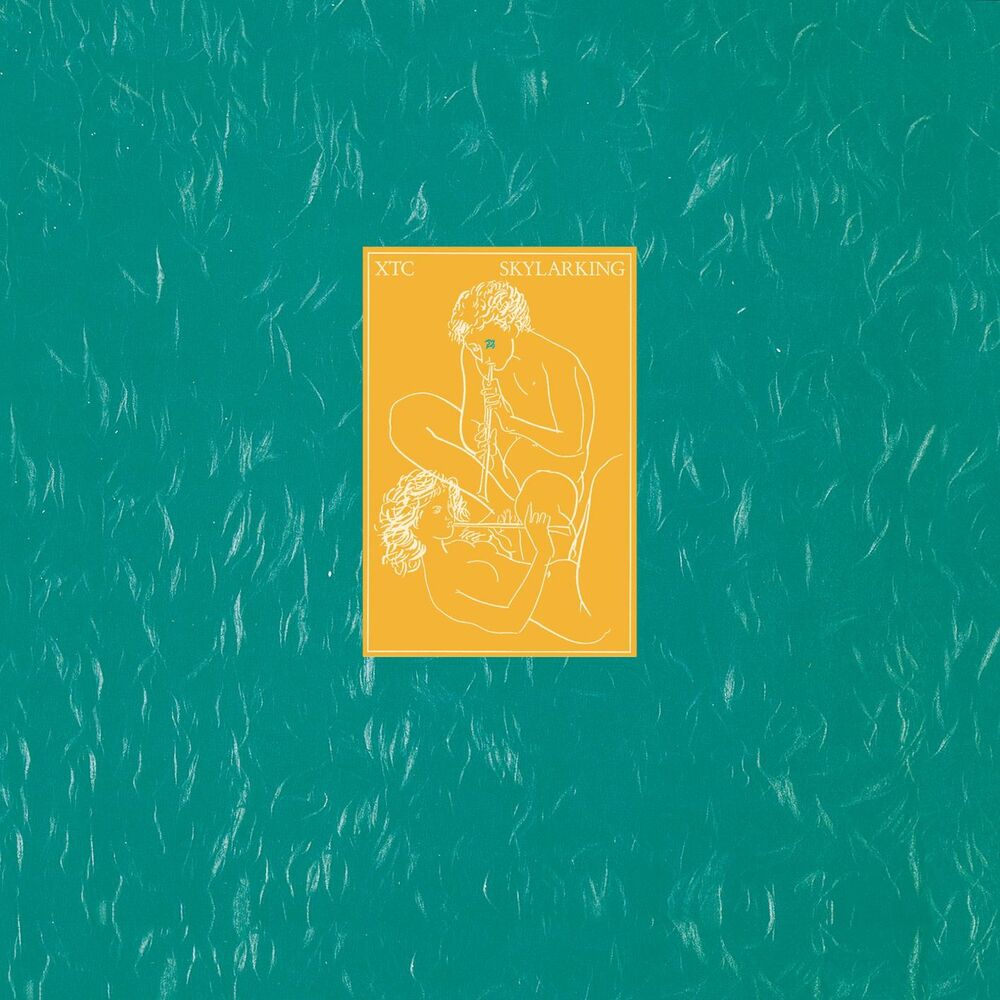
Skylarking
Rating
–
Not heard yet
110
–Archive
93Critics
0Listeners
Average score 93AOTY 953 reviews

Tracklist

  1. Summer's Cauldron (Remastered 2001)3:19
  2. Grass (Remastered 2001)3:05
  3. The Meeting Place (Remastered 2001)3:14
  4. That's Really Super, Supergirl (Remastered 2001)3:21
  5. Ballet For A Rainy Day (Remastered 2001)2:50
  6. 1000 Umbrellas (Remastered 2001)3:44
  7. Season Cycle (Remastered 2001)3:21
  8. Earn Enough For Us (Remastered 2001)2:54
  9. Big Day (Remastered 2001)3:32
  10. Another Satellite (Remastered 2001)4:15
  11. Mermaid Smiled (Remastered 2001)2:26
  12. The Man Who Sailed Around His Soul (Remastered 2001)3:24
  13. Dying (Remastered 2001)2:31
  14. Sacrificial Bonfire (Remastered 2001)3:49
  15. Dear God (Remastered 2001)3:39
Listen on

Have you heard it?

Sign in to mark it as listened, rate it and keep notes.

About the artist

XTC were an English rock band from Swindon, fronted by songwriters Andy Partridge and Colin Moulding. They evolved from punk and new wave, developing a sound ranging from angular guitar riffs to elaborately arranged pop, and are recognised for their influence on Britpop and power pop. Despite sporadic commercial success, they attracted a considerable cult following.

About the album

Skylarking is XTC's ninth studio album, heavily influenced by 1960s psychedelia, featuring a lush, gently psychedelic sound with orchestral arrangements. Produced by Todd Rundgren, the recording sessions were marked by frequent disagreements and tension, particularly between Rundgren and Andy Partridge. Despite this, it became one of their best-known and finest albums.

Meanings

Skylarking is a loose concept album exploring cycles like a day, a year, or a life, with lyrical themes of love, marriage, and religion, including the controversial 'Dear God'. The title refers to both a bird and the Royal Navy term for 'fooling around', evoking a playfully sexual hot summer.

Why it's rated so high

Skylarking is widely regarded as XTC's finest work and a masterpiece, praised for its sublime results and perfect pop craftsmanship. It was called 'hugely influential' in the US and listed among the greatest albums of the 1980s by Rolling Stone and Pitchfork. Critics noted its mature lyrics and finessed orchestral swirl.

Career and historical context

Following a period of declining sales and a shift to studio-only work, Virgin Records threatened to drop XTC if their next album didn't sell well. The band, having explored 1960s psychedelia with their Dukes of Stratosphear project, sought to create a more progressive record. This album marked a pivotal moment in their career, leading to their highest-charting US single.

Fun facts

  • Virgin Records reportedly concluded XTC sounded 'too English' and insisted on an American producer.
  • Todd Rundgren offered to produce the entire album for a lump sum of $150,000.
  • Partridge and Rundgren's arguments were so intense, Partridge once said he wanted to 'cleave my head in half with an axe'.
  • The band would play The Munsters theme whenever Rundgren arrived, as a joke about his resemblance to Herman Munster.
  • A wiring error during mastering caused the original album to have a 'thin' sound, corrected in later remasters.
Written by AI from the album's and artist's Wikipedia articles and the archive's notes. Double-check anything important.

The full story

Skylarking is the ninth studio album by the English rock band XTC, released 27 October 1986 on Virgin Records. Produced by American musician Todd Rundgren, it is a loose concept album about a nonspecific cycle, such as a day, a year, the seasons, or a life. The title refers to a type of bird (skylark), as well as the Royal Navy term "skylarking", which means "fooling around". It became one of XTC's best-known albums and is often regarded as one of their finest albums. Like XTC's Dukes of Stratosphear side project, Skylarking was heavily influenced by the psychedelic music of the 1960s. Most of the album was recorded at Rundgren's Utopia Sound Studio in Woodstock, New York, with some work undertaken in San Francisco at the Tubes' studio; Tubes drummer Prairie Prince also drummed on the album. Rundgren played a large role in the album's sound design and drum programming, providing the band with orchestral arrangements and an assortment of equipment. However, the sessions were fraught with tension, especially between Rundgren and bandleader Andy Partridge, and numerous disagreements arose over drum patterns, song selections, and other details. Upon release, Skylarking was met with indifference in the UK, peaking in the album charts at number 90, while both of its lead singles "Grass" (backed with "Dear God") and "The Meeting Place" peaked at number 100. In the US, "Dear God" became a college radio hit, causing US distributor Geffen Records to recall and repress Skylarking with the track included, and propelling the album to number 70. Following the song's growth in popularity, it was the subject of controversy in the country, inspiring many angry phone calls to radio stations and at least one bomb threat. Skylarking has been included on "100 greatest albums of the 1980s" lists by Rolling Stone (in 1989) and Pitchfork (in 2002). In 2010, it was discovered that a wiring error made during the mastering process caused the album to have a "thin" sound, and the problem was corrected on subsequent remasters. In 2016, an expanded reissue was released by Partridge's Ape House label with demos, outtakes, and new stereo and 5.1 surround sound mixes by Steven Wilson. In 2024, Wilson mixed the album in Dolby Atmos for an updated reissue.

Background

In the 1980s, XTC underwent a gradual transition in their sound and image. Their albums became increasingly complex, and after frontman and songwriter Andy Partridge suffered a panic attack before a concert, the band ceased touring. In 1984, they released The Big Express, which sold poorly and attracted little critical notice. According to Partridge, the group's psychedelic influences had begun "leaking out" through the use of Mellotron, phasing, and "backwards so-and-so". They paid further homage to these influences on the mini-album 25 O'Clock, released on April Fools' Day 1985 and credited to "the Dukes of Stratosphear". 25 O'Clock outsold The Big Express in the UK even before "the Dukes" were revealed to be XTC. Partridge remembered: "That was a bit upsetting to think that people preferred these pretend personalities to our own personalities ... they're trying to tell us something." During a routine meeting in early 1986, Virgin Records executives threatened to drop the band from the label if their next album failed to sell more than 70,000 units. One reason why the group was not selling enough records, the label reportedly concluded, was that they sounded "too English". As was the case for their other records, the label refused to allow the band to act as their own producers, even though Partridge was already established as a producer of other artists. Given a list of American producers to choose from by the label, the only name they recognized was Todd Rundgren. To Virgin, he appeared to be ideal for XTC, as he had a reputation for completing troubled projects on schedule and under budget, such as Badfinger's Straight Up (1971) and Meat Loaf's Bat Out of Hell (1977). XTC was a rare example, he said, "where I was both familiar with the band's previous work and unnecessary as a 'songcraft' agitator." He had also attended an XTC show in Chicago during their 1980 Black Sea tour. Guitarist Dave Gregory was a fan of Rundgren's music, particularly since hearing his 1978 album Hermit of Mink Hollow, though his bandmates were not as familiar with Rundgren. For bassist Colin Moulding, "I'd seen him on stage, on TV, with his Utopia stuff, and I thought it was way over the bastard top ... Then Dave started playing me one or two things. I heard 'I Saw the Light,' and I thought, 'Christ, that's a really good song!' I didn't know he had that side to him." All that Partridge knew about Rundgren was his solo album Something/Anything? (1972). Gregory urged the group to work with him: "I reminded Andy that Todd had produced one of his favourite New York Dolls records [New York Dolls, 1973]. In the absence of any better alternatives, he agreed." Once contacted, Rundgren offered to handle the album's entire recording for a lump sum of $150,000—including tape costs, studio hire, lodging, and his production fee—which the band accepted.

Concept and style

In January 1986, Partridge and Moulding mailed Rundgren a collection of more than 20 demo tapes they had stockpiled in advance of the album. Rundgren convinced the band that the songs they had written could form a concept album as a way to bridge what he described as "Colin's 'pastoral' tunes and subject matter and Andy's 'pop anthems' and sly poetry." He also suggested a provisional title, Day Passes, and said that the album ... could be about a day, a year, or a lifetime. ... there were songs that represented significant milestones along the way: birth, young love, family, labor, illness, death, sprinkled with moments of wonderment. Using this framework, I came up with a sequence of songs and a justification for their placement and brought it to the band. The chosen songs were of a gentler atmosphere and relations were drawn between tempo, key, and subject matter. Partridge thought well of the selections, but was annoyed that the tracks and running order were determined so early on in the process, remarking that "you hadn't spoken to the bloke for three minutes, and he'd already been hacking and throwing your work in the bin". Further working titles included All Day Life, Rite, Rite Things, Leftover Rites, Summer Good, and Pink Things Sing. They settled on Skylarking, referring to a type of bird (skylark) and the Royal Navy slang term "skylarking", which means "fooling around". Partridge commented that the album espoused the feeling of "a playfully sexual hot summer ... It's just about summer and being out in the open and discovering sex in a stumbly, teenage way." Similarly to 25 O'Clock, the music was heavily influenced by the 1960s psychedelic era. However, Skylarking contrasted significantly from earlier XTC efforts. As music critic A.D. Amorosi wrote, "More lyrically mature, lush and gently psychedelic than anything before in their catalog, Skylarking borrowed the hilly, holy feel of Mummer, as well as the ringing Beatles-ish vibe from ... The Big Express, but with a softly sweeping gracefulness and a finessed orchestral swirl." It has been variously described as an album of art rock, art pop, new wave, psychedelic pop, psychedelic rock, neo-psychedelia, post-punk, and chamber pop. The album's lyrical themes include love, marriage and religion. The track "Dear God" has been called an "atheist anthem." Partridge surmised that the lyrical content of his songs had gradually become more worldly as result of his "coming off—rather abruptly—of 13 years of valium addiction" in 1981. He had also recently become a father and began listening to numerous Beach Boys albums, before which he had only been familiar with their singles. Moulding had recently listened to Pink Floyd's 1967 debut The Piper at the Gates of Dawn for the first time and was influenced by Syd Barrett's "free-form" songwriting style. The final tracklist featured five songs written by Moulding, which was much more than usual for the band; Partridge reflected that "I was already feeling sort of pushed out by Virgin. ... But, honestly, that was the best batch of material that Colin had ever offered up for". According to Moulding, "Todd chose the songs. I know for a fact that, had he not, my contribution in number would have been decidedly less. I was just grateful that the band had an independent arbiter."

Production

Session difficulties

Collaborating with Rundgren proved to be difficult, especially for Partridge, and numerous disagreements arose over drum patterns, song selections, and other details. Partridge characterised Rundgren's musical preferences as "completely contradictory to mine": for instance, suggesting a fuzz guitar overdub where Rundgren wanted a mandolin. Moulding acknowledged that, until then, it was typical for Partridge to act as an "executive producer" for XTC's albums, frequently undermining the authority of the actual credited producer. According to Rundgren, "Essentially, it was kind of preordained by me what the record was going to be, which was something they never endured before. I think [Colin and Dave] trusted me, but Andy never did." Gregory intimated that "Todd and Andy were like chalk and cheese as personalities, they didn't hit it off from the start. Things just went from bad to worse." Partridge was satisfied with Rundgren's arrangements but frustrated with the producer's "patronizing" and "so bloody sarcastic" tone and remarks during the sessions. As he remembered, "[Todd would] ask how you were going to do the vocals and you would stand in front of the mic and do one run through to clear your throat and he'd say, 'That was crap. I'll come down and I'll record me singing it and you can have me in your headphones to sing along to.'." Another line he recalled was: "You can dick around with [the track] for a few hours your way if you like. I'm going up to my house. When you find out it doesn't work your way, give me a call and we'll record it my way." He believed that the producer's role was "to keep us in line", however, and that Rundgren was successful in that respect. On the extent of the altercations, Rundgren said "there was the moment Andy said he wanted to cleave my head in half with an axe. But there was never anything physical. Just verbal abuse." Gregory stated that he was "quite happy to be directed by Todd instead of Andy." He thought that Rundgren "deliberately belittle[d Andy] if he thought he was getting too big for his boots. Andy rose to the bait every time." Moulding did not have "any problem with Todd", instead feeling that Partridge was "so unhappy and taking it out, a little bit, on me."

Rundgren had listened to The Big Express and concluded that the group had "lost track" of their studio indulgences. His style of embracing technical mistakes without allowing the members a chance to fix them was also a source of contention. Partridge often stated that this was because Rundgren wanted to spend as little money as possible, while Moulding said: "I don't believe that was the only reason. You could tell, that was his working method. He liked to do it because he's of the opinion—and I think I am as well—that the best take is where the band is running through while the engineer's trying to get a sound! That's the take that should be recorded, you know." At times when Partridge wanted to improve some part of the music, Rundgren would respond saying "Andy, it won't necessarily be 'better' – it'll just be different." The band routinely played the theme from The Munsters whenever they could see Rundgren arriving to the studio. According to Partridge, Rundgren never realized this was a joke at his resemblance to Herman Munster. In spite of all the difficulties, Rundgren said the album "ultimately ... sounds like we were having a great time doing it. And at times we were having a good time." Based on the stories written about Skylarking, Partridge became known for being difficult to work with. Initially, he considered that he may have been wrong in his perception of the sessions. He later consulted with other artists who worked with Rundgren, only to find that "nine times out of ten they’ll say, 'Fuckin' hell, he was like that with us!'" After an argument about a bass part, Moulding stipulated that Partridge be banned from the studio while he finished recording his parts. In 1997, Moulding …

Release

Lead single "Grass", backed with "Dear God" in the UK, was released in August 1986. Skylarking followed on 27 October 1986. It spent one week on the UK album charts, reaching No. 90 in November. In the US, radio stations were sent a promotional disc, Skylarking with Andy Partridge, which featured interviews with the group and Rundgren. A second single, "The Meeting Place", was issued in 1987. Demos of "Let's Make a Den", "The Troubles", "Find the Fox", and "Terrorism" were remixed at Crescent Studios and released as bonus tracks to the singles. Both "Grass" and "The Meeting Place" reached No. 100 on the UK Singles Chart. Tim Sommer of Rolling Stone praised the album as "the most inspired and satisfying piece of Beatle-esque pop since ... well, since the Beatles" and drew favourable comparisons to the Beatles (Revolver, Rubber Soul), the Beach Boys (Pet Sounds) and the Kinks (Village Green Preservation Society). Creem's Karen Schlosberg dubbed it a "masterpiece" and a "somewhat baroque and ethereally-textured collection". She lamented that it was unlikely the album would receive much radio play, "since the lads' sound is probably too different to sit well with contemporary radio programming standards. Another irony, since XTC is constantly being compared to one of the most successful groups in pop history, the Beatles." Billboard reviewed: "The overall tone here is less hard-edged than in past work; the band never takes the easy way out, however, employing unique sounds and unexpected melodic twists to wonderful effect." Robert Christgau awarded the record an A− with his only criticism being "when the topics become darker and more cosmic ... they clutter things with sound and whimsy". Also from Rolling Stone, Rob Tannenbaum's 1987 review said the album's craftsmanship was "a remarkable achievement", but decried that the album's "trading of the acute modernism that marked such classics as 'This Is Pop' and 'Making Plans for Nigel' for domestic solitude dampens the band's punk-roots energy and also limits its emotional spectrum. ... Partridge complains. But then he apologizes to his ex for being "rude" to her. Being rude is the point of breakup songs, and a shot of rudeness is just what XTC could use now." Promotional videos were created for "Grass" and "Dear God" (both directed by Nick Brandt). The Channel 4 music program The Tube also produced videos for "The Meeting Place" and "The Man Who Sailed Around His Soul" filmed in Portmeirion, Wales, with the band wearing costumes from the television series The Prisoner. The music video for "Dear God" received the 1987 Billboard Best Video award and was nominated for three categories at the MTV Video Music Awards.

"Dear God" controversy

Early sales were hampered by the omission of "Dear God" from the album's original pressings. It was left off because Jeremy Lascelles was concerned about the album's length and advised that the song may upset American audiences. Partridge recalled: "I reluctantly agreed because I thought I hadn't written a strong enough take on religion. I thought I'd kind of failed." Rundgren had a different recollection, and said that Partridge demanded that the song be pulled because "He was afraid that there would be repercussions personally for him for taking on such a thorny subject... I called them and said, 'This is a mistake.'" Partridge denied such accusations: "if you can't have a different opinion without them [people upset by the song] wanting to firebomb your house then that's their problem." "Dear God" was ultimately released as the B-side to the UK lead single "Grass", but due to its popularity with American DJs, the album was reissued in the US, with "Mermaid Smiled" removed and "Dear God" cross-faded into the following track, "Dying", giving the second edition of the US album a revised track sequence. Partridge commented: "I got backed into a corner on that. They said that we had to take something off to put this one on 'cause of the limitations …

Retrospective reviews and legacy

Upon release, Skylarking received much critical acclaim. It became XTC's best-known album and generally regarded as their finest work. Dave Gregory recalled that two years after its release, he learned that XTC's recent work was "hugely influential" in the US. Music journalist Michael Azerrad wrote that with Skylarking, the band had become "deans of a group of artists who make what can only be described as unpopular pop music, placing a high premium on melody and solid if idiosyncratic songcraft." Mojo's Ian Harrison wrote that regardless of the "businesslike-to-hostile rather than chummy" relationship between Rundgren and the band, "the results were sublime". PopMatters's Patrick Schabe cited it as the album where XTC "blossomed into full maturity", while Uncut's Joe Stannard called it "the album that tied up everything great about Swindon's finest into one big beautiful package of perfect pop". Moulding said of the album: "Perhaps it lacked the polish of some of the other recordings we had made, but it was the character that was sewn into the record which was its strength. ... Positively naive at times." Gregory called the finished product "probably my favourite XTC album", expressing appreciation of how Rundgren handled the songs. In a promotional insert included with their album Nonsuch (1992), Partridge wrote "Musician and producer Todd Rundgren squeezed the XTC clay into its most complete/connected/cyclical record ever. Not an easy album to make for various ego reasons but time has humbled me into admitting that Todd conjured up some of the most magical production and arranging conceivable. A summer's day cooked into one cake." In 1989, Skylarking was listed at number 48 on Rolling Stone magazine's list of the 100 greatest albums of the 1980s. The staff at Pitchfork Media placed the album at 15 on their 2002 list of the "Top 100 Albums of the 1980s". Site contributor Dominique Leone felt that Rundgren's production added warmth to the band's "clever-but-distant" songs. Slant Magazine listed the album at 67 on its list of the "Best Albums of the 1980s", It was voted number 830 in Colin Larkin's All Time Top 1000 Albums (2000). The album was also included in the book 1001 Albums You Must Hear Before You Die.

From the Wikipedia article Skylarking, available under CC BY-SA 4.0.

Tracklist

  1. Summer's Cauldron (Remastered 2001)3:19
  2. Grass (Remastered 2001)3:05
  3. The Meeting Place (Remastered 2001)3:14
  4. That's Really Super, Supergirl (Remastered 2001)3:21
  5. Ballet For A Rainy Day (Remastered 2001)2:50
  6. 1000 Umbrellas (Remastered 2001)3:44
  7. Season Cycle (Remastered 2001)3:21
  8. Earn Enough For Us (Remastered 2001)2:54
  9. Big Day (Remastered 2001)3:32
  10. Another Satellite (Remastered 2001)4:15
  11. Mermaid Smiled (Remastered 2001)2:26
  12. The Man Who Sailed Around His Soul (Remastered 2001)3:24
  13. Dying (Remastered 2001)2:31
  14. Sacrificial Bonfire (Remastered 2001)3:49
  15. Dear God (Remastered 2001)3:39

Listeners 0

Nobody has logged it yet. Be the first.

Log a listen