Tracklist
- If Not for You2:41
- Day of the Locusts3:58
- Time Passes Slowly2:35
- Went to See the Gypsy2:47
- Winterlude2:22
- If Dogs Run Free3:37
- New Morning3:58
- Sign on the Window3:45
- One More Weekend3:08
- The Man in Me3:05
- Three Angels2:05
- Father of Night1:28
Have you heard it?
Sign in to mark it as listened, rate it and keep notes.
The full story
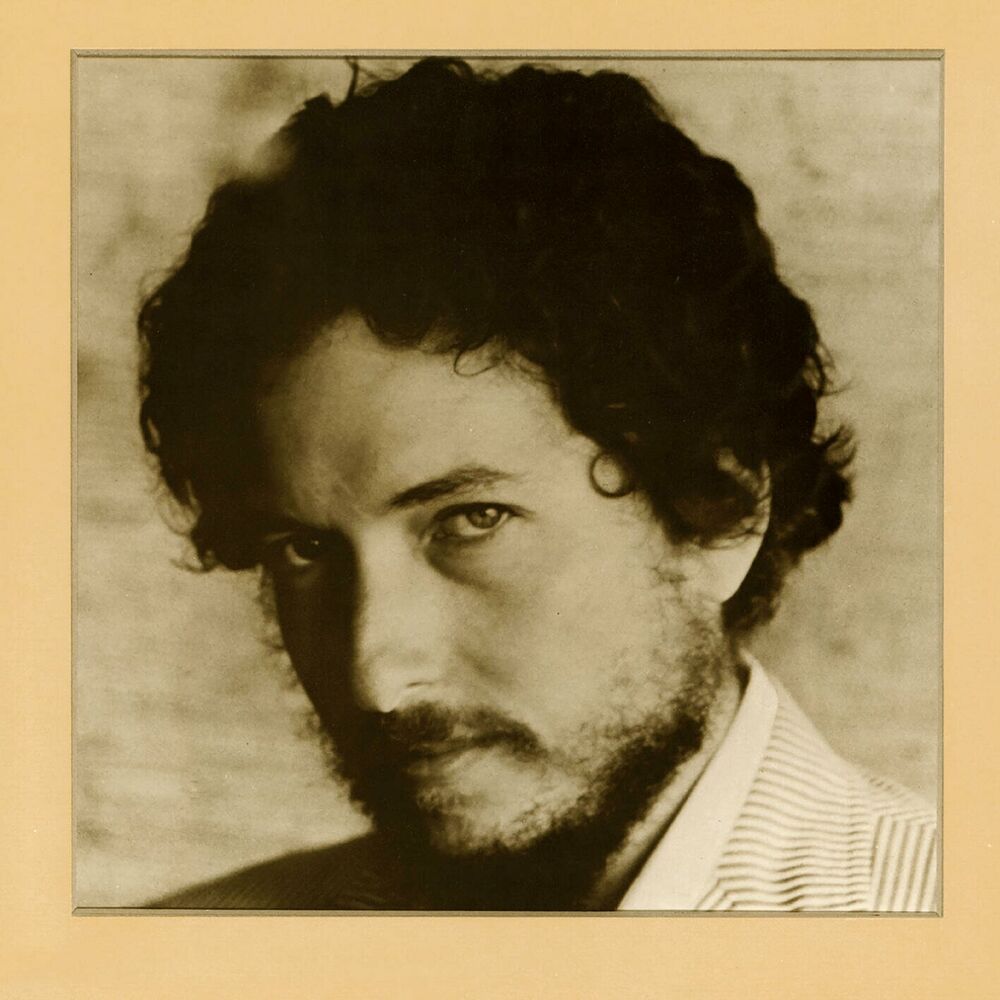
New Morning is the eleventh studio album by the American singer-songwriter Bob Dylan, released on October 21, 1970 by Columbia Records. Coming only four months after the controversial Self Portrait, the more concise New Morning received a much warmer reception from fans and critics. Most welcome was the return of Dylan's familiar, nasal singing voice. While he has a slightly nasal tone to his voice on "Alberta #1" from Self Portrait, this was the first full album with his familiar voice since John Wesley Harding in 1967, after which he began singing with a country croon. New Morning reached No. 7 in the United States, quickly going gold, and gave Dylan his sixth and last UK number 1 album until Together Through Life in 2009. The album's most commercially successful song is "If Not for You", which was also recorded by George Harrison, who played guitar on a version of the song released on 1991's The Bootleg Series Volumes 1–3, and was also an international hit for Olivia Newton-John in 1971.
Recording sessions
New Morning was released just four months after Self Portrait and there was some speculation that it was recorded hastily and rushed out as an immediate response to the scathing criticism that surrounded Self Portrait. In fact, much of New Morning was already complete when Self Portrait was officially released. "I didn't say, 'Oh my God, they don't like this, let me do another one,'" Dylan said in 1975. "It wasn't like that. It just happened coincidentally that one came out and then the other one did as soon as it did. The Self Portrait LP laid around for I think a year. We were working on New Morning when the Self Portrait album got put together." During the March sessions that yielded most of Self Portrait, Dylan attempted three songs that he later rerecorded for New Morning: "Went to See the Gypsy", "Time Passes Slowly", and "If Not for You". A number of performances were recorded, but none to his satisfaction. After work on Self Portrait was virtually completed, Dylan held more sessions at Columbia's recording studios in the Columbia Studio Building at 49 East 52nd Street in New York, beginning May 1, 1970. Held in Studio B, the first session was accompanied by George Harrison, bassist Charlie Daniels, and drummer Russ Kunkel. A large number of covers and old compositions were recorded in addition to several new compositions. The results were rejected, although "Working on a Guru" and alternate versions of "Time Passes Slowly" and "If Not for You" have since been released. Sometime in the spring of 1970, Dylan became involved with a new play by poet Archibald MacLeish. A musical version of The Devil and Daniel Webster was titled Scratch. "New Morning", "Father of Night" and others were all written for the production. Though Dylan enjoyed talking with MacLeish, he was never confident about writing songs for the play. "Archie's play was so heavy, so full of midnight murder, there was no way I could make its purpose mine," he would later write. Eventually, a conflict with the producer over "Father of Night" prompted Dylan to leave the production, withdrawing his songs in the process. Al Kooper, who is credited as co-producer of New Morning, would later say that these three songs were "pretty much the fulcrum for [New Morning]... That got him writing a little more." The next session for New Morning would not be held until June 1. By this time, Dylan had written several new songs, including "Three Angels", "If Dogs Run Free", "Winterlude", and "The Man in Me". Dylan vacated Studio B and moved into Studio E, both of which were in the Columbia Studio Building, where he stayed for the remaining sessions. For five straight days, ending on June 5, Dylan recorded most of New Morning; he even recorded a number of covers with the intention of including a few on New Morning. The June 1 session was devoted entirely to covers, but Peter La Farge's "Ballad of Ira Hayes" was the only one given any serious consideration for inclusion. The June 2 session produced a solo piano rendition of "Spanish Is the Loving Tongue"; Al Kooper felt it was a strong candidate for New Morning, but it was ultimately set aside. Jerry Jeff Walker's "Mr. Bojangles" and the traditional "Mary Ann" were also recorded on June 2, with "Mr. Bojangles" receiving serious consideration for inclusion. On June 9, several days after those initial June sessions, Dylan accepted an honorary doctorate in music from Princeton University. Dylan did not enjoy the experience, and it inspired him to write a new song, "Day of the Locusts". Weeks later, a session held on June 30 was dedicated to recording new versions of "Blowin' in the Wind", but those recordings were left on the shelf. Bob Johnston was still credited with production, but by July he was absent and would not return. Instead, Dylan and Kooper created the preliminary sequence for New Morning. The process was wrought with frustration, possibly the result of the negative criticism over Self Portrait. The first sequence of …
Reception
Several critics were quick to praise New Morning as a return to form after Self Portrait. Ralph J. Gleason of Rolling Stone heralded the release with a headline declaring "WE'VE GOT DYLAN BACK AGAIN!" and described the album as "beautiful". Reviewing for the same publication, Ed Ward echoed this sentiment and deemed it a "superb album". Ward lauded "Went to See the Gypsy" and "Sign on the Window" as "masterpieces"; he said that the former was "the hardest rocker from Dylan in a 'coon's age", with the singer's voice "back in its raspy, rowdy glory", while the latter "ranks with the best work he's done", including "Sad-Eyed Lady of the Lowlands", "Just Like Tom Thumb's Blues" and "Like a Rolling Stone". He also praised Dylan's piano playing and concluded by calling New Morning "one of Dylan's best albums, perhaps his best". Stereo Review's Noel Coppage said it was not only Dylan's best LP but "the best album I've heard in years" and "for all practical purposes, an album without a flaw". He called the musical arrangements "exemplary" and agreed with those who recognized "Time Passes Slowly" as "the best song Dylan ever wrote", saying that it was "the new anthem for Dylan's people ... It points toward open country and toward family instead of community." Geoffrey Cannon of The Guardian found New Morning a departure from all of the artist's previous albums and commented on the range of styles and influences while highlighting Dylan's "dynamite piano". He described the title track as "a marvellous song, pointing to all our best hopes" in its celebration of the simple pleasures of nature and the senses. Other commentators disagreed that the album marked Dylan's full artistic return. According to biographer Howard Sounes, these more dispassionate listeners found it "a little self-satisfied" and, further to Nashville Skyline and Self Portrait, evidence of the singer's descent into commercialism and conservative values. The NME's Richard Green said the record fell short of the high expectations created in the build-up to its release and by the high quality of his past work; he wrote that "much of it is standard pop that would be totally neglected if any other artist had done it." Green admired the rock-oriented tracks and predicted that, while the LP would be a big seller, it would "not go down as one of Bob Dylan's best efforts". Morgan Ames of High Fidelity wrote that Dylan remained an intermittently interesting songwriter, but he was no longer "a Force in the way he once was and everyone knows it". Conceding that he had never liked Dylan's singing, Ames said New Morning was not an album he would revisit and that, but for the legend surrounding Dylan, it would have been received as merely "a competent, if not inspired, offering from a country-oriented folksinger-writer". Village Voice critic Robert Christgau named New Morning the seventh best album of 1970. In comparing the record to Self Portrait, he later wrote: "this time he's writing the pop (and folk) genre experiments himself, and thus saying more about true romance than is the pop (or folk) norm." Christgau highlighted "Winterlude" and "If Dogs Run Free", but panned "Three Angels" and "Father of Night", saying they "make religion seem dumber than it already is". In his contemporaneous review for The Times, Richard Williams wrote that New Morning showed Dylan left behind by recent trends and "a newer generation finds it hard to understand what the fuss is about". Writing for Rough Guides, Nigel Williamson says that music historian Sean Egan "astutely" summarized the issue when he commented: "[Dylan's] music was no longer an elemental thing ... his world view was limited to the end of the driveway of the home that his wife baked in and his children caroused through." Williamson calls New Morning a "fine album" but, despite the excitement of Dylan's supporters at Rolling Stone, "more of a false dawn".
Tracklist
- If Not for You2:41
- Day of the Locusts3:58
- Time Passes Slowly2:35
- Went to See the Gypsy2:47
- Winterlude2:22
- If Dogs Run Free3:37
- New Morning3:58
- Sign on the Window3:45
- One More Weekend3:08
- The Man in Me3:05
- Three Angels2:05
- Father of Night1:28
Listeners 0
Nobody has logged it yet. Be the first.