João's Music Archive
This Year's Model
← Back to the lists

This Year's Model

Elvis Costello
1978-03-17
UMe/Elvis Costello
25 tracks, 1 h 16 min
Rating
–
Not heard yet
110
–Archive
93Critics
0Listeners
Average score 935 reviews

Tracklist

  1. No Action (2021 Remaster)1:57
  2. This Year's Girl (2021 Remaster)3:16
  3. The Beat (2021 Remaster)3:42
  4. Pump It Up (2021 Remaster)3:12
  5. Little Triggers (2021 Remaster)2:38
  6. You Belong To Me (2021 Remaster)2:19
  7. Hand In Hand (2021 Remaster)2:30
  8. (I Don't Want To Go To) Chelsea (2021 Remaster)3:06
  9. Lip Service (2021 Remaster)2:34
  10. Living In Paradise (2021 Remaster)3:51
  11. Lipstick Vogue (2021 Remaster)3:29
  12. Night Rally (2021 Remaster)2:40
  13. Big Tears (2021 Remaster)3:08
  14. Radio, Radio (2021 Remaster)3:04
  15. Crawling To The U.S.A. (2021 Remaster)2:54
  16. Tiny Steps (2021 Remaster)2:45
  17. Running Out Of Angels (Demo Version)2:04
  18. Green Shirt (Demo Version)2:21
  19. Big Boys (Demo Version)3:01
  20. Neat Neat Neat (Live)3:17
  21. Roadette Song (Live)5:38
  22. This Year's Girl (Alternate Version)2:09
  23. (I Don't Want To Go To) Chelsea (Alternate Version)2:59
  24. Pump It Up (Live)3:33
  25. Waiting For The End Of The World (Live)3:59
Listen on

Have you heard it?

Sign in to mark it as listened, rate it and keep notes.

About the artist

Elvis Costello, born Declan Patrick MacManus, is an English singer, songwriter, producer, and author. He reinvigorated literate lyrical traditions with punk's raw energy, known for his densely layered wordplay and wide-ranging musical styles. A two-time Grammy winner and Rock and Roll Hall of Fame inductee, he often performed with his backing band, The Attractions.

About the album

This Year's Model is Elvis Costello's second studio album, released in 1978, and the first with his permanent backing band, The Attractions. Recorded in just eleven days, it presents a harder, sharper sound, embracing new wave, power pop, and punk rock. Nick Lowe returned as producer, aiming to capture the band's energetic live performance.

Meanings

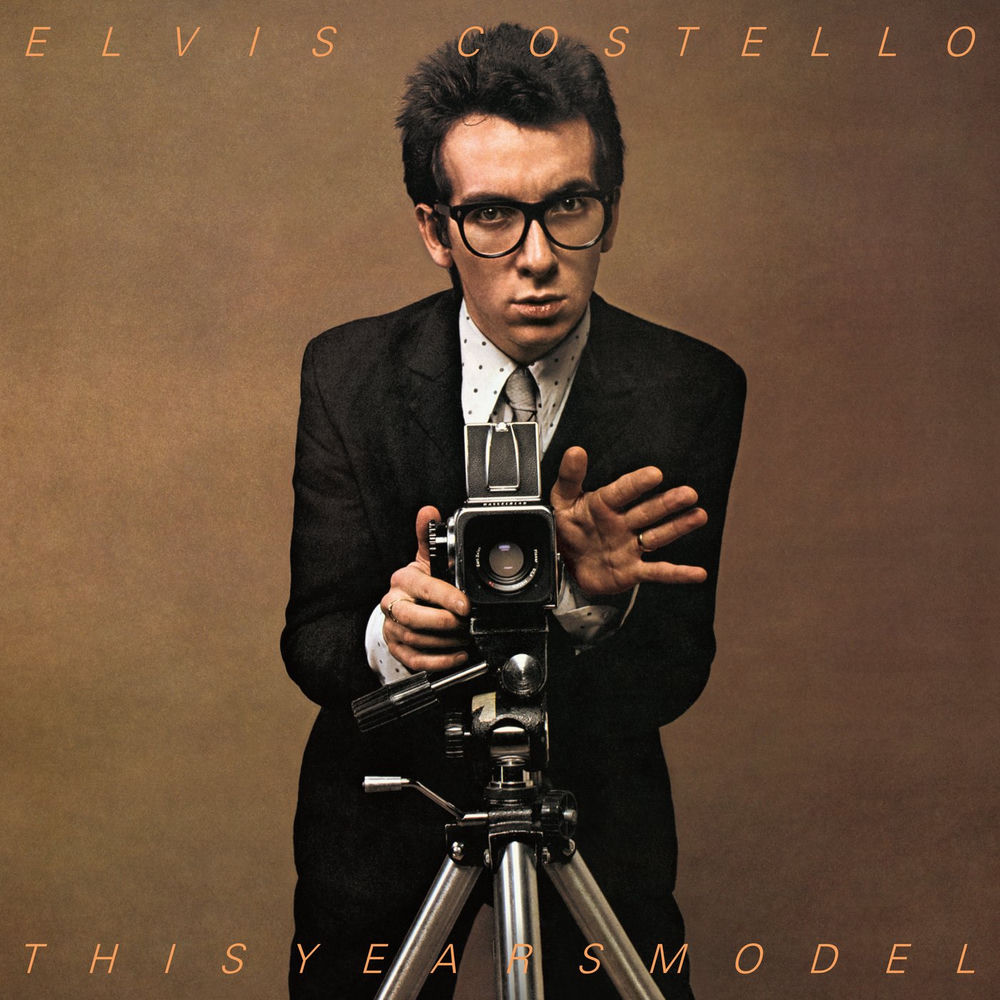
The lyrics delve into themes of mass control technologies and failing relationships, with some reviewers noting perceived misogynistic undertones. The cover artwork, featuring Costello behind a camera, symbolises his role as an observer. The album explores uncertainty between reality and artifice, reflecting a disillusioned world.

Why it's rated so high

Critics widely praised This Year's Model as superior to Costello's debut, highlighting its strong songwriting and the Attractions' performances. It was voted the best album of 1978 by Melody Maker and The Village Voice. The album continues to be acclaimed as one of Costello's finest, influencing punk and new wave, and is ranked #121 on Rolling Stone's 500 Greatest Albums of All Time.

Career and historical context

This album followed Costello's debut, 'My Aim Is True', and marked the formation of his permanent backing band, The Attractions, to achieve a harder sound. Released during the rise of punk rock, it solidified his place in the new wave movement. His growing reputation led to a famous, controversial appearance on Saturday Night Live.

Fun facts

  • The original UK album cover was deliberately off-centre, making the title appear as 'His Year's Model' and the artist 'Lvis Costello'.
  • Costello was banned from Saturday Night Live until 1989 for abruptly changing a song during his performance.
  • The album was recorded in a remarkably short period of just eleven days.
  • The American LP substituted two tracks, '(I Don't Want to Go to) Chelsea' and 'Night Rally', for 'Radio Radio'.
  • The first 50,000 copies of the LP included a free 7-inch single with an unreleased track and a live cover.
Written by AI from the album's and artist's Wikipedia articles and the archive's notes. Double-check anything important.

The full story

This Year's Model is the second studio album by the English singer-songwriter Elvis Costello, released on 17 March 1978 through Radar Records. After being backed by Clover for his debut album My Aim Is True (1977), Costello formed the Attractions—keyboardist Steve Nieve, bassist Bruce Thomas and drummer Pete Thomas (no relation)—as his permanent backing band. Recording sessions took place at London's Eden Studios in eleven days between late 1977 and early 1978. Nick Lowe returned as producer, and Roger Béchirian acted as engineer. Most of the songs were written prior to the sessions, and debuted live during the latter half of 1977. Embracing new wave, power pop and punk rock, the songs draw from bands such as the Rolling Stones and the Beatles. The lyrics explore subjects such as technologies of mass control and failing relationships, but in a manner that some reviewers found misogynistic. Echoing the lyrics of some of the tracks, the cover artwork, designed by the English graphic artist Barney Bubbles, shows Costello behind a camera on a tripod, emphasising his role as an observer. The accompanying singles "(I Don't Want to Go to) Chelsea" and "Pump It Up" were commercially successful and the album reached number four on the UK Albums Chart. The American LP was released in May 1978 through Columbia Records, substituting "(I Don't Want to Go to) Chelsea" and "Night Rally" for "Radio Radio". It reached number 30 on Billboard's Top LPs & Tape chart. This Year's Model also received critical acclaim; reviewers highlighted strong songwriting and performances, while also admiring Costello and the band as artists. The album appeared on year-end lists in both the UK and the US. In later decades, This Year's Model has been acclaimed as one of Costello's best works, some critics commenting on its influence on punk and new wave. It has appeared on several lists of the greatest albums of all time and has been reissued multiple times with bonus tracks. In 2021, Costello spearheaded a new version of the album titled Spanish Model, which featured songs from This Year's Model sung in Spanish by Latin artists over the Attractions' original backing tracks. It received favourable reviews and charted on several Billboard charts.

Background

Elvis Costello was backed on his debut album My Aim Is True (1977) by the California-based country rock act Clover, whose laid-back approach he felt did not fit the sound of the times. Wanting a harder and sharper sound, he decided to assemble a permanent backing band. The first musician hired was Pete Thomas, former drummer of Chilli Willi and the Red Hot Peppers; the second hired was Bruce Thomas, a bassist whose previous involvements included several folk rock albums earlier in the decade; and last Steve Nieve, who had no prior band experience and had trained at the Royal College of Music. With Costello on guitar, he and the band, now named the Attractions, made their live debut on 14 July 1977. Shortly after the release of My Aim Is True eight days later, the group performed an unauthorised show outside a Columbia Records convention, which led to Costello's arrest. The stunt attracted the attention of record executive Greg Geller, who months later became integral in signing Costello to Columbia in the United States. Costello and the band were on tour for most of the rest of 1977. The dates included the Greatest Stiffs Live Tour with other Stiff Records artists and their first tour of America. During this time, Stiff co-founder Jake Riviera departed Stiff due to disputes with the label's co-founder Dave Robinson. Per Costello's management contract, Costello followed Riviera and left Stiff for Radar Records but retained his American deal with Columbia. His final release for Stiff was that October's "Watching the Detectives", his first single to reach the UK top 20. In the meantime, Costello had written a large amount of new material which would appear on This Year's Model. According to the author Graeme Thomson, Costello's reputation in the US grew faster than in the UK. He was acclaimed in publications such as Time and Newsweek and approached to appear on NBC's Saturday Night Live as a last-minute replacement for the Sex Pistols, which took place the day after the tour's end. During the appearance, Costello and the Attractions played "Watching the Detectives" and began "Less Than Zero" before Costello abruptly cut the band off and counted them into the then-unreleased "Radio Radio", a critique of the commercialisation of broadcasting. The impromptu stunt angered producer Lorne Michaels and resulted in Costello's banning from Saturday Night Live until 1989.

Writing and recording

This Year's Model was recorded during a break in Costello's touring schedule. Recording took place at Eden Studios, a 24-track studio in Acton, London, beginning towards the end of December 1977 and completing in early January 1978. Costello later said the entire album was recorded in about eleven days. The band briefly paused to play a three-night residency at London's Nashville Rooms, which concluded on Christmas Eve 1977. Nick Lowe returned from My Aim Is True as producer and, in Thomson's words, was the "mad professor", pushing the band's energy further to attain the best performance. Like the debut, Lowe primarily wanted to capture the songs live with few overdubs. Acting as a foil to Lowe was engineer Roger Béchirian, who Costello recalled was tasked with interpreting Lowe's commands, such as "turn the drums into one big maraca" or "make it sound like a dinosaur eating cars". Costello stayed at Bruce Thomas's flat during the sessions. According to Thomson, Costello remained focused despite keeping himself apart from his wife Mary during this time, which eventually led to their separation. Most of the songs had been written and performed live with the Attractions before the recordings. One of the final tracks written was "Pump It Up", which Costello began writing outside a hotel fire escape during the Live Stiffs tour, debuting the song two days later and properly recording it in the studio a week after that. Having frequently played the tracks live, the band were able to complete them with few overdubs; some of Costello's live guide vocals ended up in the final mix. Bruce Thomas recalled: "We literally did the best tracks on the album – "Pump It Up", "(I Don't Want to Go to) Chelsea" – in one afternoon. It was like Motown. We'd just go in, play them, and that was it." Despite the fast-paced nature of the sessions, Béchirian recalled Costello coming off the tour with "radiating energy":

He was a star almost overnight, and I think he was quite bemused by it all, swept up with the excitement. I have a great laughing image of him being fairly fresh-faced, like a little boy in a sweet shop. Thomson says the sessions were "vibrant", productive and completed without difficulty. They began each day around 11 a.m. and finished around 9 p.m. According to Béchirian, "the whole thing was really good, it was really friendly, very positive. Everyone was really excited because they were the stars of the moment." Costello and the Attractions collaborated during the songwriting process. Although Costello preferred an "immaculate approach" to songwriting, wherein he would not present songs to the musicians until they were fully written, the Attractions offered suggestions that helped shape the songs. For "(I Don't Want to Go to) Chelsea", Costello based the guitar parts on the 1964 tracks "I Can't Explain" by the Who and "All Day and All of the Night" by the Kinks, which the band used to create new figures to make "Chelsea" stand out on its own. The band recorded several outtakes, including "Radio Radio" and "Big Tears", the latter featuring a guest contribution from the Clash guitarist Mick Jones. Other tracks written or demoed included "Crawling to the U.S.A.", "Running Out of Angels", "Green Shirt" and "Big Boys".

Mixing

The album was mixed at Eden by Béchirian with Lowe and Costello in attendance; Costello did not contribute due to his relative inexperience in the studio. The mixing console had been custom-built by Béchirian in the early 1970s after the studio had changed locations. According to the author Mick St. Michael, Lowe intentionally made the record louder than its predecessor. Béchirian recalled in an interview with Mix magazine that Lowe's primary goal was to "make sure the bass sat in well with the kick" and to bring Costello's voice to the forefront. With the record completed, Costello and the Attractions toured America in January 1978.

Music and lyrics

In the 2002 liner notes, Costello mentioned the Rolling Stones' Aftermath (1966) as a major influence on This Year's Model. Musically, the album embraces several styles, including new wave, power pop, punk rock, garage rock, and pop rock; St. Michael also recognised references to Merseybeat and glam. According to biographer Tony Clayton-Lea, rather than reusing the rockabilly and country sounds of My Aim Is True, This Year's Model opts for straightforward pop music "as influenced by punk rock". AllMusic editor Stephen Thomas Erlewine, on the other hand, defines the album as pure punk, with music that is "nervous, amphetamine-fueled, [and] nearly paranoid". In a contemporary interview with Creem magazine, Costello said the record contained less humour than its predecessor: "It's more vicious overall but far less personal, though." Referencing technologies of mass control, from corporate logos to night rallies, Hinton writes that the lyrics are "strongly visual, as befits the voyeurism which fuels many of the songs". References to objects such as cameras, films and telephones are present throughout many tracks, in both positive and negative lights, which the author David Gouldstone argues creates a disillusioned world where greed and revenge are dominant. Like the cover artwork itself, the mechanical imagery emphasises observation rather than participation. Themes of uncertainty between reality and artifice previously emerged on "Watching the Detectives", and appear throughout This Year's Model on tracks such as "Pump It Up", "This Year's Girl" and "Living In Paradise". The author James E. Perone interprets songs like "Lipstick Vogue", "(I Don't Want to Go to) Chelsea" and "This Year's Girl" as relating to Costello's former job working at cosmetics and perfume company Elizabeth Arden. Some reviewers identified themes of misogyny. In 1978, the writer Jon Pareles found the album "so wrong-headed, so full of hatred, [and] so convinced of its moral superiority" in Crawdaddy magazine. Drawing comparisons to Aftermath's similar lyrical content, Sounds magazine's Jon Savage said that "at least on occasion Elvis has the grace to make clear that it's a two-way process and he's at fault. Just wanna be your victim ...". Costello himself later wrote in the 2002 reissue's liner notes that he never understood the misogynistic accusations, believing they "clearly contained more sense of disappointment than disgust". Costello's failure to succeed romantically is the focal point of most of the relationships described in the album. Rolling Stone writer Kit Rachlis agreed, stating that all romances on the album are over or are about to commence, including a situation where he is unsure of whether to answer the phone or not ("No Action") or coming to terms after rejecting all compromises ("Lipstick Vogue").

Side one

"No Action" begins with Costello's solo voice. The lyrics detail the regret of a failed relationship. Gouldstone said that the song is the first example of Costello's use of "thematic punning", meaning the incorporation of references that indirectly relate to the song's main subject; "No Action", in this case, uses a telephone as comparisons to the narrator's companion. According to Costello, "This Year's Girl" was written as an "answer song" to the Rolling Stones' "Stupid Girl" (1965). Other influences included the mid-1960s works of the Beatles. In his 2015 memoir, Costello wrote that the song discusses how men see women and what they desire from them. The song's subject has achieved fame through fashion but it is only temporary, as by the next year, another girl will take her place. Once she realises it as time runs out, she feels cheated but by then it is too late. "The Beat" is primarily led by Nieve's keyboard and the rhythm section of Bruce and Pete Thomas. The song explores the uncertainties and pains of adolescence and early manhood, and Hinton regards it as the closest thing on the album to romantic love. It quotes Cliff …

Packaging and artwork

The original UK cover artwork for This Year's Model was deliberately off-centre, making the title appear as His Year's Model and the artist "Lvis Costello". The design by Barney Bubbles left a printers' colour bar intact along the right side. The American and Swedish sleeves were lined up correctly and not off-centre. Riviera's F-Beat Records released a May 1980 issue with an aligned sleeve, which has been retained for all subsequent releases. Photographed by Chris Gabrin, the front cover depicts Costello in his signature black framed glasses, wearing a dark suit with a polka dot shirt, glaring from behind a camera on a tripod. In Thomson's words, he is "expressionless" and "both observed and observing". According to Hinton, it was a "careful reconstruction" of David Hemmings from Michelangelo Antonioni's Blow Up (1966). The British cover had Costello standing back with his hands open; on the American cover, he crouched forward with both hands gripping the camera like a gun; a third shot was also used for the Swedish release. The back cover depicts Costello and the Attractions in a small, dimly lit hotel room reacting to a television with mock horror. Three of them are wearing black ties while Nieve dons a V-neck pullover. The inner sleeve depicts a robotic hand gripping a miniature TV on which Costello is playing, standing on one leg, and the other side depicts four colour-coded and dismembered mannequin bodies wearing string vests in a laundromat. Hinton states that the label's gimmick at the time was off-centre sleeves and avant-garde inner fold images. The Attractions were acknowledged on the LP labels but did not receive sleeve credits on the original release. The LP labels contain text between the holding spirals reading "Special pressing No. 003. Ring 434-3232. Ask for Moira for your prize". Packaged with the first 50,000 copies of the LP was a free 7" single containing "Stranger in the House", an outtake from My Aim Is True left off the album due to its country-influenced sound, with a live cover of the Damned's "Neat Neat Neat" as the B-side. The first American pressings contain Costello's rather than Columbia's logo.

Release and promotion

The band's North American tour before the album's release lasted from January to early March 1978. The setlist consisted of tracks from both My Aim Is True and This Year's Model, as well as B-sides and covers. The tour was positively received, but contributed to the growing exhaustion of Costello and the Attractions. Radar released the first single, "(I Don't Want to Go to) Chelsea", backed by "You Belong to Me", on 3 March 1978 in the UK, which received acclaim and reached number 16 on the UK Singles Chart. A performance in Toronto on 6 March was heavily bootlegged, and was eventually issued as Live at the El Mocambo in 1993 with the 2½ Years box set, and as a standalone release in 2009. This Year's Model was released in the UK on 17 March with the catalogue number RAD 3. Costello and the Attractions undertook a 28-date UK tour between March and April. The dates were plagued with problems, including Bruce Thomas cutting his hand smashing a glass bottle, requiring Lowe to substitute for him; Thomas wore bandages for the filming of promotional clips for "(I Don't Want to Go to) Chelsea" and "Pump It Up". Costello grew more exhausted from constant touring but continued writing new material. By the tour's end, This Year's Model had reached number 4 on the UK Albums Chart.

Another US tour commenced just three days after the previous tour's end. With Bruce Thomas still unavailable, Costello brought back Clover guitarist John Ciambotti, who only had one day of rehearsal. Throughout the tour, Costello and the band continued the wild behaviour they had become known for—both on and off stage—and experienced an increase in drug use, lack of sleep and growing exhaustion. Songs that would appear on Costello's next album, 1979's Armed Forces, began appearing in the set-lists. This Year's Model was issued in the US in May 1978; Columbia substituted "(I Don't Want to Go to) Chelsea" and "Night Rally" with "Radio Radio" on the notion that the lyrics on both tracks were "too English". It reached to number 30 on Billboard's Top LPs & Tape chart. The Scandinavian release retained the UK track listing and added "Watching the Detectives" as the final track on side one. It reached number 10 in Sweden. Elsewhere, This Year's Model reached the top 20 in New Zealand (11), the Netherlands (14) and Norway (15), and the top 30 in Canada (21) and Australia (26). The tour lasted until June 1978, after which the band again toured Europe. "Pump It Up", backed by "Big Tears", was released as the second single in June, which peaked at number 24 in the UK, earning Costello another appearance on BBC's Top of the Pops. In July, Costello recorded "Stranger in the House" with country artist George Jones, which appeared on the latter's My Very Special Guests album in 1979, before commencing the recording sessions for Armed Forces. "This Year's Girl", backed by "Big Tears", was issued as a US single. After appearing on the American LP, "Radio Radio" was released as a stand-alone single in the UK on 24 October 1978, backed by "Tiny Steps".

Critical reception

This Year's Model was well received on release. Many critics deemed it superior to My Aim Is True, praised the Attractions as a better band than Clover, and highlighted the strong songwriting and performances. Melody Maker's Allan Jones called it "an achievement so comprehensive, so inspired, that it exhausts superlatives". He wrote that "the penetration of the language matches the vaulting hysteria of the performance" and concluded that the record "promotes its author to the foremost ranks of contemporary rock writers", such as Bruce Springsteen. Cash Box remarked that This Year's Model allowed Costello to surpass early comparisons of Springsteen and Graham Parker to establish his own identity. Rock Australia Magazine's Anthony O'Grady dubbed This Year's Model "the best collection of...fashion-conscious songs since Ray Davies [of the Kinks] started his 'Dedicated Follower of Fashion' period." Tom Zito of The Washington Post had a hard time recalling an artist whose sophomore record surpassed their "already impressive" debut.

Several reviewers placed Costello as one of the best British New Wave artists. In Circus magazine, Fred Schruers lauded his lyrics, musicianship and angry persona, and cited This Year's Model as having fulfilled "every new wave expectation". Robert Christgau of The Village Voice also saw Costello's emotional delivery as full of anger and grimace, which he found "more attractive musically and verbally than all his melodic and lyrical tricks". In the midst of the punk movement, Christgau acknowledged the genre's influence on the album and artist. Creem's Alan Madeleine found the artist proves himself "stylistically mindful": he is "distinct enough from any other extant act to be noted, yet cautious of excess experimentation in this establishmental sophomore phase." Record Mirror's Tim Lott considered the songs "less vicious" than its predecessors, but said the artist remains an "Aladdin's cave of anti-matter". He called Costello's voice "insubstantial but wiry", the music "clever in its very lack of detail", and compared the organ-heavy sound with Blondie: a Sixties sound "trapped for ten years on atmospherics". Naming This Year's Model the winner of May 1978's "disc derby" in the Los Angeles Times, Robert Hilburn wrote that Costello's vocals "bristle with conviction and bite that we rarely find in rock in the '70s". Other critics highlighted Lowe's production. Some critics were less enthusiastic. Savage felt Costello was "less than likable" and the Attractions "spare yet full", but ultimately considered the album "an excellent, soon-to-be-popular" record. In Rolling Stone, Rachlis believed the album was more "musically and thematically" cohesive than My Aim Is True, but not "diminish[ing] the prodigal brilliance" of its predecessor. Conversely, Joel Selvin of the San Francisco Chronicle found "no new surprises" on Model, but felt the songs improved on the style exhibited on Aim, concluding that it "should satisfy his growing legion of fans, as well as gain new converts". In The New York Times, John Rockwell described This Year's Model as a "fine" record that maintains all of the artist's previous angry energy, yet "filling out the arrangements with a richness of texture (organ especially) that is very appealing". Pareles was critical of the overtly misogynistic themes. This Year's Model was voted the best album of 1978 by both Melody Maker and The Village Voice. It was highly placed in other year-end lists by Rolling Stone, NME (3), Record Mirror (5) and Sounds (8).

Legacy and influence

This Year's Model continues to receive critical acclaim. Journalists praise the Attractions' music, describing them as one of the best backing bands in rock music. Gouldstone wrote that with Costello on guitar, they became a band who are "capable of making even mediocre music listenable and of giving Costello's greatest songs an enthralling sense of intensity and immediacy." Erlewine described them as giving the album a "reckless, careening feel", further commending the sound, concluding that "Costello and the Attractions never rocked this hard, or this vengefully, ever again." Writing for Pitchfork in 2002, Matt LeMay said they were the reason the album was superior to My Aim Is True, and that "it's not only a more complex and dynamic album, but also one that steers well clear of the retro guitar twang that marred the less interesting bits of his debut." Declaring This Year's Model not only Costello's best, but one of the best albums ever made, he stated that it balanced the "raw energy" of its predecessor with the "more elegant pop songwriting" of his later works." Writing for Blender magazine, Douglas Wolk considered the Attractions "perfect creative foils" for Costello, particularly signalling out Nieve's playing throughout the record. Critics consider This Year's Model one of Costello's best, and "angriest", works. Spin's Al Shipley argued that Costello was never able to surpass the record's "inventive punch", while Michael Gallucci of Ultimate Classic Rock deemed it the work that "bridged his brief past with his wide-open future". Troper deemed it Costello's "most consistent" release and finest with the Attractions, finding it the artist's "most live-sounding, most punk, and most honest record of his dauntingly expansive career". PopMatters writers Jason Mendelsohn and Eric Klinger hailed the album as "simple, refreshing, and surprisingly modern" and "an object lesson that the New Wave could compete on the old school's field", respectively. Consequence of Sound's Ryan Bray named it the first of Costello and the Attractions' eight-year run he nicknamed "murderer's row". Reviewing in 2008, Rolling Stone's Rob Sheffield named This Year's Model as an album everyone should own, saying the songs "remain brutally funny, sung with moments of unexpected tenderness". Regarding Costello's musicianship, Uncut's Paul Moody argued that after he "dispensed with his musical safety net entirely" from My Aim Is True, This Year's Model began "his insatiable urge to 'bite the hand that feeds me'." The album was not without its detractors. Mojo magazine's Jim Irvin was more mixed on the material and arrangements, overall finding the album "unfeasibly invigorating" following its "mild-mannered" predecessor, but liked Lowe's production. Some reviewers mention the album's influence on punk and its evolution into new wave. In 2002, Uncut magazine's Chris Roberts called Costello the "bitter bard of the punk era", writing that with This Year's Model, he "articulat[ed] a generation's ire every bit as caustically as the [Sex] Pistols' gigantic guitars". Bray cited it as the album that proved pop and punk could co-exist. Writing for Record Collector in 2008, Terry Staunton cited it as "the post-punk distillation of the times", especially in London, and ten years later, Nick Hasted named it the "template" for the transition from punk to new wave. Regarding the album's position in the new wave genre, punknews.org's Julie River described This Year's Model as one of the first and strongest new wave albums, ultimately standing as one of Costello's finest albums. Paste magazine's Andy Whitman went further, describing the album as "the moment when New Wave found its frontman". Both River and Whitman agreed the album has aged well. Thomson described the songs as "tight and instantly memorable", and mentioned Costello's improved songwriting and the Attractions' performances. Hinton considers it "light years ahead" of its predecessor, creating a "paranoid …

Reissues

This Year's Model was first released on CD through Columbia and Demon Records in January 1986. Its first extended reissue came in October 1993 through Demon in the UK and Rykodisc in the US, which added the bonus tracks "Radio Radio", "Crawling to the U.S.A.", "Running Out of Angels", "Greenshirt" and "Big Boys". The 2002 CD reissue by Rhino Entertainment added more tracks on top of the 1993 additions; with this release, "Radio Radio" was sequenced as the album closer after "Night Rally". Troper argues that the addition changes the record's tone immensely, stating that as "Radio Radio" is more upbeat, it brings the album to a proper conclusion compared to the disturbing imagery and abrupt ending of "Night Rally". In 2008, it was reissued again by Universal/Hip-O Records as a deluxe edition, featuring most of the same tracks as the Rhino reissue, with the addition of a 13-track live bonus disc taken from a show at the Warner Theater in Washington, D.C., on 28 February 1978. For its 2021 remaster by UMe, "Big Tears" was added before "Radio Radio" on the standard album, bringing the total track count to 14.

From the Wikipedia article This Year's Model, available under CC BY-SA 4.0.

Tracklist

  1. No Action (2021 Remaster)1:57
  2. This Year's Girl (2021 Remaster)3:16
  3. The Beat (2021 Remaster)3:42
  4. Pump It Up (2021 Remaster)3:12
  5. Little Triggers (2021 Remaster)2:38
  6. You Belong To Me (2021 Remaster)2:19
  7. Hand In Hand (2021 Remaster)2:30
  8. (I Don't Want To Go To) Chelsea (2021 Remaster)3:06
  9. Lip Service (2021 Remaster)2:34
  10. Living In Paradise (2021 Remaster)3:51
  11. Lipstick Vogue (2021 Remaster)3:29
  12. Night Rally (2021 Remaster)2:40
  13. Big Tears (2021 Remaster)3:08
  14. Radio, Radio (2021 Remaster)3:04
  15. Crawling To The U.S.A. (2021 Remaster)2:54
  16. Tiny Steps (2021 Remaster)2:45
  17. Running Out Of Angels (Demo Version)2:04
  18. Green Shirt (Demo Version)2:21
  19. Big Boys (Demo Version)3:01
  20. Neat Neat Neat (Live)3:17
  21. Roadette Song (Live)5:38
  22. This Year's Girl (Alternate Version)2:09
  23. (I Don't Want To Go To) Chelsea (Alternate Version)2:59
  24. Pump It Up (Live)3:33
  25. Waiting For The End Of The World (Live)3:59

Listeners 0

Nobody has logged it yet. Be the first.

Log a listen