Sign in to mark it as listened, rate it and keep notes.
About the artist
The Velvet Underground, formed in New York City in 1964, pioneered the integration of rock and roll with the avant-garde. Though initially commercially unsuccessful, their provocative sound and experimentation profoundly influenced punk, new wave, and alternative music scenes.
About the album
Their 1967 debut, "The Velvet Underground & Nico", blends avant-garde elements with brash, minimal rock, featuring German singer Nico. Recorded with Andy Warhol as co-producer, it was initially met with critical indifference and poor sales.
Meanings
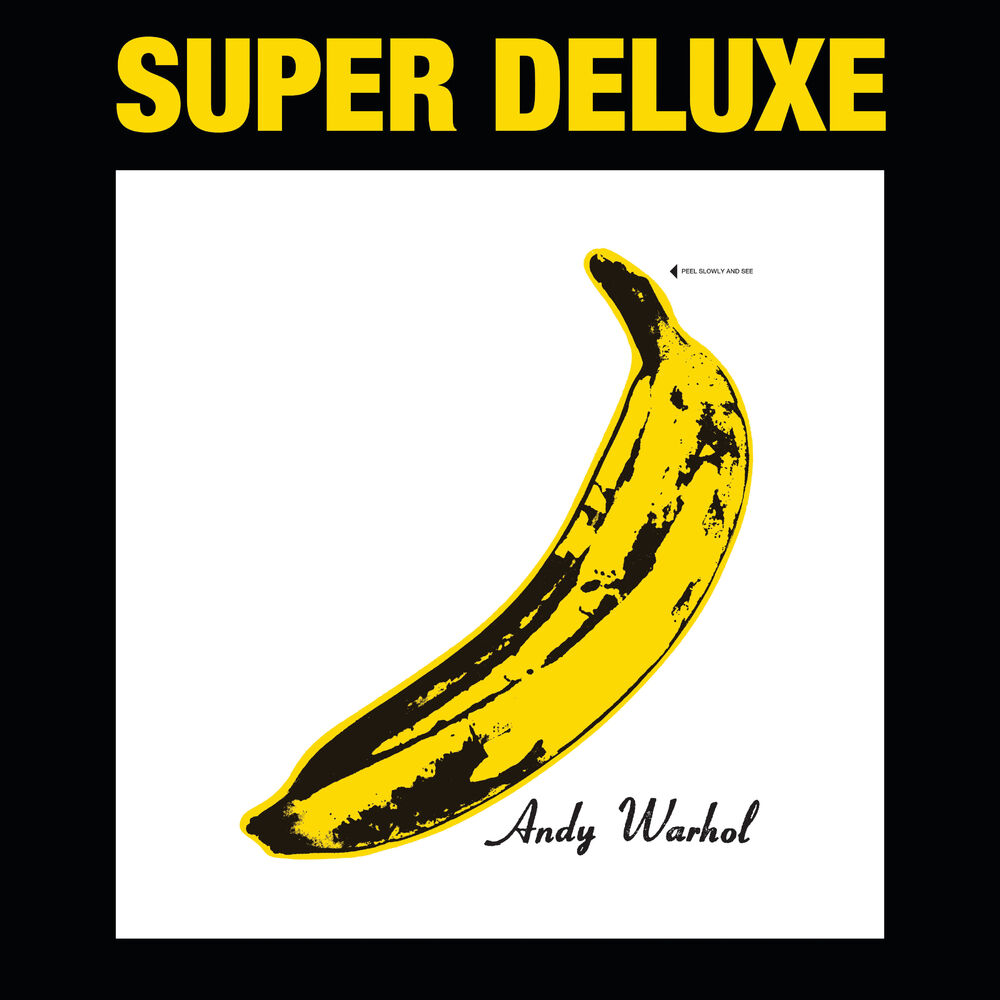
Lou Reed's explicit lyrics explore drug abuse, prostitution, sadomasochism, and urban life, drawing from literary influences rather than shock value. The iconic banana cover, designed by Andy Warhol, is widely seen as a phallic symbol.
Why it's rated so high
Despite initial commercial failure and polarised reviews, the album is now hailed as one of music history's greatest and most influential. It is considered the original art-rock record, shaping punk, post-punk, and many other alternative genres.
Career and historical context
This debut emerged during their time as the house band at Andy Warhol's Factory, performing with his multimedia show, Exploding Plastic Inevitable. Warhol managed the band and co-produced the album, integrating them into the avant-garde art world.
Fun facts
Early pressings featured a peelable banana sticker on the cover, revealing a flesh-coloured banana underneath.
Andy Warhol paid for the recording sessions, receiving a silver "Death and Disaster Series" canvas instead of cash.
The album was banned by various record stores and radio stations due to its abrasive sound and controversial lyrics.
John Cale strung his viola with guitar and mandolin strings, likening its sound to an aeroplane engine.
A lawsuit over the back cover photo led to Eric Emerson's image being airbrushed out of later pressings.
Written by AI from the album's and artist's Wikipedia articles and the archive's notes. Double-check anything important.
The full story
The Velvet Underground & Nico is the debut studio album by the American rock band the Velvet Underground and the German singer Nico, released by Verve Records in March 1967. The album was recorded in 1966 on Ludlow Street, New York while the band were featured on Andy Warhol's Exploding Plastic Inevitable tour. Warhol, who designed the album's record sleeve, served as co-producer alongside Tom Wilson.
The Velvet Underground & Nico features elements of avant-garde music incorporated into brash, minimal and groove-driven rock music. Lead singer and songwriter Lou Reed delivers explicit lyrics spanning themes of drug abuse, prostitution, sadomasochism and urban life. Due to its abrasive, unconventional sound and controversial lyrical content, the album underperformed commercially and polarized critics upon release. Various record stores banned the album, many radio stations refused to play it, and magazines refused to carry advertisements for it.
In the following decades, The Velvet Underground & Nico received widespread critical acclaim, being regarded as ahead of its time, and was included on numerous all-time best album lists. The Observer placed it at No. 1 in their list of the "50 Albums That Changed Music" and Pitchfork ranked it as the best album of the 1960s. It has been characterized as the original art-rock record, influencing many subgenres of rock and alternative music, including punk, garage rock, krautrock, post-punk, post-rock, noise rock, shoegaze, gothic rock, art punk, and indie rock.
The Velvet Underground & Nico continues to be lauded as one of the most important albums in rock and pop music. In 2006, it was inducted into the National Recording Registry by the Library of Congress for being "culturally, historically, or aesthetically significant". In 2008, it was inducted into the Grammy Hall of Fame, honoring recordings of "lasting qualitative or historical significance". Despite its poor sales, the album is certified platinum in the United Kingdom for sales of over 300,000 copies. In 2023, Billboard ranked the album No. 1 on its list of "The 100 Best Album Covers of All Time."
Recording
The Velvet Underground & Nico was recorded in a rehearsal studio on Ludlow Street, New York. It was recorded with the first professional line-up of the Velvet Underground, consisting of guitarist and vocalist Lou Reed; violist, keyboardist, and bassist John Cale; guitarist and bassist Sterling Morrison; and drummer Maureen Tucker. At the instigation of their mentor and manager Andy Warhol and his collaborator Paul Morrissey, German singer Nico was also featured; she had occasionally performed lead vocals for the band. She sang lead on three of the album's tracks—"Femme Fatale", "All Tomorrow's Parties" and "I'll Be Your Mirror"—and back-up on "Sunday Morning". In 1966, as the album was being recorded, this was also the line-up for the band's live performances as a part of Warhol's Exploding Plastic Inevitable.
The bulk of the songs that would become The Velvet Underground & Nico were recorded in four days in mid-April 1966 at Scepter Studios in Manhattan. This was financed by Warhol and Columbia Records sales executive Norman Dolph, who also co-engineered the sessions with John Licata. Rather than a cash fee, Dolph asked for one of Warhol's paintings and was given a silver "Death and Disaster Series" canvas; he sold it around 1975 for $17,000, remarking, "I bet Lou Reed hasn't made $17,000 from this album yet." The cost of the project is unknown; estimates vary from $1,500 (equivalent to $14,885 in 2025) to $3,000 (equivalent to $29,769 in 2025).
Dolph sent an acetate disc of the recordings to Columbia Records in an attempt to interest them in distributing the album, but they declined, as did Atlantic Records and Elektra Records. According to Morrison, Atlantic objected to the songs' drug references, while Elektra disliked Cale's viola. Finally, the MGM Records-owned Verve Records accepted the recordings, with the help of Verve staff producer Tom Wilson, who had recently moved from a job at Columbia.
In May 1966, three songs ("I'm Waiting for the Man", "Venus in Furs", and "Heroin") were re-recorded in two days at TTG Studios in Hollywood. When the record's release date was postponed, Wilson brought the band to Mayfair Recording Studios in Manhattan in November 1966 to add a final song to the album: the single "Sunday Morning".
Production
Although Andy Warhol is the only formally credited producer on the album, he had little influence beyond paying for the recording sessions. Several others who worked on the album are often mentioned as the technical producer.
Recording engineers Norman Dolph and John Licata are sometimes cited as producing the Scepter Studios sessions, though neither is credited as such on the album. Dolph said that Cale was the group's creative producer, as he handled the majority of the arrangements. However, Cale recalled that Tom Wilson produced nearly all the tracks, and said that Warhol "didn't do anything". Reed also said the "real producer" of the album was Wilson. Reed claimed it was MGM who decided to bring in Wilson, and credited him for producing songs such as "Sunday Morning": "Andy absorbed all the flak. Then MGM said they wanted to bring in a real producer, Tom Wilson. So that's how you got 'Sunday Morning', with all those overdubs—the viola in the back, Nico chanting. But he couldn't undo what had already been done."
However, Sterling Morrison and Lou Reed both cited Warhol's approach as a legitimate method of production. Morrison described Warhol as the producer "in the sense of producing a film". Reed said:
He just made it possible for us to be ourselves and go right ahead with it because he was Andy Warhol. In a sense, he really did produce it, because he was this umbrella that absorbed all the attacks when we weren't large enough to be attacked ... and as a consequence of him being the producer, we'd just walk in and set up and do what we always did and no one would stop it because Andy was the producer. Of course he didn't know anything about record production—but he didn't have to. He just sat there and said "Oooh, that's fantastic," and the engineer would say, "Oh yeah! Right! It is fantastic, isn't it?"
Music and lyrics
Lyrics
The Velvet Underground & Nico was notable for its overt descriptions of topics such as drug abuse, prostitution, sadomasochism, and sexual deviancy. "I'm Waiting for the Man" describes a protagonist's efforts to obtain heroin, while "Venus in Furs" is a nearly literal interpretation of the novella of the same name by Leopold von Sacher-Masoch, which itself prominently features accounts of sadomasochistic practices. "Heroin" details an individual's use of the drug and the experience of feeling its effects.
Lou Reed, who wrote the majority of the album's lyrics, never intended to write about such topics for shock value. Reed, a fan of poets and authors such as Raymond Chandler, Nelson Algren, William S. Burroughs, Allen Ginsberg, and Hubert Selby, Jr., saw no reason the content in their works could not translate well to rock music. An English major who studied at Syracuse University, Reed said in an interview that he thought joining gritty subject matter and music was "obvious": "That's the kind of stuff you might read. Why wouldn't you listen to it? You have the fun of reading that, and you get the fun of rock on top of it."
Though the album's dark subject matter is today considered revolutionary, several of the album's songs are centered on themes more typical of popular music. Certain songs were written by Reed as observations of Andy Warhol's "superstars". "Femme Fatale" in particular was written about Edie Sedgwick at Warhol's request. "I'll Be Your Mirror", inspired by Nico, is a tender and affectionate song, in stark contrast to a song like "Heroin". A common misperception is that "All Tomorrow's Parties" was written by Reed at Warhol's request (as stated in Victor Bockris and Gerard Malanga's Velvet Underground biography Up-Tight: The Velvet Underground Story); while the song does seem to be another observation of the denizens of the Factory, Reed wrote the song before meeting Warhol, having recorded a demo in July 1965 at Ludlow Street.
Instrumentation and performance
The Velvet Underground & Nico has generally been described by writers as art rock, experimental rock, proto-punk, psychedelic rock, and avant-pop. Much of the album's sound was conceived by John Cale, who stressed the experimental qualities of the band. He was influenced greatly by his work with minimalist composer La Monte Young in the Theatre of Eternal Music, John Cage, and the Fluxus arts movement, and encouraged the use of alternative ways of producing sound. Cale thought his sensibilities meshed well with Reed's, who was already experimenting with alternate tunings. For instance, Reed had "invented" the ostrich guitar tuning for a song he wrote called "The Ostrich" for the short-lived band the Primitives. Ostrich guitar tuning consists of all strings being tuned to the same pitch class. This method was utilized on the songs "Venus in Furs" and "All Tomorrow's Parties". Reed and Morrison's guitars were often tuned down a whole step, which produced a lower, fuller sound that Cale considered "sexy".
Cale performed on the viola on several of the album's songs, notably "Venus in Furs" and "The Black Angel's Death Song". Cale strung his viola with guitar and mandolin strings, and when played loudly, Cale would liken its brash sound to that of an airplane engine. Cale's technique usually involved minimalist drones, detuning for an eerie, surreal effect, and distortion to highlight harmonics and transform the instrument's sound. According to critic Robert Christgau, Cale's "narcotic drone" not only sustains the sadomasochism-themed "Venus in Furs", but also "identifies and unifies the [album] musically". Of the vocal performances, he believed "Nico's contained chantoozy sexuality" complemented "the dispassionate abandon of Reed's chant singing". In 1966, Richard Goldstein described Nico's vocal as "something like a cello getting up in the morning".
Tucker's style of drumming on the album involved her playing standing up rather than sitting …
Artwork
The album cover for The Velvet Underground & Nico is widely recognized for its Andy Warhol–designed banana image, which incorporated an interactive element: early pressings featured a peelable sticker bearing the instruction "Peel slowly and see," revealing a flesh-colored banana beneath. A special machine was needed to manufacture these covers, one of the causes of the album's delayed release, but MGM paid for costs figuring that any ties to Warhol would boost sales of the album. Most reissued vinyl editions of the album do not feature the peel-off sticker; original copies of the album with the peel-sticker feature are now considered rare collector's items. A Japanese re-issue LP in the early 1980s was the only re-issue version to include the banana sticker for many years. On the 1996 CD reissue, the banana image is on the front cover while the image of the peeled banana is on the inside of the jewel case, beneath the CD itself. The album was re-pressed onto heavyweight vinyl in 2008, featuring a banana sticker seen on original versions.
Sources have often cited the cover art as a phallic symbol. In the 2006 documentary The Velvet Underground: Under Review, one commentator remarks:"The album cover [...] is fun, it's a fun record. That's not to say it wasn't calculated. It's a banana—what does it look like? It looks like a penis, right? It's a big penis on a record. And then the temptation to peel this off—'Oh, what is underneath?'—and you're expecting something really nasty and dirty, and then, oh, you know what it is? It's a pink banana underneath. Right? Gotcha!"Warhol biographer Blake Gopnik has compared the act of peeling the banana sticker to the peeling back of a foreskin, arguing that the jacket "aligned the Velvets with the hard-edged queer culture that the Factory was coming to represent." Reflecting on the cover’s provocation, the band's frontman Lou Reed later remarked, "The banana actually made it into an erotic art show."
In 2023, Billboard ranked The Velvet Underground & Nico at the top of its list of The 100 Best Album Covers of All Time.
Back cover lawsuit
When the album was first issued, the main back cover photo of the band (taken at one of Warhol's Exploding Plastic Inevitable events) contained an image of actor Eric Emerson projected upside-down on the wall behind the band. Having recently been arrested for drug possession and desperate for money, Emerson threatened to sue over this unauthorized use of his image unless he was paid. Rather than complying, MGM recalled copies of the album and halted its distribution until Emerson's image could be airbrushed from the photo on subsequent pressings. Copies that had already been printed were sold with a large black sticker covering the actor's image.
Front cover lawsuit
In January 2012, the "Velvet Underground" business partnership (of which John Cale and Lou Reed were general partners) sued the Andy Warhol Foundation for the Visual Arts, Inc. in the United States District Court for the Southern District of New York after the Foundation licensed the cover's banana design to Incase Designs for use on a line of iPhone and iPad cases. The complaint involved copyright infringement, trademark infringement and unfair competition.
Alleging that the Foundation had earlier claimed it "may" own the design's copyright, the partnership asked the court for a declaratory judgment that the Foundation did not have such rights. In response, the Foundation gave the partnership a "Covenant Not to Sue"—a written and binding promise that, even if the partnership and certain other parties continued to use the design commercially, the Foundation would never invoke its professed copyright ownership against them in court.
On the Foundation's motion, Judge Alison J. Nathan severed and dismissed from the lawsuit the partnership's copyright claim. According to Judge Nathan, the Constitution allows federal courts to decide only "Cases" or "Controversies", which means ongoing …
Reception and sales
Contemporary reception
A capsule review from Billboard published ahead of the album's release praised the "haunting" vocals of Nico and the "powerful" lyrics of the band, calling it a collection of "sophisticated folk-rock" and a "left-fielder which could click in a big way." Vibrations, a small rock music magazine, gave the album a mostly positive review in their second issue, describing the music as "a full-fledged attack on the ears and on the brain" while noting the dark lyrics. Wayne Harada of the Honolulu Advertiser and Dave Donelly of the Honolulu Star-Bulletin both praised the album's banana-sticker cover; the former terming it "the wildest" front cover of any album yet and the latter calling it a conversation piece. Harada wrote: "Inside, the eating's good, too: 'Sunday Morning' has a definite psychedelic hit sound. 'Run Run Run' still is another Underground gem gaining ground." Donelly called the album "not Commercial with a capital 'C' but an experience in sound." An anonymous reviewer in the American Record Guide praised Reed's lyrics as "penetratingly contemporary", comparing them to the work of Dylan while calling Reed on the basis of the record "an important new (to me) talent". The reviewer also praised the variety in sounds presented by "Sunday Morning", "European Son", and "Heroin" alongside from the more Dylan-esque songs.
Meanwhile, Richard Goldstein of the Village Voice, published in Velvet Underground's hometown of New York City, was more reserved in his praise. Goldstein called "There She Goes Again" a "blatant" lift of the Rolling Stones rendition of "Hitch Hike" and called Reed's vocal performances on other songs "distressingly like early Dylan". However he ultimately wrote that "the Velvets are an important group and this album has some major work [within]", singling out "I'm Waiting for the Man", "Venus in Furs", "Femme Fatale", and "Heroin". Of the latter song, Goldstein wrote:
[It] is more compressed, more restrained than live performances I have seen. But it's also more a realized work. The tempo fluctuates wildly and finally breaks into a series of utterly terrifying squeals, like the death rattle of a suffocating violin. "Heroin" is seven minutes of genuine 12-tone rock 'n' roll.
The Tampa Tribune writer Vance Johnston dismissed it as a collection of "several confusing sounds ... most depressing and whatever the message I failed to get" but wrote that Warhol aficionados would declare it his best "at any rate". Don Lass of New Jersey's Asbury Park Evening Press was similarly dismissive, finding the music "as lifeless and inanimate as the discarded banana peel, touching every cliche in the rock 'n' roll spectrum while missing the genuine fun that good big-beat renderings can offer." A staff writer for the Pensacola News Journal defined the album overall as "one big savage sound", with its lyrics "equally frenzied": "The result sounds like the merger of Dracula and some of the long-haired wailers of today". John F. Szwed of Jazz & Pop called the band's performance on the record "tedious despite their ventures into electric viola et al", acknowledging the strength of their "loud whine" but ultimately writing that "something is lost in the translation" in the absence of the visual accompaniments of Exploding Plastic Inevitable.
Reappraisal
A decade after its release, The Velvet Underground & Nico began to attract wide praise from rock critics. Christgau wrote in his 1977 retrospective review for the Village Voice that the record had been difficult to understand in 1967, "which is probably why people are still learning from it. It sounds intermittently crude, thin, and pretentious at first, but it never stops getting better." He later included it in his "Basic Record Library" of 1950s and 1960s recordings, published in Christgau's Record Guide: Rock Albums of the Seventies (1981).
The Velvet Underground & Nico has been characterized as "the original art-rock record" and regarded as ahead …
Reissues and deluxe editions
Compact disc
The first CD edition of the album was released in 1986 and featured slight changes. The title of the album was featured on the cover, unlike the original LP release. In addition, the album contained an alternative mix of "All Tomorrow's Parties" which featured a single track of lead vocals as opposed to the double-tracked vocal version on the original LP. Apparently, the decision to use the double-tracked version on the original LP was made at the last minute. Bill Levenson, who was overseeing the initial CD issues of the VU's Verve/MGM catalog, wanted to keep the single-voice version a secret as a surprise to fans, but was dismayed to find out that the alternative version was revealed as such on the CD's back cover (and noted as "previously unreleased").
The subsequent 1996 remastered CD reissue removed these changes, keeping the original album art and double-tracked mix of "All Tomorrow's Parties" found on the LP.
Peel Slowly and See box set
The Velvet Underground & Nico was released in its entirety on the five-year spanning box set Peel Slowly and See, in 1995. The album was featured on the second disc of the set along with the single version of "All Tomorrow's Parties", two Nico tracks from Chelsea Girl and a ten-minute excerpt of the 30-minute "Melody Laughter" performance. Also included in the set (on the first disc) are the band's 1965 Ludlow Street loft demos. Among these demos are early versions of "Venus in Furs", "Heroin", "I'm Waiting for the Man" and "All Tomorrow's Parties".
Deluxe edition
In 2002, Universal released a two-disc "Deluxe Edition" set containing the stereo version of the album along with the five tracks from Nico's Chelsea Girl written by members of the band on disc one, and the mono version of the album along with the mono single mixes of "All Tomorrow's Parties" and "Sunday Morning" and their B-sides "I'll Be Your Mirror" and "Femme Fatale" on disc two. A studio demo of the unreleased track "Miss Joanie Lee" had been planned for inclusion on the set, but a dispute over royalties between the band and Universal canceled these plans. This contractual dispute apparently also led to the cancellation of further installments of the band's official Bootleg Series. However, this track was included in the subsequent re-release, 45th Anniversary Super Deluxe Edition. In April 2010, Universal re-released the second disc of the "Deluxe Edition" as a single CD "Rarities Edition".
45th Anniversary Super Deluxe edition
On October 1, 2012, Universal released a 6-CD box set of the album. It features the previously available mono and stereo mixes as discs one and two respectively. Disc one contains as bonus tracks additional alternate versions of "All Tomorrow's Parties", "European Son", "Heroin", "All Tomorrow's Parties" (instrumental), and "I'll Be Your Mirror". Disc two contains the same bonus tracks as the prior deluxe version's second disc. Disc three is Nico's Chelsea Girl in its entirety and the Scepter Studios acetate (see below) in its entirety occupies disc 4. Discs 5 and 6 contain a previously unreleased live performance from 1966. According to the essay by music critic and historian Richie Unterberger contained within the set, the source for the show is the only audio tape of acceptable quality recording during singer Nico's tenure in the band. The essay also clarifies that the absence of any DVD materials in the box set is due to the fact that none of the band's shows were filmed, in spite of their heavy reliance on multimedia visuals.
Scepter Studios acetate version
Norman Dolph's original acetate recording of the Scepter Studios material contains several recordings that would make it onto the final album, though many are different mixes of those recordings and three are different takes entirely. The acetate was cut on April 25, 1966, shortly after the recording sessions. It resurfaced decades later when it was bought by collector Warren Hill of Montreal, Quebec, …