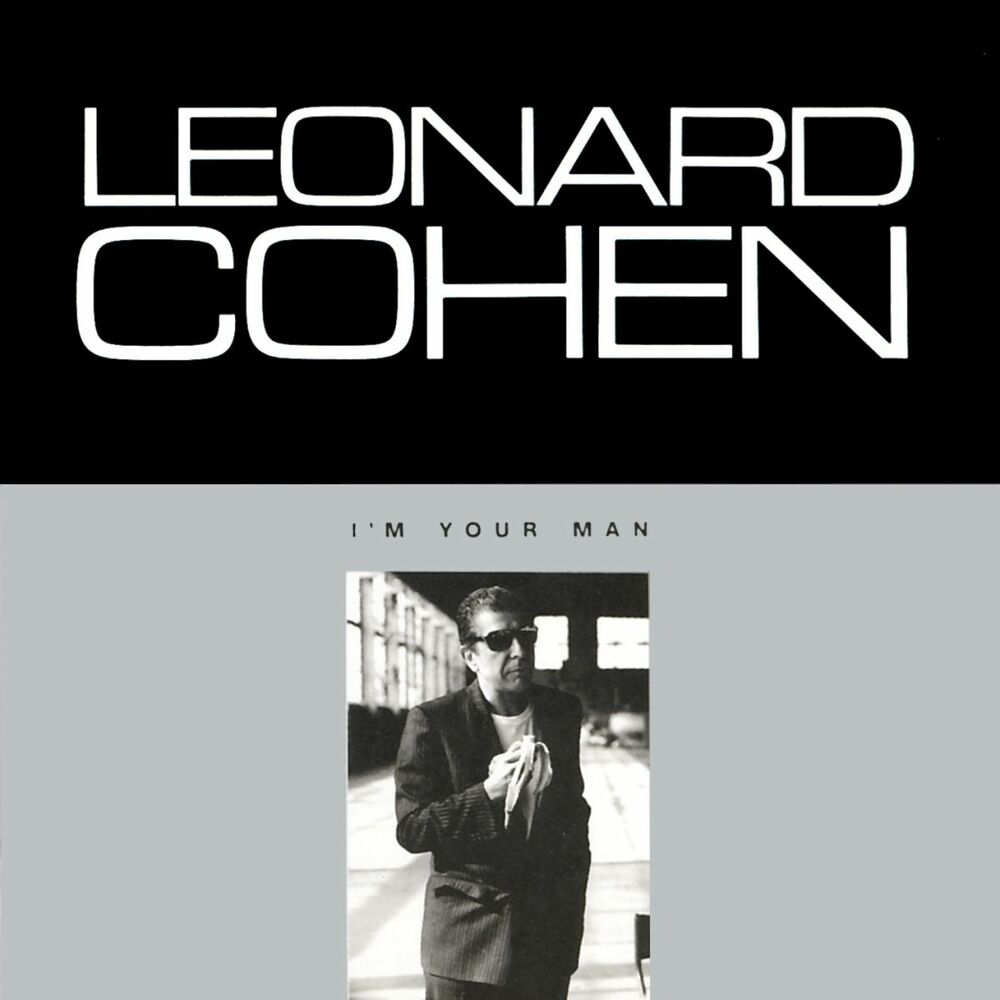
The album includes some of Cohen's most popular songs and concert staples, including the single "Ain't No Cure for Love", "First We Take Manhattan", "Tower of Song", and "Everybody Knows", which was a collaboration with Cohen's backing vocalist Sharon Robinson. "Everybody Knows" is known for its somber tone and repetition of the title at the beginning of most verses. Featuring phrases such as "Everybody knows that the dice are loaded" and "Everybody knows that the good guys lost", the song has been variously described by critics as "bitterly pessimistic" yet funny, or, more strongly, a "bleak prophecy about the end of the world as we know it." The lyrics include references to AIDS, social problems, and relationship and religion issues. The album's opening track, "First We Take Manhattan" (originally called "In Old Berlin"), deals with geopolitical ideas, specifically extremism, as he explained himself in a backstage interview:
I think it means exactly what it says. It is a terrorist song. I think it's a response to terrorism. There's something about terrorism that I've always admired. The fact that there are no alibis or no compromises. That position is always very attractive. I don't like it when it's manifested on the physical plane – I don't really enjoy the terrorist activities – but Psychic Terrorism. I remember there was a great poem by Irving Layton that I once read – I'll give you a paraphrase of it – it was "Well, you guys blow up an occasional airline and kill a few children here and there," he says. But our terrorists, Jesus, Freud, Marx, Einstein. The whole world is still quaking...
"Take This Waltz" was originally released as part the 1986 Federico García Lorca tribute album Poets in New York (Poetas en Nueva York) and as a single. It reached number one in Spain in 1986. The song appears on I'm Your Man in slightly re-arranged version (with addition of violin and Jennifer Warnes's duet vocals, both absent from the 1986 version). The song's lyrics are a loose translation of the poem "Pequeño vals vienés" by the Spanish poet Federico García Lorca (one of Cohen's favorite poets). The poem was first published in Lorca's seminal book Poet in New York/Poeta en Nueva York. In his 2010 Cohen biography, Anthony Reynolds claims that the unorthodox "Jazz Police" was Cohen's response to his band's effort to introduce augmented fifths and sevenths to their playing. He "policed" such jazz intrusions, although he "wasn't sure of the lyric's meaning and grew to dislike the conceit." The genesis of "Tower of Song" is described in Ira Nadel's 1996 Cohen memoir Various Positions:
"Tower of Song" is the keynote work of I'm Your Man. With it Cohen wanted to "make a definitive statement about the heroic enterprise of the craft" of songwriting. In the early eighties he called the work "Raise My Voice in Song". His concern was with the aging songwriter, and the "necessity to transcend one's own failure by manifesting as the singer, as the songwriter." He had abandoned the song, but one night in Montreal he finished the lyrics and called an engineer and recorded it in one take with a toy synthesizer.
Cohen revised the song, which contains the rumination, "I was born like this, I had no choice/I was born with the gift of a golden voice." Ever mindful of his reputation as a "flat singer" among critics, audiences always erupted when Cohen sang these lines live. Cohen also cites Hank Williams, a songwriter he has professed great admiration for, in the song ("...a hundred floors above me..."). Cohen recited the lyrics in full when he was inducted into the Rock and Roll Hall of Fame.
Although Cohen had earned a reputation among critics and some listeners for excessive gloominess, several tracks on the album displayed his wry sense of humor and playfulness, such as the lascivious title track and "I Can't Forget", which he cited in a BBC interview with John Archer after the album's release as an example of his simpler approach: "I had to go …