João's Music Archive
Elephant
← Back to the lists

Elephant

The White Stripes
2003-03-19
Legacy Recordings
14 tracks, 49:49
Special pressing
Red w/ Black Smoke
Rating
–
Not heard yet
110
–Archive
91Critics
0Listeners
Average score 91Metacritic 92Pitchfork 6.910 reviews

Tracklist

  1. Seven Nation Army3:51
  2. Black Math3:04
  3. There's No Home For You Here3:43
  4. I Just Don't Know What to Do With Myself2:46
  5. In The Cold, Cold Night2:58
  6. I Want To Be The Boy To Warm Your Mother's Heart3:20
  7. You've Got Her In Your Pocket3:40
  8. Ball and Biscuit7:19
  9. The Hardest Button to Button3:32
  10. Little Acorns4:09
  11. Hypnotize1:48
  12. The Air Near My Fingers3:40
  13. Girl, You Have No Faith In Medicine3:17
  14. It's True That We Love One Another2:42
Listen on

Have you heard it?

Sign in to mark it as listened, rate it and keep notes.

About the artist

The White Stripes were an American rock duo from Detroit, Michigan, formed in 1997, consisting of Jack and Meg White. They were central to the 2000s indie and garage rock revivals, known for their raw, simple sound blending garage rock and blues. Their distinctive red, white, and black aesthetic and mysterious public image also defined them.

About the album

Elephant is the White Stripes' fourth studio album, recorded over two weeks in 2002 at Toe Rag Studios in London. Produced by Jack White, it continued their "back-to-basics" approach, using antiquated equipment like an 8-track and tape machine, with no computers involved. The album delivers a raw garage rock, blues rock, and punk blues sound.

Meanings

The album's title, Elephant, reflects Jack and Meg's contrasting personalities and their dynamic onstage roles, mirroring the animal's dual nature of innocence and thunder. Lyrically, the album explores the "death of the sweetheart" in American popular culture, alongside themes of love and perseverance. The iconic red, white, and black artwork also contains hidden symbolism.

Why it's rated so high

Elephant received widespread critical acclaim, with many calling it a "work of pulverizing perfection" and the band's "magnum opus". It earned the band their first Grammy Awards for Best Alternative Music Album and Best Rock Song for "Seven Nation Army". The album is recognised as a landmark work of the 2000s rock movements, solidifying the band's influence.

Career and historical context

Following the unexpected success of their third album, White Blood Cells, Elephant propelled The White Stripes to global recognition. It cemented their position at the forefront of the garage rock revival. The album's lead single, "Seven Nation Army", became a worldwide sports anthem, significantly boosting its reach and sales.

Fun facts

  • The album was recorded for a budget of approximately £4,000, or £6,000 including hotel and other expenses.
  • The rumour that no equipment created after 1963 was used in production was promoted by "lazy" journalists and is not true.
  • Meg White edited an unspecified song on the album after being taught how to tape edit by the engineer.
  • The song "Seven Nation Army" was conceived during a sound check while the band toured in Australia.
  • John Peel, an early champion of the band, had more White Stripes records in his collection than any other artist.
Written by AI from the album's and artist's Wikipedia articles and the archive's notes. Double-check anything important.

The full story

Elephant is the fourth studio album by American rock duo the White Stripes. It was released on April 1, 2003 in the United States by V2 Records and in the United Kingdom by XL Recordings. It was produced by vocalist and guitarist Jack White, and was mostly recorded across two weeks at Toe Rag Studios in April and May 2002. Continuing the "back-to-basics" approach from the band's previous album, White Blood Cells (2001), it features lyrics about the "death of the sweetheart" in American popular culture. Elephant reached the top ten of multiple territories, peaking at number six on the US Billboard 200 and topping the UK Albums Chart, and achieved multiple platinum status in several countries. It sold over four million units worldwide, making it the band's best-selling album. The album produced the hit singles "Seven Nation Army", "The Hardest Button to Button" and "I Just Don't Know What to Do with Myself", the first of which boosted its sales. The album received widespread critical acclaim and several accolades, including a nomination for Album of the Year and winning Best Alternative Music Album at the 2004 Grammy Awards. Elephant is widely recognized as a key work of the 2000s indie and garage rock revivals, solidifying Jack and Meg White's leading positions in the movements. It has been named by several publications as the White Stripes's magnum opus and features on several publications' listings of the best albums of all time.

Recording and production

The White Stripes originally visited Toe Rag Studios late July 2001, at the behest of British drummer Bruce Brand, the day after a performance at the 100 Club in London, England. Brand and Toe Rag proprietor, Liam Watson, who served as the album's engineer, were in a band called the Masonics. The Masonics' U.S. agent arranged for them to open for the White Stripes during that performance and asked Brand to assist The White Stripes while they were in the United Kingdom. The White Stripes returned to the studio in November 2001 to record several songs: "It's True That We Love One Another", "You've Got Her in Your Pocket" and "Hypnotize", whereas "I Just Don't Know What to Do with Myself" was recorded at BBC's Maida Vale Studios. They returned to Toe Rag again in April 2002 to record the rest of the album. On certain releases, "Hypnotize" was mistakenly marked as recorded in April, which was corrected on the 20th anniversary release. The White Stripes had planned to release the album in fall 2002, but the unexpected popularity of White Blood Cells pushed the release to spring 2003. Jack and Meg explain that the title of Elephant reflects their contrasting personalities and how they often switch roles when performing onstage, much like the nature of its mammalian namesake who is both "innocent" and "thunderous." Toe Rag had a reputation within the garage rock world as the kind of studio artists "dreamed of recording at." The studio was chosen to escape the distractions of home by working in another country, as well as the fact that the Holly Golightly song "Indeed You Do" (from her 1997 album Painted On) had been recorded there. In contrast to supposedly hedonistic Los Angeles recording studios with "a cappuccino machine and video games between takes," according to guitarist and vocalist Jack White, Toe Rag was "claustrophobically cramped" and "freezing" with a virtually inoperable heat radiator, which forced them to concentrate on the work. In early 2000s, Toe Rag's location in Hackney was a notoriously violent area of London and a "harsh environment," regardless of which Jack considers it the "best studio experience [they've] ever had," and they found the studio "mind-blowing." All songs, including B-sides, were mixed in one day at the studio; Jack suggested the idea of mixing it at Abbey Road Studios, though Watson ultimately chose to do it at Toe Rag. Watson engineered the album in shifts of 6 hours at a time across approximately 10 days, although there were some days off during the two weeks booked at the studio in order to accommodate other work on the schedule such as concerts. The album would likely have been recorded in less time, but Watson had a policy of not working past dinner hours. The recording dates reportedly took place between April 24, and May 13, 2002. The album was recorded for a budget of a reported £4,000 (or £6,000 if accounting for the cost of the hotel stay and other extraneous expenses) and Jack returned in late September 2002 to re-record and remix certain vocals. Jack produced the album with antiquated equipment, including an 8-track and tape machine, not in an attempt to sound "retro" but rather in the belief that it was "the pinnacle of recording technology". Watson was unfamiliar with their other albums but held the same belief, using the Beatles and the Rolling Stones as reference. Watson taught Meg how tape edit, as she was intrigued by the process, and she edited an unspecified song. Computers were not used during Elephant's writing, recording, or production. A rumor spread that no equipment created after 1963 was used in production, though Jack says it was promoted by "lazy" journalists and never fact-checked. In fact, most of the equipment including the main mixing desk was from the 1980s according to Liam Watson; he also called the rumor "a load of crap." A REDD .17 mixing desk originally from Abbey Road Studios was indeed present at Toe Rag, however it was not the one used on this album as …

Music and lyrics

Composition and sound

Elephant is a garage rock, blues rock, and punk blues record that advances the "back to basics" approach from the White Stripes's previous album, White Blood Cells (2001). The album was originally envisioned as a melancholic project, though Jack clarified that they did not go into the album with an intended sound or genre, and his comments were so that fans would not expect more of "Fell in Love with a Girl" and White Blood Cells. At the time, Jack thought the album sounded "depressing" and initially believed it would be a "pretty quiet" album. "There was no real conscious thought involved in the different styles," Jack said. The album would have been made regardless of whether the band achieved popularity. Meg was "not really concerned about what the media thinks," as they were "really happy with it." The "power" of Toe Rag and the fervor of British fans changed its trajectory. Meg deemed Elephant "a tribute to England," and Jack called it a "total English product." It was a "guitar album" in that Jack incorporated guitar solos as "a present to himself" by tapping into the energy of his previous work with the Go. The lyrics on Elephant, written almost entirely by Jack, revolve around the idea of the "death of the sweetheart" in both American culture and popular culture. "It seemed to keep coming up lyrically when I was writing the songs for this record. They revolve around this sweetheart or gentleman notion. I was coming to terms with a lot of it being very uncool nowadays, or very dead," Jack expounded. He observed that "You look at your average teenager with the body piercings and the tattoos. You have white kids going around talking in ghetto accents because they think that makes them hard. It's so cool to be hard. We're against that." Other themes on the record include love, demonstrated by tracks such as "I Just Don't Know What to Do with Myself" and "In the Cold, Cold Night", and perseverance, demonstrated by "Little Acorns". Elephant's music was composed by the band. About one-third of the album was written in the studio, while the rest was written in the hotel room. With the exception of "It's True That We Love One Another", acoustic songs were performed on a borrowed Martin guitar. The band expanded their style with a bass line alongside lead and rhythm guitar, in addition to greater use of keyboards and pianos. Jack infamously used a DigiTech Whammy pedal to mimic the sound of a bass guitar for several of Elephant's tracks. He did so in "Seven Nation Army" and "The Hardest Button to Button" by connecting a semi-acoustic guitar to the pedal and lowering the pitch by an octave. "Seven Nation Army", "The Hardest Button to Button", and "Ball and Biscuit" are what Jack wrote to be "21st century blues" songs.

Songs 1–7

Originally conceived as an idea for a potential James Bond theme, "Seven Nation Army" was conceived in 2002 during a sound check while the band toured in Australia. Jack downtuned his guitar by an octave rather than using a bass guitar to create the famous riff. The theme of the song surrounds their observations of industry gossip, the intrusive nature of the press, and the commercial aspects of the music industry. The song, which lacks a chorus, would ultimately take on a life of its own as a de facto sports anthem in stadiums around the world. It was typically the final song or encore in a White Stripes show, and Jack continues to perform it in his solo concerts.

"Black Math" was inspired by an issue Jack had with his high school math teacher, basing the premise around the idea that students are taught what to think rather than how to think. It was frequently used as a concert opener as Jack felt it was "hard to whip out in the middle of a set." It was originally written when Jack was a member of The Go. Jack used his Japanese Crestwood Astral II guitar with an installed cut-off switch for the song. "There's No Home for You Here" was created by Jack layering between 12 …

Artwork and packaging

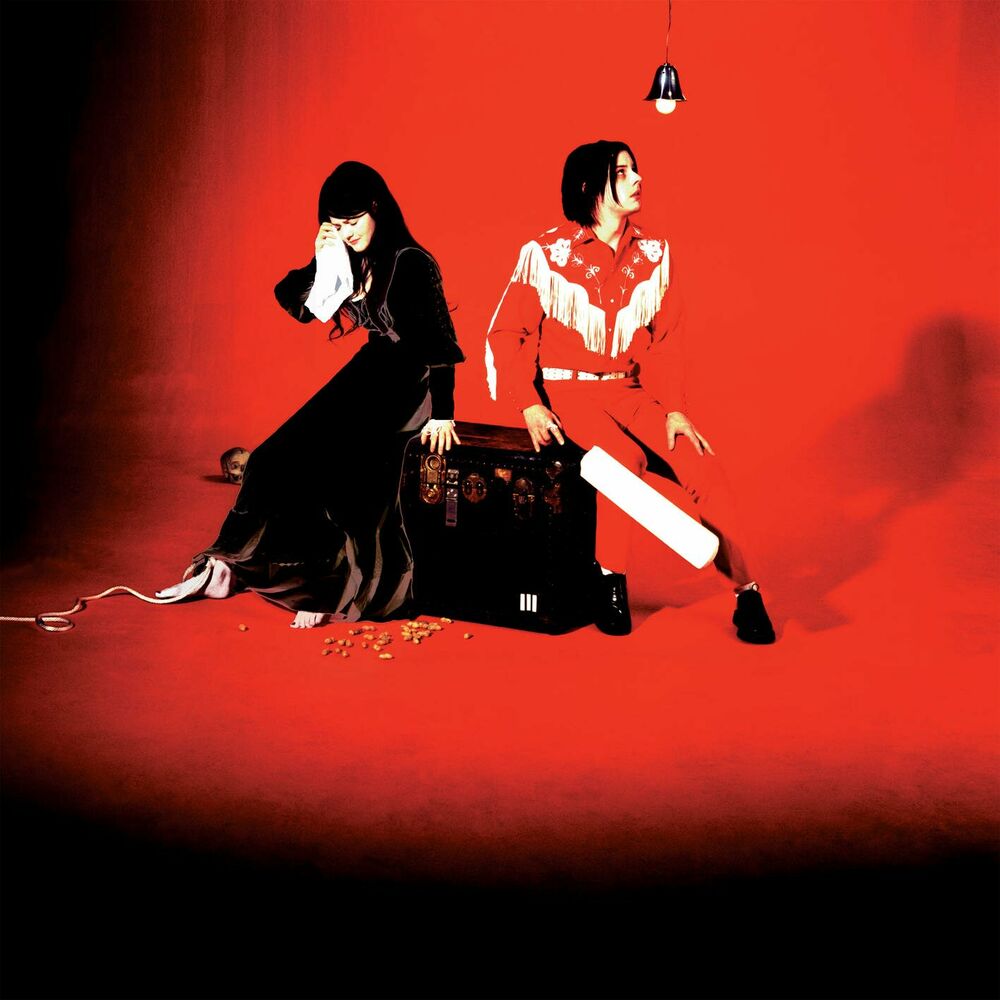
Similar to the band's other albums, Elephant's cover art and liner notes are exclusively in red, white, and black. They were photographed by The Dirtbombs member Patrick Pantano in a Detroit photo studio in late 2002. On the reverse side of the US edition, all of the number "3"s are in red (disregarding the authorization notes at the bottom). The cryptic symbolism of the album art includes a skull sitting on the floor in the background, as well as peanuts and peanut shells in the foreground, and on the circus travel trunk appears the mark "III", Jack's signature Jack is displaying a mano cornuta and looking at a light bulb intensely, while Meg is barefoot and appears to be crying, with a rope tied around her ankle and leading out of frame. Meg said the rope is an elephant reference but decided not to further explain the easter eggs of the album artwork for the audience's sake. Both have small white ribbons tied to their fingers. In an interview with Q in 2007, Jack said, "If you study the picture carefully, Meg and I are elephant ears in a head-on elephant. But it's a side view of an elephant, too, with the tusks leading off either side." He went on to say, "I wanted people to be staring at this album cover and then maybe two years later, having stared at it for the 500th time, to say, 'Hey, it's an elephant!'" The White Stripes are dressed as what Jack called "dying country stars" as a commentary on modern country music and the leitmotif of the "death of the sweetheart." The skull behind Meg was an allusion to the "Meg is dead and replaced by a robot" conspiracy theory that circulated in 2002. Meg's dress was bought by Olivia Rodrigo at auction in 2026. The album has been released with at least six different versions of the front cover—different covers for the CD and LP editions in the US, the UK and elsewhere. On the US CD edition, Meg is sitting on the left of a circus travel trunk and Jack is sitting on the right holding a cricket bat over the ground, while on the UK CD edition, the cricket bat touches the ground and the image is mirrored so that their positions on the trunk are reversed. The bat belonged to New Zealand cricketer Kane Williamson, who happens to be the cousin of their tour manager, John Baker. The UK vinyl album cover is the same as the US CD, but differs in that the color hues are much darker. The Record Store Day 2013 vinyl and August 2013 180-gram black vinyl reissues have Meg wearing a black dress instead of the usual white dress; the only other release with Meg wearing the black dress was on the V2 advanced copy back in 2003. The advanced copy was on red and white vinyl, while the RSD copy has red, black and white colored vinyl in 2013. A 20th anniversary limited edition has Jack wearing all white similar to the limited 2003 Australian pressing. The artwork of Elephant has become iconic. It appeared on Billboard's list of "The 100 Best Album Covers of All Time".

Promotion and release

The track list for Elephant was announced in January 2003 to NME, and four singles were announced to promote the album. After a debate with XL Recordings, "Seven Nation Army" was released as the lead single on February 17. The song peaked at number 76 on the Billboard Hot 100, the band's first entry on the chart, while reaching the top 10 in the United Kingdom and entering multiple international territories; it also became the first garage rock song to top Billboard's Modern Rock Songs chart. In March, Elephant was given to NME for an early review. The White Stripes were set to tour that same month, but postponed after Meg broke her wrist. Although shows were postponed when Meg broke her wrist and months later Jack severely broke his fingers in a car accident on his 28th birthday, the music videos for "Seven Nation Army" and "The Hardest Button to Button" were still filmed during their respective injuries, and their casts are visible in the videos. Elephant was officially released on April 1 by V2 Records in the United States and XL in the United Kingdom. The band began their promotional tour on June 13, and performed for six weeks across North America until July 23. "The Hardest Button to Button" was released as the second single on August 11, which peaked in the top 10 of the US Alternative Songs chart and drew attention for its music video. "I Just Don't Know What To Do With Myself" was released as the third single on September 1, which became their first work to chart in the Netherlands and New Zealand. The fourth and final single, "There's No Home for You Here", was released on March 15, 2004 and failed to replicate the success of its predecessors. That same year, the band released their first concert film, Under Blackpool Lights, which entered multiple charts. Elephant has continued to be reissued by Jack's Third Man Records, notably on anniversary dates. In 2013, Third Man Records released a limited edition vinyl reissue of Elephant, in celebration of the album's 10-year anniversary, which were pressed at United Record Pressing in Nashville, TN. In January 2023, a mono remix of the album, titled Elephant XX, was announced and later released exclusively through Third Man Records. That same year, a deluxe edition for the anniversary was released with live recordings from a performance in Chicago's Aragon Ballroom. In late October 2004, over a year after the album's release, John Peel, the band's early champion who heavily promoted Elephant on his radio show, died suddenly while in Cusco, Peru. Jack and Meg had been in England the prior week before going home but returned immediately to England for his funeral, costing them a significant amount of money. During Peel's funeral, the White Stripes briefly jammed with Robert Plant and a priest. At the time of his death, Peel had more White Stripes records in his collection than any other artist.

Critical reception

Elephant received widespread acclaim from music critics; review aggregating website Metacritic reports a normalized score of 92 out of 100 based on 28 reviews, indicating "universal acclaim". According to Times & Transcript journalist Jason Murray, Elephant "was accepted widely for its mix of hard rocking, garage sounding, disco metal mix that made even the biggest critics think again." In a perfect five-star review, AllMusic critic Heather Phares said Elephant "overflows with quality". David Fricke of Rolling Stone called Elephant "a work of pulverizing perfection," and believed it exceeded "the plantation holler of 2000's De Stijl and 2001's White Blood Cells with blues that both pop and bleed." John Mulvey of NME rated Elephant 9/10 and stated that "The eloquence, barbarism, tenderness and sweat-drenched vitality of Elephant make it the most fully-realised White Stripes album yet." The Los Angeles Times's Robert Hilburn claimed that the band earned more respect "than any other U.S. band since Nirvana and Nine Inch Nails" and compared the listening experience to "playing chess with a tournament pro -- an experience so full of unexpected twists and turns that you find yourself trying to guess where he's [Jack] going, only to marvel at his choices." Alexis Petridis of The Guardian called it their "apotheosis" and wrote that "the White Stripes' music seems almost elemental, their power undeniable: it is clear why they are the only band to have transcended the indie ghetto." Uncut magazine remarked that "Elephant is where the tabloid phenomenon of summer 2001 prove they are no flash in the pan by making a truly phenomenal record." In contrast, Jon Pareles of The New York Times, while praising the continuation of their "back to basics" template, felt that "the quest—for something that might as well be called heart—is still ahead of them." Rob Brunner of Entertainment Weekly deemed Elephant a "front-loaded Jack White powerhouse" and called the band half-talented, criticizing Meg's drumming. Brent DiCrescenzo of Pitchfork was similarly negative in his review, believing Jack's blending of elements seemed superficial and Meg's drumming was "pancake-handed". Lorraine Ali of Newsweek criticized the band's gimmicks but concluded that the album "still sounds great." Elephant was named the best album of 2003 by Loudwire, NME, and Spin. It also placed highly in other end-of-year lists, including The Village Voice's Pazz & Jop poll and The Guardian's roundup. The record netted the band their first Grammy Awards at the 2004 ceremony, winning the Best Alternative Music Album and Best Rock Song ("Seven Nation Army") awards, in addition to the band's only nomination for the Album of the Year award. It also won Best International Album at the 2004 Meteor Music Awards, and was nominated for Best Album at the 2003 MTV Europe Music Awards, International Album at the 2004 Brit Awards, and Best Album at the 2004 Shockwaves NME Awards.

Commercial performance

Elephant entered the Billboard 200 at number six after first week sales of 126,000 units and spent 58 weeks on the chart, the longest of any White Stripes album. It was certified platinum in the United States in September 2003, and ended the year at number 57 on the Billboard 200. That same month, it received a platinum certification in Canada. In the UK, the album topped the UK Albums Chart and spent 55 weeks on the chart. It was certified double platinum in October 2003 and finished the year at number 22 on the UK Albums Chart. In October 2009, Elephant was certified double platinum in Australia. In March 2023, ahead of the album's 20th anniversary, it received a double platinum certification in the United States. By December 2003, the album was certified triple platinum in Canada and the United Kingdom. As of 2025, Elephant has earned the most certifications of any White Stripes album.

Legacy

Since its release, Elephant has been cited by critics as a landmark album of the 2000s rock movements and the White Stripes's best work. Sarah Boden of The Guardian observed that, by the end of the 2000s, "nobody matched Jack and Meg when it came to creating a colossal sound out of such basic ingredients. Elephant, after all, was the release that banished preconceptions about the White Stripes' self-consciously limiting format and affirmed that they were consistently and swaggeringly magnificent." Tom Breihan of Stereogum deemed the album as the band's "show-and-prove moment. They showed, and they proved." Breihan further wrote that "the vast majority of Elephant holds together as a mean, surly, pretty statement of rock dominance. The pressure was on, but they weren't gonna crack." Ultimate Classic Rock's Michael Gallucci declared that Elephant sparked a "rock revolution" and made guitar-based music prominent again, calling it a "masterpiece". The success of "Seven Nation Army" boosted the album's reach and sales, becoming the White Stripes's signature song and most enduring work. Writers at Rolling Stone and NME deemed it a career-changing hit, while the latter publication said the song propelled the band "from their garage rock beginnings to an entirely new level of acclaim". After its initial run on music charts, the song—especially its riff—grew in popularity as a result of its usage in sports. Erik Adams of The A.V. Club attributed the song's popularity to its simplicity, a characteristic that he remarked makes the song "instantly familiar" and "instantly memorized". "Seven Nation Army" and other tracks from Elephant are among the band's most recognizable songs. Olivia Rodrigo said Elephant is the album she listens to most. In a Spin article, artists who cited the album as an inspiration include Ron Gallo, Rob Miller, Brett Newski, Mike Peters, Slug, Bela Salazar, Gina Schock, Imaad Wasif, Charlie Wayne, and Nancy Wilson.

Rankings

In March 2003, a month before its release, NME ranked Elephant at 74 on their list of the "100 Best Albums of All Time" list. Halfway through the 2000s, it appeared in the book 1001 Albums You Must Hear Before You Die. In 2009, Billboard ranked it at number nine in its list of the Top 20 Albums of the Decade. That same year, Rolling Stone ranked it number five on their list of the 100 Best Albums of the 2000s. Other publications that included Elephant on their decade-best albums lists include Complex, Consequence, NME, Paste, Pitchfork, Spin, Slant, and Uncut In 2012, Rolling Stone ranked Elephant at 390 on their list of the 500 Greatest Albums of All Time, dropping it to 449 in the 2020 revision. In 2013, NME ranked the album 114 on their list of The 500 Greatest Albums of All Time. Also in 2013, readers at Mojo voted Elephant as the most influential album of the last 20 years. In 2019, The Guardian ranked it 48 on their The 100 Best Albums of the 21st Century list. In 2020, Newsweek ranked it 81 on their 100 Best Rock Albums of All Time; the same publication ranked it 13 on their 50 Best Rock Albums from the 21st Century in 2021.

From the Wikipedia article Elephant (album), available under CC BY-SA 4.0.

Tracklist

  1. Seven Nation Army3:51
  2. Black Math3:04
  3. There's No Home For You Here3:43
  4. I Just Don't Know What to Do With Myself2:46
  5. In The Cold, Cold Night2:58
  6. I Want To Be The Boy To Warm Your Mother's Heart3:20
  7. You've Got Her In Your Pocket3:40
  8. Ball and Biscuit7:19
  9. The Hardest Button to Button3:32
  10. Little Acorns4:09
  11. Hypnotize1:48
  12. The Air Near My Fingers3:40
  13. Girl, You Have No Faith In Medicine3:17
  14. It's True That We Love One Another2:42

Listeners 0

Nobody has logged it yet. Be the first.

Log a listen