João's Music Archive
White Blood Cells
← Back to the lists

White Blood Cells

The White Stripes
2001-07-03
Legacy Recordings
16 tracks, 40:16
Rating
–
Not heard yet
110
–Archive
86Critics
0Listeners
Average score 86Metacritic 86AOTY 86Pitchfork 9.010 reviews

Tracklist

  1. Dead Leaves and the Dirty Ground3:03
  2. Hotel Yorba2:10
  3. I'm Finding It Harder To Be a Gentleman2:54
  4. Fell In Love With a Girl1:50
  5. Expecting2:03
  6. Little Room0:50
  7. The Union Forever3:25
  8. The Same Boy You've Always Known3:09
  9. We're Going to Be Friends2:22
  10. Offend In Every Way3:06
  11. I Think I Smell a Rat2:04
  12. Aluminum2:17
  13. I Can't Wait3:37
  14. Now Mary1:46
  15. I Can Learn3:28
  16. This Protector2:12
Listen on

Have you heard it?

Sign in to mark it as listened, rate it and keep notes.

About the artist

The White Stripes were an American rock duo from Detroit, Michigan, consisting of Jack White on guitar and vocals, and Meg White on drums. They were a leading group of the 2000s indie and garage rock revivals, known for their low-fidelity approach and raw, blues-infused sound.

About the album

White Blood Cells is the third studio album by The White Stripes, recorded in just three days for $5,000 to capture a raw, tense energy. It features a stripped-down, primitive rock and roll sound, moving away from their earlier blues influences.

Meanings

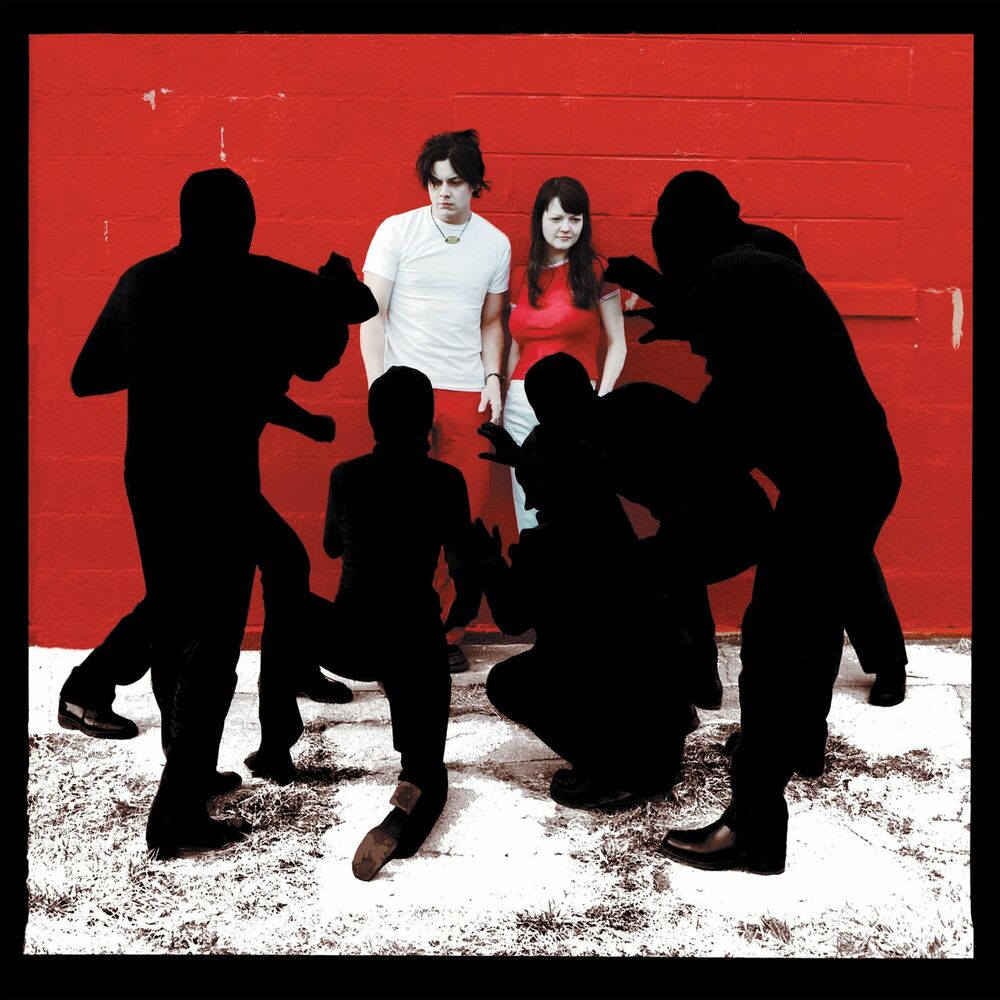
The album explores themes of love, hope, betrayal, and paranoia, reflecting the band's increasing media attention. Its title and cover art satirise their disillusionment with fame and the mainstream music industry, depicting Jack and Meg surrounded by cameras.

Why it's rated so high

White Blood Cells received widespread critical acclaim and is considered a defining album of the 2000s indie and garage rock revivals. Critics praised its 'back to basics' approach, powerful yet simple style, and its ability to surprise fans while winning new ones.

Career and historical context

This album marked The White Stripes' first commercial success, propelling them from the Detroit music scene to international recognition. It established them at the forefront of the garage rock movement and became a defining record of the era.

Fun facts

  • The album was recorded in just three days.
  • The 'Fell in Love with a Girl' music video was famously made entirely of LEGO bricks.
  • The album's production cost a mere $5,000.
  • The cover art was photographed on a wall by the former Tiger Stadium.
  • The album is dedicated to Loretta Lynn, leading to Jack producing her 2004 album, Van Lear Rose.
Written by AI from the album's and artist's Wikipedia articles and the archive's notes. Double-check anything important.

The full story

White Blood Cells is the third studio album by American rock duo the White Stripes. It was released by Sympathy for the Record Industry on July 3, 2001 and reissued by V2 Records in 2002. Produced by guitarist and lead vocalist Jack White, the album was recorded at Easley-McCain Recording in Tennessee over three days and was their first work to be mastered in a studio. The process cost $5,000 and was rushed in order to capture a "real tense feeling" and the band's raw energy. Following their success within the Detroit music scene, the White Stripes began to shift from their blues-inspired roots to a garage rock sound. The album contains lyrics about love, hope, betrayal, and paranoia, while its name and cover art reference the band's disillusionment with fame and the mainstream music industry. For promotion, they played a trio of shows in Detroit and released "Hotel Yorba", "Fell in Love with a Girl", and "Dead Leaves and the Dirty Ground" as singles. White Blood Cells charted in nine countries, reaching number 61 on the US Billboard 200 and number 55 on the UK Albums Chart, and earned platinum certifications in both countries. The album received widespread acclaim and propelled Jack and Meg White to the forefront of the 2000s indie and garage rock movements. Since its release, it has been ranked by several critics among the best albums of all time.

Background and recording

The White Stripes previously sought success in the Detroit music scene, releasing two albums between 1999 and 2000. In the interim, bandmates Jack and Meg White divorced; however Meg insisted that they continue working together. They had still been living in the house purchased from Jack's parents and lived within their means, having had no inkling of the mainstream success that would greet them with this album. With De Stijl (2000), they were content to tour modestly, come home, and go back to their respective normal day jobs as the word "success" meant no longer having to work one. That goal became a reality with the tour: Jack closed his upholstery studio and Meg eventually left her restaurant job. Paradoxically, Meg kept her uniforms out of the superstitious belief that throwing them away would bring such bad luck that it would lead her back to working a day job. Prior to White Blood Cells, the White Stripes had no interest in working with a major label for fear of losing artistic freedom and the horror stories associated with the mainstream music industry. However, the band would leave Sympathy for the Record Industry that year due to the lack of stewardship of its business and sign with V2 Records in November 2001. They were specifically aggravated that among other reasons: fans struggled to find their records, supply was not keeping up with demand, and that it was difficult for their music to be sold internationally–though they never imagined the possibility of going platinum. Before the album's release and signing with V2, Jack did not want to participate in the "business" side of the industry and believed he should only be a performer. Meg said they wanted a larger record label to address their distribution issues, though they did not actively seek any out. She expressed a similar opinion that major labels were focused on "making money", having a sense of control, and that their ideals were seemingly incompatible with that of the artist. Major labels began pursuing the White Stripes after a Rolling Stone reporter featured them on a list of artists to watch and months later, British DJ John Peel featured them live on his radio show. Operating under the assumption that no major label was genuinely interested in their music and not wanting to recoup an advance, they rejected generous offers; this in turn led to a bidding war, which gave them the leverage to ask for "impossible" contract stipulations they believed no label would accept. In hindsight, it was a "stupid" decision to turn down those generous offers, as they were "broke", acting "spoiled", and would have enthusiastically delivered albums under their contract. Ian Montone, an attorney who had recently switched to entertainment law, met Jack through Sub Pop's A&R as the band were not being paid royalties and considering leaving their label. Montone guided Jack through the process of establishing Third Man Records in order to create a licensing agreement with a major label; the imprint was otherwise not a physical business at the time but rather "protective insurance." In the meantime, Montone became a talent manager with the White Stripes as his first client. After signing with V2, Jack soon realized the band's apprehensions toward major labels were completely inaccurate and went as far as to say he would never let his own child sign to an independent label if they became a musician. In their view, they had been ripped off by independent labels that did not abide by (or have knowledge of) copyright law, and in Meg's words, they had "learned when to trust–and when not to." Seeing that some of their favorite artists, from Captain Beefheart to the Ramones, Sex Pistols, and the Rolling Stones, had been signed to major labels and appeared on popular television shows also changed their opinion when they gained mainstream success themselves. Before production, the White Stripes originally envisioned for White Blood Cells to be a double album. With the title already …

Music and lyrics

Composition and sound

Continuing the stripped-down garage rock nature of the White Stripes, White Blood Cells features less of the band's blues rock influences, instead displaying a more raw, basic, and primitive rock and roll sound. Shortly before the release of White Blood Cells, Jack asserted that "There's no blues on the new record. We're taking a break from that. There's no slide work, bass, guitar solos, or cover songs. It's just me and Meg, guitar, drums and piano." It is one of two White Stripes albums to not feature any covers of other artists. The lyrics in White Blood Cells explore love, hope, betrayal, and paranoia, brought on by the increasing media attention the duo began receiving. Most if not all of the songs were written in the band's early years, or inspired by other side-projects of Jack. Jack said being able to utilize his older works was "cool because a lot of things had been sitting around for a long time, stuff I had written on piano that had been just sitting around not doing anything. And it was good to put them all together at once, put them all in the same box and see what happened." Many songs that ended up on the album were originally written by Jack for his former band Two-Star Tabernacle. These include "Dead Leaves and the Dirty Ground", "Hotel Yorba", "The Union Forever", "The Same Boy You've Always Known", "Offend in Every Way", and "Now Mary".

Songs 1–8

"Dead Leaves and the Dirty Ground", the first of multiple former Two-Star Tabernacle songs to be adapted by the White Stripes, was first performed by the White Stripes on a local radio show in early 1999. It was recorded for their debut album, but Jack didn't feel it was ready until the production of White Blood Cells. According to Jack, although the song was his idea, the "structure", "soul", and "White Stripes feeling" of the song came from Meg's drumming. The music video was filmed in London, England and directed by Michel Gondry with numerous takes to crosscut and superimpose the wreckage of the Whites' fictional home. "Hotel Yorba" is based on the former hotel of the same name, which was a couple of blocks from Jack's childhood home. It was inspired by a rumor Jack had loved about The Beatles staying there. It was recorded at the hotel but the duo were quickly banned from the premises. Its B-side contained a live cover of 1972's country hit "Rated "X"" by Loretta Lynn. Critics perceived "I'm Finding It Harder to be a Gentleman" to be about the dissolution of the romantic relationship between Jack and Meg, who divorced over a year before the release of the album. They also perceived Jack as lyrically embodying the archaic gender roles of men in the 1930s Deep South, though Jack insisted he disagreed with their depraved behavior and does not identify as a conservative person or Republican at all, saying it was just "throwing an idea to see what the reaction is," and an attempt to "shock people." In an interview with NME, Jack said among other things that the song was about how women expect him to live up to certain standards in relationships that they wouldn't hold themselves to, though Meg insinuated that she was ambivalent toward the lyrics, saying "I don't know about that one," when asked.

"Fell in Love with a Girl", the album's second single, became the band's breakthrough to the mainstream, aided by its Lego-animation music video, directed and conceptualized by Gondry. The director was chosen because someone told Jack that Gondry directed "Devils Haircut" by Beck when in reality it was director Mark Romanek, whom they could not afford. Gondry was inspired by the album cover art for Three Imaginary Boys (1979) by The Cure as well as The White Stripes' imagery of red, white, and black of which reminded him of Legos. Fifteen animators took six weeks to create the video. The song was compared to the work of the English punk rock band Buzzcocks as well as Surfer Rosa-era Pixies. Because of its brief length, just under two minutes, …

Artwork and packaging

The name White Blood Cells was chosen as "this idea of bacteria coming at us, or just foreign things coming at us, or media, or attention on the band." Its cover art was photographed on a wall by the former Tiger Stadium. It depicts Jack and Meg surrounded by people wielding television and video cameras, which was intended to both comment on and satirize the music industry. The people portraying the silhouetted figures were The White Stripes' now-former friends in The Von Bondies and The Waxwings. Jack said in a 2001 interview before the album's release: "When does music become a business and why do we have to be suckered into it? Why do we have to buy a cell phone, you know what I mean? A lot of that stuff upsets me. It gets annoying." In 2003, he elaborated that not being perpetually accessible to their manager via cell phone was his way of maintaining his own sanity. Its cover art was only meant to comment on the success they gained outside of the Detroit rock scene, and why they themselves achieved it rather than contemporaries like Rocket 455 and The Greenhornes, but it became an "accidental prophetic thing" with the breakthrough success of the album. The album was dedicated to Loretta Lynn, whom Jack dreamed of the opportunity to meet. Over a year later, her daughter Patsy Lynn became aware of the dedication and alerted her about it, creating a friendship between Lynn and the band. After Lynn invited the White Stripes to her home and brought up making another album, Jack volunteered to produce it. The album became Van Lear Rose (2004).

Reception

Three weeks before the release of the album, the White Stripes performed three well-received shows in Detroit at the Gold Dollar, the Magic Bag, and the Magic Stick. Twice released on July 3, 2001 by Sympathy and in 2002 by V2, White Blood Cells was the band's first mainstream success. The album entered the UK Albums Chart on August 18, 2001, peaking at 55 and spending 39 weeks on the chart. It debuted on the Billboard 200 at 185 on March 23, 2002, remaining on the charts for 53 weeks and peaking at 61 on April 20, 2002. It went on to receive platinum certifications in the United Kingdom and the United States, and gold certifications in Australia and Canada. White Blood Cells received widespread acclaim. Review aggregating website Metacritic reports a normalized score of 86 out of 100 based on 16 reviews, indicating "universal acclaim". This makes White Blood Cells the White Stripes' second highest-scoring album on the website as of 2024. It drew praise in the United Kingdom on its initial release, and after its reissue by V2, was acclaimed in the United States; outlets of both territories praised the band's "back to basics" approach. As observed by AllMusic editor Heather Phares, "Jack and Meg White's third effort for Sympathy for the Record Industry wraps their powerful, deceptively simple style around meditations on fame, love, and betrayal... it's precisely this mix of strength and sweetness, among other contrasts, that makes the White Stripes so intriguing. Likewise, White Blood Cells' ability to surprise old fans and win over new ones makes it one of the Stripes' finest albums." Writers at NME said "This is the house of the Rising Stars: the lyrics are great, the attitude unmistakable. [...] Great songs, a great look and self-discipline, too. Rock'n'roll might have been the ruin of many a poor boy, but White Stripes are made guys." Dan Killan and Ryan Schreiber of Pitchfork said that "Jack and Meg White summon the Holy Spirit and channel it through 16 perfectly concise songs of longing, with dirty, distorted electric guitar cranked to maximum amplification, crashing, bruised drums, and little else. They don't innovate rock; they embody it." Rolling Stone said that, on White Blood Cells, "Jack's Delta-roadhouse fantasies, Detroit-garage-rock razzle and busted-love lyricism, as well as Meg's toy-thunder drumming all peaked at once." Joe Hagan of The New York Times declared that the White Stripes "have made rock rock again by returning to its origins as a simple, primitive sound full of unfettered zeal." White Blood Cells was included on many "best of 2001" year-end lists, including Blender, Rolling Stone, Mojo, and Kerrang!'s top 20, and NME, Pitchfork, and The Village Voice's top 10. It also earned the band their first accolades, including three awards at the 2002 MTV Video Music Awards and nominations at the 2002 MTV Europe Music Awards, the 2002 MuchMusic Video Awards, and the 2002 Shockwaves NME Awards. By July 2001, British radio DJ John Peel had been regularly playing and promoting The White Stripes' music on his radio show for over a year, unbeknownst to the band. Jack and Peel quickly bonded over their shared taste in music, particularly Captain Beefheart, Gene Vincent, Lonnie Donegan, and the blues, as well as Jack's pastime of mingling with older intellectuals. Peel rarely had live-in-studio performances on his radio show, which piqued the attention of the British media. Within mere weeks the British press–particularly NME–began to catch on to the band and turned into a barrage of British media coverage that even NME itself described as "apocolyptic." The White Stripes were nonplussed by the mainstream response to White Blood Cells, being that it was their third album and their core audience had been relatively small, abeit "fickle." Seeing The Strokes gain commensurate success and media attention in the United Kingdom from just their 2001 debut album "scared" them due to the level of "pressure." The White …
Legacy

White Blood Cells propelled the band to the forefront of the 2000s indie rock revival and garage rock revival, and is considered a defining album of the period. Retrospectively, it has been cited as one of the band's best works, and among the best albums of all time. Jon Lusk of BBC believed the album solidified their success thanks to "the crunching, insistent simplicity of Meg White's drumming, which sticks like glue to Jack White's intense, rhythmic, blues-based riffing; a broad, knowing sense of pop history, and of course their by now well-established red/white branding imagery." Paul Travers of Louder called it "one of the first great albums of the 21st century" and their best album. NPR rated White Blood Cells as one of the most important recordings of the decade, describing it as the band's "finest hour: a flawless slice of fuzzed-out, frenetic, trichromatic hip-shaking." By the end of the 2000s, it was ranked as the best album of the decade by The A.V. Club and Uncut. Billboard, Rolling Stone, NME and Pitchfork featured the album within the top 20 of their respective lists, and Consequence of Sound, The Daily Californian, Glide, and Under the Radar featured the album within the top 30 of their respective lists. It also appeared on Spin's lists of the "Top 100 Albums of the Last 20 Years" and the "125 Best Albums of the Past 25 Years" in 2005 and 2010, respectively. It appeared on The Guardian's "1000 Albums To Hear Before You Die" list and ranked it number 178 on the Rock and Roll Hall of Fame's "200 Definitive Albums" list, both in 2007. Uncut ranked it first on their list of "The 150 Greatest Albums Of The 21st Century So Far" in 2009. Slant Magazine ranked it number 68 on their list of the "Top 250 Albums of the 2000s" in 2010. Rolling Stone ranked it number 497 on their "500 Greatest Albums of All Time" list in 2012. NME ranked it number 77 on their list of "The 500 Greatest Albums of All Time" in 2013. Redd Kross bassist Steven Shane McDonald created an online-only art project, titled Redd Blood Cells, in which he added a bass track to the otherwise bass-less album. The White Stripes arranged with Steven to take the files down after more than 60,000 downloads. British choreographer Wayne McGregor used the track "Aluminum"—among other of the band's songs—for his production Chroma, a piece he created for the Royal Ballet in London, England. It was played to the band as a surprise in Cincinnati Music Hall, Ohio in 2006, and won the 2007 Laurence Olivier Award for Best New Dance Production. In addition to Napoleon Dynamite, the song "We're Going to Be Friends" has appeared in the films Wonder (2017), and Mr. Harrigan's Phone (2022), and "Fell in Love with a Girl" was featured in the Oscar-winning film Silver Linings Playbook.

From the Wikipedia article White Blood Cells, available under CC BY-SA 4.0.

Tracklist

  1. Dead Leaves and the Dirty Ground3:03
  2. Hotel Yorba2:10
  3. I'm Finding It Harder To Be a Gentleman2:54
  4. Fell In Love With a Girl1:50
  5. Expecting2:03
  6. Little Room0:50
  7. The Union Forever3:25
  8. The Same Boy You've Always Known3:09
  9. We're Going to Be Friends2:22
  10. Offend In Every Way3:06
  11. I Think I Smell a Rat2:04
  12. Aluminum2:17
  13. I Can't Wait3:37
  14. Now Mary1:46
  15. I Can Learn3:28
  16. This Protector2:12

Listeners 0

Nobody has logged it yet. Be the first.

Log a listen