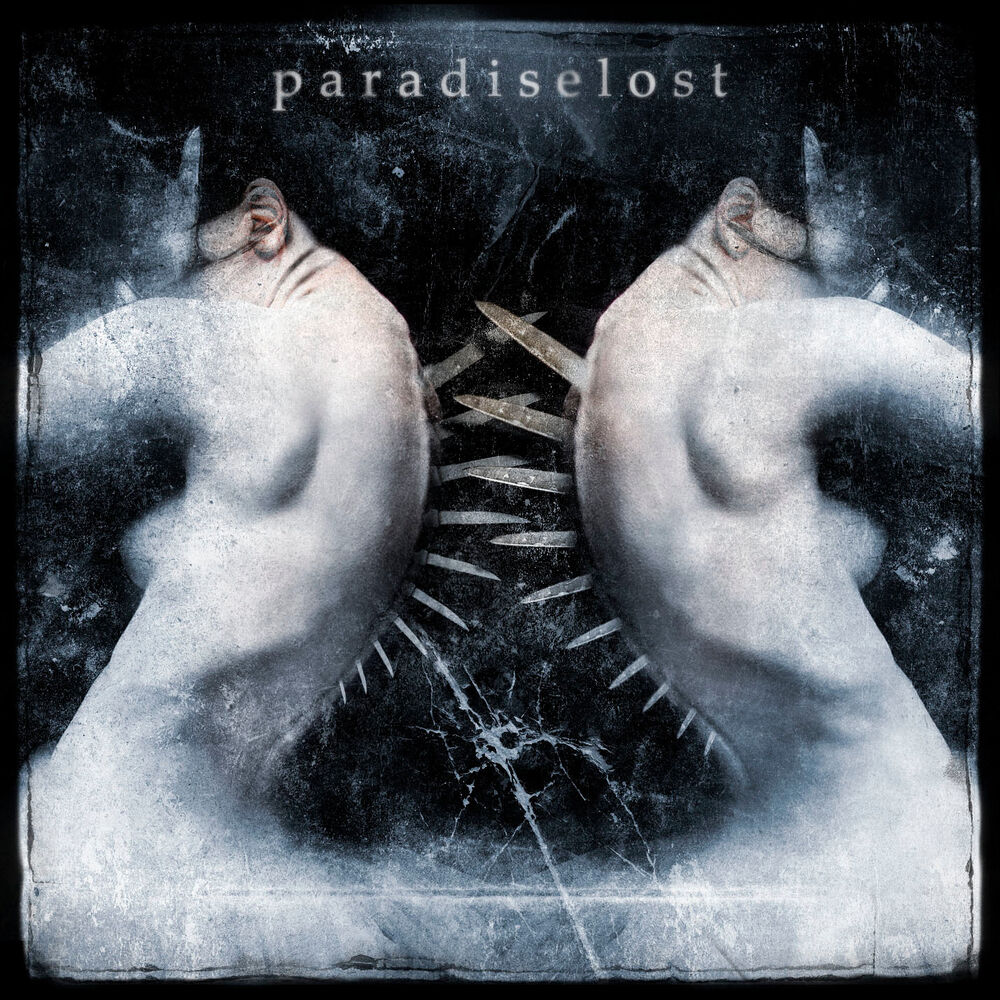
Tracklist
- Don't Belong4:18
- Close Your Eyes4:20
- Grey3:27
- Red Shift3:28
- Forever After3:47
- Sun Fading3:26
- Laws Of Cause4:09
- All You Leave Behind2:59
- Accept The Pain3:21
- Shine4:05
- Spirit4:20
- Over The Madness5:18
Have you heard it?
Sign in to mark it as listened, rate it and keep notes.
The full story
Paradise Lost is an epic poem in blank verse by the English poet John Milton (1608–1674). The poem concerns the biblical story of the fall of man: the temptation of Adam and Eve by the fallen angel Satan and their expulsion from the Garden of Eden. The first version, published in 1667, consists of ten books with over ten thousand lines of verse. A second edition followed in 1674, arranged into twelve books (in the manner of Virgil's Aeneid) with minor revisions throughout. It is considered to be Milton's masterpiece, and it helped solidify his reputation as one of the greatest English poets.
Composition
It is uncertain when Milton composed Paradise Lost. John Aubrey (1626–1697), Milton's contemporary and biographer, says that it was written between 1658 and 1663. However, parts of the poem had likely been in development since Milton was young. Having gone blind in 1652, Milton wrote Paradise Lost entirely through dictation with the help of amanuenses and friends. He was often ill, suffering from gout, and suffering emotionally after the early death of his second wife, Katherine Woodcock, in 1658, and their infant daughter. The image of Milton dictating the poem to his daughters became a popular subject for paintings, especially in the Romantic period. Milton scholar John Leonard notes that Milton "did not at first plan to write a biblical epic". Since epics were typically written about heroic kings and queens (and with pagan gods), Milton originally envisioned his epic to be based on a legendary Saxon or British king like the legend of King Arthur. Leonard speculates that the English Civil War interrupted Milton's earliest attempts to start his "epic [poem] that would encompass all space and time".
Publication
The 1667 version of Paradise Lost divided the poem into ten books. However, in the 1674 edition, the text was reorganised into twelve books. Starting in 1668, some printings inserted "Arguments" (brief summaries) at the beginning of each book. Milton's previous work had been printed by Matthew Simmons who was favoured by radical writers. However, he died in 1654 and the business was then run by Mary Simmons. Milton had not published work with the Simmons printing business for twenty years. Mary was increasingly relying on her son Samuel to help her manage the business and the first book that Samuel Simmons registered for publication in his name was Paradise Lost in 1667.
Style
Biblical epic
Key to the ambitions of Paradise Lost as a poem is the creation of a new kind of epic, one suitable for English, Christian morality rather than polytheistic Greek or Roman antiquity. This intention is indicated from the very beginning of the poem, when Milton uses the classical epic poetic device of an invocation for poetic inspiration. Rather than invoking the classical muses, however, Milton addresses the Christian God as his "Heav'nly Muse" (1.1). Other classical epic conventions include an in medias res opening, a journey in the underworld, large-scale battles, and an elevated poetic style. In particular, the poem often uses Homeric similes. Milton repurposes these epic conventions to create a new biblical epic, promoting a different kind of hero. Classical epic heroes like Achilles, Odysseus, and Aeneas were presented in the Iliad, Odyssey, and Aeneid as heroes for their military strength and guile, which might go hand in hand with wrath, pride, or lust. Milton attributes these traits instead to Satan, and depicts the Son as heroic for his love, mercy, humility, and self-sacrifice. The poem itself therefore presents the value system of classical heroism as one which has been superseded by Christian virtue.
Blank verse
The poem is written in blank verse, meaning the lines are metrically regular iambic pentameter but they do not rhyme. Milton used the flexibility of blank verse to support a high level of syntactic complexity. Although Milton was not the first to use blank verse, his use of it was very influential and he became known for the style. Blank verse was not much used in the non-dramatic poetry of the 17th century until Paradise Lost. Milton also wrote Paradise Regained (1671) and parts of Samson Agonistes (1671) in blank verse. Miltonic blank verse became the standard for those attempting to write English epics for centuries following the publication of Paradise Lost and his later poetry. When Miltonic verse became popular, Samuel Johnson mocked Milton for inspiring bad blank verse imitators. Alexander Pope's final, incomplete work was intended to be written in the form, and John Keats, who complained that he relied too heavily on Milton, adopted and picked up various aspects of his poetry.
Acrostics
Milton used at least two acrostics in the poem, perhaps mimicking the acrostics found in Dante's Divine Comedy, although these acrostics were not remarked in the scholarly literature until the 20th century. In Book 9, eight lines near the end of Eve's persuasive argument to Adam that she should work unaccompanied in the Garden that day spell out "FFAALLAF" (9.333–340); when finally remarked in 2019, this acrostic was interpreted as three interlocking copies (one reversed) of the word "FALL", in reference to the falls of Satan (from Heaven) and of Adam and Eve (from Paradise). Later, five lines describing the serpent's sidelong approach towards Eve spell out "SATAN" (9.510–514), with perhaps another truncated "FAL" just above at 9.503–505.
Double syntax
Milton infuses double syntax and ambiguous meaning into his writing through Paradise Lost. He achieves this through various methods such as using enjambment to alter the way the first half of a sentence might be interpreted before the line break. For example, in book 9 Milton writes of Adam awaiting Eve's return "Great joy he promised to his thoughts, and new/ Solace in her return..." (9.843-844). The lack of an end-stop after the word "new" gives the impression that it modifies "thoughts" implying he will be given "new" "thoughts", not "new/ Solace..." as the finished sentence reveals. This foreshadows Eve's return, having eaten fruit from the forbidden Tree of the Knowledge of Good and Evil, and Adam's eventual assent to eating the fruit as well.
Themes
Marriage
Milton held many opinions on what the ideal marriage was supposed to be. A year after Mary Powell left him weeks after their marriage in 1642, Milton published The Divorce Tracts, detailing his opinions on marriage and divorce. In the book Tetrachordon, Milton defines marriage as "a love fitly dispos'd to mutual help and comfort of life; this is that happy Form of marriage naturally arising from the very heart of divine institution in the Text". John Halkett states that, to Adam, Eve represents a more complex space in his heart as she helps satisfy the emotional needs he expressed to God, bringing him true harmony as his desire. Hermine Van Nuis clarifies, that although there was stringency specified for the roles of male and female, Adam and Eve unreservedly accept their designated roles. Rather than viewing these roles as forced upon them, each uses their assignment as an asset in their relationship with each other. These distinctions can be interpreted as Milton's view on the importance of mutuality between husband and wife. When examining the relationship between Adam and Eve, some critics apply either an Adam-centered or Eve-centered view of hierarchy and importance to God. David Mikics argues, by contrast, these positions "overstate the independence of the characters' stances, and therefore miss the way in which Adam and Eve are entwined with each other". Others like Halkett argue that these very differences help set up the inherent hierarchy between husband and wife. He states that "Milton argues the inequality of the sexes from the differences in their appearance: their hair, forehead, and eyes give evidence of different intellectual and moral powers," which the Son reminds Adam when he confronts the pair after the fall, as Eve was to "attract thy love, not thy subjection." However, Kristin Pruitt argues that both reciprocity and hierarchy are at equal play in the relationship. Eve sees Adam as her faithful guide, and Adam sees her as a priceless companion, and through this they develop each other's gifts. Pruitt states that "the ideal human marriage....is not masculinist or feminist but essentially...humanist." Milton's narrative depicts a relationship where the husband and wife (here, Adam and Eve) depend on each other and, through each other's differences, thrive. Even though there are several instances where Adam communicates directly with God while Eve must go through Adam to God, Pruitt suggests that through her relationship with Adam, she has gained "God in her" and Adam must honour that.
Although Milton does not directly mention divorce, critics posit theories on Milton's view of divorce based upon their inferences from the poem and from his tracts on divorce written earlier in his life. Other works by Milton suggest he viewed marriage as an entity separate from the church. Discussing Paradise Lost, Biberman entertains the idea that "marriage is a contract made by both the man and the woman". These ideas imply Milton may have thought that both man and woman should have equal access to marriage and to divorce.
Idolatry
Milton's 17th-century contemporaries by and large criticised his ideas and considered him a radical, mostly because of his republican political views and heterodox theological opinions. One of Milton's most controversial arguments centred on his concept of what is idolatrous, a subject which is deeply embedded in Paradise Lost. Milton's first criticism of idolatry focused on the constructing of temples and other buildings to serve as places of worship. In Book XI of Paradise Lost, Adam tries to atone for his sins by offering to build altars to worship God. In response, the angel Michael explains that Adam does not need to build physical objects to experience the presence of God. Joseph Lyle points to this example, explaining: "When Milton objects to architecture, it is not a quality inherent in buildings themselves he finds offensive, but rather their tendency to act as …
Tracklist
- Don't Belong4:18
- Close Your Eyes4:20
- Grey3:27
- Red Shift3:28
- Forever After3:47
- Sun Fading3:26
- Laws Of Cause4:09
- All You Leave Behind2:59
- Accept The Pain3:21
- Shine4:05
- Spirit4:20
- Over The Madness5:18
Listeners 0
Nobody has logged it yet. Be the first.