About the artist
Led Zeppelin were an English rock band formed in London in 1968, comprising Robert Plant, Jimmy Page, John Paul Jones, and John Bonham. Their heavy electric-guitar sound, fused with blues and folk, popularised album-oriented and stadium rock, establishing them as progenitors of hard rock and heavy metal. They are among the best-selling music artists of all time, with 200 to 300 million records sold worldwide.
About the album
Led Zeppelin IV, released in 1971, is an untitled album produced by Jimmy Page and recorded mostly at Headley Grange. It fuses hard rock, folk, and blues, defining the sound and mythology of 1970s rock. The informal recording environment allowed for diverse styles and spontaneous performances.
Meanings
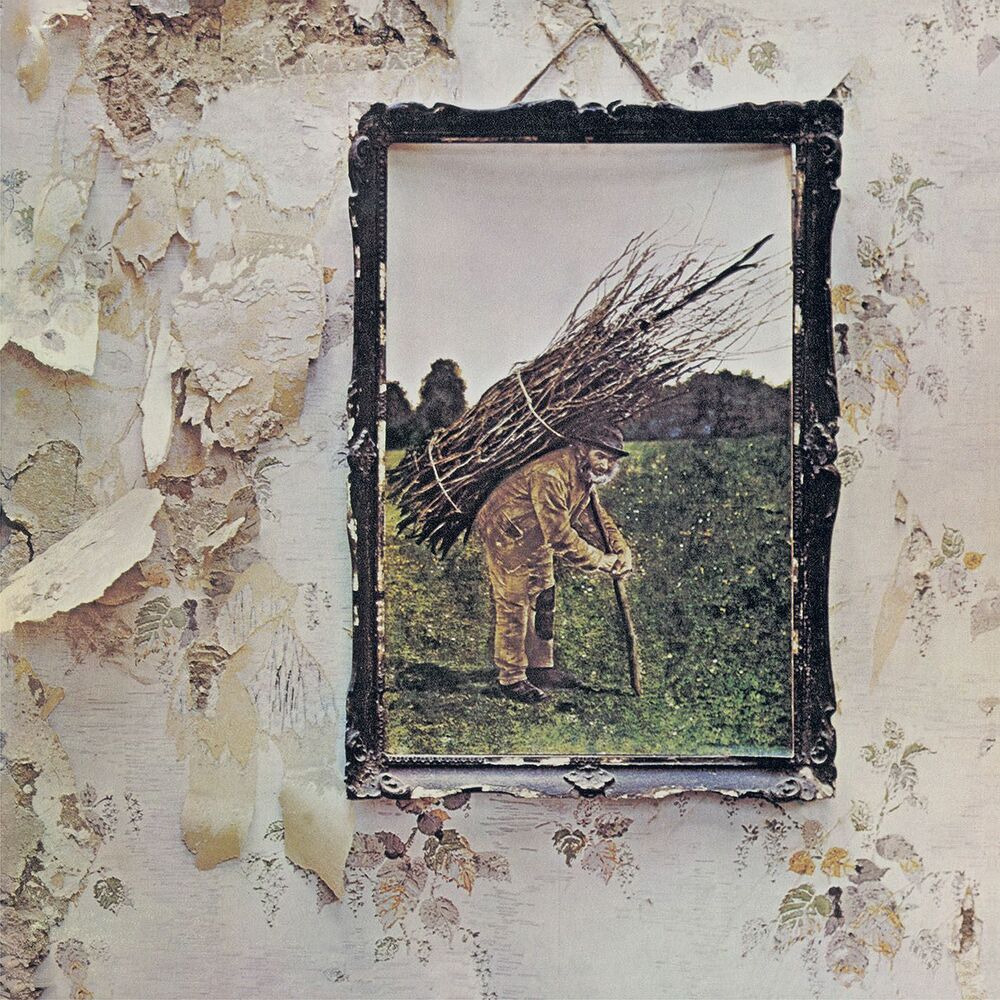
The album has no official title, instead featuring four symbols chosen by each band member, a decision made after the lukewarm reception of their previous album. The cover image of an old man carrying sticks and the inner illustration "The Hermit" were intended to create a city/country dichotomy and encourage reflection on looking after the Earth.
Why it's rated so high
Led Zeppelin IV was an immediate critical and commercial success, becoming the band's best-selling album with over 37 million copies sold worldwide. Critics regularly place it high on lists of the greatest albums, crediting it for defining 1970s hard rock and being a monolithic cornerstone of heavy metal. It is considered "the most famous hard-rock album ever recorded".
Career and historical context
Following the release of Led Zeppelin III, which received lukewarm reviews, the band decided to release their fourth album untitled, standing firm against Atlantic Records' objections. This album solidified their artistic freedom and established them as a global success, becoming their most durable seller and impressive critical and commercial achievement.
Fun facts
- The album has no official title, only four symbols, one chosen by each band member.
- Sandy Denny is the only guest vocalist on a Led Zeppelin album, duetting on "The Battle of Evermore".
- Recording mostly took place in the country house Headley Grange, using the Rolling Stones Mobile Studio.
- The front cover image of an old man is a hand-coloured photograph from 1892, not an oil painting.
- The typeface for "Stairway to Heaven" lyrics was found by Page in a late 19th-century Arts and Crafts magazine.