João's Music Archive
L.A. Woman
← Back to the lists

L.A. Woman

Doors
April 19, 1971
Rhino/Elektra
25 tracks, 2 h 57 min
Rating
–
Not heard yet
110
–Archive
88Critics
0Listeners
Average score 88Metacritic 93AOTY 889 reviews

Tracklist

  1. The Changeling (2021 Remaster)4:22
  2. Love Her Madly (2021 Remaster)3:21
  3. Been Down So Long (2021 Remaster)4:42
  4. Cars Hiss By My Window (2021 Remaster)4:13
  5. L.A. Woman (2021 Remaster)7:49
  6. L'America (2021 Remaster)4:36
  7. Hyacinth House (2021 Remaster)3:10
  8. Crawling King Snake (2021 Remaster)5:00
  9. The WASP (Texas Radio And The Big Beat) (2021 Remaster)4:15
  10. Riders On The Storm (2021 Remaster)7:16
  11. Hyacinth House (Demo) (2021 Remaster)2:36
  12. Riders On The Storm (Sunset Sound Demo)4:46
  13. The Changeling (Pt. 1) (L.A. Woman Sessions)26:49
  14. Love Her Madly (Pt. 1) (L.A. Woman Sessions)20:57
  15. Riders On The Storm (L.A. Woman Sessions)18:09
  16. L.A. Woman (Pt. 1) (L.A. Woman Sessions)11:03
  17. L.A. Woman, Pt. 2 (L.A. Woman Sessions)8:41
  18. She Smells So Nice (L.A. Woman Sessions)3:20
  19. Rock Me Baby (L.A. Woman Sessions)4:39
  20. Mr. Mojo Risin' (L.A. Woman Sessions)1:13
  21. Baby Please Don't Go (L.A. Woman Sessions)0:07
  22. L.A. Woman (Pt. 2) (L.A. Woman Sessions)13:24
  23. Been Down So Long (Pt. 1) (L.A. Woman Sessions)4:57
  24. Get Out Of My Life Woman (L.A. Woman Sessions)3:59
  25. Crawling King Snake (L.A. Woman Sessions)4:14
Listen on

Have you heard it?

Sign in to mark it as listened, rate it and keep notes.

About the artist

The Doors were an innovative American rock band formed in Los Angeles in 1965, known for their pioneering experimentation and Jim Morrison's poetic lyrics. They are considered highly influential, a major representative of the counterculture, and one of the best-selling bands globally.

About the album

L.A. Woman is The Doors' sixth studio album, released in 1971, and the last to feature Jim Morrison during his lifetime. Heavily influenced by blues, it was co-produced by the band and engineer Bruce Botnick after their long-time producer quit.

Meanings

The album explores themes of love, life in Los Angeles, and complex human experiences, with Morrison expressing mixed feelings for the city. The title track famously contains an anagram for Jim Morrison: 'Mr. Mojo Risin'.

Why it's rated so high

Critics widely praise L.A. Woman as one of The Doors' best, noting Morrison's vocal performance and the band's return to blues-rock roots. It achieved commercial success, charting well, and is recognised for its stripped-down, harmonious sound.

Career and historical context

This album followed Morrison's legal troubles and marked a return to a simpler, straightforward style after their previous, more orchestrated work. It was recorded under pressure, as the band needed to fulfil their contract with Elektra Records.

Fun facts

  • The album was recorded in their private rehearsal space, the Doors' Workshop, to create a relaxed atmosphere.
  • Jim Morrison recorded his vocals in the bathroom doorway, using the same microphone from their final tour.
  • Elvis Presley's bassist, Jerry Scheff, played on the album, much to Morrison's excitement.
  • Original producer Paul A. Rothchild quit, calling 'Love Her Madly' 'cocktail music'.
  • The first cover pressing featured a unique clear embossed cellophane insert.
Written by AI from the album's and artist's Wikipedia articles and the archive's notes. Double-check anything important.

The full story

L.A. Woman is the sixth studio album by the American rock band the Doors, released on April 19, 1971, by Elektra Records. It is the last to feature lead singer Jim Morrison during his lifetime, though he would posthumously appear on the 1978 album An American Prayer. Even more so than its predecessors, the album is heavily influenced by blues. It was recorded without producer Paul A. Rothchild after he quit the band over the perceived lack of quality in their studio performances. Subsequently, the band co-produced the album with longtime sound engineer Bruce Botnick. "Love Her Madly" was released as a single in March 1971, preceding the album's release, and reached the Top 20 on the Billboard Hot 100. Upon release, the album peaked at number nine on the Billboard 200 and reached number 28 on the UK Albums Chart. The track "Riders on the Storm" also achieved chart success. Critics including Richie Unterberger and David Quantick have called L.A. Woman one of the Doors' best albums, citing Morrison's vocal performance and the band's stripped-down return to their blues-rock roots.

Background

The Doors had achieved commercial and critical success by 1969, but for much of that year they were blacklisted from radio playlists and their concert bookings dwindled after singer Jim Morrison had been charged with profanity and indecent exposure at a concert in Miami, Florida. Morrison had mentioned leaving the group at the end of 1968, only to be convinced by keyboardist Ray Manzarek to stay on another six months. On September 20, 1970, Morrison was convicted for the Miami incident. In a 1970 interview with Ben Fong-Torres, Morrison said of Miami, "I think subconsciously I was trying to get across in that concert, I was trying to reduce it to absurdity. And it worked too well." In November 1970, shortly after Morrison's trial ended, the Doors entered Sunset Sound Recorders in Los Angeles to record early versions of the songs "L.A. Woman", "Riders on the Storm" and "Love Her Madly". The new songs were a departure from the heavily orchestrated pieces on the earlier album The Soft Parade, which burdened the group with long, drawn-out recording sessions. The simplified and straightforward style, progressing from Morrison Hotel, was well-received, noted by Jazz & Pop magazine as "a return to the tight fury of early Doors' music". The band conflicted with their record company, Elektra Records, who released the Doors' first compilation album, 13, to have a product for the Christmas market. It was released without the band's input, and featured a large image of a younger Morrison, upsetting him enough to threaten signing with another label. As their contract required one more album, the group were unable to follow through with the threat, so they continued rehearsing the new material. Record producer Paul A. Rothchild, who worked with the band on their first five albums, attended the early sessions but quit following friction with the band. This included his dissatisfaction with the song "Love Her Madly", which "drove [him] out of the studio." He felt that recording the composition was a step backwards artistically, calling it "cocktail music." Rothchild has denied a popular rumor that claimed he directed the remark toward "Riders on the Storm", explaining that he thought that song and "L.A. Woman" were "excellent in rehearsal". He maintains that his cocktail music comment was said to "make [the group] angry enough to do something good." Rothchild was frustrated that the group was slow in developing new material, especially as the band contained three songwriters. He was unable to persuade Morrison to consistently attend rehearsals. As Bruce Botnick revealed in the book Love Becomes a Funeral Pyre, another issue that led to Rothchild's leaving was the emotional devastation he felt at the death of Janis Joplin, having worked with her on Pearl. Rothchild left before any master takes were complete, recommending that the Doors co-produce L.A. Woman with Botnick, the sound engineer who had worked with Rothchild on the band's previous recordings. The artist Eve Babitz is cited as the woman who inspired the lyrics of the title song.

Recording

The group and Botnick organized a makeshift recording studio at their private rehearsal space, the Doors' Workshop, a two-story building at 8512 Santa Monica Boulevard. They could then record in a more comfortable and relaxed setting while avoiding the expenses of a professional studio. A mixing console previously owned by Elektra was installed upstairs in the Workshop, while studio monitors, microphones, and keyboards were set up downstairs. To compensate for the lack of an isolated vocal booth, Morrison recorded in the bathroom doorway, singing into the same microphone used on the Doors' final tour. According to Botnick, Morrison was easy to work with and spent long hours in the studio with little consumption of alcohol. For recording, Elvis Presley's bassist Jerry Scheff and rhythm guitarist Marc Benno were brought in to provide additional backing. Densmore characterized Scheff as "an in-the-pocket man" for his steady supportive role, and praised how Scheff "allowed me to communicate rhythmically with Morrison, and he slowed Ray down, when his right hand on the keyboards got too darn fast". By all accounts, Morrison – a huge Presley fan – was excited by Scheff's participation. In addition, Benno was asked to participate as a result of his recent notoriety from working with Leon Russell. The songs were completed in a few takes on a professional-quality 8-track recorder, and the album was finished in six days. Morrison was a blues enthusiast and proclaimed the final recording session as "blues day", recording "Crawling King Snake", "Cars Hiss by My Window", and "L.A. Woman". The album had a raw, live sound with overdubs mostly limited to additional keyboards. Botnick explained, "The overall concept for the recording session was to go back to our early roots and try to get everything live in the studio with as few overdubs as possible". Mixing was completed at Poppi Studios in West Hollywood, by which time Morrison had moved to Paris.

Music

The band began recording without much material and needed to compose songs on the spot, either by jamming or talking through ideas. In a 1994 interview, guitarist Robby Krieger stated, "Rothchild was gone, which is one reason why we had so much fun. The warden was gone." Despite its troubled beginnings, L.A. Woman contains some of the Doors' most critically acclaimed songs, as well as some of their most blues-oriented. Lyrically, the album deals with contemporary topics such as love, life in Los Angeles, and complex aspects of the human experience. Manzarek explained the band did not "approach the album with one vision, but after we started working on the songs, we realized that they're talking about L.A. They're about men, women, boys, girls, love, loss, lovers-lost, and lovers-found in Los Angeles". The album, as a whole, demonstrated Morrison's songwriting abilities, combined with his poetic phrasing and enthusiasm for Los Angeles but still a desire to leave the city with his partner, Pamela Courson. Artistically, L.A. Woman saw the band mixing blues and rock, with some elements of psychedelic and jazz rock of their early career.

Songs

==== Side one ==== L.A. Woman opens with the Morrison-penned track "The Changeling", which the Doors wanted to be the album's first single. Taken from one of Morrison's journals written in 1968, Holzman overruled the group's decision in favor of "Love Her Madly" and the non-album B-side "(You Need Meat) Don't Go No Further". Morrison also contributed "Been Down So Long", a song inspired by folk singer Richard Fariña's book Been Down So Long It Looks Like Up to Me and Furry Lewis's tune, "I Will Turn Your Money Green". A conventional blues song reminiscent of Morrison's potential imprisonment from earlier Doors performances, the lyrics showed depression, liberation, and sexuality. Additionally, Morrison wrote the blues number "Cars Hiss by My Window". Unlike most of the other tracks, it was composed in the studio. Manzarek recalled that "Jim said it was about living in Venice [Beach], in a hot room, with a hot girlfriend, and an open window, and a bad time. It could have been about Pamela Courson". Of the remaining self-written material on L.A. Woman, Krieger wrote "Love Her Madly", which echoed his songs of romance and insecurity. He wrote the song, at his house, to alleviate his boredom during Morrison's trial. L.A. Woman closes its first side with the title track, the lengthiest song on the album. Thought of as Morrison's final goodbye to Los Angeles, it communicated his mixed feelings of passion and disdain for "the city of night". The lyrics feature an anagram for Jim Morrison: "Mr. Mojo Risin'". Krieger's electric guitar effect at the introduction impersonates the sound of an accelerated automobile engine.

==== Side two ==== In addition to "The Changeling", the Doors chose to incorporate three other compositions written before 1971: "L' America", "Crawling King Snake", and "The WASP (Texas Radio and the Big Beat)". "L'America" was intended for the soundtrack of director Michelangelo Antonioni's 1970 counterculture film Zabriskie Point, but ultimately rejected. Manzarek recalled, "Antonioni was interested in using it in Zabriskie Point. So we played it for him, and it was so loud, it pinned him up against the wall. When it was over, he thanked us and fled. So he turned to Pink Floyd, as European filmmakers tend to do when they want rock & roll." Previously titled "Latin America", it was originally written and recorded during the sessions for Morrison Hotel, and the only work during the L.A. Woman sessions with a few drum overdubs. The Doors' arrangement of the traditional "Crawling King Snake" dates back to their early tours, and was sometimes coupled with Morrison's poem "Celebration of the Lizard". "The WASP (Texas Radio and the Big Beat)" is a reworking of Morrison's sample of poetry first appearing on the group's souvenir books in 1968. L.A. Woman also features "Hyacinth …

Release and reception

L.A. Woman was released on April 19, 1971. It reached number nine on the Billboard 200, remaining on the charts for 36 weeks, and reached number 28 in the UK, spending four weeks on the UK Albums Charts. The first cover pressing had a burgundy-colored, curved-corner cardboard cutout sleeve, framing a clear embossed cellophane insert, glued in from behind. Photography was credited to Wendell Hamick. According to Jac Holzman, chief executive officer of Elektra Records: "I wasn't sure there would be another album ever, so I had Bill Harvey create a collector's cover. The Doors' faces were printed on clear film. The backing color of the inner sleeve could be changed and would affect the mood of the package. This is the first album in which Jim is bearded on the front cover. His photo is on the right, no bigger, no smaller than the others, just another guy in the band."

Two and a half months after release on July 3, Morrison was found dead. There had been discussions between Morrison and the others for future recording after he returned from Paris. The album was accompanied by the "Love Her Madly" single, which was released in March and charted at number 11 on the Billboard Hot 100 for a stay of 11 weeks but failed to chart in the UK. An additional single, "Riders on the Storm", was edited and released in June, and reached number 14 on the Billboard chart, while managing to peak at number 22 in the UK chart.

The album received mostly positive reviews. Rolling Stone's Robert Meltzer was impressed by the sense of fun and the togetherness of the band, saying it was "the Doors' greatest album" and the best album of the year. Reviewing in New Musical Express, critic Roy Carr called it "one of their best in sometime," praising it as having "great depth, vigour and presence." Melody Maker wrote an unfavorable review, praising the "effective electric piano" of "Riders on the Storm", but finding the rest of the album as just "staleness", and that it's "all so obvious that originality has left them". In Christgau's Record Guide: Rock Albums of the Seventies (1981), Robert Christgau appreciated Morrison's sense of humor in some of the lyrics and believed "the band has never sounded better", although he was disappointed with "Been Down So Long" and "L'America". In his 1994 book The Complete Guide to the Music of The Doors, Peter K. Hogan describes the album as an expansion on the style from Morrison Hotel, but in a more coherent form. He also believed L.A. Woman was a fitting swan song for Morrison, who was pleased to finally record a blues-oriented album. Sal Cinquemani, reviewing the album for Slant Magazine, considers L.A. Woman to be "the sound of a band in perfect harmony". He describes the Doors' material as "disturbing and cynical over the years, and these songs were no exception". PopMatters's Nathan Wisnicki said Morrison's lyrics were less pretentious than previous work because of L.A. Woman's "more conventional blues". Stephen Dalton of Classic Rock, reviewing the 40th Anniversary Edition of the album, remarks how "the original L.A. Woman still stands proud, an all-time classic journey into bright shining darkness." David Quantick from BBC Music attributed the record's success to "a stripped-down yet full sound, a developed mysticism tied tightly to the band's brand of rock, and confidence born of having been a functioning unit for several years". Richie Unterberger, writing for AllMusic, described L.A. Woman as "uneven", but noted that the album contains compositions that "rate among their finest and most disturbing work". In 2003, L.A. Woman was ranked number 362 on Rolling Stone magazine's list of the "500 Greatest Albums of All Time". When the list was revised in 2012, to accommodate a number of albums released since 2003, the album was repositioned at number 364. Both Ultimate Classic Rock and Stereogum named it the Doors' second best album, with the latter's Ryan Leas adding in the website, "It traveled the same raw …
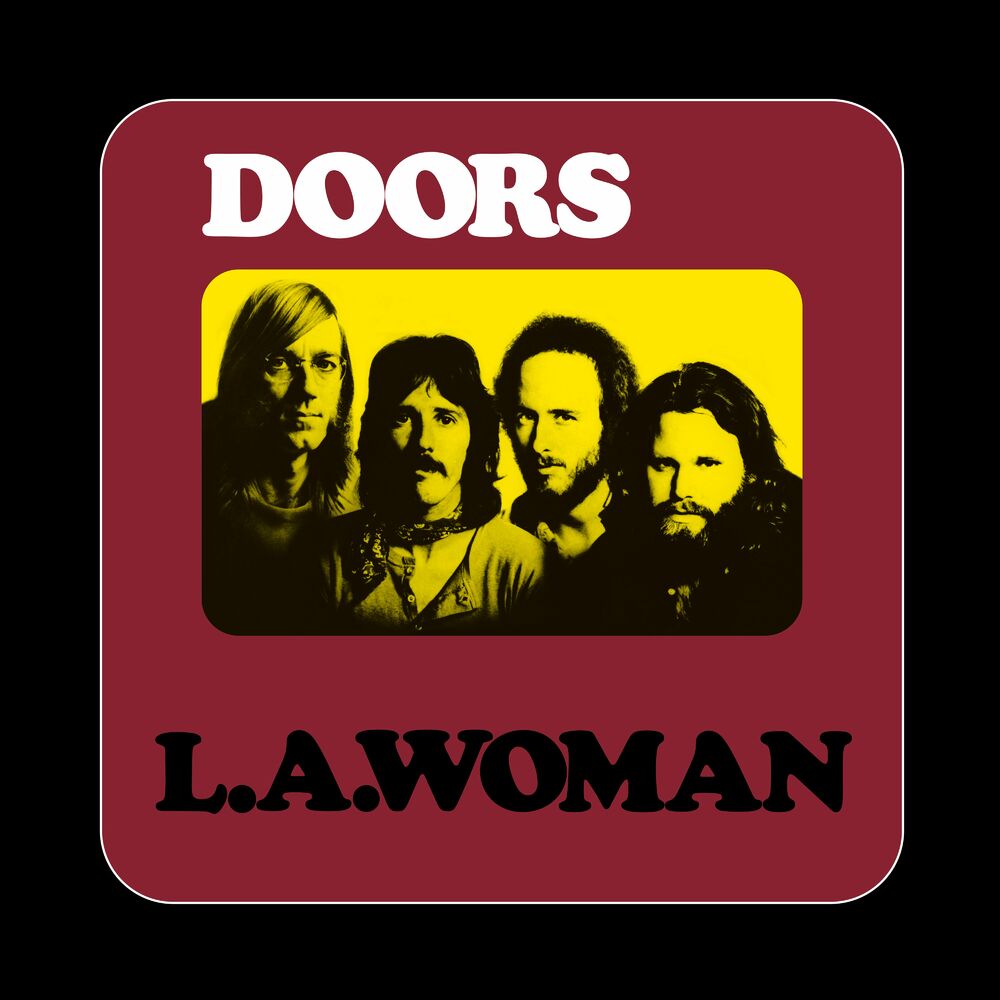
From the Wikipedia article L.A. Woman, available under CC BY-SA 4.0.

Tracklist

  1. The Changeling (2021 Remaster)4:22
  2. Love Her Madly (2021 Remaster)3:21
  3. Been Down So Long (2021 Remaster)4:42
  4. Cars Hiss By My Window (2021 Remaster)4:13
  5. L.A. Woman (2021 Remaster)7:49
  6. L'America (2021 Remaster)4:36
  7. Hyacinth House (2021 Remaster)3:10
  8. Crawling King Snake (2021 Remaster)5:00
  9. The WASP (Texas Radio And The Big Beat) (2021 Remaster)4:15
  10. Riders On The Storm (2021 Remaster)7:16
  11. Hyacinth House (Demo) (2021 Remaster)2:36
  12. Riders On The Storm (Sunset Sound Demo)4:46
  13. The Changeling (Pt. 1) (L.A. Woman Sessions)26:49
  14. Love Her Madly (Pt. 1) (L.A. Woman Sessions)20:57
  15. Riders On The Storm (L.A. Woman Sessions)18:09
  16. L.A. Woman (Pt. 1) (L.A. Woman Sessions)11:03
  17. L.A. Woman, Pt. 2 (L.A. Woman Sessions)8:41
  18. She Smells So Nice (L.A. Woman Sessions)3:20
  19. Rock Me Baby (L.A. Woman Sessions)4:39
  20. Mr. Mojo Risin' (L.A. Woman Sessions)1:13
  21. Baby Please Don't Go (L.A. Woman Sessions)0:07
  22. L.A. Woman (Pt. 2) (L.A. Woman Sessions)13:24
  23. Been Down So Long (Pt. 1) (L.A. Woman Sessions)4:57
  24. Get Out Of My Life Woman (L.A. Woman Sessions)3:59
  25. Crawling King Snake (L.A. Woman Sessions)4:14

Listeners 0

Nobody has logged it yet. Be the first.

Log a listen