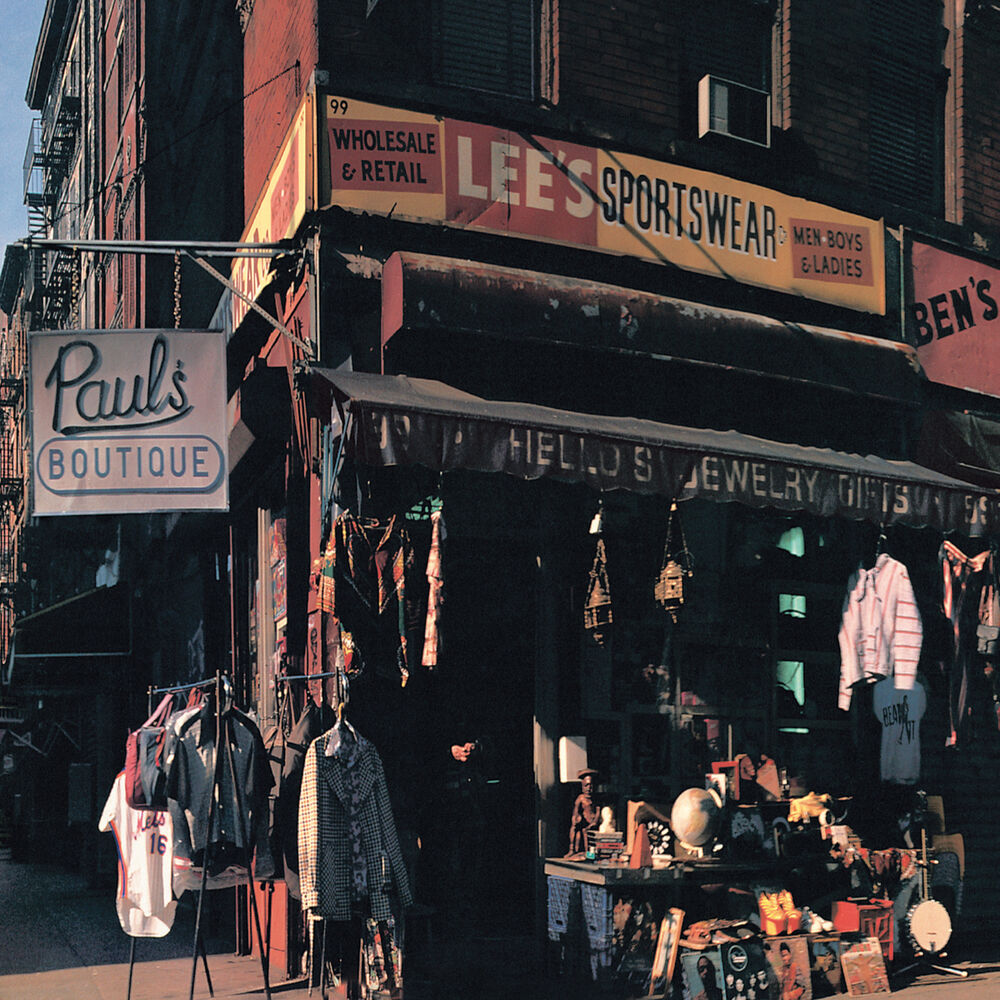
Since Paul's Boutique was first released, its critical standing has improved significantly. NME critic Paul Moody found it was "still an electrifying blast of cool" in a 1994 review, viewing it as a "younger incarnation" of Ill Communication. Rob Chapman, writing for Mojo, asserted that the album "shredded the rulebook" and called it "one of the most inventive rap albums ever made". In a 2003 review for Rolling Stone, Rob Sheffield called it "a celebration of American junk culture that is still blowing minds today—even fourteen years of obsessive listening can't exhaust all the musical and lyrical jokes crammed into Paul's Boutique". In a 2009 review, Mark Kemp of Rolling Stone called the album a "hip-hop masterpiece". Nate Patrin of Pitchfork described it "a landmark in the art of sampling, a reinvention of a group that looked like it was heading for a gimmicky early dead-end, and a harbinger of the pop-culture obsessions and referential touchstones that would come to define the ensuing decades' postmodern identity". Stephen Thomas Erlewine summed the initial reaction to Paul's Boutique and praised the density that the album contains:
Musically, few hip-hop records have ever been so rich; it's not just the recontextulations of familiar music via samples, it's the flow of each song and the album as a whole, culminating in the widescreen suite that closes the record. Lyrically, the Beasties have never been better — not just because their jokes are razor-sharp, but because they construct full-bodied narratives and evocative portraits of characters and places. Few pop records offer this much to savor, and if Paul's Boutique only made a modest impact upon its initial release, over time its influence could be heard through pop and rap, yet no matter how its influence was felt, it stands alone as a record of stunning vision, maturity, and accomplishment.
In a Vibe interview the Beastie Boys, Chuck D of Public Enemy was quoted as saying that the "dirty secret" among the black hip-hop community at the time of release was that "Paul's Boutique had the best beats". During the same interview, Mike D was asked about any possible hesitation he or the band might have had regarding their overt sampling of several minutes of well-known Beatles background tracks, including the song "The End" on "The Sounds of Science". He claimed that the Beatles filed preliminary legal papers, and that his response was, "What's cooler than getting sued by the Beatles?"
In the book For Whom the Cowbell Tolls: 25 Years of Paul's Boutique, host of KDOC's Request Video Gia DeSantis discussed the appeal of the album to local markets and the missed opportunity by Capitol Records to take the album over the top. The book was a follow-up to 33 1/3's book Paul's Boutique. Noting that Paul's Boutique was less commercially successful than the group's chart-topping debut had been, Consequence's Marcus Shorter wrote, "Paul's Boutique sat at a finish line waiting for the rest of the world to catch up." In 2014, NME wrote: "The Beastie’s classic celebrates its 25th anniversary this year, and its snot-nosed, bratty brilliance remains undimmed: a masterclass in sampling, lyrical greatness and top-notch production courtesy of the Dust Brothers."
Accolades
List of the album's rankings and listings on selected publications and top album lists:
Ranked number 5 on Slant Magazine's "Best Albums of the 1980s"
Ranked number 37 on Blender's "The 100 Greatest American Albums of All Time"
Ranked number 2 on Ego Trip's "Hip Hop's 25 Greatest Albums by Year (1980–1998)"
Ranked number 125 on "Rolling Stone's 500 Greatest Albums of All Time"
Ranked number 12 on Spin's "100 Greatest Albums, 1985–2005"
Ranked number 74 on VH1's "Top 100 Albums"
Ranked number 98 on Q's "Q Magazine Readers' 100 Greatest Albums Ever"
Ranked number 3 on Pitchfork's 2002 "Top 100 Albums of the 1980s", number 15 on its 2018 "200 Best Albums of the 1980s", and number 38 on its 2025 "100 Best Rap Albums of All …