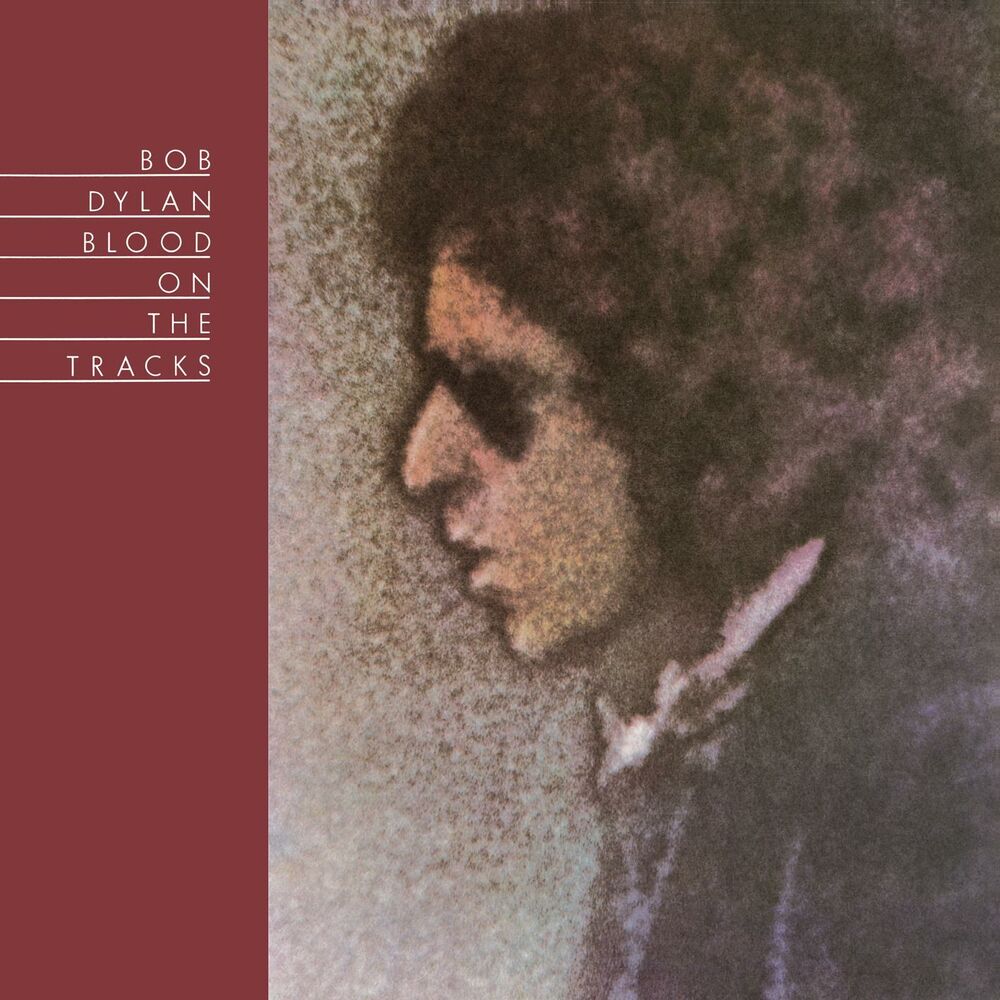
After his 1974 tour with the Band, Dylan began a relationship with a Columbia Records employee, Ellen Bernstein, which Dylan biographer Clinton Heylin has described as the beginning of the end of Dylan's marriage to his wife Sara. In spring 1974, Dylan spent several weeks in New York while he took art classes from the painter Norman Raeben. Dylan credited Raeben with transforming his understanding of time, and during the summer of 1974 he began to write songs using this new knowledge in three small notebooks:
[Raeben] taught me how to see ... in a way that allowed me to do consciously what I unconsciously felt ... when I started doing it, the first album I made was Blood on the Tracks. Everybody agrees that was pretty different, and what's different about it is there's a code in the lyrics, and also there's no sense of time.
Dylan subsequently spent time with Bernstein on his farm in Minnesota and there he completed the 17 songs from which Blood on the Tracks was formed—songs which Heylin has described as "perhaps the finest collection of love songs of the twentieth century, songs filled with the full spectrum of emotions a marriage on the rocks can engender".
Before recording the songs that would constitute Blood on the Tracks, Dylan previewed them for a number of friends in the music world, including David Crosby, Graham Nash, Stephen Stills, Tim Drummond and Peter Rowan. Nash recalled that Stills disliked Dylan's private performance of his new songs; immediately after Dylan left the room, Stills remarked to Nash, "He's a good songwriter ... but he's no musician."
Initially, Dylan considered recording Blood on the Tracks with an electric backing group, and contacted Mike Bloomfield who had played lead guitar on Dylan's Highway 61 Revisited album. When the two met, Dylan ran through the songs he was planning to record, but he played them too quickly for Bloomfield to learn. Bloomfield later recalled the experience: "They all began to sound the same to me; they were all in the same key; they were all long. It was one of the strangest experiences of my life. He was sort of pissed off that I didn't pick it up." In the end, Dylan rejected the idea of recording the album with a band, and instead substituted stripped-down acoustic arrangements for all of his songs. On August 2, 1974, Dylan signed a contract with Columbia Records. After releasing his two previous albums, Planet Waves and Before the Flood, on Asylum Records, Dylan decided his new album would benefit from the commercial muscle of the record label that had made him famous, and his new contract gave him increased control over his own masters.
Dylan commenced recording at A & R Recording Studios in New York City on September 16, 1974. Bernstein has stated "the theme of returning ran through the sessions", so "it made a lot of sense to do it at A&R". A & R Studios was the former Columbia Records "Studio A", where Dylan had recorded six albums in the 1960s. The musicians quickly realized that Dylan was taking a "spontaneous" approach to recording. The producer, Phil Ramone, later said that Dylan transitioned from one song to another as if they were part of a medley. Ramone noted: "Sometimes he will have several bars, and in the next version, he will change his mind about how many bars there should be in between a verse. Or eliminate a verse. Or add a chorus when you don't expect."
Eric Weissberg and his band, Deliverance, originally recruited as session men, were rejected after one day of recording because they could not keep up with Dylan's pace. Dylan retained bassist Tony Brown from the band, and soon added organist Paul Griffin (who had also worked on Highway 61 Revisited and Blonde on Blonde) and steel guitarist Buddy Cage. After ten days and four sessions with the current lineup, Dylan had finished recording and mixing, and, by November, had cut a test pressing of the album. Columbia began to prepare to release the album before Christmas.
Dylan played the test …