About the artist
The Who are an English rock band formed in London in 1964, celebrated for their influential sound and pioneering use of synthesisers. Their classic lineup, featuring Roger Daltrey and Pete Townshend, developed the rock opera and left a significant mark on hard rock, punk, and mod genres.
About the album
Who's Next is The Who's fifth studio album, released in 1971, largely comprising songs from Pete Townshend's ambitious but abandoned 'Lifehouse' rock opera. It features a powerful rock sound integrated with innovative synthesizer use, recorded with engineer Glyn Johns at Olympic Studios.
Meanings
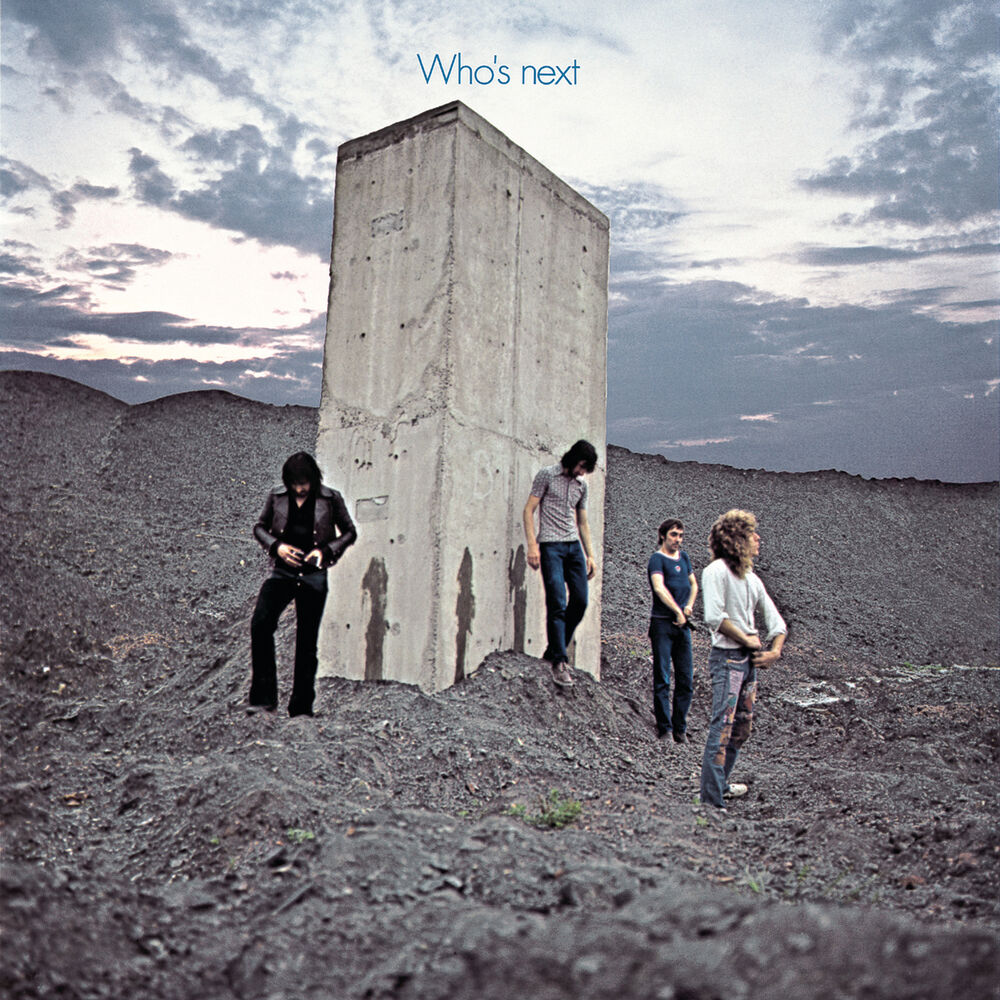
The album's origins lie in the 'Lifehouse' project, a futuristic rock opera where music is banned and rebels use rock to enlighten people. The cover art, shot by Ethan Russell, references the monolith from '2001: A Space Odyssey', depicting the band seemingly having urinated on a concrete pillar.
Why it's rated so high
Critics widely regard Who's Next as The Who's finest work and one of the greatest albums of all time, praised for its sophisticated music and hook-laden songs. It was voted best album of 1971 by American critics and inducted into the Grammy Hall of Fame for its lasting significance.
Career and historical context
Following the success of their rock opera 'Tommy', The Who sought a new direction with the ambitious 'Lifehouse' project, which proved too complex and was eventually abandoned. 'Who's Next' emerged from these sessions, marking a pivotal moment as the band transitioned from their mod roots to a more expansive rock sound.
Fun facts
- The album's opening track, 'Baba O'Riley', is informally known as 'Teenage Wasteland'.
- John Entwistle's song 'My Wife' was originally intended for his solo album.
- The synthesizer parts in 'Baba O'Riley' and 'Won't Get Fooled Again' came from Pete Townshend's original demos.
- Keith Moon, uncharacteristically, does not play on the first half of 'Behind Blue Eyes'.
- The master tapes for most of the Olympic sessions are believed to be lost.