Lemay placed Colored Sands in the context of Gorguts previous work by explaining that, beginning with Obscura, the band "deliberately made an effort to not do such things as the fast Slayer beats, no more fast picking riffs and other ideas found on our second album The Erosion of Sanity". This prompted the band to develop what Lemay described as "a new musical language" that was first heard on Obscura. However, Lemay noted that Obscura was essentially a "first draft of this new language", for which "the outcome is somewhat simplistic". Lemay viewed From Wisdom to Hate and Colored Sands as more sophisticated expressions of the "musical language" developed by Gorguts.
The songs on Colored Sands were written by Lemay (with the exception of "Forgotten Arrows", written by Marston, and "Absconders", written by Hufnagel), but the other band members composed most of their own parts. Inspired by Opeth and the album The Incident by Porcupine Tree, Lemay intended to write more progressive songs with longer running times and more dynamics. Lemay described the album as having more of a "soundtrack approach" that, while containing the essential ingredients of Obscura and From Wisdom to Hate, differed in how it was composed and arranged. As he explained, "I think we took more time to say things musically on this record; not that we were in a rush on the other records, but the songs were shorter....With this one, it breathes more".
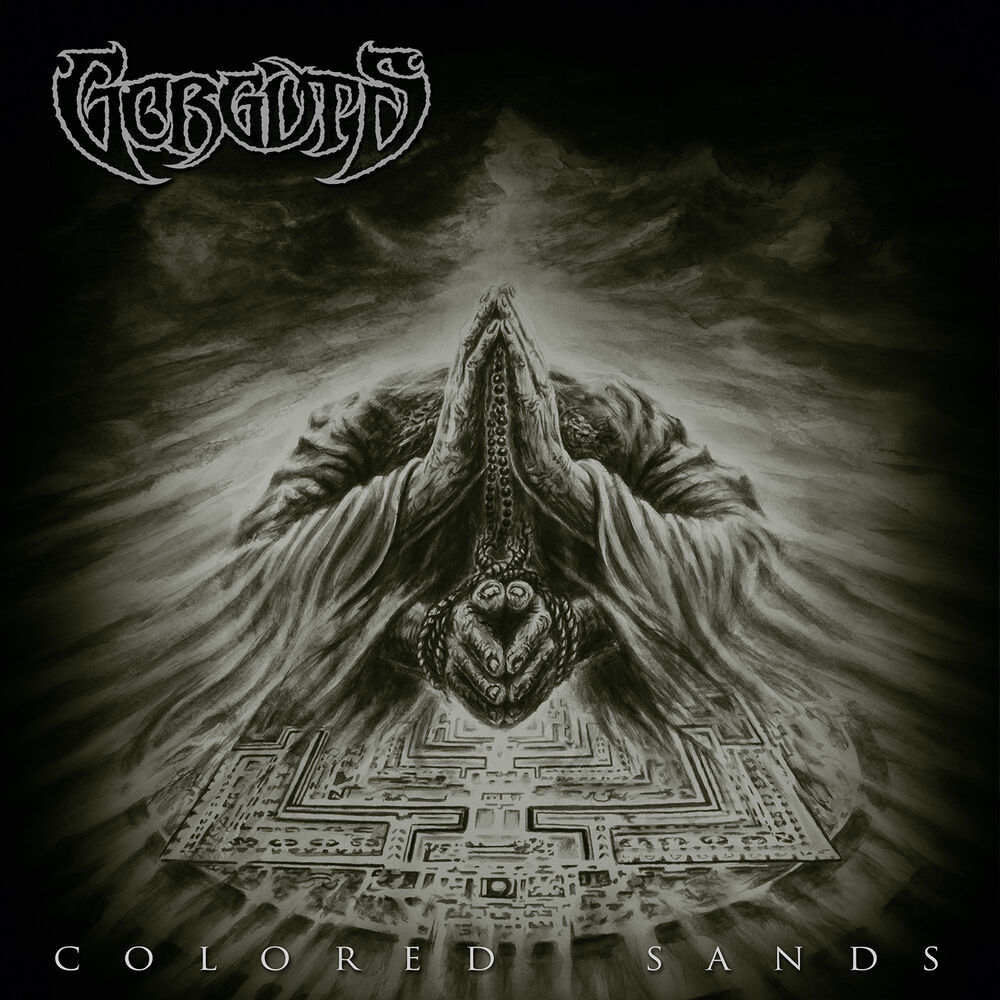
The album's concept was inspired by Lemay's viewing of a child's drawing of a Tibetan sand mandala, which is a symbol made of colored sand that is ritualistically destroyed once it has been constructed. Lemay confirmed that the album's title alludes to sand mandalas. Lemay explained that, while he initially considered writing an album entirely based upon the sand mandala, he later expanded to focus upon Tibetan culture, geography, and history. Lemay explained that it was intent to "create a storytelling mood within the music; sort of like motion picture music". Lemay referred to Tibet as "the canvas for the music" in which the first four songs discuss "the splendours of the country, the culture, the topography, the geography", and the last four refer to "the country being invaded, people protesting through immolation, people getting killed trying to escape"; the song "Absconders" is based on Jonathan Green's book Murder in the High Himalaya about the Nangpa La shooting incident, and quotes the book with Green's permission.
The transition between the first four songs and the last four is an orchestral piece, "The Battle of Chamdo", which refers to the invasion of Tibet by China. The piece was written by Lemay on piano and recorded with a string quintet. Compared to classical composers Shostakovitch and Penderecki (which has been acknowledged and affirmed by Lemay), the song represents a critical turning point in the album concept, according to Lemay: "The topic of this song, the Chinese invasion of 1950, is the most important thing that happened to this country [Tibet]...so the instrumentation is different – it's striking". He further explained how "The Battle of Chamdo" served as the watershed of Colored Sands:
The orchestral piece is very important on the record because it divides the concept in two because the first four songs are about the beauty of the philosophy and the landscape and the beauty of those people's culture and everything which is very positive and then you get the orchestral piece which illustrates the Chinese invasion of 1950...So that's why the opening rhythm is a very military, very war-like rhythm, you know? And then that's where the misery strikes Tibet in this music.
The album concept ultimately concludes, on "Reduced to Silence", with Lemay's consideration of non-violence as it relates to Tibetan history and the preservation of a threatened culture:
The last song, "Reduced to Silence," is about questioning the non-violence philosophy which is in the heart of the Tibetan …