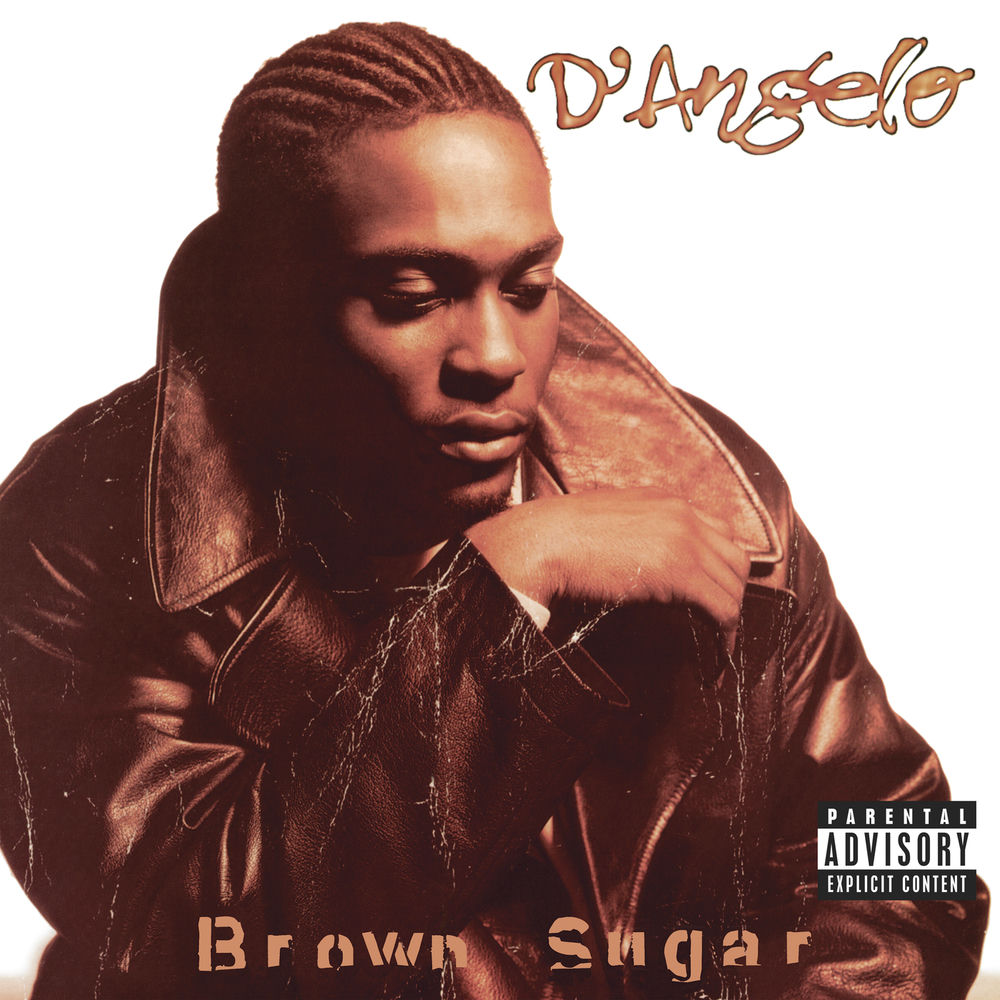
Born to a Pentecostal-minister father, D'Angelo was brought up to an early appreciation of gospel music, while his mother, a jazz enthusiast, introduced him to the musical complexities of trumpeter Miles Davis and the funk and soul music of the 1970s. In addition to old gospel records, these factors inspired him during the making of Brown Sugar, as D'Angelo drew upon his roots of traditional gospel and soul, and infused the sound of contemporary R&B and hip hop music to create a stylistically unique and soulful sound for the album. The album has been noted by critics for its classic soul elements and influences, as well as the sound of live instruments and organic grooves, which are reminiscent of the work of Stevie Wonder and Sly & the Family Stone. Its production contrasts the producer-driven and digital approach of contemporary R&B at the time of its release.
The album's sound is prominently driven by keyboards, sensual vocals, and smooth melodies, while it evokes the work of such artists as Prince, Isaac Hayes, Marvin Gaye, Smokey Robinson and the Isley Brothers. The quiet storm love song "Cruisin'", a cover of Robinson's 1979 hit of the same name, features a string section. Along with the album's modern aesthetic and vintage texture, Brown Sugar combines the sounds of blues, gospel and jazz in a contemporary fashion. According to music journalist Peter Shapiro, "Lady" uses "the jazzy hallmarks of bohemian soul to emphasize the singer's insecurity". Most of the songs on the album have a stripped-down feel, without complex orchestrations, and have heavy drum beats and bass lines, which are accompanied by electric piano riffs and minimal guitar work. Music writer Robert Christgau finds Brown Sugar to be "bass-driven rather than voice-led".
Vocals
D'Angelo's singing throughout Brown Sugar is a gospel-influenced, falsetto crooning style, which critics have compared the singing of Prince, Al Green, Donny Hathaway, and Sam Cooke. Despite the album's retro influence, music writers have noted his delivery as having a hip hop approach and "swagger", as one critic described the album as a "blend of classic soul and urban attitude". Another writer described the album's vibe as "sultry" and D'Angelo's vocal delivery as "sly". Music journalist Jon Caramanica later called D'Angelo a "classicist, in other words, cloaked in the guise of a hip-hop roughneck." Shapiro viewed the vocal production as similar to that of Prince's Sign o' the Times (1987). The album's closing track "Higher" features D'Angelo's organ set to a choir of his overdubbed vocals, while "Jonz in My Bonz", which compares love to an addiction, features D'Angelo's falsetto moans overdubbed in an array for effect.
According to D'Angelo, the hip hop influence present on the album "came from the Native Tongues movement - Tribe Called Quest, Gang Starr and Main Source." The title track features the most hip hop influence on the album, as Ali Shaheed Muhammad's co-production for the song developed a seamless integration of hip hop beats into D'Angelo's old school-influenced material. The vocal delivery on the track resembles the flow of most emcees at the time. In a 1995 interview, D'Angelo cited hip hop artists Rakim and KRS-One as influences, and explained his affinity with rapping, stating "All rap is street soul. They just have a different method."
Lyrics
With the exception of the title track, a thinly veiled ode to smoking marijuana, most of the album's material consists of traditional romance ballads and love songs, in the style of classic soul music. The lyrical content of the album closer, "Higher", combines the spiritual love of God and the carnal love of a woman, and is similar to the lyricism of Prince, who has been noted by music writers for exploring the "eternal dichotomy" of spirituality and sexuality. Music writers have noted the lyrical "openness" of the album, along with qualities of honesty and "earnestness" in D'Angelo's songwriting, in …