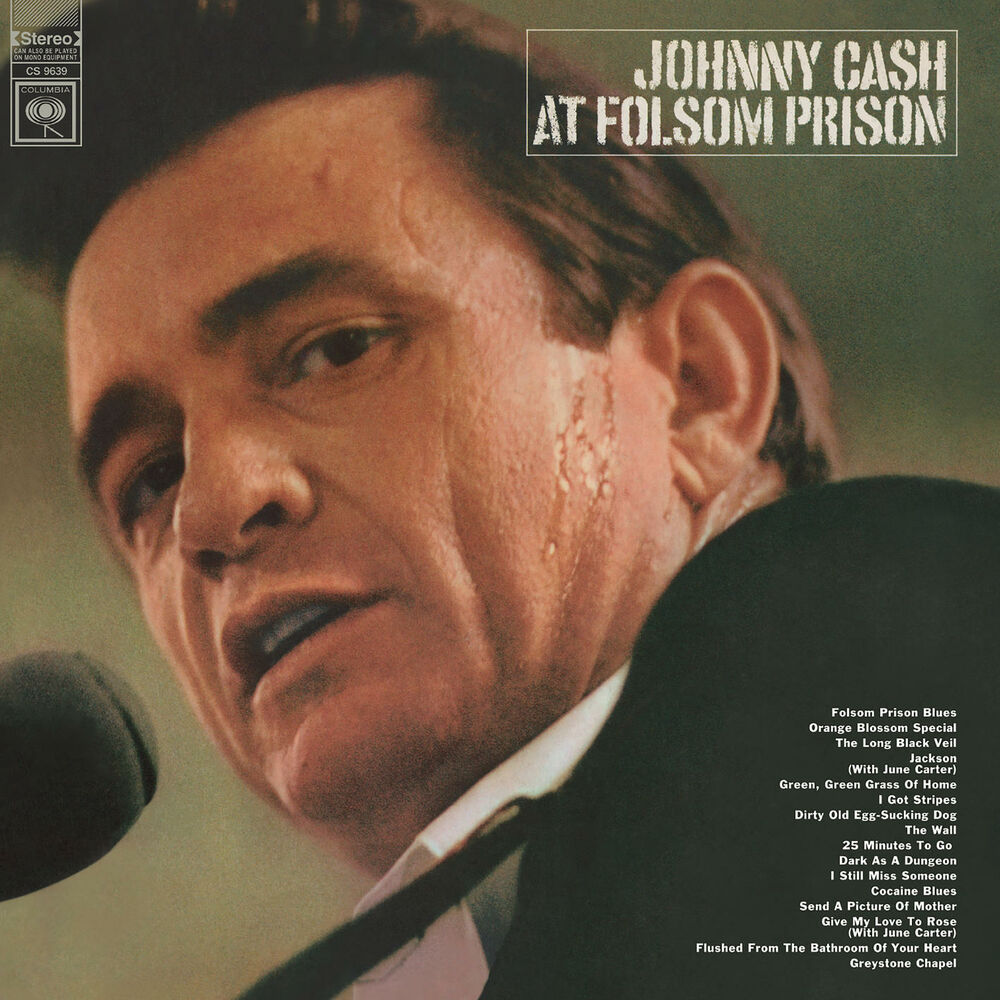
About the artist
Johnny Cash, the 'Man in Black', was an American singer-songwriter known for his deep bass-baritone voice and train-like guitar rhythms. His music often explored themes of sorrow, tribulation, and redemption, spanning country, rock and roll, and gospel, making him one of the best-selling artists of all time.
About the album
At Folsom Prison is Johnny Cash's iconic 1968 live album, recorded during two electrifying performances at Folsom State Prison. Backed by June Carter, Carl Perkins, and the Tennessee Three, it captured a raw, authentic sound that revitalised his career.
Meanings
The album deeply explores themes of prison life, despair, and redemption, resonating with the incarcerated audience. Cash's songs, including 'Folsom Prison Blues', reflected his long-standing interest in the lives of inmates and their experiences.
Why it's rated so high
This album revitalised Cash's career, reaching number one on the country charts and earning triple platinum status. It garnered rave reviews, won two Grammy Awards, and is consistently cited as one of the greatest albums of all time, including by Rolling Stone.
Career and historical context
Recorded after years of limited success and personal struggles, this album marked a turning point for Cash, who sought to resuscitate his career. It fulfilled his long-held desire to record a live album in a prison, an idea he had since his 1955 song 'Folsom Prison Blues'.
Fun facts
- Cash's interest in Folsom Prison was sparked by watching the 1951 film 'Inside the Walls of Folsom Prison' while in the Air Force.
- California Governor Ronald Reagan visited the band during rehearsals at their motel before the concert.
- The album's lead single, 'Folsom Prison Blues', was edited for radio after Robert F. Kennedy's assassination.
- An inmate, Glen Sherley, wrote 'Greystone Chapel', which Cash performed to close both concerts.
- Two full shows were recorded on January 13, 1968, to ensure a satisfactory performance for the album.