João's Music Archive
Highway to Hell
← Back to the lists

Highway to Hell

AC/DC
July 27, 1979
Columbia
10 tracks, 41:26
Rating
–
Not heard yet
110
–Archive
85Critics
0Listeners
Average score 85AOTY 8810 reviews

Tracklist

  1. Highway to Hell3:26
  2. Girls Got Rhythm3:23
  3. Walk All Over You5:08
  4. Touch Too Much4:24
  5. Beating Around the Bush3:55
  6. Shot Down in Flames3:21
  7. Get It Hot2:34
  8. If You Want Blood (You've Got It)4:34
  9. Love Hungry Man4:14
  10. Night Prowler6:27
Listen on

Have you heard it?

Sign in to mark it as listened, rate it and keep notes.

About the artist

AC/DC are an iconic Australian rock band, formed in Sydney in 1973, known for their powerful hard rock, blues rock, and heavy metal sound, which they simply call "rock and roll". They are cited as a formative influence on the new wave of British heavy metal and are among the best-selling artists globally, with over 200 million records sold.

About the album

"Highway to Hell" is AC/DC's sixth studio album, released in 1979, and the first of three produced by Robert John "Mutt" Lange. Lange refined their raging, blues-based hard rock sound, polishing tracks without losing the characteristic crunch. Tragically, it is also the final album to feature their iconic lead singer, Bon Scott, before his death.

Why it's rated so high

The album became AC/DC's first LP to break the US Billboard 200 top 100, reaching number 17, and is generally considered one of the greatest hard rock albums ever. Critics praised its compact songs and "chart-smart boogie," with the title track hailed as "one of hard rock's all-time anthems."

Career and historical context

This album marked a pivotal moment, as Atlantic Records pushed the band to work with an outside producer for a more radio-friendly sound, leading to Robert John "Mutt" Lange taking the helm. It solidified their status as a major hard rock act, bridging their earlier raw sound with the massive success that would follow.

Fun facts

  • AC/DC initially resisted working with an outside producer, feeling loyalty to their older brother George Young.
  • Producer Eddie Kramer was replaced after just three weeks, partly because he asked Bon Scott if he could sing.
  • The band recorded six songs in one day to send to Robert John "Mutt" Lange, asking him to produce.
  • Lange taught Angus Young his iconic solo for "Highway to Hell" by pointing out notes on the fretboard.
  • The album's East German release featured much plainer artwork due to authorities disliking the original cover.
Written by AI from the album's and artist's Wikipedia articles and the archive's notes. Double-check anything important.

The full story

Highway to Hell is the sixth studio album by Australian hard rock band AC/DC, released on 27 July 1979, by Albert Productions and Atlantic Records. It is the first of three albums produced by Robert John "Mutt" Lange, and is the last album featuring lead singer Bon Scott, who died on 19 February 1980.

Background

By 1978, AC/DC had released five albums internationally and had toured Australia and Europe extensively. In 1977, they landed in America and, with virtually no radio support, began to amass a live following. The band's most recent album, the live If You Want Blood, had reached number 13 in the United Kingdom, and the two albums previous to that, 1977's Let There Be Rock and 1978's Powerage, had seen the band find their raging, blues-based hard rock sound. Although the American branch of Atlantic Records had rejected the group's 1976 LP Dirty Deeds Done Dirt Cheap, it now believed the band was poised to strike it big in the States if only they would work with a producer who could give them a radio-friendly sound. Since their 1975 Australian debut High Voltage, all of AC/DC's albums had been produced by George Young and Harry Vanda. According to the book AC/DC: Maximum Rock & Roll, the band was not enthusiastic about the idea, especially guitarists Angus Young and Malcolm Young, who felt a strong sense of loyalty to their older brother George:

Being told what to do was bad enough but what really pissed off Malcolm and Angus was they felt that George was being treated disrespectfully by Atlantic, like an amateur with no great track record when it came to production ... Malcolm seemed less pleased with the situation and went so far as to tell Radio 2JJ in Sydney that the band had been virtually "forced" to go with an outside producer. Losing Harry was one thing. Losing George was almost literally like losing a sixth member of the band, and much more. The label paired the band with South African-born Eddie Kramer, best known for his pioneering work as engineer for Jimi Hendrix but also for mega-bands Led Zeppelin and Kiss. Kramer met the band at Criteria Studios in Miami, Florida but, by all accounts, they did not get on. Geoff Barton quotes Malcolm Young in Guitar Legends magazine: "Kramer was a bit of a prat. He looked at Bon and said to us, 'Can your guy sing?' He might've sat behind the knobs for Hendrix, but he's certainly not Hendrix, I can tell you that much." Former AC/DC manager Michael Browning recalls in the 1994 book Highway to Hell: The Life and Times of AC/DC Legend Bon Scott, "I got a phone call from Malcolm in Florida, to say, 'This guy's hopeless, do something, he's trying to talk us into recording that Spencer Davis song,' 'Gimme Some Lovin',' 'I'm a Man,' whatever it was." Browning turned to Zambian-born producer Robert John "Mutt" Lange to step in. Lange was best known for producing the Boomtown Rats number-one hit "Rat Trap" and post-pub rock bands like Clover, City Boy, and Graham Parker. In 1979, singer Bon Scott told Rock Australia Magazine, "Three weeks in Miami and we hadn't written a thing with Kramer. So one day we told him we were going to have a day off and not to bother coming in. This was Saturday, and we snuck into the studio and on that one day we put down six songs, sent the tape to Lange and said, 'Will you work with us?'" The band had also signed up with new management, firing Michael Browning and hiring Peter Mensch, an aggressive American who had helped develop the careers of Aerosmith and Ted Nugent.

Recording

With "Mutt" Lange in place as producer, recording commenced at the Roundhouse Recording Studios in Chalk Farm, north London on 24 March 1979, and ended on 14 April. Clinton Walker described this process in his book Highway to Hell. The band had spent about three weeks at Roundhouse Studio, constantly working on the album. They worked for fifteen hours a day, usually for days on end, working on and reworking the songs within the album. This process was a culture shock to the band, who had grown used to spending about three weeks or so on an album, not the exhausting three-month period they spent on Highway to Hell. In spite of this, Lange's process was appreciated by the band, who had a similarly solid work ethic. Brothers Malcolm and Angus Young later went on to describe Lange's contributions to the band in an article in Mojo by Sylvie Simmons. Lange was able to refine the tracks for the band, ensuring that sound, guitar, drums, and even vocals were up to par with both his and the band's expectations. Tour manager Ian Jeffery, who was present during recordings, recalled the many changes Lange had put the band through, such as during a particular recording session that led to an argument between Bon Scott and Lange. Lange had advised Scott to control his breathing during the recording of "If You Want Blood," leading Scott to demand that he do the technique himself. Lange was able to do it without complication, much to the shock of those in the room. Soon after, the band became receptive to Lange's instruction. In AC/DC: Maximum Rock & Roll, Arnaud Durieux writes that Lange, a trained singer, showed Scott how to breathe so he could be a technically better singer on songs like "Touch Too Much" and would join in on background vocals himself, having to stand on the other side of the studio because his own voice was so distinctive. The melodic backing vocals were a new element to the band's sound, but the polish Lange added did not detract from the band's characteristic crunch, thereby satisfying both the band and Atlantic Records at the same time. Lange also taught Angus some useful lessons, instructing him to play his solos while sitting next to the producer. Jeffrey recalled an instance where he sat down with the lead guitarist to show him how he wanted him to play. While Angus initially reacted with hostility, he sat down with Lange, who instructed him by pointing toward notes on the fretboard. These notes turned out to be the solo from "Highway to Hell." Moments like these stood out as significant to the band. Lange didn't ask them to do the impossible, nor tell them their past process was incorrect. He heightened their process further, shaping the album into what it came to be.

Release

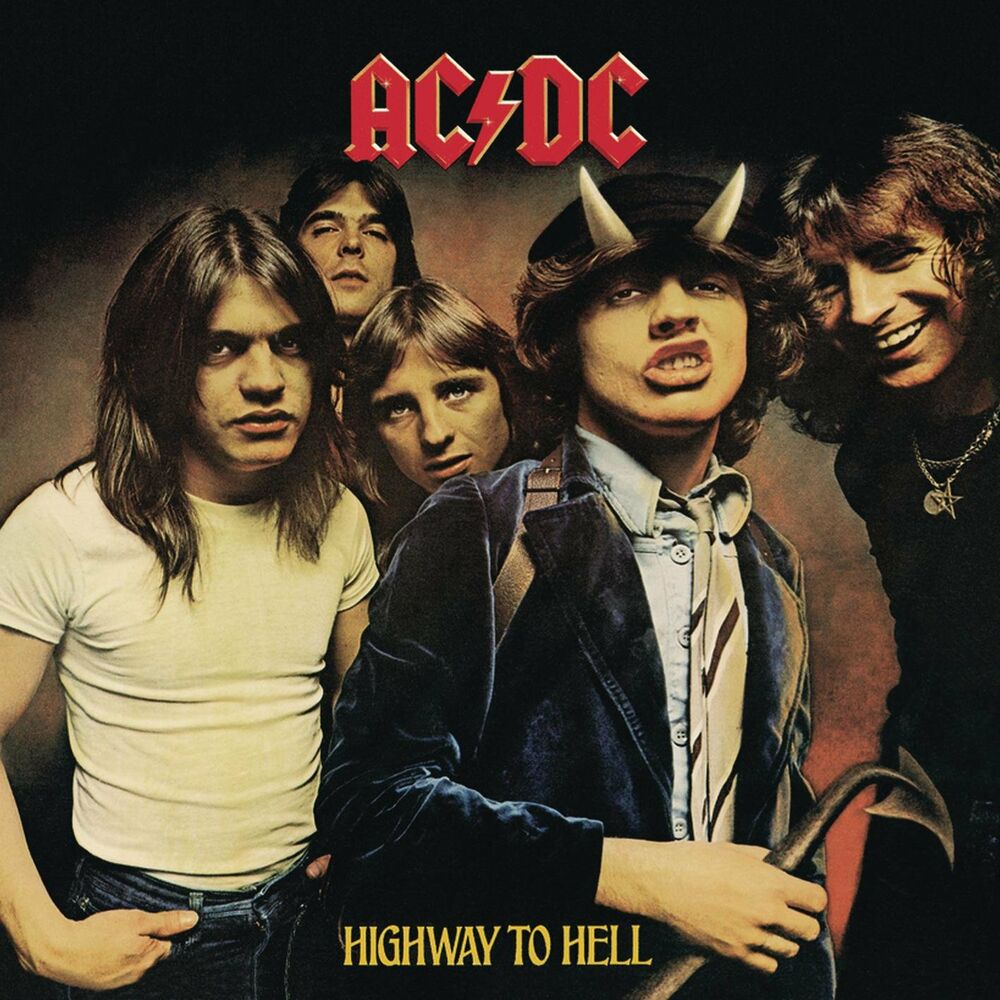
Highway to Hell was originally released on 27 July 1979 by Albert Productions, who licensed the album to Atlantic Records for release outside of Australia, and it was re-released by Epic Records in 2003 as part of the AC/DC Remasters series. In Australia, the album was originally released with a slightly different album cover, featuring flames and a drawing of a bass guitar neck superimposed over the same photo of the band used on the international cover; also, the AC/DC logo is a darker shade of maroon, but the accents are a bit lighter. The East German release had different and much plainer designs for the front and back of the album, apparently because the authorities were not happy with the sleeve as released elsewhere.

Reception

The album became AC/DC's first LP to break the top 100 of the US Billboard 200 chart, eventually reaching number 17, and it propelled the band into the top ranks of hard rock acts. It is the second-highest selling AC/DC album (behind Back in Black) and is generally considered one of the greatest hard rock albums ever made. On 8 July 2024, the album was certified 8× Platinum by the RIAA. Of the album, Greg Kot of Rolling Stone wrote: "The songs are more compact, the choruses fattened by rugby-team harmonies. The prize moment: Scott closes the hip-grinding 'Shot Down in Flames' with a cackle worthy of the Wicked Witch of the West." In a 2008 Rolling Stone cover story, David Fricke noted: "Superproducer 'Mutt' Lange sculpted AC/DC's rough-granite rock into chart-smart boogie on this album." AllMusic called the song "Highway to Hell" "one of hard rock's all-time anthems." The album was ranked number 199 on Rolling Stone magazine's 2003 list of the 500 greatest albums of all time; it was number 200 on the 2012 revised list. The 2010 book The 100 Best Australian Albums included Highway to Hell in the top 50 (Back in Black was No. 2). In 2013, AC/DC fans Steevi Diamond and Jon Morter (who was behind a Rage Against the Machine Facebook campaign in 2009) spearheaded a Facebook campaign to make "Highway to Hell" a Christmas number one single on the UK Singles Chart, to celebrate the 40th anniversary of AC/DC, and to prevent The X Factor from achieving another number one hit single. The campaign raised funds for Feel Yourself, a testicular cancer-awareness charity. The song peaked at number four on the Official Singles Chart for Christmas that year, making it AC/DC's first-ever UK Top 10 single.

From the Wikipedia article Highway to Hell, available under CC BY-SA 4.0.

Tracklist

  1. Highway to Hell3:26
  2. Girls Got Rhythm3:23
  3. Walk All Over You5:08
  4. Touch Too Much4:24
  5. Beating Around the Bush3:55
  6. Shot Down in Flames3:21
  7. Get It Hot2:34
  8. If You Want Blood (You've Got It)4:34
  9. Love Hungry Man4:14
  10. Night Prowler6:27

Listeners 0

Nobody has logged it yet. Be the first.

Log a listen