João's Music Archive
Yeezus
← Back to the lists

Yeezus

Kanye West
2013-06-18
Rock The World/IDJ/Kanye/LP6
10 tracks, 40:03
Rating
–
Not heard yet
110
–Archive
84Critics
0Listeners
Average score 84Metacritic 84AOTY 83Pitchfork 9.5AnyDecentMusic? 8.210 reviews

Tracklist

  1. On Sight2:38
  2. Black Skinhead3:08
  3. I Am A God3:51
  4. New Slaves4:16
  5. Hold My Liquor5:26
  6. I'm In It3:54
  7. Blood On The Leaves5:59
  8. Guilt Trip4:04
  9. Send It Up2:58
  10. Bound 23:49
Listen on

Have you heard it?

Sign in to mark it as listened, rate it and keep notes.

About the artist

Kanye West is an American rapper, songwriter, and record producer, widely regarded as one of hip-hop's most prominent and influential figures. His music is known for its frequent stylistic shifts, breaking from traditional gangsta rap conventions and consistently pushing artistic boundaries.

About the album

Yeezus, Kanye West's sixth studio album from 2013, is an abrasive, minimal, and industrial record, marking his most experimental work to date. It features distorted drum machines and synthesizers, drawing from genres like industrial, acid house, and Chicago drill, with key contributions from Daft Punk and Rick Rubin.

Meanings

The album explores themes of drug use, racial politics, sex, and relationships, with West describing it as "a protest to music." Its minimalist aesthetic was heavily inspired by modern design and architecture, with the original title being "Thank God for Drugs."

Why it's rated so high

Critics universally acclaimed Yeezus, calling it noisy, gripping, and West's most ambitious and uninhibited work. It was the most acclaimed album of 2013 and is considered among West's best, with Lou Reed praising its majestic and inspiring sound.

Career and historical context

Following the maximalist "My Beautiful Dark Twisted Fantasy," Yeezus represented a radical stylistic shift in West's career, embracing a stripped-down, confrontational sound. Its unorthodox, minimalist marketing campaign, including video projections and no pre-order, was also a notable departure.

Fun facts

  • Rick Rubin was brought in just 15 days before release to strip down the album's sound.
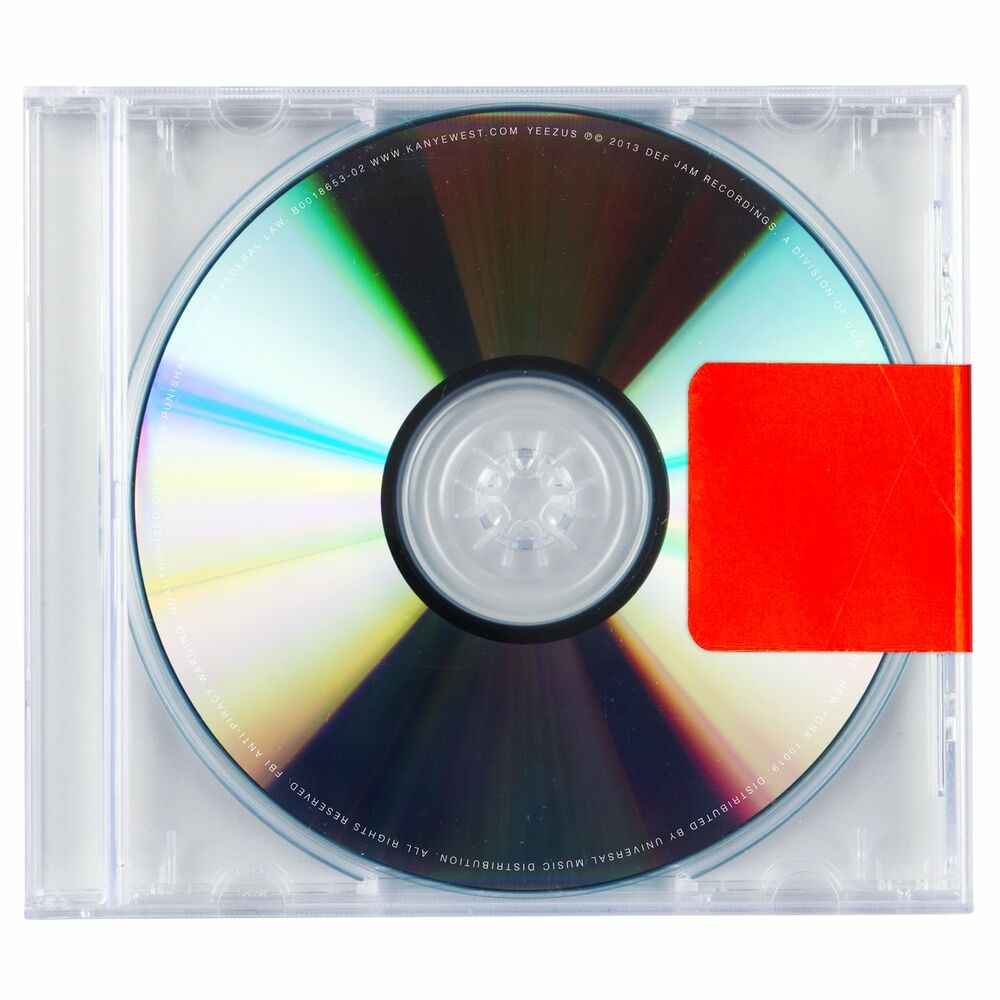
  • The physical CD came in a clear case with no artwork, just a red sticker, symbolising an "open casket for the CD."
  • Kanye West was primarily inspired by minimalist design and a single Le Corbusier lamp during its creation.
  • The album was originally titled "Thank God for Drugs."
  • Rapper J. Cole intentionally released his album "Born Sinner" on the same day as "Yeezus" as a statement.
Written by AI from the album's and artist's Wikipedia articles and the archive's notes. Double-check anything important.

The full story

Yeezus is the sixth studio album by the American rapper Kanye West. It was released on June 18, 2013, through Def Jam Recordings and Roc-A-Fella Records. West began recording it in 2012 and produced it alongside Mike Dean, Daft Punk, Noah Goldstein, Arca, Hudson Mohawke, and Travis Scott. West recruited Rick Rubin as an executive producer 15 days before its release to help strip down the sound for a minimalist approach. Guest appearances include Justin Vernon, Chief Keef, Kid Cudi, Assassin, King L, Charlie Wilson, and Frank Ocean. In contrast to West's previous albums, Yeezus is characterized by an abrasive, electronic soundscape with distorted drum machines and synthesizers. It draws from genres including industrial, acid house, electro, punk, Chicago drill, and horrorcore, while continuing West's use of unconventional samples. Music critics considered Yeezus the most experimental work by West, who described it as "a protest to music" and excluded tracks deemed too melodic or similar to his prior work. Lyrical themes include drug use, racial politics, sex, and relationships. Yeezus was initially promoted with an unorthodox, minimalist marketing campaign that included worldwide video projections and live television performances. No singles preceded the release; "Black Skinhead" was released as the lead single in July 2013, followed by "Bound 2" in August. West embarked on the Yeezus Tour to support it between October 2013 and September 2014. Yeezus received acclaim from critics, who considered it among West's best work and commended its brash direction, though its departure from West's prior soundscape divided general audiences. It was the most acclaimed album of 2013, according to Metacritic, and topped numerous end-of-year list rankings. Yeezus was nominated for Best Rap Album at the 2014 Grammy Awards. It debuted at number one on the US Billboard 200, selling 327,000 copies in the first week of release, while also topping the charts in Australia, Canada, Denmark, New Zealand, Russia, and the United Kingdom. It has been certified double platinum by the Recording Industry Association of America (RIAA). Several publications named it one of the best albums of the 2010s, including Rolling Stone, which also included it on its 2020 list of the 500 Greatest Albums of All Time.

Background

Following the release of his fifth studio album, My Beautiful Dark Twisted Fantasy (2010), Kanye West collaborated with longtime friend Jay-Z on Watch the Throne (2011). In July 2012, producer No I.D. revealed that he had been working on West's sixth solo studio album (and seventh overall) and that it would be released after Cruel Summer (2012), a collaborative compilation album between members of West's record label GOOD Music. West was influenced primarily by minimalist design and architecture during the production of Yeezus, and visited a furniture exhibit in the Louvre five times. A single Le Corbusier lamp was his "greatest inspiration". West worked closely with the architect Oana Stănescu, and took "field trips" to Le Corbusier homes. Fascinated by Stănescu's comments on the unusual and radical nature of Corbusier design choices, West applied the situation to his own life, feeling that "visionaries can be misunderstood by their unenlightened peers". West also met with architect Joseph Dirand and Belgian interior designer Axel Vervoordt, and had "rare Le Corbusier lamps, Pierre Jeanneret chairs and obscure body-art journals from Switzerland" delivered to the loft. West also wanted a deep hometown influence on the album, and listened to 1980s house music most associated with his home city of Chicago for influence. Alejandro Jodorowsky's The Holy Mountain was also an inspiration for the album and its ensuing tour. The album was originally titled Thank God for Drugs.

Recording and production

In 2012, West began recording his sixth studio album with collaborators, including No I.D. and DJ Khaled. The first recordings were held in January 2013, in the living room of his personal loft at a Paris hotel, referred to in the album's credits as the "No Name Hotel". West kept compositions simple in order to hear the tracks more clearly; too much bass or complexity would simply overpower the room's poor acoustics. The beats emanating from the loft space, which sometimes lasted through the night, provoked complaints from neighbors. Reports emerged that he and his then-girlfriend Kim Kardashian had moved to the loft in order for West to begin work on the album.

The atmosphere in the studio was described by contributor Evian Christ as "very focused", and West once again brought in several close collaborators. Producer Hudson Mohawke noted the inclusive "group" atmosphere of the sessions, in which multiple contributors would work on similar pieces, with different elements ultimately selected from each. All involved were given a song to work on and return the next day to sit and critique, a process Anthony Kilhoffer compared to an art class. Producer Arca described being initially asked to send West music, noting that she purposefully sent perhaps the strangest material she had, with West happening to be excited by it. Describing West's collaborative style, Arca stated: It was a lot of coming up with design, like solving riddles. If the song called for something aggressive, it was up to three or four people to design what in their head was the best solution for that aggression in that moment. Everyone would approach it in completely different ways, and ultimately, it would all be edited by Kanye himself.

Determined to "undermine the commercial", several tracks were left off the finished product that were deemed too melodic or more in line with West's previous material. West set parameters regarding sound and style, insisting that there be no "bass wobbles" reminiscent of dubstep. The album's recording process was described as "very raw" by Thomas Bangalter of the French electronic duo Daft Punk, who produced four songs for the album, adding that West was "rapping – kind of screaming primally, actually". While previous albums, particularly Dark Fantasy, took considerable time in the studio, Yeezus was described by Kilhoffer as "the fastest record we ever made". In May 2013, Def Jam executives listened to the "final product", (only later to be changed) describing the album as "dark". American rapper Travis Scott opined that the snippets he'd heard of Yeezus were from the year 3000 and recalled "crazy memories" from being around West during the recording of it. W writer Christopher Bagley reports that West's creative process often bordered on perfectionist. In March 2013, West described the album to Bagley as near completion, only to revise this statement one month later to the album being "only 30 percent complete". West made several last-minute alterations to Yeezus, enlisting the co-founder of Def Jam Recordings, Rick Rubin, as an executive producer for additional recording mere days before its release; changes included re-recording whole songs and rewriting entire verses. The rough cut West played Rubin ran nearly three and a half hours long. West's orders to Rubin were to take the music in a "stripped-down minimal direction", often removing elements already recorded. In a September 2013 interview with radio DJ Zane Lowe, West said of Rubin that "he's not a producer, he's a reducer". For several days in late May and early June 2013, West and a "rotating group of intimates, collaborators and hangers-on" holed up at Rubin's Shangri-La studio in Malibu in service of completing the record. Rubin thought it impossible to meet the deadline and all involved ended up working long hours with no days off in order to complete the record. West had intended the album be 16 tracks until Rubin suggested cutting the album down to fewer …

Music and composition

According to Chicago Tribune critic Greg Kot, Yeezus is a "hostile, abrasive and intentionally off-putting" album that combines "the worlds of" 1980s Chicago acid-house, 2013 Chicago drill music, 1990s industrial music, and the "avant-rap" of Saul Williams, Death Grips, and Odd Future. The Independent, Mass Appeal, and The Village Voice described it as an experimental release, while Meagan Garvey of The Outline described it as West's "industrial album". Rolling Stone described it as "an extravagantly abrasive album full of grinding electro, pummeling minimalist hip-hop, drone-y wooz and industrial gear-grind", while Vulture called it a "punk rap opus", and Rolling Stone called it an "industrial-rap opus". Slant Magazine critic Ted Scheinman described the album as "built on alien, angular beats, slowly morphing drones and sirens, abrupt periods of silence, and a pulse-quickening style of delivery from Yeezy himself", writing that West reconceives the "notion of what kind of music (or noise) can underpin hip-hop". According to Charles Aaron of Spin, Yeezus is "a hip-hop album, not a rap album", because of how its sounds and subject matter are assembled together, and although listeners can hear "'punk' or 'post-punk' or industrial'" throughout, "hip-hop has always been about noise and dissonance and dance music as agitation". The album also incorporates elements of industrial and trap music. The record "most closely resembles" 1990s industrial rock, during which the genre had a significant pop culture impact, with artists such as Nine Inch Nails, Ministry, and Marilyn Manson gaining success. The industrial scene created a "vast global underground community", and Esquire notes that one of its epicenters was in Chicago, where West was raised. Evan Rytlewski of The A.V. Club characterized its opening series of songs as electro and industrial hip-hop. Billboard and Spin additionally observed horrorcore elements, such as synths and screaming. Referencing the sound of Yeezus in September 2013, West stated: "For me as Kanye West, I got to fuck shit up... I'm going to take music and try to make it three dimensional... I'm not here to make easy listening, easily programmable music". At the same time, he viewed himself as artistically being "here to crack the pavement and break new ground, sonically". West would later go onto describe the sound of the album as "a protest to music". West elaborated, claiming that he "was like 'I'm gonna take my ball and go home'". Yeezus is primarily electronic in nature, and boasts distorted drum machines and synthesizers that sound like they're malfunctioning, low-resolution samplers that add a pixelated digital aura to the most analog sounds. To this end, the album incorporates glitches reminiscent of CD skips or corrupted MP3's, and Auto-Tuned vocals are modulated to a point in which they are difficult to decipher. Esquire cites "On Sight" as an early example of the album's connection to electronic music, citing its "droning synthesizer tone", which is "modulated until the signal starts throwing off harshly treble-heavy spikes and begins to clip, as if it were overloading a digital audio processor".

Yeezus continues West's practice of eclectic samples: he employs an obscure Hindi sample on "I Am a God", and a sample of 1970s Hungarian rock group Omega on "New Slaves". "On Sight" interpolates a melody from "Sermon (He'll Give Us What We Really Need)" by the Holy Name of Mary Choral Family, although the track originally sampled an old vocal track from the original recording. "Bound 2" features heavy soul music samples and has been described as the only song on Yeezus which recalls the sound of West's early work. "Bound", a 1971 song by American soul group Ponderosa Twins Plus One from their album 2 + 2 + 1 = Ponderosa Twins Plus One, serves as the primary sample used in West's track. The album's second track "Black Skinhead" has alternately been called an industrial hip-hop song and "a galloping …
Promotion and release

On May 1, 2013, West used Twitter to post a single message reading "June Eighteen", leading several media outlets to speculate that the post referred to the release date of West's upcoming album. On May 17, he began promotion of the album by unveiling the previously unreleased song "New Slaves" through video projections in 66 assorted locations. The following day, West appeared on the American late-night live television sketch comedy show Saturday Night Live and performed the songs "New Slaves" and "Black Skinhead". West subsequently revealed the album's cover and title, Yeezus, on his official website. Fellow rapper Kendrick Lamar offered his opinion on the title in an interview that same month, stating: "That's crazy, I want to hear that. That's that creative Kanye genius stuff out the box". He also claimed that the album's "whole marketing scheme is crazy" and "very inspiring". The iTunes Store made Yeezus available for pre-order on May 20, but the listing was subsequently taken down for unknown reasons. On May 29, A.P.C. founder Jean Touitou unveiled an advertisement for Yeezus which stated that the album would not be available for pre-order. Speaking about the album's minimal promotion, West stated: "With this album, we ain't drop no single to radio. We ain't got no NBA campaign, nothing like that. Shit, we ain't even got no cover. We just made some real music". In May 2013, American rapper J. Cole called West "one of the greatest artists of our generation" via Twitter, with him following this by tweeting: "Which is exactly why I'm moving my release date up. Born Sinner June 18th". He explained releasing his second studio album Born Sinner on the same day as Yeezus during an interview that same month, saying: "I'm not going to sit [here]... I worked too hard to come a week later after Kanye West drops an amazing album. It'd be like, 'Oh and J.Cole dropped too, a week later.' Nah. I'm going to go see him on that date. He's the greatest". The next month, J. Cole gave further context, claiming for the coinciding release to be "more about the statement" than the sales. J. Cole elaborated on this, admitting that the music being competed over "is art" and he "can't compete against the Kanye West celebrity and the status that he's earned just from being a genius", though stated: "But I can put my name in the hat and tell you that I think my album is great and you be the judge and you decide". A lyrical reference to releasing on the same date as West is included in the track "Forbidden Fruit" from Born Sinner. The physical CD edition of Yeezus was released in a clear jewel box with no album artwork, reflecting the minimalist tone. The packaging consists of little more than a piece of red tape and a sticker affixed to the back, with sample credits and the album's UPC. Other versions of this release have different colors of stickers, with green, yellow and orange being some of the other colors. The front is affixed with a Parental Advisory label. The Source pointed out a resemblance between the Yeezus CD packaging and a packaging concept designed for the single "Crystal" by the English band New Order in 2001. In a 2016 BBC interview with Annie Mac, West explained the album cover; "The whole concept for the Yeezus album is that we're not going to be using CDs in the future and since this is the last time we're going to see it, this is an open casket for the CD."

Def Jam confirmed in late June 2013 that "Black Skinhead" would be serviced to American radio as the album's first single on July 2, 2013, and that a music video for the track was being produced. It was officially released to radio in the United Kingdom on June 19. The song peaked at number 69 on the US Billboard Hot 100 and 34 on the UK Singles Chart. In August 2013, it was revealed that "Bound 2" would be released as the second single from Yeezus. "Bound 2" features vocals from American soul singer Charlie Wilson and incorporates numerous samples into its production, …

Critical reception

According to the review aggregator Metacritic, Yeezus received "universal acclaim" based on a weighted average score of 84 out of 100 from 46 critic scores. Aggregator AnyDecentMusic? gave it 8.2 out of 10, based on their assessment of the critical consensus. Reviewing the album in The Guardian, lead critic Alexis Petridis found it "noisy, gripping, maddening, potent", while Helen Brown from The Daily Telegraph said it was "the most exciting album" she had heard in some time. Jon Dolan from Rolling Stone called it a "brilliant, obsessive-compulsive career auto-correct" that made other abrasive records by "mad geniuses", such as In Utero by Nirvana and Radiohead's Kid A, seem tame by comparison. Pitchfork critic Ryan Dombal viewed it as a "razor-sharpened take" on West's fourth studio album, 808s & Heartbreak, concluding that "cohesion and bold intent are at a premium on Yeezus, perhaps more than any other Kanye album. Each fluorescent strike of noise, incongruous tempo flip, and warped vocal is bolted into its right place across the album's fast 40 minutes". Randall Roberts of the Los Angeles Times felt it was his most ambitious piece of music yet, and Evan Rytlewski from The A.V. Club said it was his most uninhibited record: "Even by the standards of an artist who reinvents himself with each release, it's a drastic departure". In a highly positive review, AllMusic's David Jeffries opined that the album was an "extravagant stunt with the high-art packed in, offering an eccentric, audacious, and gripping experience that's vital and truly unlike anything else". Ann Powers of NPR described the album as "juxtaposing avant-garde industrial and electronic innovations with the high romantic hip-hop West had already perfected." Rock artist Lou Reed reviewed Yeezus in July 2013 shortly before his death, describing it as majestic and inspiring. "He's really trying to raise the bar. No one's near doing what he's doing, it's not even on the same planet". Some reviewers expressed reservations. In The New York Times, Jon Pareles said West's innovative transfiguration of his music—with unrefined electronica and drill elements—was undermined by his distasteful lyrics and appropriation of 1960s civil rights slogans "to his own celebrity or to bedroom exploits". In Robert Christgau's opinion, the combination of harsh rock and hip-hop sounds on Yeezus was as bold as Public Enemy's music during the 1980s, but West's lyrics were grotesquely off-putting. "He's wordsmith enough to insure that his sexist imagery is very hard to take", Christgau wrote in The Barnes & Noble Review, looking at the album as an "alt-rap also-ran". Chris Richards from The Washington Post found West's lyricism perhaps "his least compelling" yet and "drunk on bitterness", though viewed the album as "West at his most wasted, stumbling through rubble". Alex Griffin of Tiny Mix Tapes expressed similar feelings, describing it as "a nebulous, dense, paranoid web of utterly unfiltered expression that's utterly or negligibly fascinating depending on how much you care about Yeezy". In The Times, Will Hodgkinson surmised that Yeezus could have been West's masterpiece had he not become "so hopelessly self-important".

Accolades

Based on 146 individual year-end top ten lists compiled by Metacritic, Yeezus was the most critically acclaimed album of 2013, appearing on 61 lists and being named first on 18 of them. In October 2013, Complex named Yeezus the sixth best hip-hop album of the last five years. Yeezus was rated as album of the year by nine publications. Spin named it the best album of 2013, writing, "Yeezus was a thorny tangram puzzle of boxy headbanger blats that exemplified a year of equally stripped-down, basal pleasures". The A.V. Club named it the best album of 2013 saying "It's magnificent, and it sounds like absolutely nothing else". Rolling Stone named it the second best album of 2013, comparing it in concept to Reed's polarizing 1975 album Metal Machine Music: "No …

Commercial performance

Yeezus debuted at number one on the US Billboard 200, becoming West's sixth chart-topping studio album and selling 327,000 copies in the United States in its first week. The album failed to reach the 500,000 sales projections, and marked West's lowest solo opening week sales in the US. However, it still had the third-best first week sales of 2013 at the time of release and marked the highest first week sales by a hip-hop album since Drake's 2011 album Take Care. Simultaneously, Born Sinner entered at number two on the Billboard 200 with sales of 297,000 copies, selling 30,000 less than Yeezus. The second week sales saw the album fall dramatically; although it descended two places to end at number three on the chart, sales dropped by 80% to 65,000 units, making Yeezus the largest second-week percentage drop for a number one-debuting album in 2012–13 and the fourth-largest for a number one-bowing album in the SoundScan era. Billboard's Keith Caulfield attributed the diminished figures to the non-traditional marketing, considering that the lack of singles and public appearances led the album to find "difficulty in sustaining its momentum". That same week, Born Sinner remained at number two on the Billboard 200, outselling Yeezus by nearly 20,000 units with sales of 84,000 copies. The following week, Born Sinner climbed to number one on the chart, tying the peak position attained by Yeezus previously. On August 12, 2013, Yeezus was certified gold in the US by the Recording Industry Association of America (RIAA) for sales of over 500,000 copies. By September 19, 2013, the album had sold 537,000 copies, being outperformed by the 599,000 copies sold of Born Sinner. J. Cole responded to this by commenting that he doesn't "live for the accolades" and claiming: "I'm more so about the music. Making it, and putting it out. Those are the two best feelings". Yeezus was later certified platinum in the US by the RIAA on January 8, 2014, for shipments of one million albums shipped to stores and digital retailers. Yeezus was ranked as the 37th most popular album of 2013 on the Billboard 200. On the ARIA Albums Chart, Yeezus initially debuted at number two after selling 9,500 copies in three days, entering behind The Great Country Songbook by Troy Cassar-Daley and Adam Harvey at the summit. However, after a data error was found, a re-count of sales was done. The re-count found that Yeezus was actually the number one album of the week. ARIA issued an apology and the chart was fixed. The album stood as West's first chart topper in Australia. Yeezus reached number one on the Canadian Albums Chart, becoming West's fifth chart-topping album in Canada. In the United Kingdom, the album experienced a chart-topping performance, with it debuting at number one on the UK Albums Chart and giving West his first number one on the chart since Graduation in 2007, as well as his fourth top ten album in the UK. The following week, Yeezus descended five places to number six on the UK Albums Chart. The album was ultimately certified gold in the UK by the British Phonographic Industry (BPI) on February 20, 2015, for sales of 100,000 units. Yeezus was also a chart topper in Denmark, New Zealand and Russia. The album was the ninth best-selling cassette album in the US in 2017.

Public reaction

Public reaction to Yeezus, including its unorthodox and deliberate lack of promotion as well as its brash and aggressive sound, was mixed. Yeezus was noted as one of the most anticipated releases of 2013 by major publications, but the lack of a major radio single was regarded as a risky move. Regardless, radio stations still played tracks from Yeezus on air, despite it being a departure from the normal playlists found on hip-hop stations. "When I listen to radio, that ain't where I wanna be no more", stated West at his headlining June 9, 2013 Governor's Ball performance, where he unveiled several tracks from the record for the first time. Rolling Stone summarized the …

From the Wikipedia article Yeezus, available under CC BY-SA 4.0.

Tracklist

  1. On Sight2:38
  2. Black Skinhead3:08
  3. I Am A God3:51
  4. New Slaves4:16
  5. Hold My Liquor5:26
  6. I'm In It3:54
  7. Blood On The Leaves5:59
  8. Guilt Trip4:04
  9. Send It Up2:58
  10. Bound 23:49

Listeners 0

Nobody has logged it yet. Be the first.

Log a listen