Sign in to mark it as listened, rate it and keep notes.
About the artist
Sir Rod Stewart is a British singer-songwriter, celebrated for his distinctive raspy voice and immense record sales, exceeding 120 million worldwide. His early career saw him fuse rock, folk, soul, and R&B, establishing him as a significant figure in music.
About the album
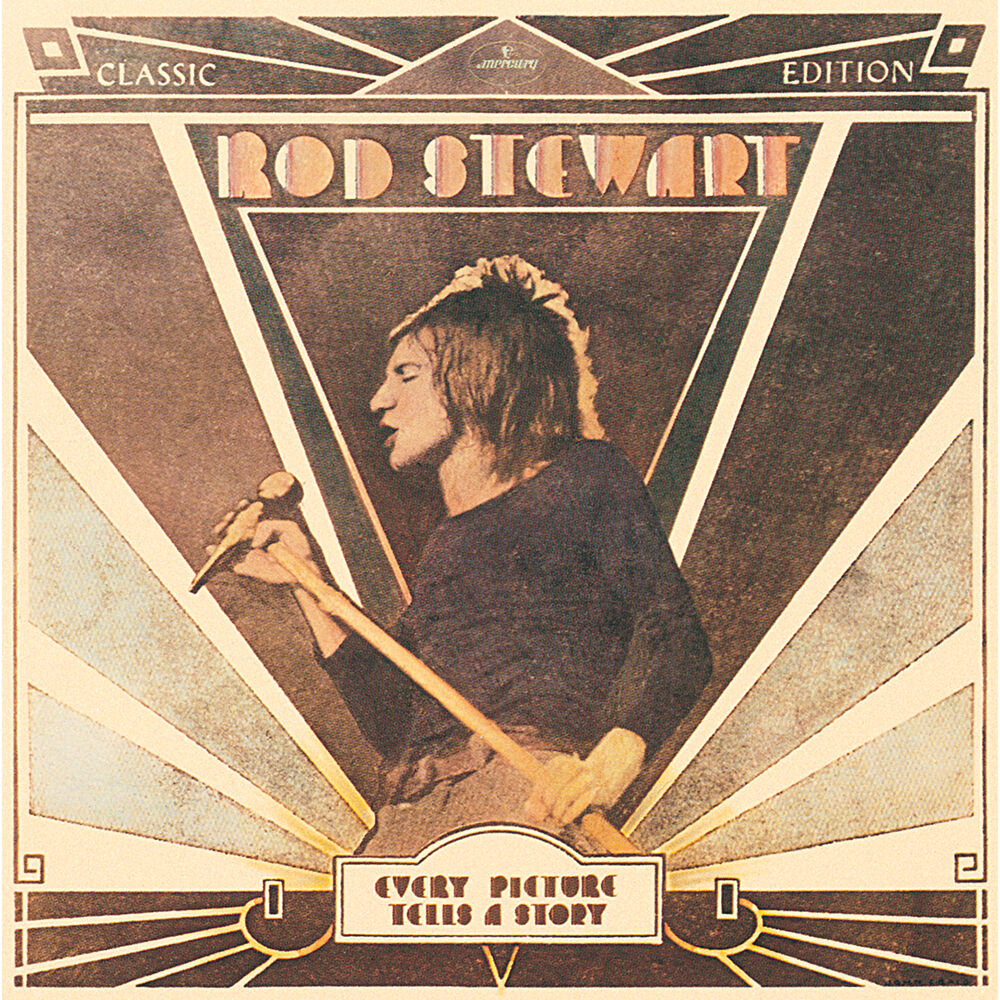
Released in 1971, "Every Picture Tells a Story" is Rod Stewart's third studio album, blending hard rock, folk, and blues styles. It perfected his signature sound, leading to its success on both the UK and US charts.
Why it's rated so high
The album achieved enduring critical success, topping charts in the UK and US, and was highly praised for its blend of styles and Stewart's vocal delivery. Critics lauded it as a "masterclass in roots rock" and a creative pinnacle, earning it a spot on Rolling Stone's 500 Greatest Albums list.
Career and historical context
This 1971 release marked Rod Stewart's major breakthrough as a solo artist, following his work with Faces and two previous albums. It propelled him to international stardom, with both the album and its single "Maggie May" reaching number one.
Fun facts
The album was released on 28 May 1971 by Mercury Records.
It topped the charts in the UK, US, Canada, and Australia.
Its single, "Maggie May", also reached number one.
Rolling Stone ranked it number 177 on their 2020 list of the 500 Greatest Albums of All Time.
British television's Channel 4 placed it 99th in a 2005 survey of the 100 greatest albums.
Written by AI from the album's and artist's Wikipedia articles and the archive's notes. Double-check anything important.
The full story
Every Picture Tells a Story is the third studio album by British singer-songwriter Rod Stewart, released on 28 May 1971, by Mercury Records. It incorporates hard rock, folk, and blues styles. It went to number one on both the UK and US charts and finished third in the Jazz & Pop critics' poll for best album of 1971. It has been an enduring critical success, including being ranked number 172 on Rolling Stone's 2003 list of the "500 Greatest Albums of All Time", repositioned to number 177 in the 2020 revision.
Critical reception and legacy
In his original Rolling Stone review, John Mendelsohn wrote: "Boring as half of it may be, there's enough that is unqualifiedly magnificent on the other half." However, Village Voice critic Robert Christgau gave the album a glowing review, writing: "Rod the Wordslinger is a lot more literate than the typical English bloozeman, Rod the Singer can make words flesh, and though Rod the Bandleader's music is literally electric it's the mandolin and pedal steel that come through sharpest."
A retrospective review by Pitchfork's Tal Rosenberg called it "a rollicking and surprisingly grounded document of early '70s folk-rock".
The album has been an enduring critical success, including a number 172 ranking on Rolling Stone's 2003 list of the 500 greatest albums of all time, maintaining the rating in a 2012 revised list, dropping slightly in a 2020 revised list to number 177. In 1992, the album was awarded the number-one spot in Jimmy Guterman's book The Best Rock 'N' Roll Records of All Time: A Fan's Guide to the Stuff You Love. It was ranked 99th in a 2005 survey held by British television's Channel 4 to determine the 100 greatest albums of all time.
In a retrospective review for AllMusic, Stephen Thomas Erlewine wrote: "Without greatly altering his approach, Rod Stewart perfected his blend of hard rock, folk, and blues on his masterpiece, Every Picture Tells a Story." Writing in The Rough Guide to Rock (1999), Nicholas Oliver wrote that Stewart broke through commercially on "an artistic high", adding that it features well-chosen covers and strong original material. Martin C. Strong of The Great Rock Discography (2006) described the album as the creative pinnacle of Stewart's career, naming it "a masterclass in roots rock." "Mandolin Wind" was highlighted as the best original song by both Oliver and Strong, with Oliver calling it "peerless" and Strong naming it one of Stewart's "most perfectly conceived originals". Tony Parsons of The Observer named it his favourite British album, writing that Stewart "made the best records that Seventies teenagers had ever heard. Great voice, great songs, great haircuts and acoustic guitars that were played like electric guitars."