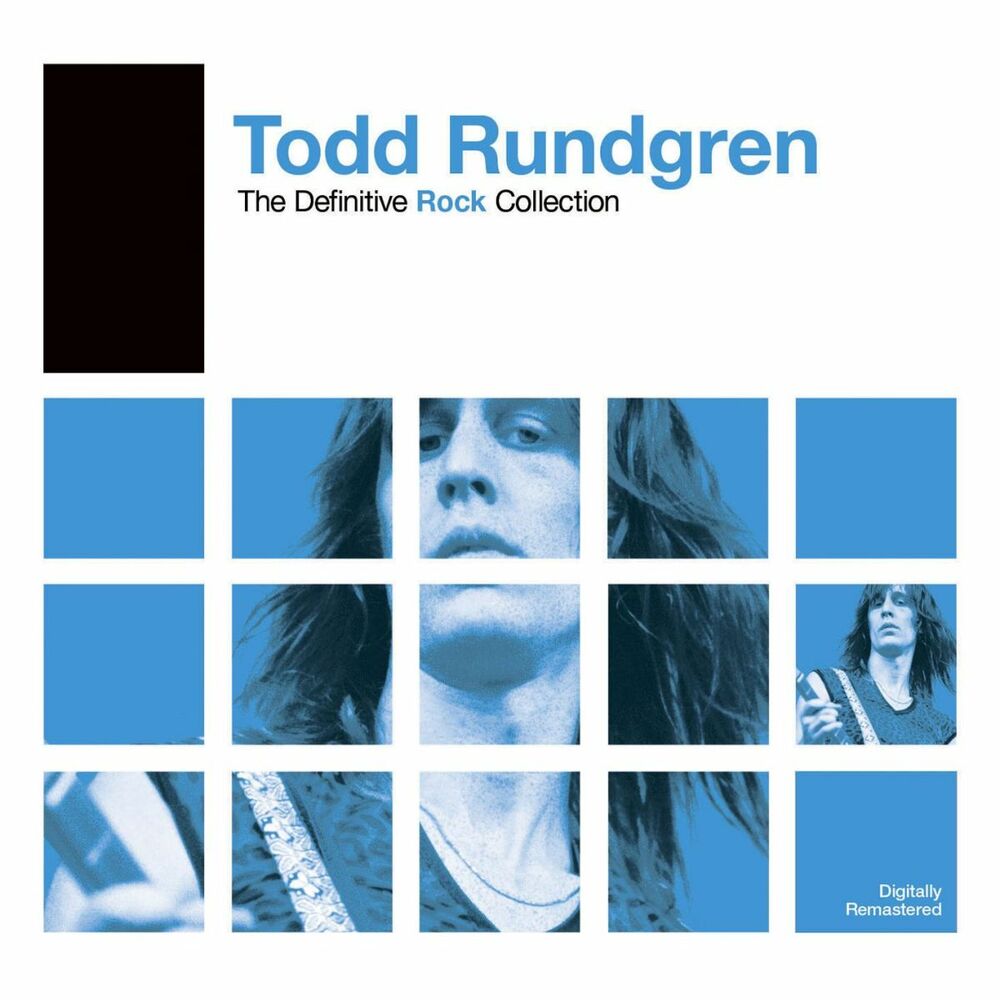
Tracklist
- We Gotta Get You a Woman (2006 Remaster)3:08
- Wailing Wall (2006 Remaster)3:04
- Be Nice to Me (2006 Remaster)3:24
- I Saw the Light (2006 Remaster)2:59
- Couldn't I Just Tell You (2006 Remaster)3:19
- It Wouldn't Have Made Any Difference (2006 Remaster)3:50
- Hello It's Me (2006 Remaster)4:19
- Just One Victory (2006 Remaster)4:55
- Sometimes I Don't Know What to Feel (2006 Remaster)4:16
- A Dream Goes on Forever (2006 Remaster)2:23
- The Last Ride4:48
- Don't You Ever Learn?6:06
- Real Man (2006 Remaster)4:28
- Black and White4:44
- Love of the Common Man (2006 Remaster)3:36
- Cliché (2006 Remaster)4:00
- The Verb "To Love" (2006 Remaster)7:25
- Love Is the Answer (2006 Remaster)4:15
- Love in Action (2006 Remaster)3:27
- Can We Still Be Friends? (2006 Remaster)3:36
- All the Children Sing (2006 Remaster)3:10
- Fade Away3:06
- The Very Last Time (2006 Remaster)3:52
- Time Heals (2006 Remaster)3:32
- Compassion (2006 Remaster)4:40
Have you heard it?
Sign in to mark it as listened, rate it and keep notes.
The full story
Todd Harry Rundgren (born June 22, 1948) is an American musician, singer, songwriter, and record producer who has performed a diverse range of styles as a solo artist and as a member of the bands Nazz and Utopia. He is known for his sophisticated and often unorthodox music, his occasionally lavish stage shows, and his later experiments with interactive art. He also produced music videos and was an early adopter and promoter of various computer technologies, such as using the Internet as a means of music distribution in the late 1990s. A native of Upper Darby, Pennsylvania, Rundgren began his professional career in the mid-1960s, forming the psychedelic band Nazz in 1967. After two years, he left Nazz to pursue a solo career and immediately scored his first US top 40 hit with "We Gotta Get You a Woman" (1970). His best-known songs include "Hello It's Me" and "I Saw the Light" from Something/Anything? (1972), which get frequent air time on classic rock radio stations, the 1978 "Can We Still Be Friends", and the 1983 single "Bang the Drum All Day", which is featured in many sports arenas, commercials, and movie trailers. Although lesser known, "Couldn't I Just Tell You" (1972) was influential to many artists in the power pop genre. His 1973 album A Wizard, a True Star remains an influence on later generations of bedroom musicians. Rundgren is considered a pioneer in the fields of electronic music, progressive rock, music videos, computer software, and Internet music delivery. He organized the first interactive television concert in 1978, designed the first color graphics tablet in 1980, and created the first interactive album, No World Order, in 1993. Additionally, he was one of the first acts to be prominent as both an artist and producer. His notable production credits include Badfinger's Straight Up (1971), Grand Funk Railroad's We're an American Band (1973), the New York Dolls' New York Dolls (1973), Meat Loaf's Bat Out of Hell (1977), and XTC's Skylarking (1986). He was inducted into the Rock and Roll Hall of Fame in 2021.
Early influences and Nazz
Todd Harry Rundgren was born in Philadelphia on June 22, 1948, the son of Ruth (née Fleck; April 29, 1922 – April 6, 2016) and Harry W. Rundgren (1917–1996). His father was of Swedish descent and his mother was of Austrian and German descent. He grew up in the bordering town of Upper Darby Township, Pennsylvania and taught himself how to play guitar with little help. As a child, Rundgren was fascinated by his parents' small record collection, which consisted of show tunes and symphonic pieces, and especially by the operettas of Gilbert and Sullivan. Later, he grew infatuated with the music of the Beatles, the Rolling Stones, the Ventures, and the Yardbirds, as well as the Philadelphia soul of Gamble & Huff, the Delfonics, and the O'Jays. At the age of 17, he formed his first band, Money, with then-best friend and roommate Randy Reed and Reed's younger brother. After graduating from Upper Darby High School in 1966, Rundgren moved to Philadelphia and began his career in Woody's Truck Stop, a blues rock group in the style of Paul Butterfield Blues Band. Rundgren stayed with the band for eight months, and in the process, they became the most popular group in Philadelphia. He and bassist Carson Van Osten left before they released the eponymous first album to form the rock band Nazz in 1967. By then, Rundgren had lost interest in the blues and wanted to pursue a recording career with original songs in the style of newer records by the Beatles and the Who. As a member of the Nazz, he learned his craft as a songwriter and vocal arranger, and was determined to equal the artistry of the Beatles.
In 1968, after recording four demo discs, the Nazz were signed by Atlantic Records subsidiary Screen Gems Columbia (SGC). They were flown to Los Angeles to produce their first album at ID Sound studio. Rundgren had no prior production experience and remembered that the producer, Bill Traut, "just whipped through the mixes in a day or two ... So I got it into my head, 'Well, he's gone now, so why don't we just mix it again, more like the way we want it?' Our engineer didn't mind if we went and just started diddling around on the board ... It was pretty much trial and error." He took an experimental approach to the recordings, employing techniques such as varispeed and flanging, and despite having no formal training, scored music charts for string and horn arrangements. Engineer James Lowe, whom Rundgren recruited for his involvement with arranger Van Dyke Parks, believed that Rundgren had become the de facto leader of Nazz, and that a producer's credit was wrongfully withheld from him. Nazz gained minor recognition with their debut single, July 1968's "Open My Eyes" backed with "Hello It's Me", both songs penned by Rundgren. They subsequently released three albums: Nazz (October 1968), Nazz Nazz (April 1969), and Nazz III (1971). In March 1968, New York singer-songwriter Laura Nyro released her second album, Eli and the Thirteenth Confession. When Rundgren heard the record, he was struck by "all the major seventh chords and variations on augmented and suspended chords", and it had an immediate impact on his songwriting, especially as he began to compose more on piano. He elaborated:
I know for a fact that her influences were the more sophisticated side of R&B, like Jerry Ragovoy and Mann & Weil and Carole King. ... and she also had her own very original and very jazz-influenced way of seeing things. It was that extra layer that made her influential. A lot of those chords she got from other people. But beyond the elements of her composition, I always thought it was the way she played her own material that really sold it. ... I met her right after Eli and the Thirteenth Confession. I actually had arranged a meeting, just because I was so infatuated with her and I wanted to meet the person who had produced all this music. ... after I met her the first time, she asked me if I wanted to be her band leader. But the Nazz had just signed a record …
Production beginnings
After departing Nazz, the 21-year-old Rundgren briefly considered working as a computer programmer, and then decided that his calling was as a producer. He moved to New York in the summer of 1969 and involved himself with the clubs of Greenwich Village, particularly Steve Paul's Scene, and met a number of Manhattan musicians and fashion designers. Michael Friedman, formerly the assistant of Nazz manager John Kurland, offered Rundgren a job as staff engineer and producer under Albert Grossman, which Rundgren accepted. Grossman, known for his management of folk rock acts, had just founded Ampex Records, a joint business venture with the tape company of the same name, and built Bearsville Studios, near Woodstock. Bearsville soon became its own record imprint. Grossman promised to Rundgren that he would become the "highest-paid producer in the world", which later came true. Rundgren said he was initially relegated to "various old folk artists that they had who needed an upgrade: people like Ian & Sylvia, James Cotton, and other artists in Albert's stable." Shortly after producing the eponymous 1969 album by Great Speckled Bird, he was promoted as Bearsville's house engineer. Accompanied by Robbie Robertson and Levon Helm of the Band, he traveled to Canada to record Jesse Winchester's eponymous 1970 debut album. Immediately afterward, he said, "the Band asked me to engineer their Stage Fright sessions. I think Jesse Winchester was a kind of run-through for that, because I was pretty quick to get the sounds and they liked that." Released in August 1970, Stage Fright reached number 5 on the Billboard 200, the highest chart showing the Band had to that point. Rundgren was dubbed Bearsville's "boy wonder". His work for the Band was followed by a second album for Winchester (which was then shelved for two years) and the album Taking Care of Business by the James Cotton Blues Band (1970). This project resulted in Rundgren meeting Cotton's keyboard player Mark "Moogy" Klingman, who in turn introduced Rundgren to keyboard player Ralph Schuckett, both of whom worked extensively with Rundgren over the next few years. Rundgren was to produce Janis Joplin's third and ultimately final album, Pearl (1971), but plans fell through, as the two artists could not get along with each other.
Style and recognition
As a solo artist
Writing for AllMusic, music critic Stephen Thomas Erlewine recognizes Rundgren thus:
Todd Rundgren's best-known songs – the Carole King pastiche "I Saw the Light", the ballads "Hello, It's Me" and "Can We Still Be Friends", and the goofy novelty "Bang on the Drum All Day" – suggest that he is a talented pop craftsman ... but at his core, Rundgren is a rock & roll maverick. Once he had a taste of success with his 1972 masterwork Something/Anything?, Rundgren chose to abandon stardom and, with it, conventional pop music. He began a course through uncharted musical territory, becoming a pioneer not only in electronic music and prog rock, but in music video, computer software, and Internet music delivery as well. As a solo artist from 1972 to 1978, Rundgren scored four US Top 40 singles on the Billboard Hot 100, including one Top 10 hit with "Hello, It's Me", and three US Top 40 albums on the Billboard 200. He is one of the first acts to be prominent both as an artist and as a producer, and he was also influential in the fields of power pop, lo-fi, overdubbing, and experimental music. Rundgren performed in an eclectic variety of styles, so much so that his singles often contrasted with other tracks from the LPs from which they derived, which curtailed his mass appeal. Of his early incorporation of digital technology, he said "I wasn't the first to start recording digitally, because it was so expensive. But once the technology came down to where I could afford it, then I went digital." Rundgren said that adapting his sound to meet commercial expectations was also never an issue for him since he already made "so much money from production", a rare luxury for an artist.
As a producer
Comparisons are sometimes drawn between Rundgren and producer/artists Brian Wilson and Brian Eno. Biographer Paul Myers attributes the recording studio to be Rundgren's "ultimate instrument". Rundgren acknowledged that, in the case of his own records, he does not think "as a producer", but uses the studio to "assist in creating a performance". His recording processes continued in the same tradition as multitrack recording innovator Les Paul as well as the studio experiments of the Beatles and the Beach Boys. According to biographer Myers, Rundgren himself came to inspire "a generation of self-contained geniuses like Prince ... Ironically, some of his innovations would come to liberate the recording artist in such a way as to lessen the perceived value, or need, for a record producer at all." Rundgren's influence is also cited to Hall & Oates, Björk and Daft Punk. Slate writer Marc Weingarten identified A Cappella (1985) as the precedent for Björk's "all vocals, all the time" experiment Medúlla (2004) and said that, overall, "The two [artists] share more common ground than their fans might think." Rundgren's production work for other artists were largely one-off affairs. Exceptions were Grand Funk Railroad, the New York Dolls, the Tubes, Hello People, and the Pursuit of Happiness. He described his typical function as being a "'songcraft' agitator". In cases where the act's songs were unfinished, he would complete them and decline a writer's credit. Some of his collaborators frequently characterize him as a "genius", but also "sarcastic" and "aloof". His most notorious production was for XTC's 1986 album Skylarking, known for the creative tensions and disagreements that arose during its sessions. The album is sometimes regarded as both the pinnacle of Rundgren's production career and of the career of XTC. He commented that, in spite of the turmoil surrounding its making, the record "ultimately ... sounds like we were having a great time doing it. And at times we were having a good time." All three members expressed admiration for the end product.
The Fool guitar
During the mid-to-late 1970s, Rundgren regularly played the eye-catching psychedelic Gibson SG (known variously as "Sunny" or "The Fool"), which Eric Clapton had …
Tracklist
- We Gotta Get You a Woman (2006 Remaster)3:08
- Wailing Wall (2006 Remaster)3:04
- Be Nice to Me (2006 Remaster)3:24
- I Saw the Light (2006 Remaster)2:59
- Couldn't I Just Tell You (2006 Remaster)3:19
- It Wouldn't Have Made Any Difference (2006 Remaster)3:50
- Hello It's Me (2006 Remaster)4:19
- Just One Victory (2006 Remaster)4:55
- Sometimes I Don't Know What to Feel (2006 Remaster)4:16
- A Dream Goes on Forever (2006 Remaster)2:23
- The Last Ride4:48
- Don't You Ever Learn?6:06
- Real Man (2006 Remaster)4:28
- Black and White4:44
- Love of the Common Man (2006 Remaster)3:36
- Cliché (2006 Remaster)4:00
- The Verb "To Love" (2006 Remaster)7:25
- Love Is the Answer (2006 Remaster)4:15
- Love in Action (2006 Remaster)3:27
- Can We Still Be Friends? (2006 Remaster)3:36
- All the Children Sing (2006 Remaster)3:10
- Fade Away3:06
- The Very Last Time (2006 Remaster)3:52
- Time Heals (2006 Remaster)3:32
- Compassion (2006 Remaster)4:40
Listeners 0
Nobody has logged it yet. Be the first.