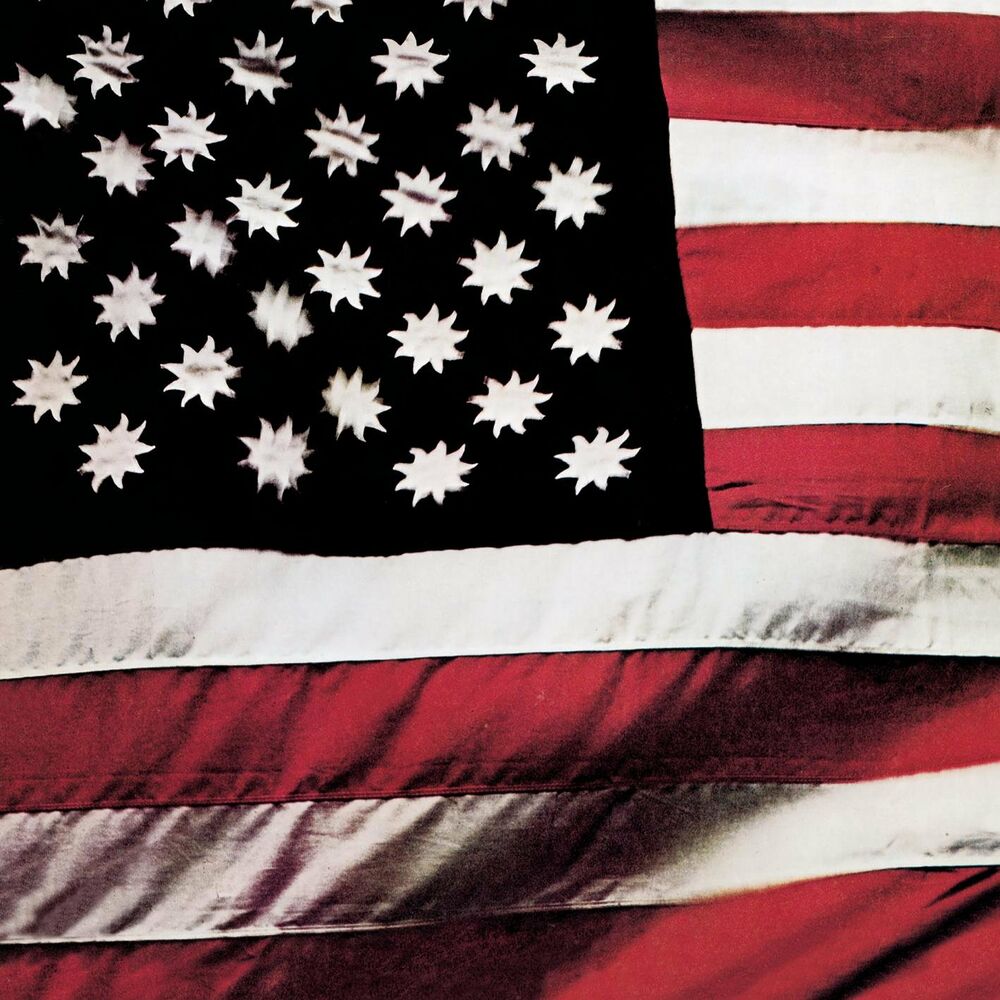
There's a Riot Goin' On was met with a divided response from professional critics and general listeners, who found its production and lyrical content particularly challenging. Reviewing in November 1971 for the Los Angeles Times, Robert Hilburn disapproved of the Family Stone's stylistic change from "soulflavored" songs such as "Everyday People" and "Hot Fun in the Summertime", while saying that "there is little on the album that is worth your attention". Fellow critic Greil Marcus called the record "Muzak with its finger on the trigger." Others were more overt in their praise. Rolling Stone reviewer Vince Aletti wrote that, "At first I hated it for its weakness and its lack of energy and I still dislike these qualities. But then I began to respect the album's honesty". Aletti cited it as "one of the most important fucking albums this year" and "the new urban music... not about dancing to the music, in the streets. It's about disintegration, getting fucked up, nodding, maybe dying. There are flashes of euphoria, ironic laughter, even some bright stretches but mostly it's just junkie death, oddly unoppressive and almost attractive in its effortlessness". A columnist for Hit Parader magazine gave Riot a favorable review, and stated that the album has "a lot that makes Sly the in-person rave that he is." In The Village Voice, Robert Christgau concluded that "what's expressed is the bitterest ghetto pessimism", backed by "subtle production techniques and jarring song compositions", while declaring Riot to be "one of those rare albums whose whole actually does exceed the sum of its parts".
There's a Riot Goin' On was included on several music publications' "End of the Year" lists and critics' polls, including The Village Voice's Pazz & Jop albums list at number seven. The album achieved commercial success with two hit singles and reaching number-one on the Billboard Pop Albums and Soul Albums chart. It later came to be viewed by critics as one of the greatest and most influential albums. Christgau wrote in 2007 that the "temptations and contradictions" of commercial stardom consumed Sly Stone and resulted in "the prophetic 1971" album, "its taped-over murk presaging Exile on Main St., its drum-machine beats throwing knuckleballs at Miles [Davis] and JB [James Brown], it was darker than the Velvet Underground and Nico and funkier than shit, yet somehow it produced two smash hits, including the stark, deep 'Family Affair'." AllMusic described the album as "funk at its deepest and most impenetrable," stating that "what makes Riot so remarkable is that it's hard not to get drawn in with him, as you're seduced by the narcotic grooves, seductive vocals slurs, leering electric pianos, and crawling guitars." Zeth Lundy of PopMatters deemed it "a challenging listen, at times rambling, incoherent, dissonant, and just plain uncomfortable" with "some episodic moments of pop greatness to be found". Lundy went on to discuss its radical departure from the band's past music:
[It] sank their previously burgeoning idealism at a time when social disillusionment was all the rage. Sly had found something else to take him higher and, as a result, Riot is a record very much informed by drugs, paranoia, and a sort of halfhearted malcontent ... listening to it isn't exactly a pleasurable experience. It's significant in the annals of pop and soul because it is blunt and unflinching, because it reflects personal and cultural crises in a manner unbecoming for pop records at the time. Riot can be classified as avant-soul only after being recognized as a soul nightmare—the 'nightmare', so to speak, being a reflection of an unfortunate and uncompromised reality, not a glossed-over pop-music approximation of reality.
There's a Riot Goin' On has been considered one of the first instances of the funk music later popularized by George Clinton and Funkadelic, the Ohio Players, and similar acts. The album, as well as the follow-ups Fresh and Small Talk, are …