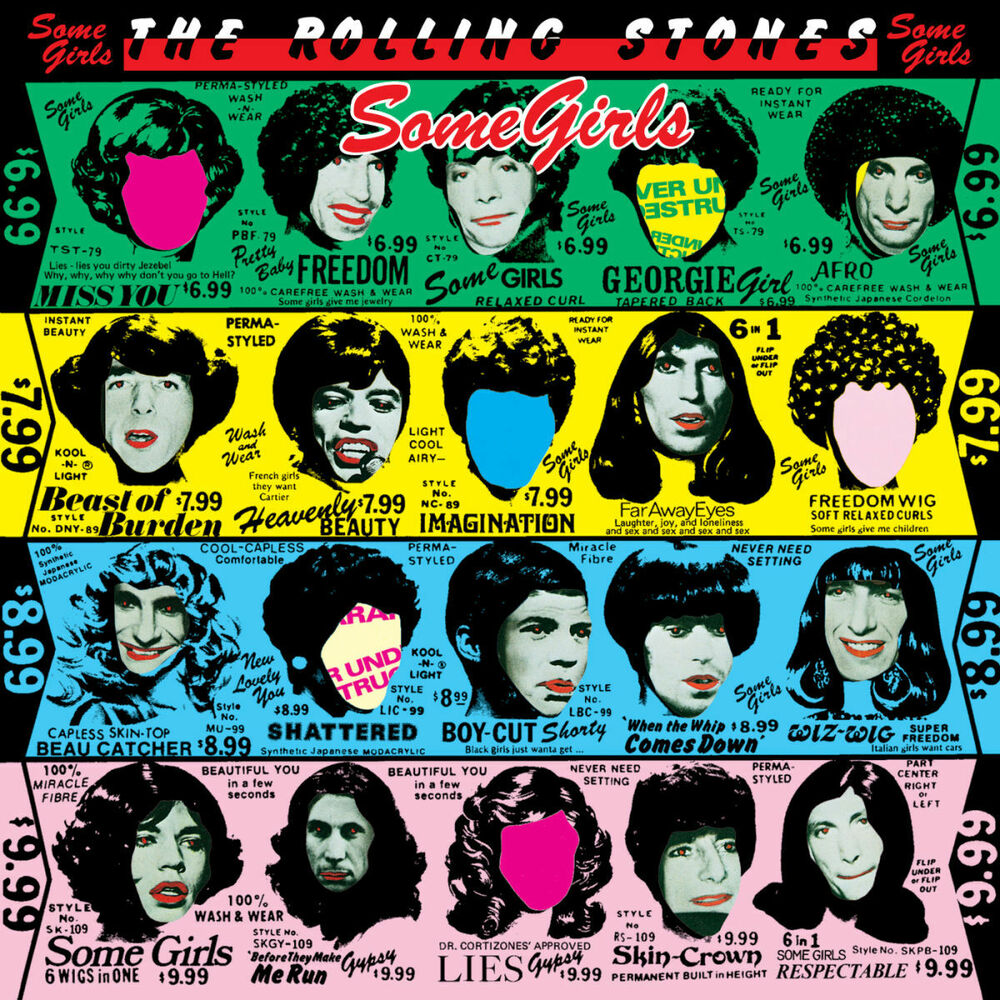
The lead single, "Miss You", was released on 19 May 1978 by the band's own Rolling Stones label, with the album track "Far Away Eyes" as the B-side; a longer, 12" edit appeared on 2 June. The single was a commercial success, spending seven weeks on the UK Singles Chart, eventually peaking at number three. It fared better in the US, spending 20 weeks on the Billboard Hot 100 – longer than any prior Rolling Stones single – eventually peaking at number one, the band's final single to top the chart. Despite its commercial success, its disco sound alienated part of the fanbase. Regarding this, Jagger stated:
There were a lot of people that were very narrow-minded about it. To me, I wasn't brought up on rock music so much as blues and soul music, and lot of that music was dance music. It was specifically made to dance to... You don't really play the grooves of yesteryear when you make records, you play the grooves of now. And that sort of beat was the thing that was going around at the time. For some people it was a very big hit, but not everyone liked it.
Some Girls was released on 9 June 1978, with the catalogue number CUN 39108 (UK) and COC 39108 (US). The record continued the band's commercial success. It spent 25 weeks on the UK Albums Chart, peaking at number two the week of 24 June, being kept off the top spot by the Saturday Night Fever soundtrack. It fared better in the US, peaking at number one on the Billboard Top LPs & Tape chart and spending 88 weeks on the chart. "Beast of Burden", backed by "When the Whip Comes Down", was released as the second single on 28 August 1978 in the US, where it reached number eight on the Billboard Hot 100. "Respectable", again backed by "When the Whip Comes Down", was released as the third single in the UK on 15 September, while "Shattered", backed by "Everything is Turning to Gold", appeared as the fourth and final single in the US on 29 November 1978. Both became Top 40 hits.
Controversy
Immediately following its release, Some Girls attracted controversy. According to Cyrus Patell, a prominent black music station WBLS in New York City refused to play "Miss You" due to what the station deemed to be "the offensive racial attitudes of the album and the band." Additionally, the title track attracted controversy with the line "Black Girls just want to get fucked all night/I just don't have that much jam." Regarding the line, Ahmet Ertegun, the chairman of Atlantic Records (the US distributor of Rolling Stones Records), stated: "When I first heard the song, I told Mick it was not going to go down well. Mick assured me that it was a parody of the type of people who hold these attitudes. Mick has great respect for blacks. He owes his whole being, his whole musical career, to black people." Incidentally, black-oriented radio stations began to boycott "Some Girls", leading Jagger to tell Rolling Stone: "Atlantic tried to get us to drop it, but I refused. I've always been opposed to censorship of any kind, especially by conglomerates. I've always said, 'If you can't take a joke, it's too fucking bad.'"
On 6 October 1978, Ertegun met with Reverend Jesse Jackson, then leader of Operation PUSH (People United to Save Humanity) to discuss the lyric. The meeting ended with Jackson declaring the song to be a "racial insult" that "degrades blacks and women", threatening to boycott the record until a resolution was met. Ertegun concurred, saying, "It is not our wish to in any way demean, insult, or make less of the people without whom there would be no Atlantic Records." After discussing the matter with Atlantic officials, who considered censoring the line, Earl McGrath, president of Rolling Stones Records, released a statement on 12 October on behalf of the band:
It never occurred to us that our parody of certain stereotypical attitudes would be taken seriously by anyone who heard the entire lyric of the song in question. No insult was intended, and if any was taken, we sincerely apologise.
…