About the artist
Björk is an Icelandic artist renowned for her distinct voice, three-octave range, and eclectic musical style spanning electronica, pop, and avant-garde. She is considered one of the most influential musicians of her era, with over 40 million records sold worldwide.
About the album
Homogenic is Björk's third studio album, a stylistic shift combining electronic beats with chilly strings from the Icelandic String Octet. Recorded largely in Spain, it features a unique fusion of electronica, trip hop, and avant-garde sounds. Björk aimed for a "simple sound" reflecting Iceland's raw nature.
Meanings
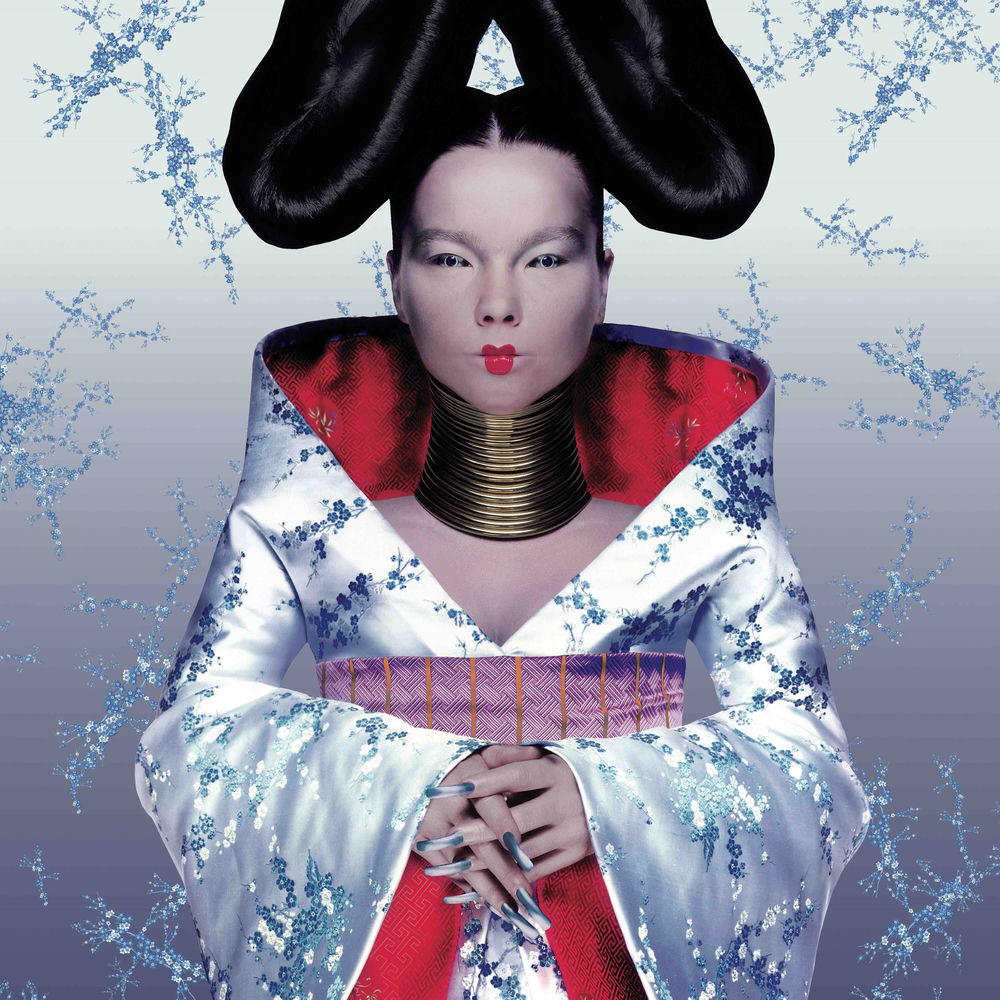
The album's concept centres on Björk's native Iceland, reflecting its raw nature and emotional extremes. Lyrics explore love, failed relationships, and the idea of universal love, with "Jóga" dedicated to her best friend. The cover, designed by Alexander McQueen, portrays a warrior fighting with love.
Why it's rated so high
Homogenic received widespread critical acclaim, lauded as one of the boldest and most exciting albums of its time. Critics praised its seamless fusion of electronic beats and strings, calling it Björk's most emotional and deeply felt work. It has been listed among the greatest albums of all time and influenced artists like Radiohead and Kanye West.
Career and historical context
Following extensive touring and a stalker incident, Björk sought privacy, relocating to Spain to record Homogenic. This album marked a deliberate shift towards a more focused, singular sound after the varied styles of her previous works, Debut and Post. It cemented her status as a pioneering solo artist.
Fun facts
- Björk originally intended to produce the album in her London home.
- The album's working title was "Homogeneous" before becoming "Homogenic".
- She composed string sections for the album using a Casio keyboard.
- The American hip hop group Wu-Tang Clan almost contributed to the album's production.
- Björk's babysitter was added to the production staff after showing interest in the equipment.