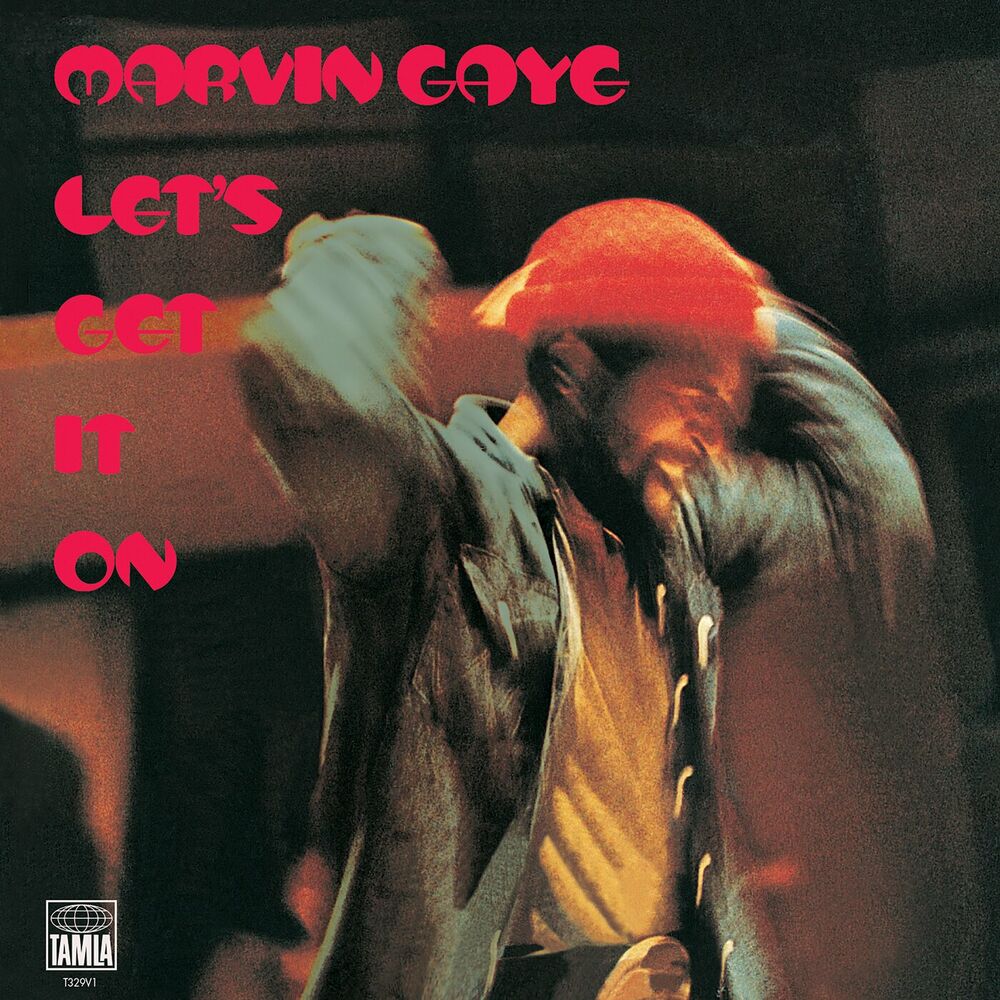
In the spring of 1972, Marvin Gaye was suffering from writer's block. Following the release of his most commercially successful album up to that point, What's Going On (1971), and the soundtrack album to the blaxploitation film Trouble Man (1972), Gaye had struggled to come up with new material after Motown Records had renegotiated a new contract with him. The contract provided him with more creative control over his recordings. The deal was worth $1 million, making him the highest-earning soul artist, as well as the highest-earning black artist, at the time. He was also struggling with deciding whether or not to relocate to Los Angeles, following Motown-CEO Berry Gordy's move of the record label and replacement of the Detroit-based Hitsville U.S.A. (Motown Studio A) recording studio with the Hitsville West studio in Los Angeles. Amid relocation and his lack of material, Gaye was struggling with his conscience, as well as dealing with expectations from his wife, Gordy's sister Anna. Gaye's separation from Gordy pressured him emotionally. During this time, he had also been attempting to cope with past issues that had stemmed from his childhood.
During his childhood, Gaye had been physically abused by his preacher father Marvin Gay Sr., who disciplined his son under extremely moralistic and fundamentalist Christian teachings. As a result, the meaning and practice of sex had later become a disturbing question for Gaye. As an adult, he suffered from impotence and became plagued by sadomasochistic fantasies, which haunted him in his dreams and provoked intense feelings of guilt. Gaye learned to cope with his personal issues with a newly found spirituality. He began incorporating his new outlook into his music, as initially expressed through the socially conscious album What's Going On, along with promotional photos of him wearing a kufi in honor of African traditional religions and his faith.
By winning over record executives with the success of What's Going On, Gaye attained more creative control, which he would use, following his brief separation from wife Anna Gordy, to record an album that was meant to explore themes beyond sex. As with What's Going On, Gaye wanted to have a deeper meaning than the general theme that was used to portray it; in the case of the former album, politics, and with its follow-up effort, love and romance, which would be used by Gaye as a metaphor for God's love. In his book Divided Soul: The Life of Marvin Gaye, Gaye biographer David Ritz wrote of the singer's inspiration behind Let's Get It On:
If the most profound soul songs are prayers in secular dress, Marvin's prayer is to reconcile the ecstasy of his early religious epiphany with a sexual epiphany. The hope for such a reconciliation, the search for sexual healing, is what drives his art ... The paradox is this: The sexiest of Marvin Gaye's work is also his most spiritual. That's the paradox of Marvin himself. In his struggle to wed body and soul, in his exploration of sexual passion, he expresses the most human of hungers—the hunger for God. In those songs of loss and lament—the sense of separation is heartbreaking. On one level, the separation is between man and woman. On a deeper level, the separation is between man and God.
In the album's liner notes, Gaye explained his views on the themes of sex and love, stating "I can't see anything wrong with sex between consenting anybodies. I think we make far too much of it. After all, one's genitals are just one important part of the magnificent human body ... I contend that SEX IS SEX and LOVE IS LOVE. When combined, they work well together, if two people are of about the same mind. But they are really two discrete needs and should be treated as such. Time and space will not permit me to expound further, especially in the area of the psyche. I don't believe in overly moralistic philosophies. Have your sex, it can be exciting, if you're lucky. I hope the music that I present here makes you lucky."