Sign in to mark it as listened, rate it and keep notes.
About the artist
Sly and the Family Stone, an American band from San Francisco, pioneered the psychedelic soul sound from 1966 to 1983. Their unique blend of funk, soul, psychedelic rock, gospel, and R&B made them a pivotal influence on popular music. Notably, they were the first major American rock group with a racially integrated, mixed-gender lineup.
About the album
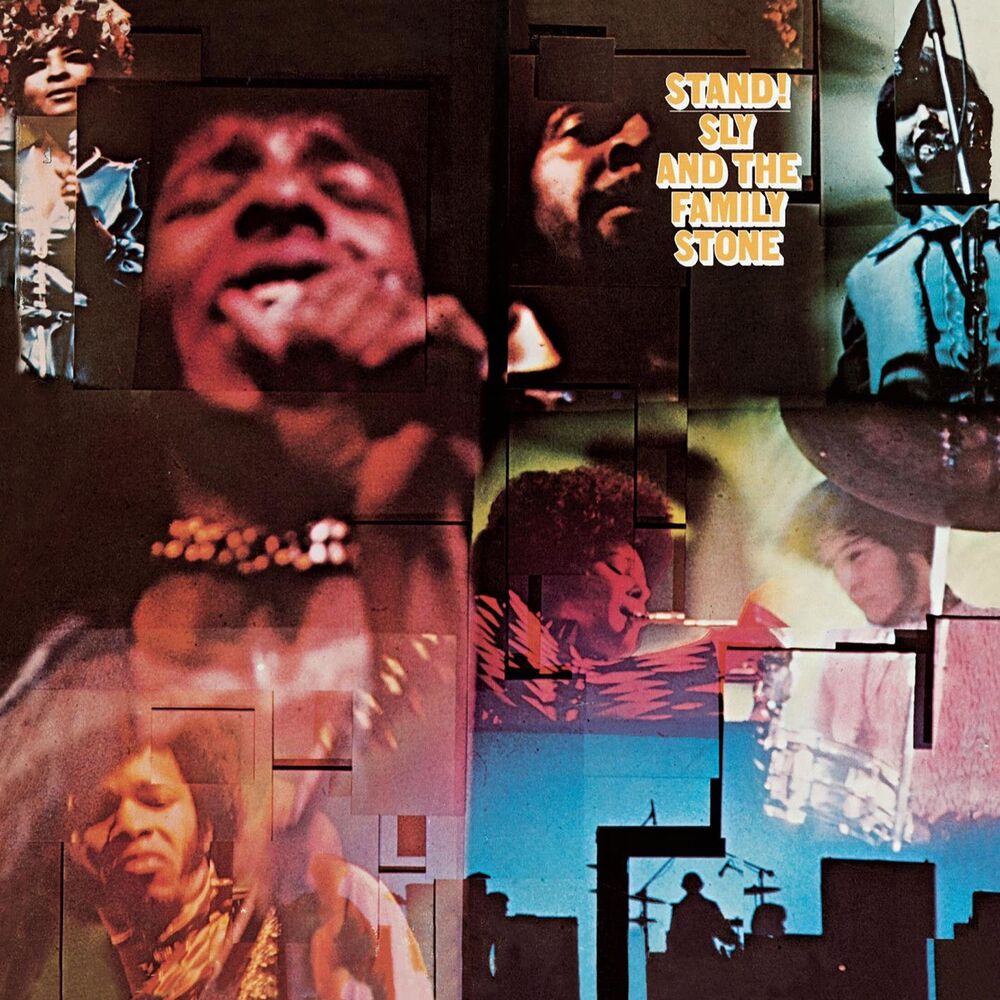
Stand! is Sly and the Family Stone's fourth album, released in May 1969, and is considered an artistic high-point. Written and produced by Sly Stone, it features a seamless blend of rock, funk, and soul. Much of the album was recorded at Pacific High Recording Studios in San Francisco.
Meanings
The album carries a very evident sense of moral purpose and social commentary, delivering a powerful message of unity. While songs like "Everyday People" offered hope, others like "Don't Call Me Nigger, Whitey" reflected the disintegration of the 1960s dream.
Why it's rated so high
Highly acclaimed, "Stand!" is ranked #119 on Rolling Stone's 500 Greatest Albums of All Time and was inducted into the Grammy Hall of Fame. Critics praised its raw energy, provocative content, and its breakthrough blend of rock, funk, and soul.
Career and historical context
Released just before their celebrated Woodstock performance, "Stand!" became the band's most commercially successful album, launching them into the pop mainstream. It marked a significant turning point after their first three albums had limited chart success.
Fun facts
The album sold 500,000 copies in 1969 and over 3 million by 1986.
Sly Stone was noted for his focus during recording, unlike his later work.
The Jackson 5 covered the title track "Stand!" on their debut album.
Primal Scream sampled "Sex Machine" for their 1991 album *Screamadelica*.
The album was selected for the National Recording Registry in 2015.
Written by AI from the album's and artist's Wikipedia articles and the archive's notes. Double-check anything important.
The full story
Stand! is the fourth album by American soul-funk band Sly and the Family Stone, released on May 3, 1969. Written and produced by lead singer and multi-instrumentalist Sly Stone, Stand! is considered an artistic high-point of the band's career. Released by Epic Records, just before the group's celebrated performance at the Woodstock festival, it became the band's most commercially successful album to date. It includes several well-known songs, among them hit singles, such as "Sing a Simple Song", "I Want to Take You Higher", "Stand!", and "Everyday People". The album was reissued in 1987 on compact disc and vinyl, and again in 2007 as a remastered numbered edition digipack CD with bonus tracks and, in the UK, as only a CD with bonus tracks.
The album sold 500,000 copies in 1969 and was certified gold in sales by the RIAA on December 4 of that year. It peaked at number 13 on the Billboard 200 and stayed on the chart for nearly two years. By 1986, it had sold well over 1 million copies and was certified platinum in sales by the RIAA on November 21 of that same year. It then went on to sell over three million copies, becoming one of the most successful albums of the 1960s. In 2003, the album was ranked number 118 on Rolling Stone magazine's list of the 500 greatest albums of all time, 121 in a 2012 revised list, and number 119 in a 2020 reboot of the list. In 2015, the album was deemed "culturally, historically, or aesthetically significant" by the Library of Congress and selected for inclusion in the National Recording Registry. In 2015, Stand! was inducted into the Grammy Hall of Fame.
Production
Stand! was recorded after Life, a commercially unsuccessful album. Although the Family Stone's single "Dance to the Music" was a top ten hit in early 1968, none of the band's first three albums reached above 100 on the Billboard 200. Stand! reached number thirteen and launched Sly Stone and his bandmates Freddie Stone, Larry Graham, Rose Stone, Cynthia Robinson, Jerry Martini, and Greg Errico into the pop music mainstream.
Much of the album was recorded at Pacific High Recording Studios in San Francisco. The band's A&R director and photographer Stephen Paley recalled how "together" Sly Stone was while working on Stand!, constantly referring to Walter Piston's Orchestration textbook, unlike his erratic behavior and work after he became dependent upon cocaine within a year of the album's success.
Critical reception and legacy
Reviewing for Rolling Stone in July 1969, Alec Dubro observed a "very evident sense of moral purpose" in the content and a rawness in its brand of soul music, which he said "depends on sheer energy more than anything else". Overall, he found the album provocative and "effective", recommended "for anyone who can groove on a bunch of very raucous kids charging through a record, telling you exactly what they think whether you want to hear it that way or not." In the same magazine, covering Epic-Legacy's 2007 reissue of the band's catalogue, Robert Christgau said that "Stand! revealed the magnificence of which this band would all too briefly be capable. 'Sex Machine,' which precipitated James Brown's, wah-wahs on a bit, but everything else is etched in Stone, from the equally precipitous 'Don't Call Me Nigger, Whitey' to the Chaka Khan fave 'Somebody's Watching You' to, yes you can, 'You Can Make It If You Try.'" Also appraising the reissue campaign, Peter Shapiro wrote in Uncut that Stand! was "the group’s true breakthrough" as its "seamless blend of rock, funk and soul, and the soaring mix of black and white voices, made crossover seem like Utopia." Commenting on the music's historical context, Shapiro added:
At a time when the civil rights coalition was breaking apart, when flower power was mutating into armed struggle, the Family Stone clung desperately to the belief that 'You Can Make it If You Try' and had the gall to deliver the decade's most powerful message of unity as a singsong nursery rhyme. Of course, maybe 'Everyday People' was believable as a nursery rhyme because, on songs like 'Don’t Call Me Nigger, Whitey' and 'Somebody’s Watching You', Sly watches the '60s dream disintegrate before his eyes.
The Jackson 5 covered "Stand!" on their first Album Diana Ross Presents the Jackson 5 (1969), the song was used as a set opener for their 1970 and 1971 concert tours. A live version appears along with "I Want to Take You Higher" on their soundtrack album Goin' Back to Indiana (1971).
Primal Scream sampled "Sex Machine" on their cover of the 13th Floor Elevators' "Slip Inside This House" from their album Screamadelica (1991).
Rapper Ice-T, Body Count, and Jane's Addiction performed "Don't Call Me Nigger, Whitey" during the 1991 Lollapalooza tour and in the 1993 Perry Farrell film Gift.
From the Wikipedia article Stand!, available under CC BY-SA 4.0.