João's Music Archive
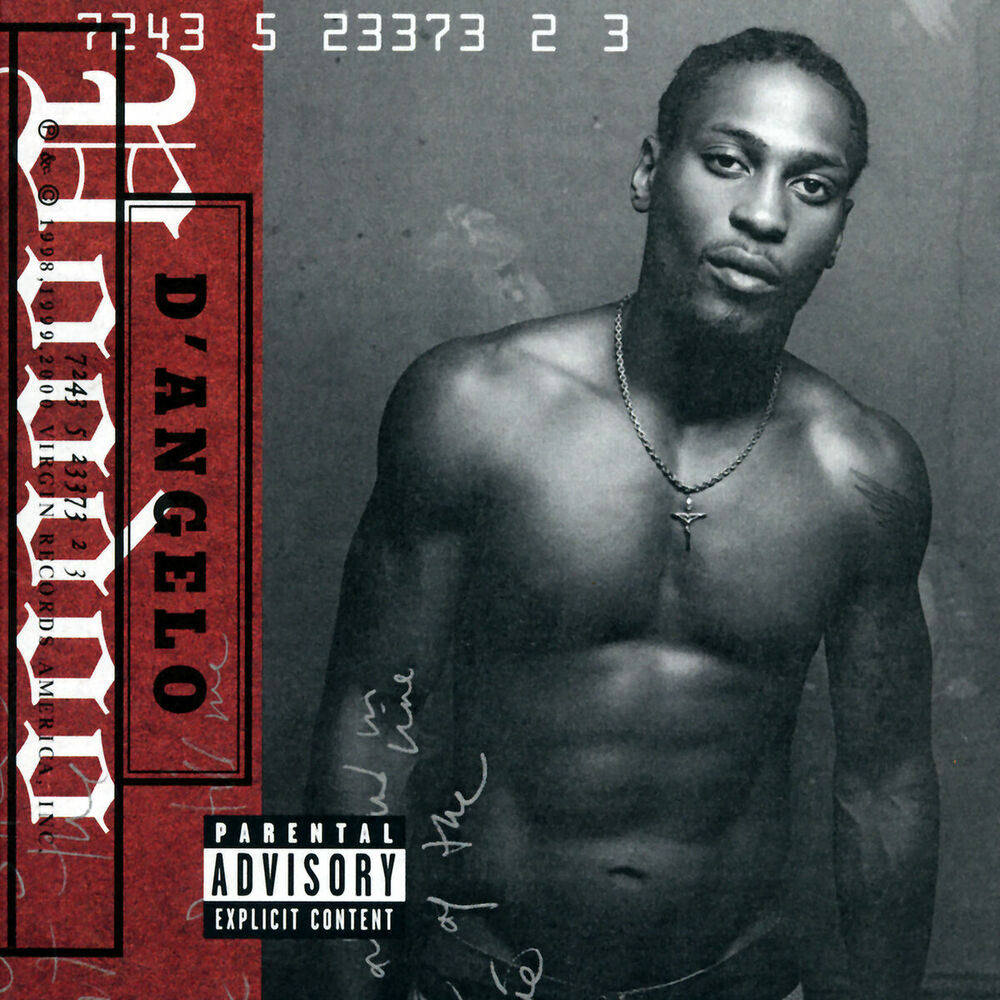
Voodoo
← Back to the lists

Voodoo

D'Angelo
2000-01-25
Virgin Records
13 tracks, 1 h 19 min
Rating
–
Not heard yet
110
–Archive
87Critics
0Listeners
Average score 87AOTY 86Pitchfork 10.010 reviews

Tracklist

  1. Playa Playa7:09
  2. Devil's Pie5:21
  3. Left And Right4:46
  4. The Line5:16
  5. Send It On5:58
  6. Chicken Grease4:38
  7. One Mo'Gin6:13
  8. The Root6:33
  9. Spanish Joint5:44
  10. Feel Like Makin' Love6:22
  11. Greatdayndamornin'/Booty7:34
  12. Untitled (How Does It Feel)7:11
  13. Africa6:16
Listen on

Have you heard it?

Sign in to mark it as listened, rate it and keep notes.

About the artist

D'Angelo, born Michael Eugene Archer, is an American singer, songwriter, and multi-instrumentalist, widely regarded as a pioneer of the neo-soul movement. Billboard named him one of the greatest R&B artists, and Rolling Stone ranked him among the 200 Greatest Singers of All Time. He was inducted into the National Rhythm & Blues Hall of Fame in 2025.

About the album

Voodoo is D'Angelo's second studio album, featuring a loose, groove-based funk sound that departs from conventional song structures. Recorded with the Soulquarians, including Questlove on drums, at Electric Lady Studios, it blends jazz, hip-hop, blues, and soul with vintage influences. The album's improvisational atmosphere came from recording most tracks live and on the first take.

Meanings

The album's title, "Voodoo," reflects its deep musical influences, tracing back through blues and religious ceremonies. Lyrically, D'Angelo offers personal reflections on spirituality, love, sexuality, maturation, and fatherhood. The liner photography visually reinforces this theme, showing D'Angelo participating in a voodoo ceremony.

Why it's rated so high

Critics hailed Voodoo as a masterpiece, praising its diverse sound and experimental, groove-over-melody approach. It won a Grammy Award for Best R&B Album, and "Untitled (How Does It Feel)" won Best Male R&B Vocal Performance. The album is considered a creative milestone for neo-soul, listed at number 28 on Rolling Stone's 500 Greatest Albums of All Time.

Career and historical context

Following the success of his debut, "Brown Sugar," D'Angelo took a four-and-a-half-year break, struggling with writer's block. The birth of his son in 1998 inspired him to return to music, reconnecting with African-American musical history. "Voodoo" marked a significant artistic progression, moving towards a more experimental sound compared to his earlier work.

Fun facts

  • D'Angelo became a reluctant sex symbol after the "Untitled (How Does It Feel)" music video, which featured him nude from the waist up.
  • The album was recorded simultaneously with Erykah Badu's "Mama's Gun" and Common's "Like Water for Chocolate" at Electric Lady Studios.
  • D'Angelo and Questlove studied bootleg videos of artists like James Brown and Jimi Hendrix for inspiration during recording sessions.
  • The album's release was delayed due to the folding of D'Angelo's former label and legal troubles with his management.
  • Virgin Records executives had mixed opinions on "Voodoo's" commercial potential due to its unconventional sound.
Written by AI from the album's and artist's Wikipedia articles and the archive's notes. Double-check anything important.

The full story

Voodoo is the second studio album by American musician D'Angelo, released on January 25, 2000, through Virgin Records. D'Angelo recorded the album during 1998 and 1999 at Electric Lady Studios in New York City, with an extensive line-up of musicians associated with the Soulquarians musical collective. Produced primarily by the singer, Voodoo features a loose, groove-based funk sound and serves as a departure from the more conventional song structure of his debut album, Brown Sugar (1995). Its lyrics explore themes of spirituality, love, sexuality, maturation, and fatherhood. Following heavy promotion and public anticipation, the album was met with commercial and critical success. It debuted at number 1 on the US Billboard 200, selling 320,000 copies in its first week, and spent thirty-three weeks on the chart. It was promoted with five singles, including the hit single "Untitled (How Does It Feel)", whose music video garnered D'Angelo mainstream attention and controversy. Critically, Voodoo was acclaimed as a masterpiece and earned D'Angelo several accolades, including the Grammy Award for Best R&B Album and top rankings in album polls for the year. D'Angelo promoted Voodoo with an international supporting tour in late 2000. While successful early on, the tour became plagued by concert cancellations and D'Angelo's personal frustrations surrounding his sexualized public image from the album's marketing. Voodoo has since been regarded by music writers as a creative milestone of the neo soul genre during its apex and has sold more than 1.7 million copies in the United States, being certified platinum by the Recording Industry Association of America (RIAA). Voodoo was listed as 28th on Rolling Stone's 500 Greatest Albums of All Time.

Background

Following the success of his debut album Brown Sugar (1995), D'Angelo went into a four-and-a-half-year absence from the music scene and releasing solo work. His debut album presented a musical fusion of traditional soul and R&B influences with hip-hop vocal and production elements, serving as fundamental elements for the neo soul sound. With its single-oriented success, Brown Sugar earned considerable sales success and defied the contemporary, producer-driven sound of the time, while earning popularity among mature R&B audiences and the growing hip-hop generation. Prior to its release, neo soul itself was undefined by a major artist or musical work, and was developing during the early 1990s through the work of artists such as Tony! Toni! Toné!, Me'Shell NdegéOcello, and Omar. The album also earned D'Angelo recognition for producing a commercial breakthrough for the genre and giving notice to other neo soul artists, including Erykah Badu, Lauryn Hill, and Maxwell. After spending two years on tour promoting Brown Sugar, D'Angelo found himself stuck with writer's block. On the setback, D'Angelo later stated "The thing about writer's block is that you want to write so fucking bad, [but] the songs don't come out that way. They come from life. So you've got to live to write." During this time, he generally released cover versions and remakes, including a cover-collaboration with Erykah Badu of the Marvin Gaye and Tammi Terrell duet song "Your Precious Love" for the soundtrack to High School High (1996). D'Angelo also covered Prince's "She's Always in My Hair" for the Scream 2 soundtrack (1997), as well as the Ohio Players' "Heaven Must Be Like This" for the Down in the Delta soundtrack (1998). He also appeared on a duet, "Nothing Even Matters", with Lauryn Hill for her debut solo album The Miseducation of Lauryn Hill (1998). He also spent the time lifting weights, smoking marijuana, and making music.

Inspiration

In 1998, he was inspired to write music again after the birth of his first child, Michael, with fellow R&B singer and then-girlfriend Angie Stone. He also traveled back to the South, spending time in South Carolina and in his hometown of Richmond, Virginia, while reconnecting himself with the African-American musical history that had originally inspired him. Shortly after his son's birth and the release of his first live album Live at the Jazz Cafe (1998) through EMI Records, he began preparation for the recording of songs for Voodoo. In several interviews after its release, he cited his son's birth as an inspirational source and creative muse for him. A dedication to his son Michael and daughter Imani was included in the album's liner notes, which were co-written by D'Angelo and writer/musician Saul Williams. In a press video accompanying the release of Voodoo, D'Angelo suggested that he was attempting to create a new sound for him that was in transition: "My inspiration was just to go farther. To get to that next level. To push it even further. To work against the floss and the grain and to get even deeper into the sound that I'm hearing ... and the thing is, I'm just looking at Voodoo as just the beginning. I'm still developing and growing and still listening to that sound I hear inside my head ... So this is the first step". In a February 1999 interview with music journalist Touré, D'Angelo discussed the album and elaborated on the events that had preceded its release, explaining how he had no initial plan for a follow-up. He also discussed his attempt to focus on his original inspiration to produce music, stating "The sound and feel of my music are going to be affected by what motivates me to do it". On his visit to South Carolina, D'Angelo stated that he "went through this runnel, through gospel, blues, and a lot of old soul, old James Brown, early, early Sly and the Family Stone, and a lot of Jimi Hendrix", and "I learned a lot about music, myself, and where I want to go musically". In the same interview, he …

Recording and production

Beginning in 1996, Voodoo evolved from nearly four years of sessions and featured an extensive roster of R&B, hip-hop, and jazz musicians and recording technicians. Drummer and producer Ahmir "Questlove" Thompson of the Roots was D'Angelo's "co-pilot" during the session. He and his crew studied bootleg videotapes of classic R&B artists such as Marvin Gaye, James Brown, and Jimi Hendrix, along with reruns of Soul Train, at Electric Lady Studios, the Manhattan-based recording studio built by Jimi Hendrix. After watching a tape, they played a certain artist's album or catalog, jam, and recorded for inspiration. Touré of Rolling Stone observed, "One night they played Prince's Parade until they flowed into a new groove that became 'Africa'". On several occasions, D'Angelo listened to Sly & the Family Stone's There's a Riot Goin' On (1971), which had an influential production. The crew recorded numerous hours of unreleased, original material, as well as covers of their influencers' material. Collectively referred to by D'Angelo as "yoda", these influencers included soul artist Al Green, funk artist George Clinton, and Afrobeat artist Fela Kuti. During the initial recording sessions, D'Angelo also worked with personal trainer Mark Jenkins, who was hired to help him get into shape. As Questlove recounted, "Money was definitely overweight by '96, so they got him a drill sergeant physical trainer Mark Jenkins. This guy didn't take no shit. I cannot see D running in Central Park, but he did [...] Push-ups, weight room, sparring every day for three hours. He wouldn't take no shit." Following the birth of his son, D'Angelo composed the album's first song "Send It On" in 1998 at a recording studio in Virginia. Shortly afterwards, he felt ready to begin the recording for Voodoo. D'Angelo wrote most of Voodoo's material at Electric Lady Studios, as opposed to his method of composing outside the studio as he did for Brown Sugar. Recording sessions for what ended up on the album began in 1998 and continued through to 1999. On the sessions' environment, Touré wrote "What started as the follow-up to D'Angelo's 1995 platinum debut, Brown Sugar, became five years of study at Soul University, complete with classes, pranks, gossip and equal amounts of discipline and laziness." D'Angelo and Questlove have compared the environment to school. Music writer Trevor Schoonmaker examined D'Angelo's and Questlove's initial recording approach, stating "In the endless sessions for the record, the two spent hours trying to conjure the elusive 'vibe' necessary to provoke the album's creation, which included listening to hours of black music that escaped strict classification. Some of that found itself played out in ghostly ways on Voodoo."

Soulquarians and guests

Production for the album was conducted in a generally informal manner and took place at Electric Lady Studios simultaneously with recording for Erykah Badu's Mama's Gun (2000) and Common's Like Water for Chocolate (2000). This led to impromptu collaborations and a distinctive sound that is featured on the three albums. Frequent visits to the studio were made by fellow neo soul and hip-hop recording artists associated with the Soulquarians collective such as Erykah Badu, Q-Tip, Talib Kweli, James Poyser, and Mos Def. Voodoo's sessions also had visitors not associated with the project, including record producer Rick Rubin, comedian Chris Rock, and rock musician Eric Clapton. D'Angelo previewed songs for them, which they found impressive. D'Angelo produced songs on Common's Like Water for Chocolate. Q-Tip was originally intended to contribute a verse to the song "Left & Right", but was replaced by rappers Method Man & Redman during recording due to creative differences. Questlove has stated that "general opinion was that the song was cool but nobody was feeling Tip's verse". According to former A&R-man Gary Harris, D'Angelo's manager Dominique Trenier "thought that Tip's verse was wack". Members of …

Music

In the album's EPK, D'Angelo said that Voodoo is "like a funk album", regarding the genre to be "the natural progression of soul". while Questlove describes it as "vicarious fantasy", a "new direction of soul for 2000", and "the litmus test that will reveal the most for your personality", inspired by "a love for the dead state of black music, a love to show our idols how much they taught us". Of the album's title and meaning, D'Angelo told USA Today: "[T]he myriad influences found on it can be traced through the blues and back deeper in history through songs sung–in religious [voodoo] ceremonies." This theme is illustrated in Voodoo's liner photography by Thierry LesGoudes, which depicts D'Angelo participating in a voodoo ceremony. According to Voodoo's press kit: "Lyrically, D'Angelo offers that much of Voodoo is personal reflection: touching on subjects like spirituality, sexuality, growth, and in particular, becoming a father. Musically, as he puts it, Voodoo is 'definitely groove-based'". Voodoo incorporates musical elements of jazz, funk, hip-hop, blues, and soul, as well as ambient music with a musical layer shaped by guitar-based funk. It features vintage influences and a looser, more improvisational structure, which contrasts the more conventional song structure of Brown Sugar. Music writer Greg Kot has considered the album a production of the Soulquarians, calling it "the most radical of the many fine records" conceived by the collective's members. In an interview with the New Orleans Times-Picayune's Shawn Rhea, D'Angelo attributed the album's experimental and jam-like atmosphere to the fact that most of Voodoo was recorded "live and its first take". On its eclectic and conceptual style, Rhea commented "[D'Angelo] seems to have channeled the brilliance of his musical forefathers, living and dead, during the crafting of this album. It is a complex, intricate collection of songs that, like voodoo, is simultaneously secular and spiritual, sensual and sacred, earthbound and ethereal". Recording engineer Russell Elevado's analog mixing and old school production techniques contributed to the album's jazz element and vintage sound. On its jazz influence, D'Angelo stated "because a lot of the album was cut live and has free playing on it, it was hard not to go in a jazz direction". While most musical compositions rely on tension and release, which can be produced by factors such as soft verses and loud choruses, gradual buildup, subtle tension within verses or over the course of the bridge, or harmonic tension in chords that provides space for improvisation, D'Angelo's arrangements for Voodoo subdivide the tension into each of the songs' moments. According to music critic Steve McPherson, the concept results in "no linear way to measure how far off things slide before they pull themselves back ... can't be measured in beats or fractions of beats in a meaningful way. For lack of a less clichéd word, it's entirely 'feel'". This type of syncopation serves as the center for Voodoo, rather than the more conventional method of using it as flavoring or departure from the center. According to New York Daily News music journalist Jim Farber, "In order to counter the slickness of modern R&B, D'Angelo's album reconfigured – and updated – the adventurous song structures and lowdown grooves of early-'70s works like Curtis Mayfield's 'Move On Up', Isaac Hayes' 'Hot Buttered Soul' and Marvin Gaye's 'Let's Get It On'." The album features aggressive multi-tracking of D'Angelo's voice, a technique similar to the production of Sly & the Family Stone's There's a Riot Goin' On (1971) and Marvin Gaye's Let's Get It On (1973). The multi-tracking on Voodoo significantly affected the clarity of D'Angelo's vocals. In Voodoo's liner notes, Saul Williams wrote of its heavy use of multi-tracking, stating "You might respond, 'Lyrics? Yo, I can't even understand half the shit that D'Angelo be saying. That nigga sounds like Bobby McFerrin on opium'. And …

Marketing

The album's release was preceded by several delays, which were primarily caused by the folding of D'Angelo's former label EMI Records and legal troubles with his management. It was originally scheduled for release on November 23, 1999, When Voodoo was originally presented to Virgin Records executives, mixed opinions formed on whether or not it would succeed commercially, as the project had been heavily financed by the label. In return for the production budget, Virgin executives expected a record with potential for radio-oriented success. However, Voodoo's unconventional sound proved difficult to translate into singles suited for contemporary radio success, in contrast to the more accessible Brown Sugar. "Devil's Pie" and "Left & Right" were released as singles but failed to make a significant commercial impact, with the latter having been aimed at R&B and hip-hop-oriented radio stations due to the prominence of rappers Redman and Method Man on the track. A music video for "Left & Right", created by director Malik Hassan Sayeed and producer Rich Ford Jr., was anticipated by fans and MTV network executives that had planned special promotions and a world premiere for the clip. However, Sayeed's concept of a concert video that paid tribute to funk shows of the past expended Virgin's budget and resulted in a missed deadline for the MTV premiere. As punishment, the network refused to put the final edit of music video in rotation. It was eventually world-premiered by BET on Thanksgiving Day. According to Ford, both the single and the video went commercially unnoticed due to MTV's refusal to place the song's video in rotation. The limited success with singles and lukewarm opinions from label executives led to more promotional efforts and a public response made by D'Angelo's management through issuing a statement, which cited Voodoo as the R&B musical equivalent of art rock band Radiohead's acclaimed studio album OK Computer (1997). While both records feature an experimental edge, in terms of sound and lyrical themes, the English indie rock scene to which the latter had belonged was album-oriented, as opposed to the contemporary R&B scene in the United States, which was more single-oriented at the time. Prior to its release, Virgin launched an extensive, multi-layered campaign for the album, which setup several promotional performances by D'Angelo in 1999, including a guest performance on the season premiere of The Chris Rock Show on September 17, New York's Key Club, the National Black Programmers Coalition meeting in New Orleans on November 20, KMEL San Francisco's House of Soul show on December 10, and KKBT L.A.'s Holiday Cooldown on December 11. Following commitments made by the label for the album's distribution in the UK, continental Europe, Australia, and New Zealand, D'Angelo appeared at London's Music of Black Origin Awards on October 6. Other promotional events included signings and in-store appearances by D'Angelo at shopping venues such as Macy's, Virgin Megastore, and Fulton Mall in New York City, which attracted a considerable number of D'Angelo's female fans. A remix album, Voodoo DJ Soul Essentials (2000), was also issued by Virgin. The release of the controversial music video for "Untitled (How Does It Feel)" prior to the album's release has been cited as having the greatest promotional impact, boosting the song's appeal and D'Angelo's popularity. Directed by Paul Hunter, the video features D'Angelo, filmed from the waist-up, lip-synching in the nude. According to writer Keith M. Harris, it portrayed D'Angelo's "discursive play with masculinity and blackness". Billboard had written of the video, "it's pure sexuality. D'Angelo, muscularly cut and glistening, is shot from the hips up, naked, with just enough shown to prompt a slow burning desire in most any woman who sees it. The video alone could make the song one of the biggest of the coming year". It would earn three nominations for the 2000 MTV Video Music Awards, …

Critical reception

Voodoo was met with rave reviews and hailed by critics as a masterpiece. In The Village Voice, Robert Christgau called it a "deeply brave and pretentious record ... signifies like a cross between lesser Tricky and Sly's Riot Goin' On", and wrote of D'Angelo, "he leads from strength" rather than "tune-and-hook", "a feel for bass more disquieting than bootalicious." NME praised its diverse sound and commented that the album "represents nothing less than African American music at a crossroads ... To simply call D'Angelo's work neo-classic soul, as per corporate diktat, would be reductive, for that would be to ignore the elements of vaudeville jazz, Memphis horns, ragtime blues, funk and bass grooves, not to mention hip-hop, that slip out of every pore of these 13 haunted songs." Christopher John Farley of Time called it a "richly imagined CD". Mark Anthony Neal of PopMatters called it "the working blueprint for 'post-Soul' black pop". Joshua Klein of The A.V. Club commented that the album "often recalls the muddier bits of Sly Stone's later works [...] and the much-missed balladry of prime Prince" and stated, "D'Angelo's mellow strategy frequently pays off [...] a brave antidote to current pop and hip-hop trends." Despite perceiving a "heavy-handed emphasis on groove over melody" and "self-indulgent" song durations, Miles Marshall Lewis of The Village Voice viewed the album as a progression for D'Angelo and compared it to Prince's acclaimed Sign o' the Times (1987), noting that the latter album was initially perceived by most critics as "uneven". Greg Tate of Vibe dubbed it "the most daring song-oriented album by a mainstream R&B artist of his generation." Steve Jones of USA Today wrote that "no other R&B artist today seems to have as acute an understanding of where he comes from as D'Angelo, and none seems as willing to take risks in exploring where he should be heading". The Austin Chronicle's Christopher Gray commented that "Voodoo unlocks the brain's inner freak like an especially nimble Harry Whodini". Rob Evanoff of All About Jazz gave it five out of five stars and called it "a record you put on and let it seep in, soaking your essence and one that evolves over subsequent listens... an aural aphrodisiac". He found it to be in the tradition of classic jazz albums and wrote of its musical significance, stating:

As most jazz aficionados will already attest to, a truly classic record is not one you can turn on and off as if it were only a switch. It's an important ingredient of an otherworldly experience ... When you set the needle down on Miles' Kind of Blue or Coltrane's Giant Steps or Dexter Gordon's Go, you have an ulterior motive, you seek to escape, to enjoy, to experience, to extrapolate your inner demons. This process is a musical form of Voodoo, which Sir D'Angelo discovered while making this record, and hopes you will too. However, some critics found it inconsistent. Music journalist Peter Shapiro criticized its "loose playing and bohemian self-indulgence", stating "Voodoo drifted all over the map in a blunted haze". Rolling Stone's James Hunter disapproved of the experimental and loose-sounding structure, and viewed that it does not attain its potential, stating "long stretches of it are unfocused and unabsorbing [...] Voodoo flatters the real at the expense of the thing. The result is superb smoke, but smoke nonetheless". By contrast, Jon Caramanica wrote in The New Rolling Stone Album Guide (2004) that "D'Angelo achieves through nuance what some singers with decades of experience and training never achieve: a throbbing, vital presence, that demands attention, even as it shuns it".

Accolades

In 2001, Voodoo won a Grammy Award for Best R&B Album at the 43rd Grammy Awards, which was awarded to D'Angelo and recording engineer Russell Elevado. The song "Untitled (How Does It Feel)" won for Best Male R&B Vocal Performance and was also nominated for Best R&B Song. The song was also ranked number 12 on The Village …

From the Wikipedia article Voodoo (D'Angelo album), available under CC BY-SA 4.0.

Tracklist

  1. Playa Playa7:09
  2. Devil's Pie5:21
  3. Left And Right4:46
  4. The Line5:16
  5. Send It On5:58
  6. Chicken Grease4:38
  7. One Mo'Gin6:13
  8. The Root6:33
  9. Spanish Joint5:44
  10. Feel Like Makin' Love6:22
  11. Greatdayndamornin'/Booty7:34
  12. Untitled (How Does It Feel)7:11
  13. Africa6:16

Listeners 0

Nobody has logged it yet. Be the first.

Log a listen