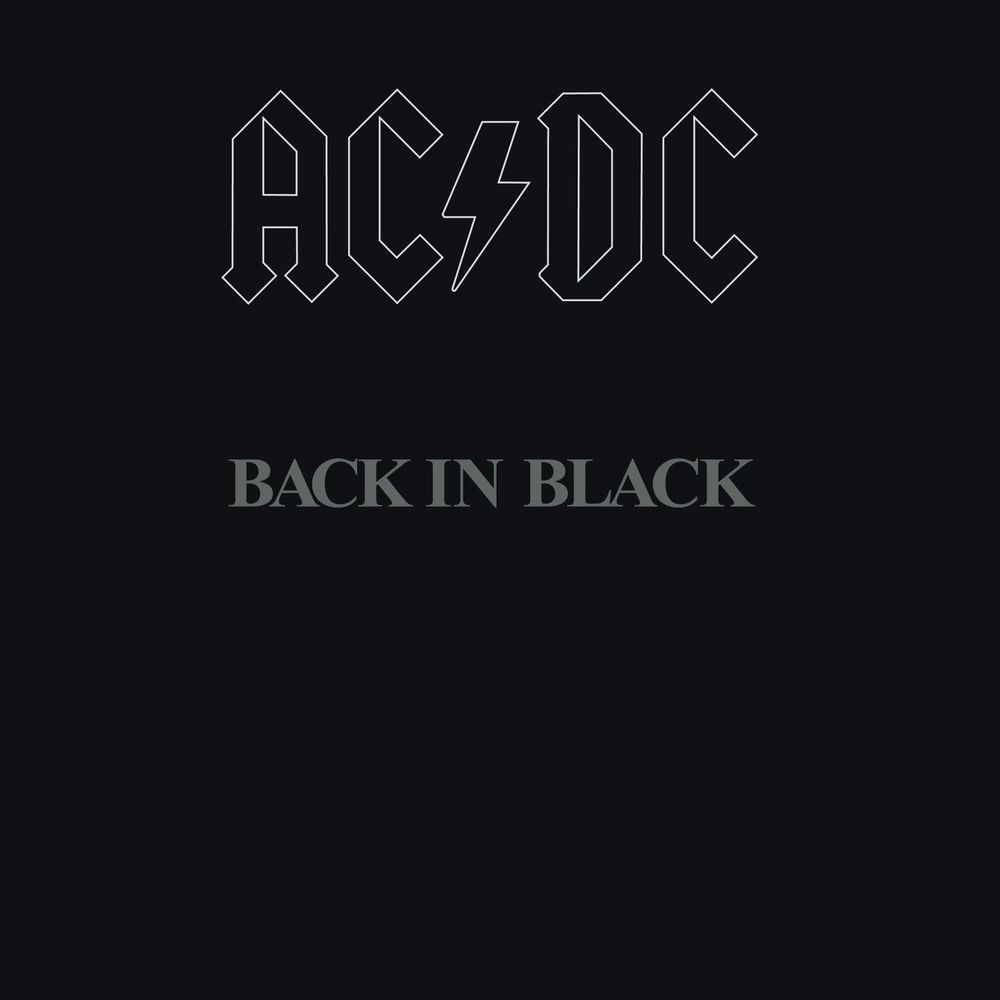
As AC/DC commenced writing new material for the followup to Highway to Hell, vocalist Bon Scott, who began his career as a drummer with The Spektors, played the drums on demo recordings of "Let Me Put My Love into You" and "Have a Drink on Me". In a 2021 interview with Paste, Angus Young claimed this was the full extent of Scott's contributions to Back in Black (though, at this point, he said the demos on which Scott played drums were of "Hells Bells" and "Have a Drink on Me").
Three weeks of rehearsals for Back in Black were scheduled at London's E-Zee Hire Studios, but the rehearsals were cut to one week when an opening came up at Compass Point Studios in Nassau, in the Bahamas. Although the band had wanted to record their next effort in the UK, there were no studios available, and the Bahamas presented a nice tax advantage, so Back in Black was recorded at Compass Point from mid-April to May 1980 with producer "Mutt" Lange. Johnson recalled that "It was hardly any kind of studio, we were in these little concrete cells, comfy mind, you had a bed and a chair. And this big old black lady ran the whole place. Oh, she was fearsome, she ruled that place with a rod of iron. We had to lock the doors at night because she'd warned us about these Haitians who'd come down at night and rob the place. So she bought us all these six-foot fishing spears to keep at the fucking door! It was a bit of a stretch from Newcastle, I can tell you."
Around the time of the band's arrival in the Bahamas, the area was hit by several tropical storms, which wreaked havoc on the electricity at Compass Point. Johnson referenced the bad weather on the opening lines of "Hells Bells": "I'm rolling thunder, pourin' rain. I'm comin' on like a hurricane. My lightning's flashing across the sky. You're only young but you're gonna die." In addition, some of the group's equipment was initially held up by customs, while other gear was slowly freighted over from the UK.
Having never recorded with the group, Johnson felt pressure during the process, and he also reported having trouble adjusting to the environment. Lange focused particular attention on Johnson's vocals, demanding perfection out of each take.
It was like, 'Again, Brian, again – hold on, you sang that note too long so there's no room for a breath'. He wouldn't let anything go past him. He had this thing where he didn't want people to listen to the album down the road and say there's no way someone could sing that, they've dropped that in, even the breaths had to be in the right place. And you cannot knock a man for that, but he drove me nuts. I'd be sitting there going, 'Arrggghh!'
The general attitude during recording was optimistic, though engineer Tony Platt was dismayed to find the rooms at Compass Point were not sonically complementary to the group's sound, which was designed to be very dry and compact. A humorous anecdote from the sessions involved a take being interrupted by a crab shuffling across the studio's wooden floor. Angus Young's particular guitar sound on the album was achieved, in part, through the use of the Schaffer–Vega diversity system, a wireless guitar device designed by Ken Schaffer that provided a signal boost and was reissued as a separate guitar effect in 2014.
Near the end of the recording process, the band asked manager Ian Jeffery to find a bell to include on the album. Jeffery located a foundry to produce the bell, but, with seven weeks having already gone by, he suggested Platt instead record the bells of a nearby church. Platt did so, but these recordings did not suffice, due to the sound of a flurry of birds flying away that accompanied each peal of the bells. The foundry brought forward production on the bell, which turned out perfectly tuned, and it was recorded with Ronnie Lane's Mobile Studio. Following the completion of recording, Back in Black was mixed at Electric Lady Studios in New York City.
According to Angus Young, the album's all-black cover was a "sign …