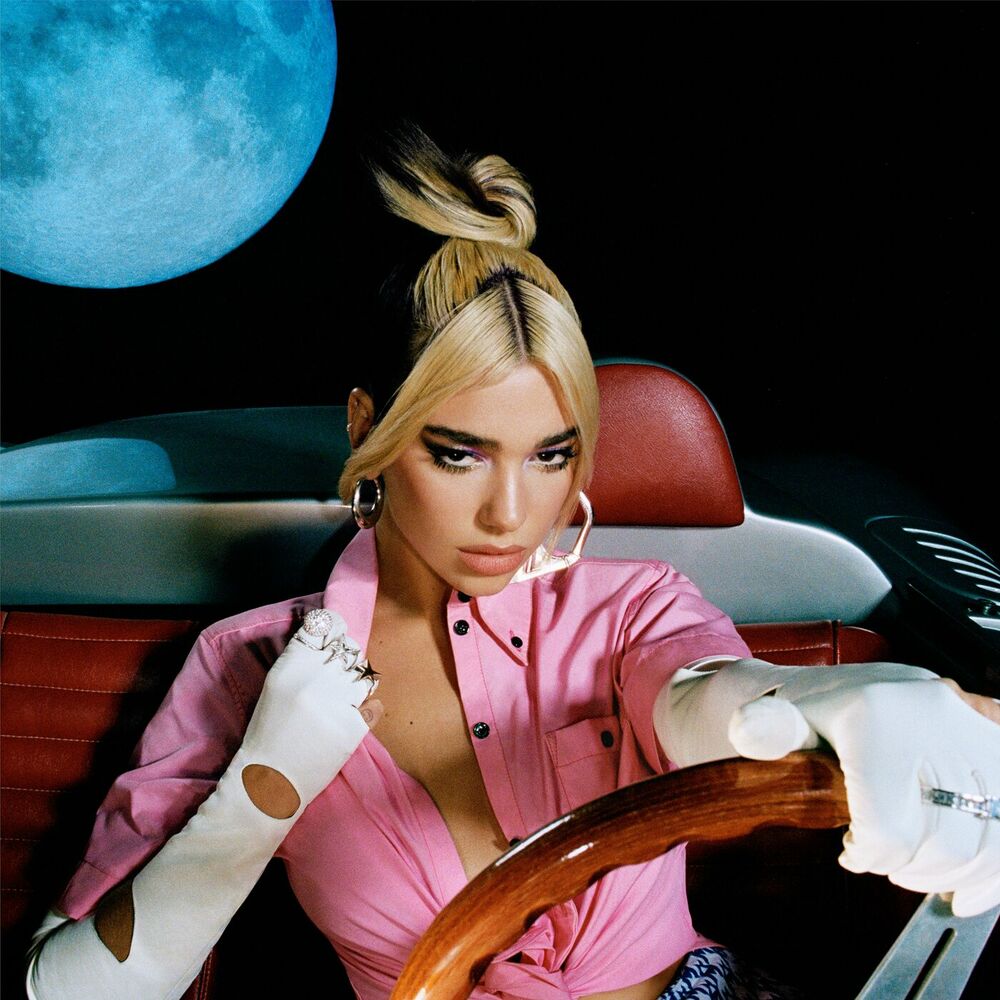
Future Nostalgia is a dance-pop, electropop, nu-disco, pop-funk, synth-pop, power pop, and disco-pop record, with several 1980s and retrofuturism tropes, and elements of Eurodance, hi-NRG, house, techno, and R&B. Described by Lipa as a "nostalgic" pop record that "feels like a dancercise class," she took inspiration from the music of the 1970s, 1980s, 1990s, and 2000s to create a sound that felt familiar and brand-new at the same time. The album's structure includes sticky-sweet choruses, and catchy pop hooks, while it has campy productions, consisting of funk bass guitars, electronic beats, rubbery basslines, robotic vocoder backing vocals, chunky synths, lush strings, percolating drums, house-influenced piano chords, and disco strings. The album has themes of the transformative nature of romance, sex, inequality, empowerment, self-possession, the exploration of vulnerability, falling in love, breaking up, equality, hope, flirtation and affection.
Critics note similarities between the tracks on Future Nostalgia and the works of Blondie, Chic, Daft Punk, Lady Gaga, Gloria Gaynor, Debbie Harry, Jamiroquai, Madonna (Confessions on a Dance Floor, 2005), Kylie Minogue (Fever, 2001), Moloko, Olivia Newton-John, No Doubt, Outkast, Prince, and Nile Rodgers. Neil Z. Yeung of AllMusic described the sound of Future Nostalgia as "'70s disco, '80s dance-pop, and '90s club jams." In her review for The Independent, Helen Brown stated that Lipa "channels the zingy, electro-ambitions of the 1980s with remarkable freshness." Pitchfork's Anna Gaca viewed it as "a collection of sophisticated, hard-bodied pop-funk that gives way to slick, [Minogue]-inspired disco." Mesfin Fekadu from ABC News regarded the album as "a collection of upbeat, dance-flavoured, power pop gems."
I think it was trying to make the record sound as cohesive as possible so that it all feels part of the same story. And alongside the bass in multiple songs, I also have strings in multiple songs. I wanted to make this really organic in having a lot of live instrumentation. It is a very happy album. This album is purely about dancing and having fun and being free and being in love.
Songs
Future Nostalgia opens with its title track, a playful and fun synth-pop and electro-funk song, with house, hip hop, and disco elements. It has an electronic production, that includes electroclash synths, disco beats, funk and grunge bass-popping, and a jazz piano progression. In the song, Lipa name-drops its producer, Jeff Bhasker, and American architect, John Lautner, while vocally making use of falsetto and spoken word deliveries. Lyrically, it deals with themes of feminism and self-reflection. The following track and lead single, "Don't Start Now", has empowerment themes and sees Lipa addressing an ex-lover about moving on from a relationship, using direct bullet point instructions. She uses her lower-register vocals, over a production consisting of cowbells, accented disco strings, and a rhythm guitar loop. Musically, it is a nu-disco song with elements of dance-pop and Eurodance. Synth-pop cut, "Cool", has inspirations from 1980s music and Prince. The song is about the initial rush of falling in love, painting a picture of a summer romance, with confidence and vulnerability themes, and reckless, youthful energy. Driven by a funk bass, glitter gel noises and a drum line embody the production, whilst Lipa contributes vocals with hopeful tones.
An upbeat and high energy song released as the second single from Future Nostalgia, "Physical" has a message about an intense and lustful relationship. A power pop and synth-pop song, it includes dance-rock, dark wave, and Italo disco elements, while Lipa's lower register vocal performance uses deadpan, spoken word, belts, and chants. The song shares a chorus line with Olivia Newton-John's 1981 single of the same name, and includes sawtooth wave synths, a synth flute, and hi-hats in its production. "Levitating" is an electro-disco, pop-funk, and …