Sign in to mark it as listened, rate it and keep notes.
About the artist
Peter Gabriel is an English singer-songwriter, known for co-founding Genesis and his diverse solo career. He is celebrated for his theatrical performances and pioneering work in progressive rock, new wave, and world music, earning multiple awards and Hall of Fame inductions.
About the album
This self-titled album, often called 'Melt', is Peter Gabriel's third solo record, released in 1980. It explores progressive rock, new wave, and post-punk, featuring hit singles like 'Games Without Frontiers' and 'Biko'.
Meanings
The album includes 'Biko', a powerful protest song against apartheid in South Africa, showcasing Gabriel's commitment to human rights. The lyrics often delve into introspective and challenging themes, characteristic of his solo work.
Why it's rated so high
This album is highly rated, appearing on 'The Highest Rated Albums of All Time' list with a score of 90. It is praised for its innovative sound, blending art rock with new wave and post-punk influences, solidifying Gabriel's reputation as a visionary artist.
Career and historical context
Following his departure from Genesis, this album further established Gabriel's successful solo career, building on his previous self-titled releases. It marked a significant step in his exploration of diverse musical styles, including world music influences.
Fun facts
Peter Gabriel has been inducted into the Rock and Roll Hall of Fame twice, both with Genesis and as a solo artist.
He co-founded the WOMAD festival in 1982, promoting world music, arts, and dance.
Gabriel's 1986 album 'So' became his best-selling release, transforming him into an international superstar.
The music video for his song 'Sledgehammer' won a record nine MTV Awards in 1987.
Gabriel was an early pioneer of digital music distribution, co-founding one of the first online download services.
Written by AI from the album's and artist's Wikipedia articles and the archive's notes. Double-check anything important.
The full story
Peter Gabriel is the fourth studio album by the English rock musician Peter Gabriel. In the United States and Canada, the album was released by Geffen Records with the title Security. Some music streaming services refer to it as Peter Gabriel 4: Security. A German-language version, entitled Deutsches Album (German Album), was also released. The album saw Gabriel expanding on the post-punk and world music influences from his 1980 eponymous studio album, and earned him his first US top 40 single with "Shock the Monkey".
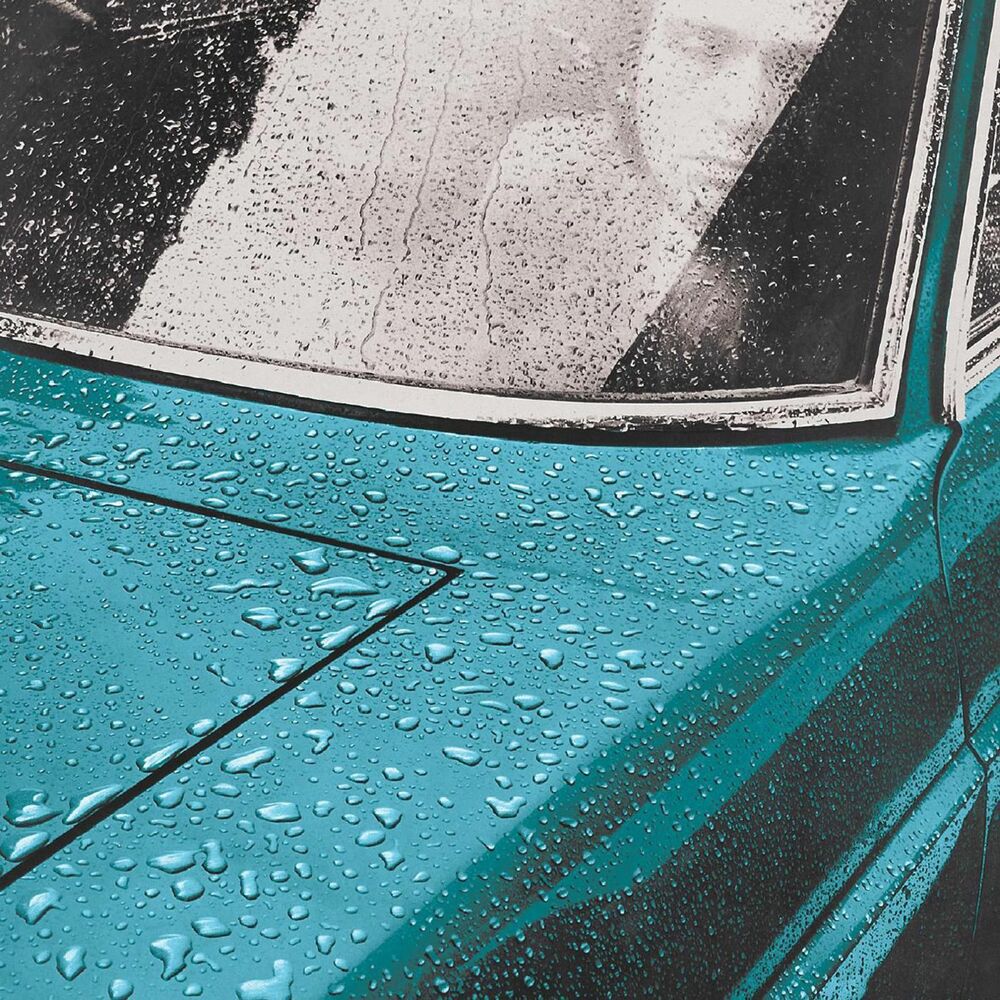
Instead of working with Hipgnosis on the cover art as he did for his previous three studio albums, Gabriel turned to sculptor Malcolm Poynter. The image is of Gabriel's face, based on an experimental videotape recorded by Poynter and heavily distorted through the use of flexible mirrors, Fresnel lenses, and lighting techniques.
The album was remastered with most of Gabriel's catalogue in 2002.
Recording
The album was recorded at Ashcombe House in Swainswick, Somerset, half a mile from where Gabriel was living at the time. Work on the album began in the spring of 1981, with Gabriel handling the writing and pre-production. He also used a Fairlight CMI to sample sounds from various sources, including a scrapyard. Like the previous studio album, he took a rhythm-first approach to songwriting by improvising on piano and keyboards to a drum machine, this time a Linn LM-1. Co-producer David Lord would later join to help structure and arrange Gabriel's ideas into proper songs, and together they created 8-track demos with the Linn as a reference for his backing band.
That summer, he recorded the basic tracks for the album with his band, including Jerry Marotta, Tony Levin, David Rhodes, and John Ellis. These sessions yielded seven hours' worth of material to be overdubbed and edited down over subsequent months. The first two weeks of sessions involved use of the Mobile One, a London-based recording truck which offered 46-track recording facilities before a control room was ready.
After the basic tracks were recorded, Larry Fast joined for three months, working with Gabriel on 'electronic production' aspects including synthesizer overdubs, programming and audio treatments. By spring of 1982, Gabriel was focusing on writing lyrics and recording finished vocals, which he did in the control room at Ashcombe via a Shure SM57 dynamic microphone. As per Lord, they did up to 20 takes for each song, rated each word on a scale of one to ten, and compiled the best parts together – this whole process took hours to accomplish. The album was mixed down at Lord's Crescent Studios onto a Sony PCM-1610 digital 2-track, being an early use of digital recording.
Title
As with his previous three studio albums, the album is titled Peter Gabriel. In the United States and Canada, Geffen Records issued the album under the title Security to differentiate it from his previous releases. The title was changed with Gabriel's reluctant agreement. The new title was displayed in a sticker on top of the LP sleeve's shrink wrap and on the disc labels. The album was officially known as Peter Gabriel in other territories.
Critical reception
In The Boston Phoenix, Howard Hampton wrote that "though I have serious reservations about the album, it is just varied, provocative, and experimental enough to have radio programmers and fans murmuring 'artistic breakthrough.' It even has commercial potential (up to a point – Asia it isn't)." Cashbox wrote that the album possessed "challenging aural soundscapes capable of propelling listeners to different levels of consciousness" and that it was a "superlative late-night, headphone experience for lovers of spacy yet introspective melodies." Billboard thought that the album "again confirms [Gabriel's] stature as a virtual rock visionary", adding that its tracks were "as uncompromised as ever" with their "experiments in electronics and Third World rhythms".
In a retrospective review, Stephen Thomas Erlewine of AllMusic thought that the album "continued where the third Gabriel album left off, sharing some of the same dense production and sense of cohesion, yet lightening the atmosphere and expanding the sonic palette." Erlewine partially attributed the album's "brighter feel" to Gabriel's embrace of African and Latin rhythms, which he thought were effective in complementing the synthesizers. He asserted that certain songs required greater attention from the listener, including "The Family and the Fishing Net," "Lay Your Hands on Me," and "Wallflower", but felt that some of them failed to deliver a rewarding experience.