Sign in to mark it as listened, rate it and keep notes.
About the artist
The Notorious B.I.G., born Christopher Wallace, was an American rapper from Brooklyn, New York City, widely considered one of the greatest of all time. He was known for his distinctive, laidback lyrical delivery, which often offset the grim content of his semi-autobiographical songs, detailing hardship, criminality, debauchery, and celebration.
About the album
"Ready to Die" is the acclaimed 1994 debut studio album by The Notorious B.I.G., recorded in New York City across two stages. Its production, mainly sample-based with heavy bottomed and slick beats, was crafted by Sean Combs, Easy Mo Bee, and others, enhancing B.I.G.'s rhymes and storytelling.
Meanings
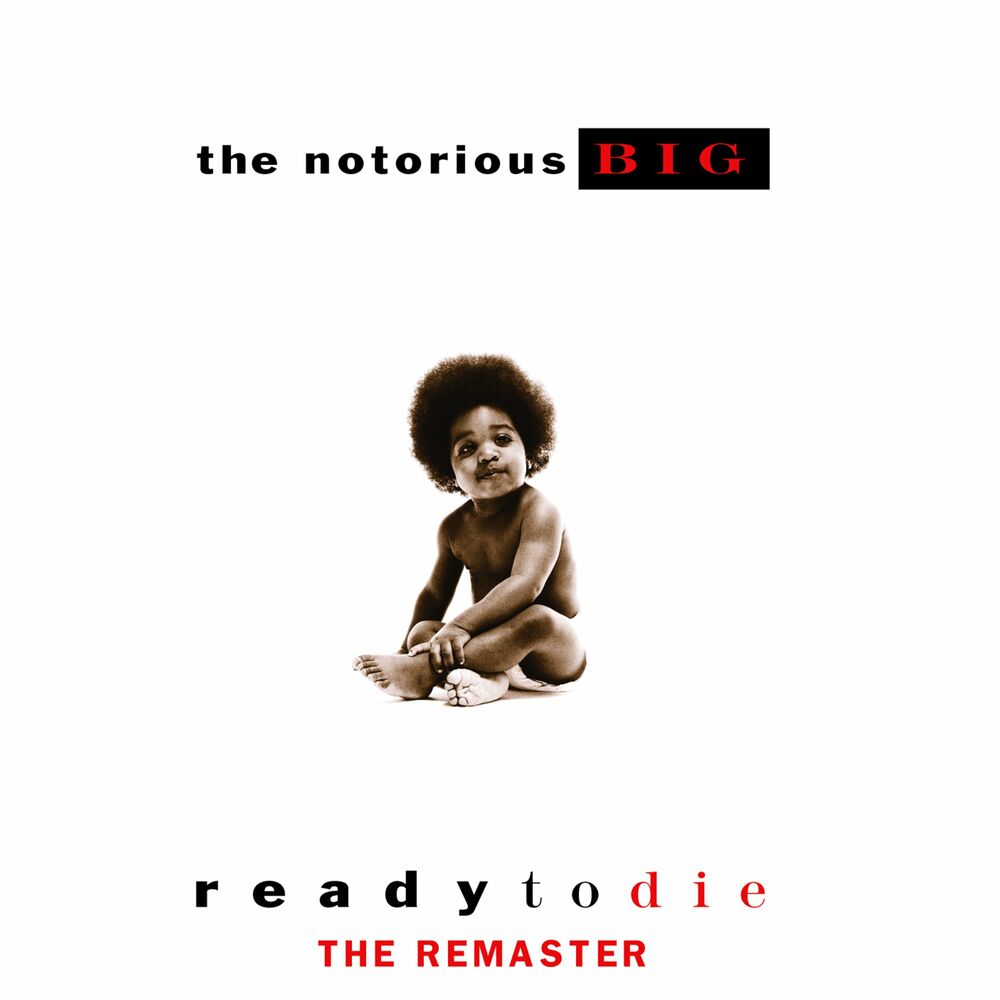
The album is a partly autobiographical concept piece, loosely following the rapper's life from birth to death, as depicted by the infant on its cover. Its lyrics delve into violence, drug dealing, and the realities of his environment, exploring themes with a dark tone and a sinister sense of depression. The title signifies his willingness to risk everything for his music, much like he did when hustling.
Why it's rated so high
Critics widely acclaimed "Ready to Die" for its compelling storytelling and its honest, balanced portrayal of street life, calling it the strongest solo rap debut since Ice Cube's. It revitalised the East Coast hip-hop scene, becoming a cornerstone of the genre and one of the greatest albums of all time, earning a place in the National Recording Registry.
Career and historical context
This debut album, released in 1994, was The Notorious B.I.G.'s only one during his lifetime and instantly made him a central figure in East Coast hip-hop. It helped restore the prominence of the East Coast sound at a time when West Coast hip-hop was dominating the genre. He signed with Sean Combs's new Bad Boy Records after Combs was fired from Uptown.
Fun facts
The album was recorded in two stages, with Biggie developing a smoother vocal tone for the second half.
The baby on the album cover may be Keithroy Yearwood, though Bad Boy Records could not confirm this.
The album was subject to a lawsuit over illegally used samples, leading to a sales ban on some tracks.
"Suicidal Thoughts" is the final song, depicting the Notorious B.I.G. contemplating and committing suicide.
"Juicy" was a rags-to-riches chronicle, while "Big Poppa" was named after one of his nicknames.
Written by AI from the album's and artist's Wikipedia articles and the archive's notes. Double-check anything important.
The full story
Ready to Die is the debut studio album by the American rapper The Notorious B.I.G., released on September 13, 1994, by Bad Boy Records and distributed by Arista Records. The album features productions by Bad Boy founder Sean Combs, Easy Mo Bee, Chucky Thompson, DJ Premier and Lord Finesse, among others. It was recorded from 1993 to 1994 at The Hit Factory and D&D Studios in New York City. The partly autobiographical album tells the story of the rapper's experiences as a young criminal, and was the only album he released during his lifetime, as he was murdered sixteen days before the release of his second album Life After Death in 1997. The album features a guest appearance from Wu-Tang Clan member Method Man.
Ready to Die peaked at number 15 on the Billboard 200 and was subject to critical acclaim and soon a commercial success. Three singles were released: "Juicy", "Big Poppa", "One More Chance" and a promotional track of Biggie: "Warning". "Juicy", the lead single, peaked at number 27 on the Billboard Hot 100, number 14 on Hot R&B/Hip-Hop Singles & Tracks and reached number 3 on the Hot Rap Singles. "Big Poppa" was a hit on multiple charts, peaking at number six on the Billboard Hot 100 and also being nominated for a Grammy Award for Best Rap Solo Performance at the 1996 Grammy Awards. The Notorious B.I.G.'s lyrics were generally praised by critics, particularly for his story-telling ability.
In April 2018, Ready to Die was certified six-times platinum in the US. It was significant for revitalizing the East Coast hip-hop scene, amid West Coast hip-hop's commercial dominance. It has been ranked by many critics as one of the greatest hip-hop albums, as well as one of the greatest albums of all time. In 2020, it was ranked 22nd on Rolling Stone's updated list of the 500 Greatest Albums of All Time and was ranked 1st on their list of the greatest hip-hop albums. In 2024, it was added to the National Recording Registry by the Library of Congress as "culturally, historically, and/or aesthetically significant".
Background and recording
The album was recorded in New York City (mainly at the Hit Factory) in two stages during 1993 and 1994. In 1992, Biggie was signed to the Uptown Records label by A&R Sean "Puffy" Combs. Biggie started recording his debut album in 1993 in New York, after making numerous guest appearances among his label-mates' singles around that time. The first tracks recorded include the darker, less radio-friendly content (including "Ready to Die", "Gimme the Loot" and "Things Done Changed"). In these sessions, XXL describe an "inexperienced, higher-pitched" Biggie sounding "hungry and paranoid".
When executive producer Sean "Puffy" Combs was fired from Uptown, Biggie's career hung in limbo, as the album was only partially completed. After a brief period dealing drugs in North Carolina, Biggie returned to the studio the following year on Combs' new Bad Boy Records label possessing "a smoother, more confident vocal tone" and completed the album. In this stage, the more commercial-sounding tracks were recorded, including the singles. Between the two stages, XXL writes that Biggie moved from writing his lyrics in notebooks to freestyling them from memory.
The album was released with a cover depicting an infant resembling the artist, though sporting an afro, which pertains to the concept of the artist's life from birth to his death. It has been listed as among the best album covers in hip-hop. The New York Daily News suggested in 2011 that the baby on the cover was Keithroy Yearwood, then a high school student in the Bronx. Bad Boy Records could not confirm him as the subject.
Regarding the title, Wallace said: "When I say I'm Ready to Die, people may be, like, 'Oh, he's on some killing himself shit.' That's not what I meant. I meant that I was willing to go all out a hundred percent as far as the music was concerned. When I was hustlin', I was doing that shit every day—waking up, putting drugs in my pocket, and not even thinking about the police, stickup men, or my competition. I was riskin' my life, so that meant I was ready to die."
Lawsuits and sample removal
On March 24, 2006, Bridgeport Music and Westbound Records won a federal lawsuit against Bad Boy Records for copyright infringement, with a jury deciding that Combs and Bad Boy had illegally used samples for the production of the songs "Ready to Die", "Machine Gun Funk", and "Gimme the Loot". The jury awarded $4.2 million in punitive and direct damages to the two plaintiffs, and federal judge Todd Campbell enacted an immediate sales ban on the album and tracks in question. On appeal, the Sixth Circuit found the damages unconstitutionally high and in violation of due process and remanded the case, at which point Campbell reduced them by $2.8 million; however, the verdict was upheld. All versions of the album released since the lawsuit are without the disputed samples.
Although a fair use issue, Combs and Bad Boy never raised the legal concept of the fair use doctrine in their defense. This decision was questioned by some legal experts: Anthony Falzone of the Fair Use Project at Stanford Law School criticized Combs and Bad Boy for not defending the legality of sampling and suggested that they might have refused to raise such a defense because they feared it could later imperil their control over their own music.
On April 2, 2014, Lee Hutson of the Impressions filed a multimillion-dollar copyright infringement suit against Combs, Bad Boy Records, and the estate of the Notorious B.I.G. for copyright infringement, alleging that his song "Can't Say Enough About Mom" was illegally sampled in the production of the song "The What". The case was dismissed. The estate countersued in turn, claiming the sample as used was short, adapted, and supplemented, and thus subject to fair use; the legal tactic not pursued previously.
Composition
Production
Ready to Die was mainly produced by Easy Mo Bee and the Hitmen. Cheo H. Coker of Rolling Stone depicted the beats as "heavy bottomed and slick, but B.I.G.'s rhymes are the showstoppers. The tracks only enhance them, whether it's the live bass driving a menacing undercurrent or [the] use of bluesy guitar and wah-wah feedback" and that the production is used to "push the rapper to new heights." The production is mainly sample-based with the samples varying from the percussion of funk tracks to the vocals of hip-hop songs. Steve Huey presented some criticism over the beats, stating that the "deliberate beats do get a little samey, but it hardly matters: this is Biggie's show".
Lyrical themes
The lyrics were generally praised by critics. Many critics applauded his story-telling ability such as AllMusic writer Steve Huey, who stated "His raps are easy to understand, but his skills are hardly lacking—he has a loose, easy flow and a talent for piling multiple rhymes on top of one another in quick succession". He also went on to mention that his lyrics are "firmly rooted in reality, but play like [a] scene from a movie". Touré, writing for The New York Times, referred to the Notorious B.I.G., proclaiming that he stood out from other rappers because "his lyrics mix autobiographical details about crime and violence with emotional honesty, telling how he felt while making a living as a drug dealer". The album is also noted for its dark tone and sinister sense of depression. In the original Rolling Stone review, Cheo H Coker declared that he "maintains a consistent level of tension by juxtaposing emotional highs and lows". "Things Done Changed" was also one of the few hip-hop songs in The Norton Anthology of African American Literature.
The lyrics on Ready to Die tend to deal with violence, drug dealing, women, alcohol and marijuana use, and other elements of Notorious B.I.G.'s environment. He rapped about these topics in "clear, sparse terms, allowing the lyrics to hit the first time you hear them". The album contains a loose concept starting out with an intro that details his birth, his early childhood, his adolescence and his life at the point of the release. Songs range from homicide narratives ("Warning") to braggadocious battle raps ("The What," "Unbelievable"). "Things Done Changed" deals with how life in the ghetto has changed since B.I.G.'s childhood. "One More Chance" as recited by B.I.G largely centers around the rapper's sexual prowess. "Juicy" is a "rags-to-riches chronicle". The title for "Big Poppa" is based on one of the Notorious B.I.G.'s many nicknames. The final song was "Suicidal Thoughts", a song in which the Notorious B.I.G. contemplates and finally commits suicide.
Critical reception
Ready to Die received widespread acclaim from music critics. In his review for Rolling Stone, Cheo H. Coker called it "the strongest solo rap debut since Ice Cube's AmeriKKKa's Most Wanted. From the breathtakingly visual moments of his birth to his Cobainesque end in 'Suicidal Thoughts,' B.I.G. proves a captivating listen. It's difficult to get him out of your head once you sample what he has to offer". Shortie of The Source praised Wallace's ability to "weave[s] tales like a cinematographer", calling each song "another scene in his lifestyle", and concluding that "Overall, this package is complete: ridiculous beats, harmonizing honeys, ill sound effects, criminal scenarios, and familiar hooks". In The New York Times, Touré wrote "Though drug dealing carries tremendous heroic value with some young urban dwellers, he sacrifices the figure's romantic potential. His raps acknowledge both the excitement of drug dealing and the stress caused by the threat from other dealers, robbers, the police and parents, sometimes one's own. In presenting the downside of that life, Ready to Die offers perhaps the most balanced and honest portrait of the dealer's life of any in hip-hop". Q stated "the natural rapping, clever use of sound effects and acted dialogue, and concept element (from a baby being born at the start to the fading heartbeat at the end) set this well apart from the average gangsta bragging".
Commercial performance
Ready to Die shipped 57,000 units in its first week of release. However, it was then certified gold by the RIAA only two months after its release on November 15, 1994. On October 16, 1995, only a year and one month after its release the album was certified double platinum. Ready to Die was then certified triple platinum on August 26, 1998, and was later certified four-times platinum on October 19, 1999. In April 2018, Ready to Die was certified six-times platinum.
Legacy
Ready to Die has been highly acclaimed. In 1998, The Source included it on their 100 Best Rap Albums of All Time list, and in 2002, they re-rated it to the maximum five 'mics'. Rolling Stone has also given acclaim to Ready to Die over the years. In 2003, they ranked it number 133 on their 500 Greatest Albums of All Time list, 134 in a 2012 revised list, and 22 in a 2020 revised list. In 2004, they re-rated it to five stars. In 2011, Rolling Stone also placed it at number eight on their 100 Best Albums of the Nineties list, and described it as "mapping out the sound of 'Nineties cool'". In his Consumer Guide book, Robert Christgau commented "His sex raps are erotic, his jokes are funny, and his music makes the thug life sound scary rather than luxuriously laid back. When he considers suicide, I not only take him at his word, I actively hope he finds another way". Kilian Murphy from Stylus Magazine wrote favorably in a retrospective review, and concluded "Sweet, hypocritical, sensitive, violent, depressed and jubilant; these words could all fittingly describe Big at various points on Ready to Die."
Steve Huey from AllMusic gave it five stars, stating "The album that reinvented East Coast rap for the gangsta age, Ready to Die made the Notorious B.I.G. a star. Today it's recognized as one of the greatest hardcore rap albums ever recorded, and that's mostly due to Biggie's skill as a storyteller". In 2006, Time magazine included it on their 100 Greatest Albums of All Time list, and stated "On Ready to Die, Wallace took his street corner experiences and filtered them through his considerable charm. The result was a record that mixed long stretches of menace with romance and lots of humor. No rapper ever made multi-syllabic rhymes sound as smooth". The album was also included in the book 1001 Albums You Must Hear Before You Die.
In 2022, Pitchfork named Ready to Die the fourteenth-best album of the 1990s. Staff writer Alphonse Pierre called it "the cornerstone of a historic moment in hip-hop, the album that made the East Coast feel like the center of the rap universe again." He concluded: "There have been rappers who have tried to recapture Biggie’s presence, voice, and ability to be both grounded and larger than life at the same time, but Ready to Die itself is completely inimitable. Murals don’t do it justice."
Accolades
(*) signifies unordered lists
From the Wikipedia article Ready to Die, available under CC BY-SA 4.0.
Tracklist
Intro (2005 Remaster)3:23
Things Done Changed (2005 Remaster)3:58
Gimme the Loot (2005 Remaster)4:45
Machine Gun Funk (2005 Remaster)4:15
Warning (2005 Remaster)3:40
Ready to Die (2005 Remaster)4:24
One More Chance (2005 Remaster)4:43
Fuck Me (Interlude) (Interlude; 2005 Remaster)1:31