
João17 Nov 2026
really interesting sounds and amazing mastering and mixing, way ahead of its time. tomorrow never knows sounds like let forever be by the chemical brothers. loved the eastern sounds in there, yellow submarine is the weak one.
Sign in to mark it as listened, rate it and keep notes.
The Beatles, formed in Liverpool in 1960, are considered the most influential band in popular music, integral to 1960s counterculture and elevating pop as an art form. Their sound evolved from rock 'n' roll to incorporate classical, Indian, and psychedelic elements, pioneering recording and songwriting.
Revolver, the Beatles' seventh studio album, is celebrated as one of popular music's most innovative records, showcasing diverse styles and sounds. It marked their most extensive use of studio technology, employing techniques like automatic double tracking, reversed tapes, and varied instrumentation, as they no longer planned to perform live.
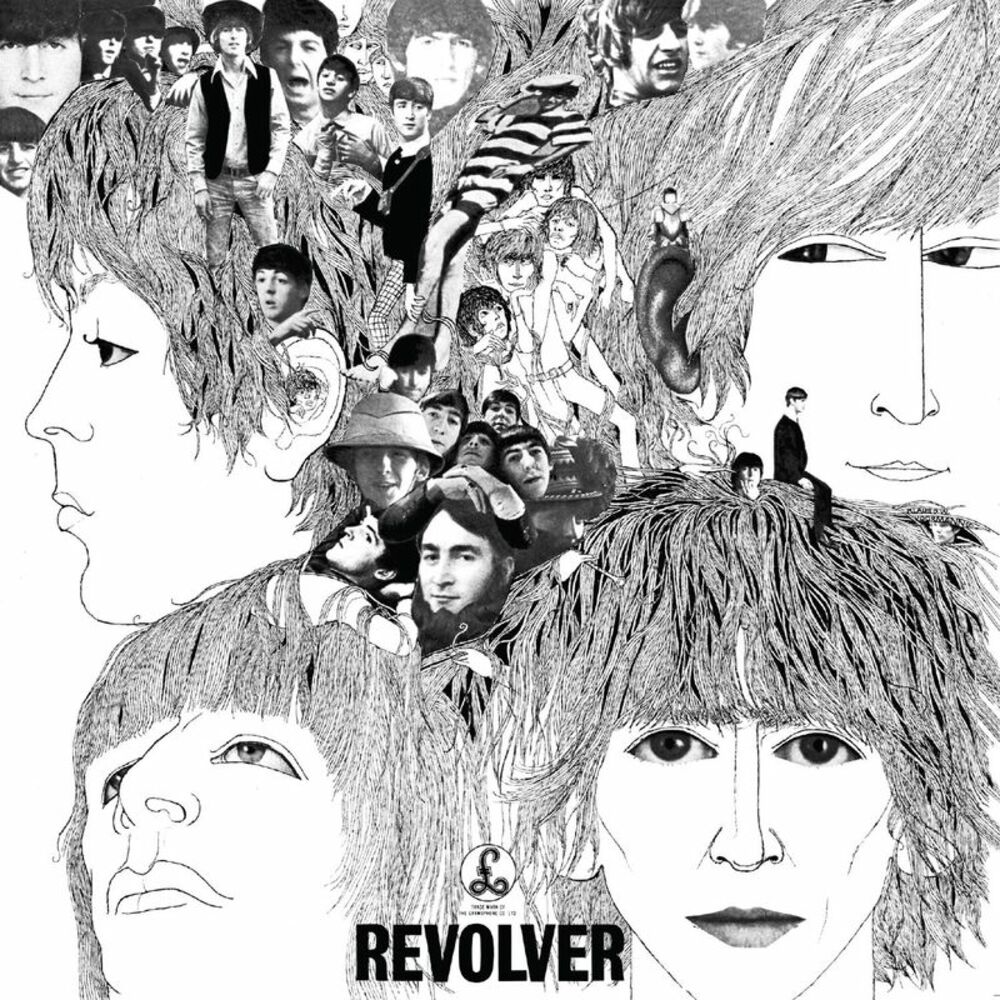
The album's title is a pun, referring to a handgun and a record's revolving motion, with the focus rotating between each Beatle's contributions. Its songs reflect interests in LSD, Eastern philosophy, and the avant-garde, exploring themes of death and transcendence. The black-and-white cover, inspired by Aubrey Beardsley, visually represents the album's radical sound.
Critics and listeners highly rate Revolver for expanding pop music boundaries, revolutionising studio recording, and inspiring psychedelic rock, electronica, and world music. It is often regarded as the Beatles' best album, influencing the development of the album as an art object. It topped charts in the UK and US, with its single becoming the best-selling of 1966 in the UK.
Revolver was created during a three-month break in 1966, a period when London was the cultural capital and the Beatles retired from live performances. This allowed unprecedented studio experimentation, as their interest shifted from touring to crafting intricate soundscapes. The album's release coincided with public relations challenges, including the 'more popular than Jesus' controversy, marking a shift in their public image and audience.
Revolver is the seventh studio album by the English rock band the Beatles. It was released on 5 August 1966, accompanied by the double A-side single "Eleanor Rigby" and "Yellow Submarine". The album was the Beatles' final recording project before their retirement as live performers and marked the group's most overt use of studio technology to date, building on the advances of their late 1965 release Rubber Soul. It has since become regarded as one of the greatest and most innovative albums in the history of popular music, with recognition centred on its range of musical styles, diverse sounds and lyrical content. The Beatles recorded Revolver after taking a three-month break at the start of 1966, and during a period when London was feted as the era's cultural capital. Regarded by some commentators as the start of the group's psychedelic period, the songs reflect their interest in the drug LSD, Eastern philosophy and the avant-garde while addressing themes such as death and transcendence of material concerns. With no plans to reproduce their new material in concert, the band made liberal use of automatic double tracking, varispeed, reversed tapes, close audio miking, and instruments outside of their standard live set-up. Among its tracks are "Tomorrow Never Knows", incorporating heavy Indian drone and a collage of tape loops; "Eleanor Rigby", a song about loneliness featuring a string octet as its only musical backing; and "Love You To", a foray into Hindustani classical music. The sessions also produced a non-album single, "Paperback Writer", backed with "Rain". In the United Kingdom, the album's 14 tracks were gradually distributed to radio stations in the weeks before its release. In North America, Revolver was reduced to 11 songs by Capitol Records, with the omitted three appearing on the June 1966 LP Yesterday and Today. The release there coincided with the Beatles' final concert tour and the controversy surrounding John Lennon's remark that the band had become "more popular than Jesus". The album topped the Record Retailer chart in the UK for seven weeks and the US Billboard Top LPs list for six weeks. Critical reaction was highly favourable in the UK but less so in the US amid the press's unease at the band's outspokenness on contemporary issues. Revolver expanded the boundaries of pop music, revolutionised standard practices in studio recording, advanced principles espoused by the 1960s counterculture, and inspired the development of psychedelic rock, electronica, progressive rock and world music. The album cover, designed by Klaus Voormann, combined Aubrey Beardsley-inspired line drawing with photo collage and won the 1967 Grammy Award for Best Album Cover, Graphic Arts. Aided by the 1987 international CD release, which standardised its content to the original Parlophone version, Revolver has surpassed Sgt. Pepper's Lonely Hearts Club Band (1967) in many critics' estimation as the Beatles' best album. It was ranked first in the 1998 and …
In December 1965, the Beatles' Rubber Soul album was released to wide critical acclaim. According to David Howard, the limits of pop music "had been raised into the stratosphere" by the release, resulting in a shift in focus away from singles to creating albums of consistently high quality. The following January, the Beatles carried out overdubs on live recordings taken from their 1965 US tour, for inclusion in the concert film The Beatles at Shea Stadium. The group's manager, Brian Epstein, had intended that 1966 would then follow the pattern of the previous two years, in terms of the band making a feature film and an accompanying album, followed by concert tours during the summer months. After the Beatles vetoed the proposed film project, the time allocated for filming became a further three months free of professional engagements. This was the longest period the band members had experienced outside the group collective since 1962, and it defied the convention that pop acts should be working almost continually. The group thereby had an unprecedented amount of time to prepare for a new album.
Beatles biographer Nicholas Schaffner cites 1966 as the start of the band's "psychedelic period", as do musicologists Russell Reising and Jim LeBlanc. Schaffner adds: "That adjective [psychedelic] implies not only the influence of certain mind-altering chemicals, but also the freewheeling spectrum of wide-ranging colors that their new music seemed to evoke." Music journalist Carol Clerk describes Revolver as having been "decisively informed by acid", following John Lennon and George Harrison's continued use of the drug LSD since the spring of 1965. Through these experiences, the two musicians developed a fascination for Eastern philosophical concepts, particularly regarding the illusory nature of human existence. Despite his bandmates' urging, after Ringo Starr had also partaken of the drug, Paul McCartney refused to try LSD. Intent on self-improvement, McCartney drew inspiration from the intellectual stimulation he experienced among London's arts scene, particularly its thriving avant-garde community. With Barry Miles as his guide, he became immersed in the nascent British counterculture movement, which soon emerged as the underground. While arranging dates for the band's world tour, Epstein agreed to a proposal by journalist Maureen Cleave for the Beatles to be interviewed separately for a series of articles that would explore each of the band members' personality and lifestyle beyond his identity as a Beatle. The articles were published in weekly instalments in London's Evening Standard newspaper throughout March 1966, and reflected the transformation that was underway during the group's months of inactivity. Of the two principal songwriters, Cleave found Lennon to be intuitive, lazy and dissatisfied with fame and his surroundings in the Surrey countryside, while McCartney conveyed confidence and a hunger for knowledge and new creative possibilities. In his book Revolver: How the Beatles Reimagined Rock 'n' Roll, Robert Rodriguez writes that, whereas Lennon had been the Beatles' dominant creative force before Revolver, McCartney now attained an approximately equal position with him. In a further development, Harrison's interest in the music and culture of India, and his study of the Indian sitar, had inspired him as a composer. According to Ian Inglis, Revolver is widely viewed as "the album on which Harrison came of age as a songwriter".
The Beatles had hoped to work in a more modern facility than EMI's London studios at Abbey Road and were impressed with the sound on records created at Stax Studio in Memphis. In March 1966, Epstein investigated the possibility of their recording the new album at Stax, where, according to a letter written by Harrison two months later, the group intended to work with producer Jim Stewart. The idea was abandoned after locals began descending on the Stax building, as were alternative plans to use either Atlantic Studios in New York or Motown's Hitsville USA facility in Detroit. Recording for the album instead began at EMI Studio 3 in London on 6 April, with George Martin again serving as producer. The first track attempted was Lennon's "Tomorrow Never Knows", the arrangement for which changed considerably between the initial take that day and the subsequent remake. This first version of "Tomorrow Never Knows", along with several other outtakes from the album sessions, was included on the 1996 compilation Anthology 2. Also recorded during the Revolver sessions were "Paperback Writer" and "Rain", which were issued as the A and B-side of a non-album single in late May.
The band had worked on ten songs, including both sides of the upcoming single, by 1 May, when they interrupted the sessions to perform at the NME's annual Poll-Winners Concert. At a time when Time magazine dubbed London "the Swinging City", belatedly recognising its ascendance as the era's cultural capital, the Beatles drew inspiration from attending concerts by visiting artists, as well as film premieres, plays and other cultural events. From February through June, these musical acts included Stevie Wonder, Roy Orbison, the Lovin' Spoonful, the Mamas & the Papas, Bob Dylan (with whom they socialised extensively), Luciano Berio and Ravi Shankar. During mid-May, Lennon and McCartney attended a private listening party for the Beach Boys' Pet Sounds album, and McCartney met Italian director Michelangelo Antonioni, who filmed Blowup in London, inspired by the contemporary fashion scene. On 16 May, Epstein responded to a request from Capitol Records, EMI's North American counterpart, to supply three new songs for an upcoming US release, titled Yesterday and Today. Issued on 20 June, this album combined tracks that Capitol had omitted from the Beatles' previous US releases with songs that the band had originally issued on non-album singles. From the six completed recordings for Revolver, Martin selected three Lennon-written songs, since the sessions had favoured his compositions thus far. Keen to limit the interruption to recording that multiple television appearances would create, the Beatles spent two days making promotional films for the "Paperback Writer" single. The first set of clips was filmed at EMI Studio 1 on 19 May by Michael Lindsay-Hogg, director of the popular TV show Ready Steady Go! The following day, the group shot further clips for the two songs in the grounds of Chiswick House, in west London. In the face of fans' complaints of an aloofness in their new work, however, the band conceded to making a live appearance on Top of the Pops on 16 June. The camaraderie among the four Beatles was at its highest throughout this period. A disagreement between McCartney and his bandmates nevertheless resulted in McCartney walking out of the studio during the final session, for Lennon's "She Said She Said", on 21 June, two days before the band were due to fly to West Germany for the first leg of their world tour. The Beatles spent over 220 hours recording Revolver – a figure that excludes mixing sessions, and compares with less than 80 hours for Rubber Soul. Final mixing of the album took place on 22 June. The Beatles celebrated the project's completion by attending the opening of Sibylla's, a nightclub in which Harrison had a financial stake.
The sessions for Revolver furthered the spirit of studio experimentation that was evident on Rubber Soul. With the Beatles increasingly involved in the production of their music, Martin's role as producer had changed to one of a facilitator and collaborator, whereby the band now relied on him to make their ideas a reality. According to Robert Rodriguez, Revolver marked the first time the Beatles integrated studio technology into the "conception of the recordings they made". He views this approach as reflective of the group's waning interest in live performance before crowds of screaming fans, "in favor of creating soundscapes without limitation" in a studio environment. For the first time at EMI Studios, the company's four-track tape machines were placed in the studio's control room, alongside the producer and balance engineer, rather than in a dedicated machine room. The Beatles' new recording engineer on the project was twenty-year-old Geoff Emerick, whom the critic Ian MacDonald describes as an "English audio experimentalist" in the tradition of Joe Meek. Emerick recalled that no preproduction or rehearsal process took place for Revolver; instead, the band used the studio to create each song from what was often just an outline of a composition. Speaking shortly before the start of the sessions, Lennon said that they had considered making the album a continuous flow of tracks, without gaps to differentiate between each song.
The group's willingness to experiment was also evident in their dedication to finding or inventing sounds that captured the heightened perception they experienced through hallucinogenic drugs. The album made liberal use of compression and tonal equalisation. Emerick said that the Beatles encouraged the studio staff to break from standard recording practices, adding: "It was implanted when we started Revolver that every instrument should sound unlike itself: a piano shouldn't sound like a piano, a guitar shouldn't sound like a guitar." In their search for new sounds, the band incorporated musical instruments such as the Indian tambura and tabla, and clavichord, vibraphone and tack piano into their work for the first time. The guitar sound on the album was more robust than before, through the use of new Fender amplifiers; the choice of guitars, which included Harrison using a Gibson SG as his preferred instrument; and the introduction of Fairchild 660 limiters for recording. With no expectations of being able to re-create their new music within the confines of their live shows, the Beatles increasingly used outside contributors while making the album. This included the band's first use of a horn section, on "Got to Get You into My Life", and the first time they incorporated sound effects extensively, during a party-style overdubbing session for "Yellow Submarine".
Mark Brend writes that, with Revolver, the Beatles advanced Meek's strategy of employing the recording studio as a musical instrument and "formalized this approach into what is now an accepted option for pop music making". A key production technique they used was automatic double tracking (ADT), which EMI technical engineer Ken Townsend invented on 6 April. This technique employed two linked tape recorders to automatically create a doubled vocal track. The standard method had been to double the vocal by singing the same piece twice onto a multitrack tape, a task Lennon particularly disliked. The Beatles were delighted with the invention, and used it extensively on Revolver. ADT soon became a standard pop production technique, and led to related developments such as the artificial chorus effect. The band's most experimental work during the sessions was channelled into the first song they attempted, "Tomorrow Never Knows". Lennon sang his vocal for the song through the twin revolving speakers inside a Leslie cabinet, which was designed for use with a Hammond organ. The effect was employed throughout the …
The cover for Revolver was created by German-born bassist and artist Klaus Voormann, one of the Beatles' oldest friends from their time in Hamburg during the early 1960s. Voormann's artwork was part line drawing and part collage, using photographs mostly taken over 1964–65 by Robert Freeman. In his line drawings of the four Beatles (McCartney, Lennon, Harrison and Starr, clockwise from top-left), Voormann drew inspiration from the work of the nineteenth-century illustrator Aubrey Beardsley, who was the subject of a long-running exhibition at London's Victoria and Albert Museum in 1966 and highly influential on fashion and design themes of the time. Voormann placed the various photos within the tangle of hair that connects the four faces. Turner writes that the drawings show each Beatle "in another state of consciousness", such that the older images appear to be tumbling out from them. Voormann's aim was to reflect the radical departure in sound represented, particularly by "Tomorrow Never Knows", and his choice of a black-and-white cover was in deliberate defiance of the preference for vivid colour. When he submitted his work to the Beatles, Epstein wept, overjoyed that Voormann had managed to capture the experimental tone of the Beatles' new music. Voormann also designed a series of four images, titled "Wood Face", "Wool Face", "Triangle Face" and "Sun Face", which appeared on the front of the Northern Songs sheet music for each of the album's songs.
The LP's back cover included a photograph of the Beatles, in Riley's description, "shaded by the hip modesty of sunglasses and cigarette smoke". The photo was part of a series taken by Robert Whitaker during the filming at Abbey Road on 19 May and demonstrated the Beatles' adoption of fashions from boutiques that had recently opened in Chelsea, rather than the Carnaby Street designers they had favoured previously. From these Chelsea boutiques, Lennon wore a long-collared paisley shirt from Granny Takes a Trip, while Harrison was dressed in a wide-lapelled velvet jacket designed by Hung on You. Turner views the selection of attire as reflective of the Beatles "still dressing similarly yet with an individual stamp"; he identifies the choice of sunglasses as another example of a unified yet personalised look, whereby the styles ranged from oblong-shaped lenses, for Lennon, to an oval-shaped pair worn by Starr. Gould, who describes Starr's glasses as "ludicrously bug-eyed", considers the cover design to be consistent with the "break with the past" ethos that had guided the album's creation. During the same photo shoot, Whitaker took pictures of the Beatles examining transparencies of his "butcher cover" design for Yesterday and Today. The latter image proved instantly controversial in America due to its depiction of dismembered baby dolls and raw meat.
The album's title, like that of Rubber Soul, is a pun, referring to both a kind of handgun and the "revolving" motion of a record as it plays on a turntable. Gould views the title as a "McLuhanesque pun", since, more so than on their previous albums, the focus of Revolver appears to rotate from one Beatle to another with each song. The group had originally wanted to call the album Abracadabra, until they discovered that another band had already used it. When discussing possible alternatives, during their German tour, Lennon opted for Four Sides to the Circle in response to McCartney's Magic Circle, and Starr jokingly suggested After Geography, a play on the title of the Rolling Stones' recently released Aftermath LP. Other suggestions included Bubble and Squeak, Beatles on Safari, Freewheelin' Beatles and Pendulum before the band settled on Revolver. They confirmed their choice in a telegram to EMI, sent from the Tokyo Hilton on 2 July.
In mid-May 1966, Tony Hall of Record Mirror wrote a preview of the Beatles' new recordings in which he opined that some of them were "the most revolutionary ever made by a pop group". While avoiding mention of the official song titles, he highlighted Lennon's "The Void" for its electronic effects, along with a "McCartney song about lonely people" set to string orchestration, and a "Harrison number on which he plays a long exotic solo on sitar". In Britain, EMI gradually distributed the album's songs to radio stations throughout July – a strategy that MacDonald describes as "building anticipation for what would clearly be a radical new phase in the group's recording career". Revolver was released there on 5 August and on 8 August in the United States. "Eleanor Rigby" was issued as a double A-side single with "Yellow Submarine". The pairing of a ballad devoid of any instrumentation played by a Beatle and a novelty song marked a significant departure from the usual content of the band's singles. Schaffner likens the Beatles' 1966 recordings to the moment of transformation in the film The Wizard of Oz, "where, when Dorothy discovers herself transported from Kansas to Oz, the film dramatically changes from black-and-white to glorious technicolor". The album appeared a year before psychedelic drugs became a phenomenon in youth culture, and it was the source of confusion for the group's more conservative fans. A female writer later complained in Beatles Monthly that 1966 represented the end of "The Beatles we used to know before they went stark, raving mad." In this way, Revolver marked the start of a change in the Beatles' core audience, as their young, female-dominated fanbase gave way to a following that increasingly comprised more serious-minded, male listeners. The release coincided with a period of public relations challenges for the band, the combination of which led to their decision to retire from touring following the end of their North American tour, on 29 August. In the US, the album's release was a secondary event to the controversy surrounding the recent publication there of Cleave's interview with Lennon, in which he remarked that the Beatles had become "more popular than Jesus". This episode followed the unfavourable reaction to the Yesterday and Today butcher sleeve, from the press, radio stations and retail outlets. As a result, at press conferences during the tour, questions were typically focused on religious matters rather than the band's new music. In addition, the group were vocal in their opposition to the Vietnam War, a stand that further redefined their public image in the US. The Beatles did not attempt to perform any of the songs from Revolver during the tour. Reporting on "Swinging London" for The Village Voice, Richard Goldstein said that, as if in response to the antagonism being shown towards the band in the US, "British youth has flipped completely over the new Beatle album, Revolver." Howard Sounes writes that, amid the fine weather of the 1966 summer and England's recent win in the World Cup, Revolver was the nation's "soundtrack album of the season".
In the UK, where "Eleanor Rigby" was the favoured side, the single became the best-selling song of 1966, after topping the national chart for four weeks during August and September. On Record Retailer's LPs chart (later the UK Albums Chart), Revolver entered at number 1 and stayed there for seven weeks during its 34-week run in the top 40. On the national chart compiled by Melody Maker, the album was number 1 for nine weeks. By October, at least ten of the LP's songs had been covered by other artists and reviewed by Melody Maker. Among these, Cliff Bennett and the Rebel Rousers' version of "Got to Get You into My Life", which McCartney co-produced, was a top ten hit. McCartney's ballads "Here, There and Everywhere" and "For No One" became highly popular among mainstream recording artists. In the UK, Revolver was the second–highest-selling album of 1966, behind The Sound of Music. In the NME readers' poll for 1966, Revolver and Pet Sounds were jointly recognised as the magazine's "Album of the Year".
In America, Capitol were wary of the religious references in "Eleanor Rigby", given the ongoing controversy, and instead pushed "Yellow Submarine". The latter peaked at number 2 on the Billboard Hot 100, making it, in Gould's description, "the first 'designated' Beatles single since 1963" not to top that chart. On the Billboard Top LPs chart, Revolver hit number 1 on 10 September, a week after the end of Yesterday and Today's five-week run at the top. The Beatles were presented with gold discs from the Recording Industry Association of America (RIAA), recognising the album as a "million seller", during their 24 August press conference at the Capitol Tower in Hollywood. Revolver was number 1 there for six weeks and remained on the chart until mid-February 1968. In March 1967, Revolver was nominated for the Grammy Award for Album of the Year. Voormann's cover design won the Grammy for Best Album Cover, Graphic Arts. Based on retail sales up to early October 1966, Revolver was the eighth–highest-selling album of the year in the US. Although commercially successful, it ranked only equal tenth (with Help!) on the list of the Beatles' biggest-selling albums in the US, as supplied by Allen Klein in 1970. According to figures published in 2009 by former Capitol executive David Kronemyer, further to estimates he gave in MuseWire magazine, the album had sold 1,187,869 copies in the US by 31 December 1966 and 1,725,276 copies by the end of the decade. The April 1987 CD release of Revolver standardised the track listing to the original UK version. Revolver returned to the UK Albums Chart the following month, peaking at number 55, while the 2009 remastered album reached number 9. In 2013, after the British Phonographic Industry altered its sales award protocol, the album was certified Platinum based on UK sales since 1994. In January 2014, the Capitol version of Revolver was issued on CD for the first time, both as part of the Beatles' U.S. Albums box set and as an individual release. As of that year, Revolver had been certified 5× Platinum by the RIAA.
In Britain, the reception to Revolver was highly favourable. Having found Rubber Soul "almost monotonous" at times, Melody Maker lauded the new release, saying it was a work that would "change the direction of pop music". The reviewer highlighted its "electronic effects", McCartney's "penchant for the classics" and Harrison's "stunning use of the sitar" as diverse elements that distinguished the LP as a group effort, such that the four band members' "individual personalities are now showing through loud and clear". The writer concluded: "this is a brilliant album which underlines once and for all that the Beatles have definitely broken the bounds of what we used to call pop." Peter Clayton, a jazz critic for Gramophone magazine, described it as "an astonishing collection" that defied easy categorisation since much of the LP had no precedent in the context of pop music. Clayton concluded: "if there's anything wrong with the record at all it is that such a diet of newness might give the ordinary pop-picker indigestion." Edward Greenfield of The Guardian titled his review "Thinking Pop" and wrote that the three Beatles songwriters "habitually go outside the realm of sloppy love-theme, and find inspiration instead (as serious artists always must) in specific feelings and specific experiences". Highlighting the importance of McCartney's classical aesthetic, he recognised the band's ongoing success as "fair vindication" for popular taste in terms of its alignment with artistic merit. In their joint review for Record Mirror, Richard Green and Peter Jones found the album "full of musical ingenuity" yet "controversial", and added: "There are parts that will split the pop fraternity neatly down the middle." In her round-up of 1966 for the Evening Standard, Maureen Cleave named Revolver and the single as the year's best records, although she rued that, together with Mick Jagger, the Beatles had become aloof in that, "Unlike anybody else, they seemed to know what they wanted."
Due to the controversies surrounding the Beatles during their tour, critical reaction in the US was muted relative to the band's previous releases. According to Rodriguez, in redefining the limits of pop music, Revolver emphasised the need for genuine rock criticism, a form of journalism that only became commonplace from 1967. KRLA Beat's reviewer described Revolver as "a musical creation of exceptional excellence" but lamented that, amid the continued acclaim for Rubber Soul, "it is receiving only a fraction of the attention and respect due", and some Americans were overly focusing on the band's "political views". Writing in the recently launched Crawdaddy!, Paul Williams gave the US LP a mixed review, in which he admired "Love You To" and "Eleanor Rigby" but derided "Tomorrow Never Knows" and "Yellow Submarine". Williams lauded the album's musical range but found it lacked an integral quality, which he acknowledged was outside the group's control. According to Turner, the album's combination of novel sounds and unusual subject matter "challenged all the conventions of pop" and it was the upcoming generation of writers who "got it immediately". Ralph J. Gleason, then the jazz critic for the San Francisco Chronicle, wrote it was "the most outstanding pop album in years, possibly the best of all time", with "[n]ot a single disappointing track". In his article for The Village Voice, Richard Goldstein described Revolver as "a revolutionary record" that was "as important to the expansion of pop as was Rubber Soul", and one that demanded that the genre's "boundaries ... be re-negotiated". He added: "it seems now that we will view this album in retrospect as a key work in the development of rock and roll into an artistic pursuit ..." Another writer identified by Turner, Jules Siegel, likened Revolver to works by John Donne, John Milton and William Shakespeare, saying that the band's lyrics would provide the basis for scholarly analysis well into …
MacDonald deems Lennon's remark about the Beatles' "god-like status" in March 1966 to have been "fairly realistic", given the reaction to Revolver. He adds: "The album's aural invention was so masterful that it seemed to Western youth that The Beatles knew – that they had the key to current events and were somehow orchestrating them through their records." MacDonald highlights "the radically subversive" message of "Tomorrow Never Knows" – exhorting listeners to empty their minds of all ego- and material-related thought – as the inauguration of a "till-then élite-preserved concept of mind-expansion into pop, simultaneously drawing attention to consciousness-enhancing drugs and the ancient religious philosophies of the Orient". Shawn Levy writes that the album presented an alternative reality that contemporary listeners felt compelled to explore further; he describes it as "the first true drug album, not a pop record with some druggy insinuations, but an honest-to-heaven, steeped-in-the-out-there trip from the here and now into who knew where". According to Simon Philo, Revolver announced the arrival of the "underground London" sound, supplanting that of Swinging London. Barry Miles describes the album as an "advertisement for the underground", and recalls that it resounded on the level of experimental jazz among members of the movement, including those who soon founded the UFO Club. He says it established rock 'n' roll as an art form and identifies its "trailblazing" quality as the impetus for Pink Floyd's The Piper at the Gates of Dawn and for Brian Wilson to complete the Beach Boys' "mini-symphony", "Good Vibrations". Citing composer and producer Virgil Moorefield's book The Producer as Composer, Jay Hodgson highlights Revolver as a "dramatic turning point" in recording history through its dedication to studio exploration over the "performability" of the songs, as this and subsequent Beatles albums reshaped listeners' preconceptions of a pop recording. In his review for Pitchfork, Plagenhoef says that the album not only "redefin[ed] what was expected from popular music", but recast the Beatles as "avatars for a transformative cultural movement". MacDonald cites Revolver as a musical statement that, further to the Rubber Soul track "The Word" and "Rain", helped guide the counterculture towards the 1967 Summer of Love due to the widespread popularity of the Beatles. Revolver has been recognised as having inspired new subgenres of music, anticipating electronica, punk rock, baroque rock and world music, among other styles. According to Rolling Stone, the album "signaled that in popular music, anything – any theme, any musical idea – could now be realized". Through the Beatles' example, psychedelia moved from its underground roots into the mainstream, thereby originating the longer-lasting psychedelic pop style. Russell Reising and Jim LeBlanc credit the songs on Revolver with "set[ting] the stage for an important subgenre of psychedelic music, that of the messianic pronouncement". As with Rubber Soul, Walter Everett views the album's "experimental timbres, rhythms, tonal structures, and poetic texts" as the inspiration for many of the bands that formed the progressive rock genre in the early 1970s. He also considers Revolver to be "an innovative example of electronic music" as much as it broke new ground in pop by being "fundamentally unlike any rock album that had preceded it". Rolling Stone attributes the development of the Los Angeles and San Francisco music scenes, including subsequent releases by the Beach Boys, Love and the Grateful Dead, to the influence of Revolver, particularly "She Said She Said". Steve Turner likens the Beatles' creative approach in 1966 to that of modern jazz musicians, and recognises their channelling of Indian and Western classical, Southern soul, and electronic musical styles into their work as unprecedented in popular music. He says that, …
The album was first issued on compact disc, world-wide, on 30 April 1987, along with the albums Help and Rubber Soul. This release standardized the album to the stereo format and canonized the 14 tracks that appeared on the British version of the album. In 2009, Apple and EMI released remastered versions of the Beatles albums on CD. Revolver was also included in the box sets released at the time, The Beatles: Stereo Box Set and The Beatles in Mono Box Set. On 28 October 2022, a remixed and expanded edition of Revolver was released. It includes a new stereo remix of the album by Giles Martin, with the help of de-mixing technology developed by Peter Jackson's WingNut Films, as well as the original mono mix, session recordings, demos and an EP containing new mixes of "Paperback Writer" and "Rain".
really interesting sounds and amazing mastering and mixing, way ahead of its time. tomorrow never knows sounds like let forever be by the chemical brothers. loved the eastern sounds in there, yellow submarine is the weak one.