Sign in to mark it as listened, rate it and keep notes.
About the artist
Santana is an American rock band from San Francisco, California, formed in 1966 by Mexican-American guitarist Carlos Santana. Known for their unique blend of Latin rhythms, psychedelic rock, and blues rock, the band became global stars and one of the best-selling groups of all time.
About the album
Abraxas is Santana's second studio album, released in 1970, which became their first to top the Billboard 200 in the United States. It showcases a vibrant fusion of Latin rhythms and psychedelic guitar, defining their distinctive sound.
Meanings
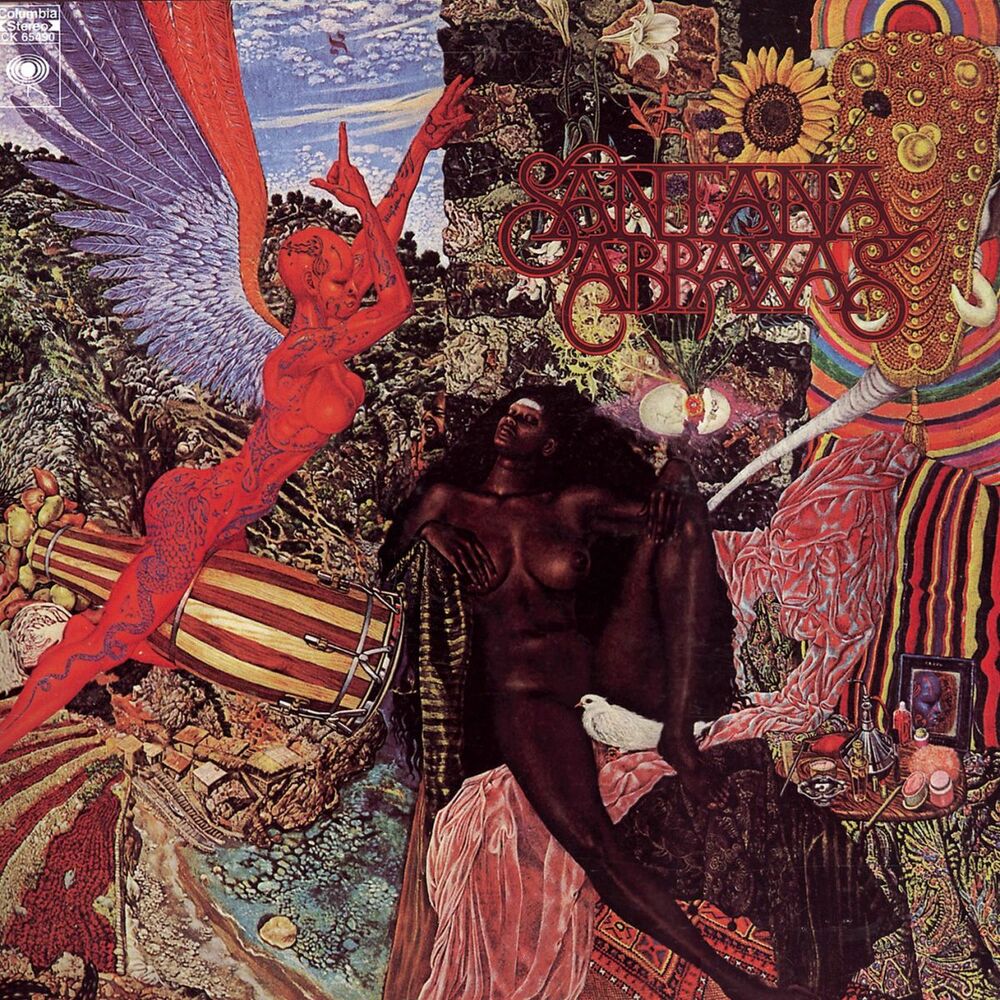
The album title, "Abraxas", originates from a line in Hermann Hesse's 1919 book *Demian*, which is quoted on the back cover. The striking cover art reproduces a painting by Mati Klarwein.
Why it's rated so high
Highly acclaimed, *Abraxas* has been ranked among the greatest albums by *Rolling Stone* and included in *1001 Albums You Must Hear Before You Die*. It was deemed "culturally, historically, or aesthetically significant" and selected for preservation in the National Recording Registry.
Career and historical context
Released in 1970, *Abraxas* followed Santana's successful debut and their iconic Woodstock performance, cementing their status as global stars. It features the band's "classic" line-up, building on the critical acclaim of their first album.
Fun facts
It was Santana's first album to reach number one on the Billboard 200 chart.
The hit song "Black Magic Woman" is a cover of a Fleetwood Mac song.
The album's title comes from Hermann Hesse's 1919 novel *Demian*.
The cover art is a reproduction of a painting by artist Mati Klarwein.
It was selected for preservation in the National Recording Registry in 2015.
Written by AI from the album's and artist's Wikipedia articles and the archive's notes. Double-check anything important.
The full story
Abraxas is the second studio album by the American rock band Santana. It was released on September 23, 1970, by Columbia Records and became the band's first album to top the Billboard 200 in the United States. In 2020, Rolling Stone magazine ranked the album number 334 on its list of the "500 Greatest Albums of All Time".
Title
The title of the album originates from a line in Hermann Hesse's 1919 book Demian, quoted on the album's back cover: "We stood before it and began to freeze inside from the exertion. We questioned the painting, berated it, made love to it, prayed to it: We called it mother, called it whore and slut, called it our beloved, called it Abraxas..."
Critical reception
In 2003, the album was ranked No. 205 on Rolling Stone magazine's list of the 500 greatest albums of all time, at No. 207 on the 2012 revision of the list, and then again at No. 334 in its 2020 release. In 2000, it appeared at No. 202 in Colin Larkin's All Time Top 1000 Albums. The album was also included in the book 1001 Albums You Must Hear Before You Die. In 2015, the album was listed among Billboard's 50 Essential Latin Albums of the 50 Past Years.
Rock critic Robert Christgau, in one of his capsule reviews in The Village Voice, at the time of the album's release, gave it a rating of only C+, which denotes "a not disreputable performance, most likely a failed experiment or a pleasant piece of hackwork".
Legacy
Abraxas was deemed "culturally, historically, or aesthetically significant" by the Library of Congress and was selected for preservation in their National Recording Registry in 2015.
From the Wikipedia article Abraxas (album), available under CC BY-SA 4.0.